Laboratory Pipets Types, Structural Features, and Performance Benefits for Professional Laboratory Operations
Laboratory Pipets are widely applied in laboratories that require accurate liquid transfer, controlled measurement, and reliable experimental procedures. Different types of Laboratory Pipets are developed according to specific working conditions, liquid characteristics, and accuracy requirements. Common categories include volumetric pipets, graduated pipets, serological pipets, Pasteur pipets, and customized glass pipets. Each design provides different advantages for chemical analysis, pharmaceutical research, biological testing, education, and industrial laboratory applications. Selecting the appropriate Laboratory Pipets type helps improve workflow efficiency and supports consistent experimental performance.
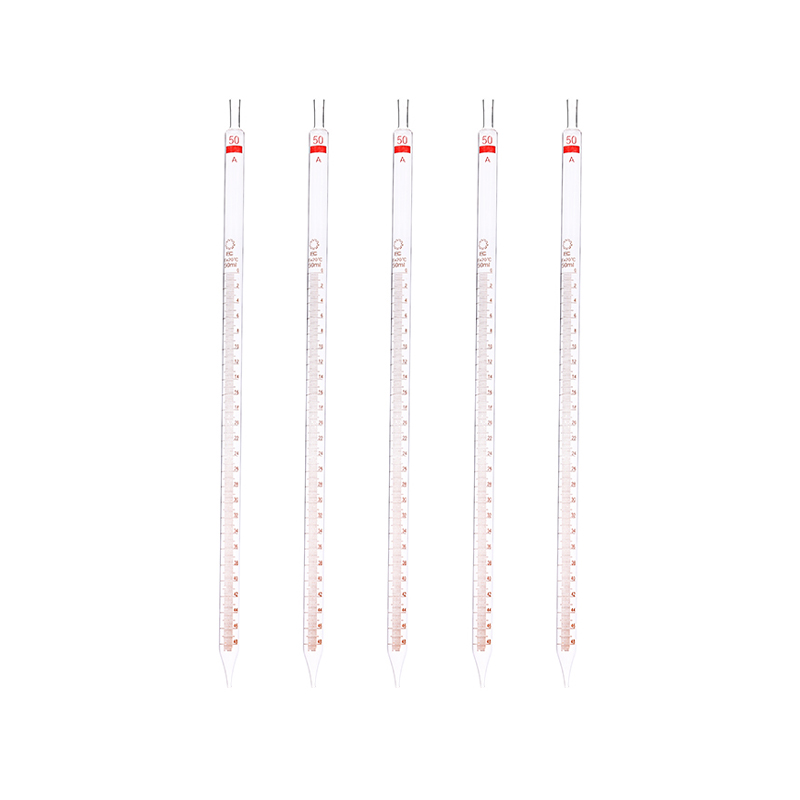
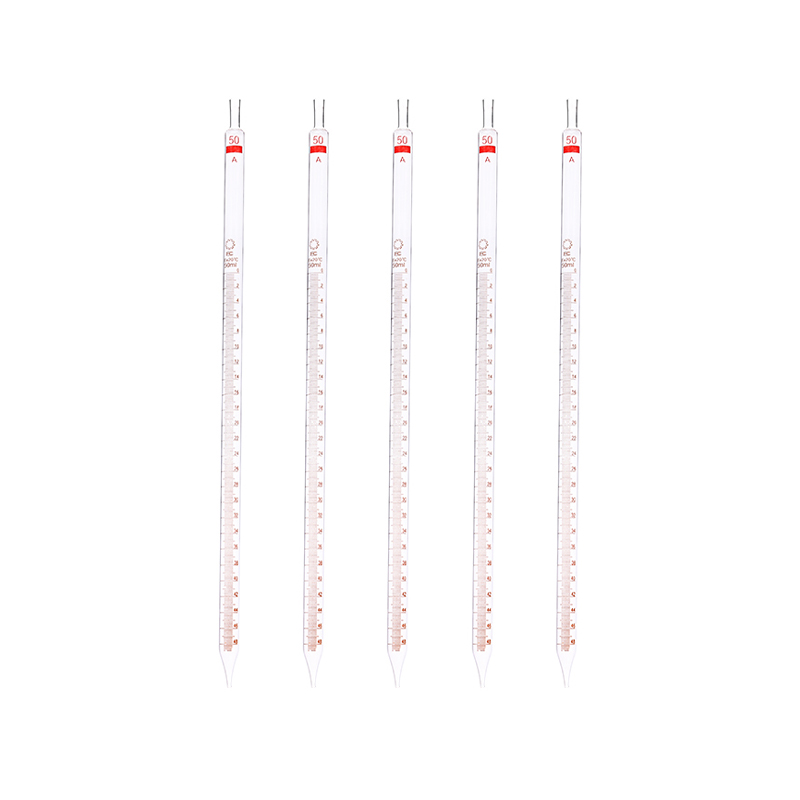
Volumetric Laboratory Pipets are mainly designed for high-precision applications where a fixed volume of liquid needs to be transferred with minimal deviation. These pipets usually feature a narrow body structure and a clearly marked calibration line, allowing laboratory operators to achieve accurate measurements during solution preparation and analytical testing. Graduated Laboratory Pipets provide greater flexibility because multiple measurement marks are placed along the tube body, allowing users to transfer different volumes according to experimental requirements. This type is commonly used in routine laboratory operations where different sample quantities are required within the same procedure. Serological Laboratory Pipets are frequently used in biological and medical research environments because of their extended length, clear graduation markings, and compatibility with various liquid handling processes. Pasteur Laboratory Pipets are suitable for transferring small amounts of liquid, adding reagents, and performing basic laboratory operations where exact volume measurement is not always required.
Shanghai Heqi Glassware Co., Ltd., founded in March 2002, specializes in the research, development, and production of standard-mouth glass instruments and provides professional solutions as a China Laboratory Pipets Manufacturer and Laboratory Pipets Factory. With production bases established in Songjiang, Chengdu, Jiaxing, and Yancheng, the company has developed comprehensive manufacturing capabilities for laboratory glassware products. By integrating advanced technology, practical craftsmanship, and efficient management systems, Shanghai Heqi has introduced mechanized and semi-mechanized production methods to improve consistency and manufacturing efficiency. These production improvements support the stable quality of Laboratory Pipets and related glass instruments.
Modern Laboratory Pipets also include specialized designs developed for customized laboratory environments. Some research institutions and industrial laboratories require specific dimensions, capacities, or structural adjustments to meet unique experimental conditions. Through professional glass processing capabilities, Shanghai Heqi supports customized glass component production and provides flexible solutions for chemical, pharmaceutical, and scientific research applications. The company has established specialized workshops for glass manufacturing, metalworking, and assembly, allowing different production processes to work together efficiently. This integrated manufacturing structure supports the development of various laboratory instruments while maintaining quality standards for Laboratory Pipets.
The continuous development of Laboratory Pipets reflects changes in laboratory technology and user requirements. Manufacturers now focus on improving measurement accuracy, durability, chemical resistance, and operational convenience. Shanghai Heqi combines expertise in chemical research and development, mechanical design, processing technology, and electronic control systems to enhance product innovation. Through these capabilities, the company continues to provide laboratory instruments that support professional users in different industries. Whether applied in chemical experiments, pharmaceutical development, educational laboratories, or industrial testing facilities, Laboratory Pipets remain dependable tools for controlled liquid handling and scientific procedures.
| Parameter |
Specification |
Parameter |
Specification |
| Product Name |
Laboratory Pipets |
Material |
High-quality Borosilicate Glass |
| Volume Range |
0.1 mL – 100 mL (Customized Available) |
Calibration Type |
Volumetric / Graduated Calibration |
| Accuracy Level |
High Precision Liquid Measurement |
Scale Marking |
Clear and Durable Graduation Lines |
| Application Fields |
Chemical, Pharmaceutical, Biological, Research Laboratories |
Chemical Resistance |
Excellent Resistance to Acids, Solvents, and Reagents |
| Manufacturing Process |
Mechanized and Semi-Mechanized Production |
Custom Service |
OEM Glass Instrument Design and Fabrication Available |
The structural design of Laboratory Pipets directly affects measurement performance, handling convenience, and long-term reliability. Professional Laboratory Pipets require careful consideration of material selection, dimensional accuracy, calibration methods, surface treatment, and overall construction. Every component of a pipet contributes to its ability to deliver liquids accurately and maintain stable performance during repeated laboratory operations. Modern manufacturing technologies allow producers to create Laboratory Pipets with improved consistency and better adaptation to different laboratory environments.
The main body of Laboratory Pipets is generally manufactured from laboratory-grade glass materials with excellent transparency and chemical resistance. High-quality glass allows operators to observe liquid levels clearly during measurement and transfer processes. Smooth inner surfaces reduce liquid residue and help maintain easier cleaning procedures after use. The shape and thickness of the glass body are carefully controlled during manufacturing to achieve appropriate strength while maintaining accurate volume capacity. Proper structural balance allows Laboratory Pipets to withstand regular laboratory handling while providing dependable performance.
Calibration markings are another important feature of Laboratory Pipets. Clear and durable graduation lines help users identify measurement points quickly and reduce reading errors during operation. Professional calibration requires precise control of dimensions and manufacturing conditions. Temperature changes, glass expansion characteristics, and production accuracy must all be considered during the calibration process. Manufacturers with advanced production systems can maintain stable calibration standards across large production quantities.
Shanghai Heqi Glassware Co., Ltd. has developed professional production capabilities through years of experience in laboratory glassware manufacturing. As a Laboratory Pipets Manufacturer, the company focuses on combining technology, craftsmanship, and industrial production methods to improve product consistency. Traditional manual production approaches have been gradually replaced by mechanized and semi-mechanized processes, while assembly-line production methods help optimize manufacturing efficiency. These improvements allow Shanghai Heqi to provide Laboratory Pipets with stable structures and reliable performance for laboratory users.
The structural design of Laboratory Pipets also considers user operation requirements. Comfortable handling, balanced weight distribution, and convenient liquid control contribute to a smoother laboratory experience. In professional environments where repeated liquid transfer tasks are performed daily, ergonomic design can help improve operational efficiency. Different applications may require different pipet structures, and customization capabilities allow manufacturers to adjust designs according to specific customer needs.
Shanghai Heqi continues to enhance its manufacturing capabilities through internal research and development resources. The company has brought together professionals in chemical R&D, mechanical design and processing, and electronic control technologies to support product improvement. With specialized workshops for glass production, metal processing, and assembly, Shanghai Heqi can provide integrated manufacturing services for Laboratory Pipets and other laboratory equipment. These capabilities support the production of glass reactors, rotary evaporators, distillation systems, circulation systems, vacuum pumps, stirrers, and UV analyzers, creating a broader service foundation for chemical and pharmaceutical industries.
The combination of structural design, manufacturing precision, and professional engineering enables Laboratory Pipets to meet diverse laboratory requirements. From basic educational experiments to advanced industrial research, properly designed Laboratory Pipets provide accurate liquid handling performance and dependable operation. Continuous improvement in materials, processing technology, and quality management allows these instruments to maintain their value in modern laboratory environments.
The material selection and manufacturing technology of Laboratory Pipets have a direct influence on product accuracy, durability, chemical compatibility, and service performance. In professional laboratory environments, instruments must maintain stable performance while handling different types of liquids, including chemical reagents, analytical solutions, biological samples, and pharmaceutical materials. High-quality materials and advanced production processes allow Laboratory Pipets to achieve consistent performance during repeated laboratory operations.
Glass remains one of the most commonly selected materials for Laboratory Pipets because of its excellent transparency, chemical resistance, and dimensional stability. Laboratory-grade borosilicate glass is widely used in professional applications because it provides good resistance against temperature changes and exposure to many chemical substances. The low expansion characteristics of borosilicate glass help maintain structural stability during heating, cooling, cleaning, and sterilization procedures. This material advantage makes glass Laboratory Pipets suitable for laboratories requiring reliable measurement tools with long service life.
The manufacturing process of Laboratory Pipets involves multiple controlled procedures, including glass forming, shaping, calibration, surface treatment, marking, inspection, and final quality evaluation. Each production stage requires careful management to ensure that the finished products meet laboratory requirements. Accurate forming techniques help maintain consistent dimensions, while advanced calibration methods ensure that volume measurement remains reliable. Clear scale markings and smooth surface finishing further improve usability during laboratory procedures.
Shanghai Heqi Glassware Co., Ltd. was founded in March 2002 and focuses on the research, development, and production of standard-mouth glass instruments. As a China Laboratory Pipets Manufacturer and Laboratory Pipets Factory, the company has developed professional manufacturing systems based on technology integration, practical craftsmanship, and production management experience. Through the establishment of production bases in Songjiang, Chengdu, Jiaxing, and Yancheng, Shanghai Heqi has expanded its manufacturing capacity and improved its ability to supply laboratory glassware products efficiently.
To enhance production efficiency and product consistency, Shanghai Heqi has introduced mechanized and semi-mechanized production methods to replace traditional manual processing procedures. The company has also adopted assembly-line industrial manufacturing processes instead of simple workshop-style production models. These improvements help reduce production costs while maintaining stable product quality. For Laboratory Pipets production, advanced manufacturing systems provide better control over dimensions, appearance, and performance consistency.
In addition to standard Laboratory Pipets, Shanghai Heqi also supports customized glass instrument production based on customer requirements. The company has developed internal capabilities for glass component design, processing, and fabrication, allowing flexible solutions for different laboratory applications. Specialized workshops for glass manufacturing, metalworking, and assembly provide a complete production environment for laboratory instruments and related equipment.
The combination of suitable materials and professional manufacturing technology allows Laboratory Pipets to perform effectively in various scientific fields. Chemical laboratories require instruments with strong resistance to different reagents, while pharmaceutical and biological laboratories require accurate measurement and reliable cleanliness. By continuously improving manufacturing processes and quality management systems, Shanghai Heqi provides Laboratory Pipets and other laboratory instruments that support research institutions, industrial laboratories, and educational organizations with dependable solutions.
Laboratory Pipets provide multiple performance advantages that support accurate liquid handling, efficient laboratory workflows, and consistent experimental procedures. In professional laboratory operations, accuracy, reliability, ease of use, and compatibility with different working environments are important factors when selecting liquid transfer instruments. High-quality Laboratory Pipets help laboratory personnel achieve controlled sample preparation, accurate reagent measurement, and improved experimental repeatability.
Measurement accuracy is one of the primary performance characteristics of Laboratory Pipets. Scientific experiments often require precise liquid volumes because even minor differences may influence analytical results. Well-manufactured Laboratory Pipets provide accurate volume delivery through careful calibration and controlled production methods. Clear graduation marks and optimized structural designs allow users to measure and transfer liquids with improved control.
Chemical compatibility is another important advantage of Laboratory Pipets. Laboratories often handle different substances, including solvents, acids, alkaline solutions, and chemical reagents. The use of appropriate glass materials helps maintain product stability when exposed to various liquids. Laboratory Pipets manufactured with suitable materials can reduce risks associated with chemical interaction and maintain reliable performance throughout repeated laboratory procedures.
Operational convenience also influences the practical value of Laboratory Pipets. A well-designed pipet allows laboratory operators to complete liquid transfer procedures smoothly and efficiently. Balanced structures, clear markings, and comfortable handling characteristics contribute to better user experience. In laboratories where numerous samples require processing, convenient operation helps improve workflow efficiency and reduce unnecessary handling difficulties.
Shanghai Heqi Glassware Co., Ltd. provides professional laboratory instrument solutions by combining manufacturing expertise, technical capabilities, and customer service resources. As an experienced Laboratory Pipets Manufacturer, the company focuses on improving product quality through continuous innovation and production optimization. Shanghai Heqi has assembled a dedicated R&D team consisting of professionals in chemical research and development, mechanical design and processing, and electronic control technology. This multidisciplinary approach supports the improvement of Laboratory Pipets and other laboratory equipment.
Beyond Laboratory Pipets production, Shanghai Heqi supplies a wide range of laboratory glass instruments, consumables, and experimental equipment from domestic and international brands. With sufficient inventory resources, efficient delivery systems, and professional service support, the company provides comprehensive assistance for laboratory customers. This service model helps customers obtain suitable products while maintaining smooth laboratory operations.
Shanghai Heqi has also developed specialized production workshops for glass, metalworking, and assembly processes. These facilities support the manufacturing of various small-scale and pilot-scale equipment, including glass reactors, rotary evaporators, distillation units, high- and low-temperature circulation systems, vacuum pumps, stirrers, and UV analyzers. The company’s integrated capabilities in design, production, and customized fabrication allow Laboratory Pipets to be developed alongside broader laboratory solutions.
The performance benefits of Laboratory Pipets extend across many industries, including chemical research, pharmaceutical development, education, environmental testing, and industrial quality control. Reliable liquid measurement supports accurate analysis and efficient experimentation. Through continuous improvement in product design, manufacturing technology, and service systems, Shanghai Heqi continues to provide Laboratory Pipets that meet the practical needs of modern laboratories and scientific organizations.


 English
 Français
 Español