Understanding the Role of Lab Reaction Tubes in Modern Laboratories
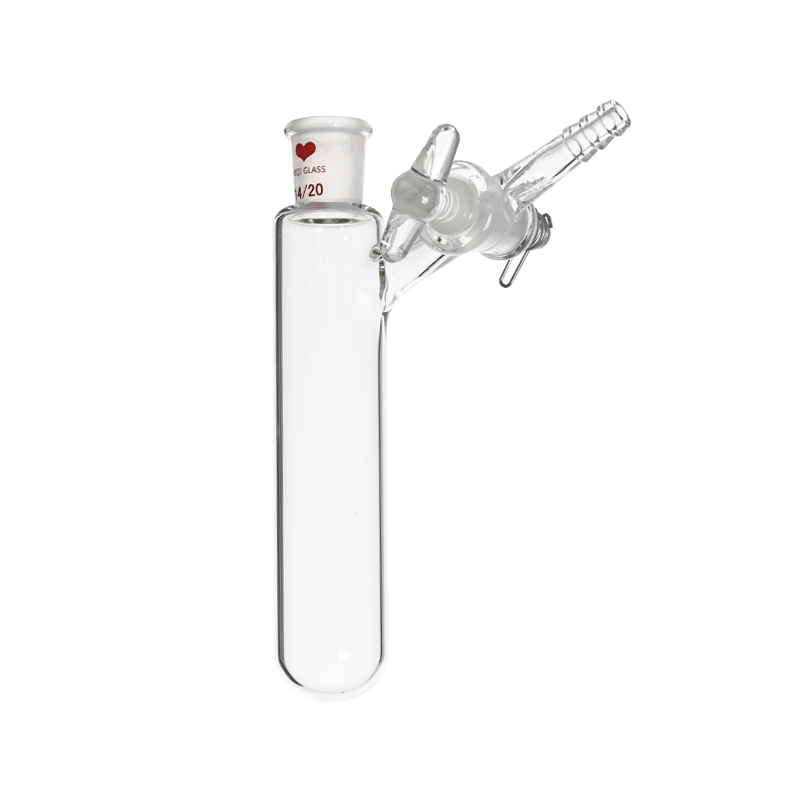
A Lab Reaction Tube is a specialized laboratory container designed for conducting controlled reactions, mixing samples, heating substances, and observing chemical or biological changes on a small experimental scale. Unlike ordinary laboratory tubes that mainly serve as sample containers, reaction tubes are designed to actively support experimental processes where reaction conditions, material compatibility, temperature control, and observation capability are critical.
In scientific research, most discoveries begin with small-scale experiments. Before industrial production or large-scale testing, researchers need reliable reaction systems to evaluate chemical behavior, optimize reaction parameters, and verify experimental feasibility.
Lab Reaction Tubes provide a convenient platform for these early-stage studies. They allow scientists to perform controlled reactions with limited quantities of reagents while maintaining accurate observation and operation. They are widely used in chemistry laboratories, pharmaceutical research, biotechnology, material science, and industrial R&D.
Why Lab Reaction Tubes Are Important in Experimental Research
A reaction tube is not simply a container for holding substances. It is an important part of the experimental system that directly influences reaction efficiency and data reliability.
During laboratory research, scientists often need to control multiple factors simultaneously, including temperature, reaction time, reagent ratio, mixing conditions, and sample protection. A properly designed Lab Reaction Tube helps maintain stable experimental conditions and improves repeatability.
| Experimental Function |
Role of Reaction Tube |
| Chemical Reaction |
Provides a stable environment for reagent interaction and reaction observation |
| Sample Mixing |
Allows efficient combination of multiple substances |
| Heating and Cooling |
Supports controlled temperature changes during experiments |
| Reaction Monitoring |
Provides visual observation of color changes, precipitation, or gas formation |
| Sample Protection |
Helps prevent contamination, evaporation, and external interference |
Structural Design Features of Laboratory Reaction Tubes
The performance of a Lab Reaction Tube depends not only on the material but also on its structural design.
The tube shape influences heat transfer, mixing efficiency, and sample recovery. A uniform internal surface helps reduce sample residue and improves cleaning performance, while specialized designs can support specific experimental procedures.
The opening structure is another important consideration. Open reaction tubes are suitable for experiments requiring frequent reagent addition, while sealed reaction tubes are designed for applications requiring sample protection and reduced contamination risks.
For experiments involving temperature changes, borosilicate glass reaction tubes are widely selected because of their excellent thermal stability and resistance to thermal shock.
| Design Factor |
Influence on Laboratory Performance |
| Tube Material |
Determines chemical resistance, temperature tolerance, and durability |
| Tube Diameter and Length |
Affects reaction volume, mixing space, and heat transfer efficiency |
| Closure Design |
Influences sealing performance and contamination prevention |
| Surface Quality |
Impacts cleaning efficiency and sample residue control |
Materials Used for Lab Reaction Tubes
Different experimental environments require different materials. The selection of material directly affects reaction safety and experimental accuracy.
| Material |
Main Advantages |
Typical Applications |
| Borosilicate Glass |
Excellent chemical resistance, thermal stability, high transparency |
Chemical synthesis, pharmaceutical research, heating experiments |
| Quartz Glass |
Outstanding temperature resistance and optical performance |
High-temperature research and special analysis |
| Polypropylene (PP) |
Lightweight, impact-resistant, good chemical compatibility |
Biological experiments and disposable applications |
| Polyethylene (PE) |
Flexible and resistant to many chemicals |
Sample storage and general laboratory use |
Among these materials, borosilicate glass is one of the most commonly used choices for laboratory reaction applications because it provides a balance of transparency, chemical resistance, and thermal performance.
Applications of Lab Reaction Tubes in Different Industries
Lab Reaction Tubes are widely used across multiple scientific and industrial fields.
In chemical research, reaction tubes are commonly used for organic synthesis, reagent testing, catalyst evaluation, and reaction condition studies. Researchers can quickly adjust experimental parameters and compare different reaction results using small-scale reaction systems.
In pharmaceutical development, reaction tubes support drug discovery and laboratory validation. They are used for compound preparation, chemical screening, stability studies, and formulation research. Small-scale reactions help researchers reduce material consumption while improving development efficiency.
In biotechnology, reaction tubes are applied in enzyme reactions, protein analysis, nucleic acid research, and biological sample processing. Their compatibility with laboratory equipment makes them suitable for precise experimental workflows.
In material science, reaction tubes support polymer research, material synthesis, and chemical performance evaluation.
| Industry |
Main Uses of Reaction Tubes |
| Chemical Research |
Organic synthesis, reagent testing, reaction condition evaluation |
| Pharmaceutical Development |
Compound screening, formulation research, quality testing |
| Biotechnology |
DNA research, enzyme reactions, biological sample processing |
| Material Science |
Polymerization studies and material performance analysis |
Manufacturing Quality and Customization Capability
Producing reliable Lab Reaction Tubes requires professional manufacturing technology and strict quality management.
For glass reaction tubes, precision glass forming, cutting, polishing, cleaning, and inspection processes are required to achieve accurate dimensions and smooth surfaces. The consistency of wall thickness and surface quality directly affects product performance during experiments.
For customized laboratory applications, manufacturers must also consider the compatibility between reaction tubes and complete laboratory systems, such as reactors, circulation equipment, and analytical instruments.
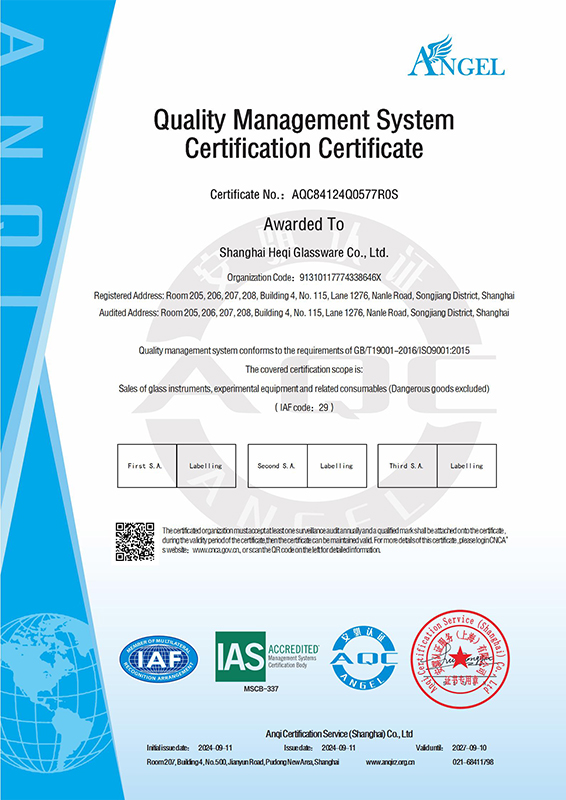
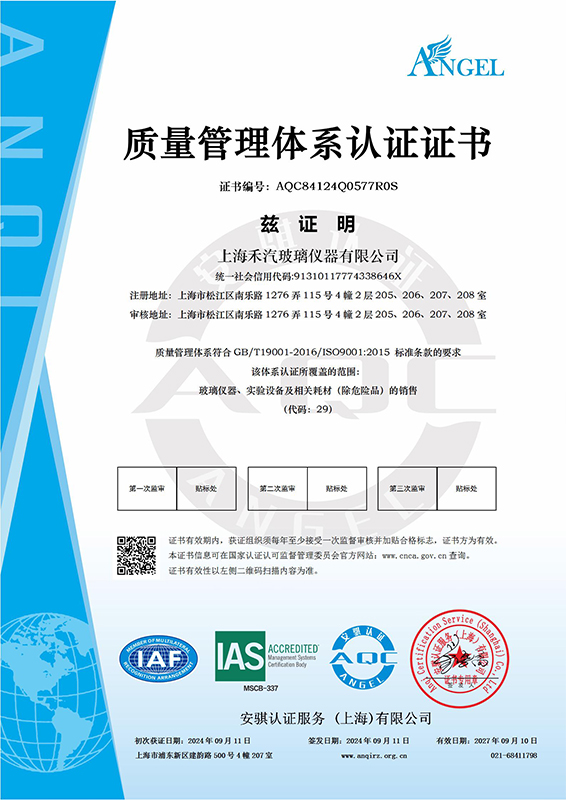
With years of experience in laboratory glassware development, Shanghai Heqi Glassware Co., Ltd. focuses on providing professional laboratory glass solutions and customized experimental equipment.
Founded in March 2002, Shanghai Heqi specializes in the R&D and production of standard-mouth glass instruments, laboratory equipment, and customized laboratory systems. The company has established production bases in Songjiang, Chengdu, Jiaxing, and Yancheng, integrating advanced manufacturing technology, professional craftsmanship, and modern production management.
By introducing mechanized and semi-mechanized production methods together with assembly-line manufacturing processes, Shanghai Heqi improves production efficiency and maintains stable product quality. The company has also built a professional R&D team covering chemical research, mechanical design and processing, and electronic control technologies.
With dedicated workshops for glass manufacturing, metal processing, and equipment assembly, Shanghai Heqi develops a wide range of laboratory products, including glass reactors, rotary evaporators, distillation units, high and low temperature circulation systems, vacuum pumps, laboratory stirrers, and UV analyzers.
This integrated capability allows Shanghai Heqi to provide not only individual laboratory components but also customized experimental solutions for chemical, pharmaceutical, research, and industrial customers.
Selecting the Right Lab Reaction Tube
Choosing a suitable Lab Reaction Tube requires consideration of the experimental environment, reaction characteristics, and operating requirements.
| Requirement |
Recommended Consideration |
| High-temperature reaction |
Select materials with excellent thermal stability, such as borosilicate glass |
| Strong chemical exposure |
Choose tubes with appropriate chemical resistance |
| Biological experiments |
Consider sterile and disposable solutions |
| Small-scale research |
Select suitable volume and dimensions for accurate sample handling |
| Customized systems |
Consider special structures and equipment compatibility |
A properly selected reaction tube can improve experimental efficiency, reduce sample waste, and provide more reliable research results.
Future Development Trends of Lab Reaction Tubes
With the development of precision chemistry, biotechnology, and automated laboratory systems, Lab Reaction Tubes are becoming more specialized and application-oriented.
Future trends include improved materials for extreme reaction environments, customized designs for automated laboratories, enhanced compatibility with analytical instruments, and more sustainable manufacturing methods.
As scientific research continues to expand into pharmaceuticals, advanced materials, and biotechnology, laboratory reaction tubes will remain an essential tool for controlled experiments and scientific innovation.


 English
 Français
 Español