What is a Laboratory Desiccator? Understanding the Core Equipment
Definition and Basic Function
A laboratory desiccator is an enclosure designed to protect moisture-sensitive materials, samples, and chemical reagents from ambient humidity and moisture degradation. In analytical chemistry, pharmaceutical research, and materials science, exposure to atmospheric moisture can alter sample weights, trigger unwanted chemical reactions, or compromise the structural integrity of compounds. By establishing a dry, controlled internal atmosphere, a laboratory desiccator prevents hydration, oxidation, and moisture absorption, ensuring sample stability during storage and cooling processes after high-temperature drying in ovens or furnaces.
Core Mechanism
The operational mechanism of a laboratory desiccator relies on two primary methods: chemical desiccation and vacuum-assisted moisture extraction. In standard configurations, chemical drying agents—such as silica gel, anhydrous calcium chloride, or phosphorus pentoxide—are placed in a lower compartment beneath a perforated plate. These hygroscopic substances actively absorb ambient water vapor within the sealed chamber. Vacuum-type models feature an airtight stopcock fitted into the lid or upper flange, allowing air to be evacuated via an external pump. Reducing internal pressure accelerates the removal of trapped moisture from samples while preventing ambient air from re-entering the chamber.
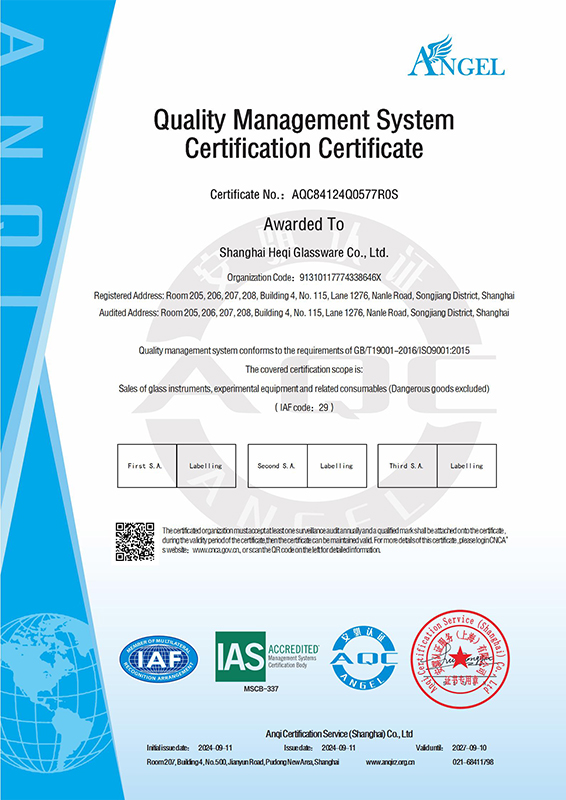
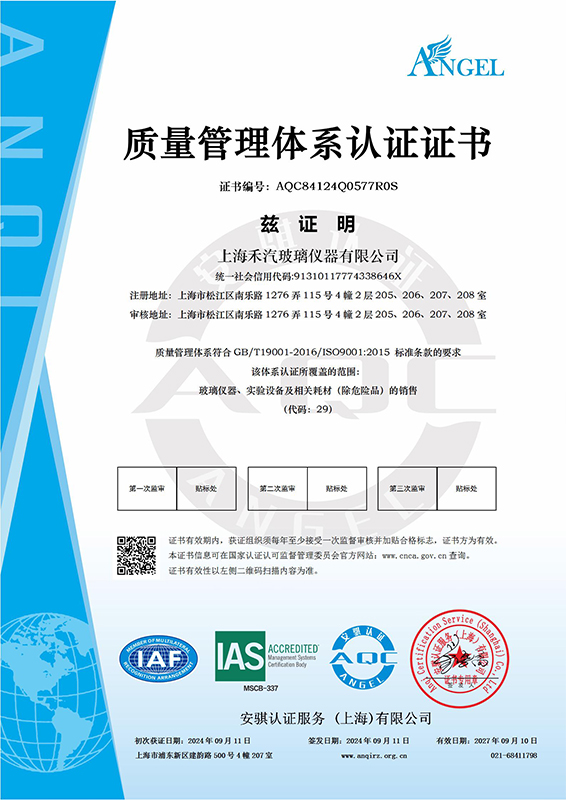
To ensure consistent reliability across diverse research and industrial workflows, advanced manufacturing processes play a critical role. For instance, Shanghai Heqi Glassware Co., Ltd. integrates decades of expertise in glass instrument R&D and precision production across its specialized manufacturing bases in Songjiang, Chengdu, Jiaxing, and Yancheng. By utilizing mechanized techniques and strict assembly-line quality control, such production standards ensure that every sealing surface, flange, and ground glass joint maintains the exact tolerances required for long-term airtight performance.
Role in Quality Control
In rigorous quality control (QC) and analytical laboratories, moisture management is non-negotiable. Analytical balances require reference standards and crucibles to remain completely dry to avoid erroneous mass measurements. Similarly, pharmaceutical powders, hygroscopic salts, and fine chemicals must be kept in absolute dryness to meet strict purity benchmarks. Using a dependable laboratory desiccator eliminates moisture-induced variables, safeguarding experimental accuracy, protecting high-value reagents, and maintaining compliance with international testing standards.
Key Types of Laboratory Desiccators for Industrial and Research Applications
Standard Vacuum Desiccators: Glass vs. Polycarbonate Options
When rapid moisture removal is required, standard vacuum desiccators are the primary choice for research and industrial laboratories. These units utilize a heavy-duty stopcock to allow evacuation, significantly speeding up the drying process. Selecting the right material depends on operational demands:
Borosilicate Glass Desiccators: Renowned for ultimate chemical resistance, high thermal stability, and complete optical clarity. Glass units tolerate aggressive solvents and harsh cleaning agents without degradation, making them ideal for heavy-duty chemical synthesis environments.
Polycarbonate Desiccators: Shatter-resistant, lightweight, and highly durable under high-vacuum conditions. They offer a safer alternative for busy, high-throughput settings where glassware breakage poses safety hazards.
| Parameter / Feature |
Borosilicate Glass Desiccator |
Polycarbonate Desiccator |
| Material Resistance |
Exceptional against all organic solvents and acids (except hydrofluoric) |
Good resistance; vulnerable to certain strong organic solvents |
| Impact Resistance |
Low (susceptible to shattering on severe impact) |
High (shatter-proof and impact-resistant) |
| Vacuum Performance |
Excellent for long-term, high-vacuum holding |
High-vacuum capable (typically up to 740 mm Hg for 24 hours) |
| Thermal Limit |
Withstands high thermal shock |
Restricted to moderate ambient temperature ranges |
Non-Vacuum (Standard) Desiccators
For samples that do not require accelerated vacuum drying, non-vacuum desiccators provide a cost-effective, passive storage solution. These units rely solely on desiccant trays placed at the bottom of the chamber to absorb residual moisture over time. They are widely deployed in routine analytical workflows for storing crucibles, weighing bottles, and hygroscopic reference standards between measurements.
Automated and Electronic Dry-Cabinets
Modern high-volume laboratories often require continuous, automated humidity regulation without manual desiccant replacement. Electronic dry-cabinets feature solid-state dehumidification units and digital hygrometers that actively maintain internal relative humidity at precise setpoints (often below 10% RH). These cabinets are essential for bulk reagent storage and sensitive electronic components.
Material Variations and Manufacturing Integration
Choosing the correct material—whether borosilicate glass, clear acrylic, or heavy-duty polypropylene—dictates the lifespan and safety of the equipment. To ensure seamless integration into diverse laboratory setups, Shanghai Heqi Glassware Co., Ltd. applies its advanced manufacturing capabilities across its specialized glass, metalworking, and assembly workshops. By combining traditional glasscraft expertise with modernized industrial production processes, the company delivers a comprehensive range of laboratory equipment and consumables, ensuring that institutional buyers and industrial users receive durable, precisely engineered solutions tailored to their exact moisture-control requirements.
Critical Factors for Commercial Buyers: Selecting the Right Laboratory Desiccator
Capacity and Dimensional Requirements
When sourcing a laboratory desiccator for large-scale facilities or institutional laboratories, spatial planning is a primary consideration. Procurement teams must evaluate internal storage volume against available benchtop or shelving space. Units range from compact benchtop models with inner diameters of 150mm to large-capacity floor or heavy-duty bench models exceeding 300mm to 400mm in diameter. Selecting the correct internal clearance ensures that bulk sample racks, wide crucibles, and tall weighing bottles fit comfortably without blocking the internal sealing flange or crowding desiccant trays.
Material Compatibility and Chemical Resistance
The operating environment inside a laboratory frequently exposes equipment to aggressive chemical vapors, organic solvents, and strong acids. Ensuring that the laboratory desiccator material matches these exposure conditions prevents premature structural degradation. While borosilicate glass handles nearly all aggressive chemical fumes, certain applications involving strong alkaline solutions or hydrofluoric acid require specialized plastics like polypropylene. To support complex chemical and pharmaceutical settings, Shanghai Heqi Glassware Co., Ltd. leverages its dedicated R&D team—comprising experts in chemical engineering and mechanical design—to ensure that every unit's material composition meets rigorous chemical resistance benchmarks.
Seal Integrity and Vacuum Retention
For vacuum-type desiccators, long-term seal integrity dictates operational efficiency. Procurement officers should closely evaluate the following structural parameters:
Gasket Material: High-grade neoprene or silicone rings provide superior compressibility and resistance to permanent deformation, ensuring an airtight seal over thousands of open-close cycles.
Stopcock Quality: Precision-ground glass stopcocks or PTFE (polytetrafluoroethylene) stopcocks dictate vacuum retention. PTFE options eliminate the need for vacuum grease, reducing maintenance and preventing sample contamination.
Flange Precision: Finely ground flat glass flanges or reinforced polymer rims prevent air leakage under negative pressure.
| Performance Parameter |
Standard Glass Stopcock Unit |
PTFE Stopcock Unit |
| Vacuum Grease Requirement |
Required for optimal seal |
Not required (self-lubricating PTFE) |
| Contamination Risk |
Moderate (grease migration possible) |
Minimal (clean, grease-free operation) |
| Maintenance Frequency |
High (frequent cleaning and regreasing) |
Low (minimal upkeep required) |
| Durability under Chemical Stress |
High glass resilience; grease may degrade |
Excellent resistance to aggressive solvents |
Compliance and Safety Standards
Institutional purchasers must ensure that all acquired hardware aligns with established safety and quality benchmarks. A reliable laboratory desiccator must adhere to recognized manufacturing standards regarding pressure limits, mechanical strength, and thermal shock resistance. Backed by its production bases in Songjiang, Chengdu, Jiaxing, and Yancheng, Shanghai Heqi Glassware Co., Ltd. integrates strict mechanized and semi-mechanized production standards to replace traditional manual inconsistencies. This industrial-grade processing ensures that every piece of equipment meets the stringent repeatability and safety expectations demanded by modern commercial and research laboratories.
Manufacturing Excellence: How We Build a Reliable Laboratory Desiccator
Precision Engineering and Molding
Producing a high-performance laboratory desiccator requires exact manufacturing tolerances, particularly at the mating surfaces where the lid meets the chamber body. Minor deviations in flatness can compromise vacuum retention and allow atmospheric moisture to seep inward. To eliminate these vulnerabilities, advanced production utilizes computer-controlled machining and precision glass-molding techniques. These processes ensure that every flange, stopcock bore, and wall thickness achieves uniform structural integrity, capable of withstanding both high internal vacuums and rigorous daily handling.
Strict Quality Control Protocols
Quality assurance is a foundational step before any equipment leaves the factory floor. Every completed laboratory desiccator undergoes a multi-stage inspection process designed to verify operational safety and longevity. Key evaluations include:
Vacuum Leak Testing: Units are subjected to prolonged negative pressure tests using sensitive gauge monitors to verify that pressure loss remains within strict safety limits over 24-hour intervals.
Thermal Shock Resistance Assessment: Ensuring borosilicate glass components can endure rapid temperature shifts without structural micro-fracturing.
Optical Clarity and Surface Inspection: Thorough checks for internal bubbles, inclusions, or surface scratches that could weaken the material under stress.
Customization and OEM Capabilities
Every analytical facility or industrial plant faces unique spatial and operational constraints. Standard stock configurations do not always align with specific pilot-scale workflows or specialized sample storage requirements. To address this, Shanghai Heqi Glassware Co., Ltd. operates dedicated workshops for glass, metalworking, and assembly, bringing together specialists in mechanical design and electronic control. Leveraging these in-house manufacturing foundations—established across production bases in Songjiang, Chengdu, Jiaxing, and Yancheng—the company provides tailored design, custom fabrication, and flexible OEM services. Whether modifying port dimensions, adjusting internal shelf configurations, or scaling unit volumes for wholesale distribution, this integrated approach ensures that every laboratory desiccator is built precisely to client specifications.
Supply Chain, Bulk Procurement, and Factory Direct Advantages
Volume Pricing and Scalability
For institutional purchasers, large-scale distributors, and industrial plants, procuring laboratory equipment efficiently requires robust supply chain backing. Sourcing a laboratory desiccator directly from a primary manufacturer eliminates intermediary markups, ensuring competitive volume pricing for bulk orders. This direct-to-market structure allows growing facilities and major research centers to scale their equipment inventory without exceeding budgetary constraints.
Packaging and Global Logistics
Transporting fragile laboratory glassware and precision-molded components across international borders demands rigorous logistical planning. A high-quality laboratory desiccator must be protected against heavy shocks, vibrations, and shifting during transit. To safeguard shipments, export-grade packaging typically incorporates custom-molded high-density foam inserts, corrugated multi-wall outer cartons, and reinforced wooden crating for large-scale sea or air freight. Meeting these demanding shipping standards ensures that orders arrive at global destinations completely intact and ready for immediate deployment.
Lead Times and Inventory Management
Unpredictable supply chain delays can halt laboratory workflows and stall pilot-scale production schedules. To prevent bottlenecks, maintaining reliable stock levels for high-demand laboratory desiccator models is essential. Supported by its established production infrastructure across major manufacturing bases, Shanghai Heqi Glassware Co., Ltd. combines ample in-house inventory with mechanized assembly processes to streamline order fulfillment. By replacing traditional slow workshop production with efficient industrial workflows—encapsulated in the corporate commitment that "you make a call, we handle the rest"—the company delivers fast turnaround times, dependable shipping schedules, and comprehensive supply chain support for commercial clients worldwide.
Frequently Asked Questions (FAQ)
What is the difference between a vacuum and non-vacuum Laboratory Desiccator?
The primary difference lies in how moisture is removed and the speed of the drying process. A standard non-vacuum laboratory desiccator relies strictly on passive chemical absorption, using desiccant agents like silica gel placed at the bottom to lower internal humidity over time. This makes it ideal for routine, long-term storage of dry samples. In contrast, a vacuum desiccator includes a stopcock and is connected to an external pump to evacuate air. Reducing internal pressure draws trapped moisture out of samples rapidly, making it the preferred choice when quick drying or cooling is required.
How often should desiccant materials (like silica gel) be replaced or regenerated?
The lifespan of a desiccant depends directly on laboratory humidity levels and how frequently the chamber is opened. Self-indicating silica gel, which changes color (typically from blue to pink or orange to green) as it absorbs moisture, offers a clear visual cue. When the gel reaches saturation, it must be regenerated by heating in an oven or replaced entirely. Maintaining active desiccant is essential to ensure that every laboratory desiccator maintains the low-humidity environment required for sensitive analytical work.
What is the maximum vacuum level a standard polycarbonate Laboratory Desiccator can safely handle?
Polycarbonate and glass models have distinct mechanical thresholds. While borosilicate glass handles high negative pressures exceptionally well, high-quality polycarbonate units are typically engineered to safely sustain vacuums down to roughly 740 mm Hg (approx. 29.5 inches Hg) for 24-hour intervals without structural compromise. Operating beyond these thresholds can stress the material or flange seals, risking implosion. When sourcing units for rigorous industrial applications, checking manufacturer specifications is vital. To support procurement teams with precise technical data and reliable equipment sourcing, Shanghai Heqi Glassware Co., Ltd. draws on its extensive R&D expertise and specialized workshops to ensure every laboratory desiccator meets strict performance and safety tolerances.
Can your factory provide custom sizes or private labeling for wholesale orders?
Yes, industrial and institutional buyers frequently require tailored specifications to match unique pilot-scale or laboratory footprints. Standard off-the-shelf options do not always fit specialized testing environments. Leveraging its integrated production bases in Songjiang, Chengdu, Jiaxing, and Yancheng, Shanghai Heqi Glassware Co., Ltd. combines in-house glassworking, metalworking, and assembly capabilities to support customized fabrication, specialized port configurations, and flexible wholesale arrangements.


 English
 Français
 Español