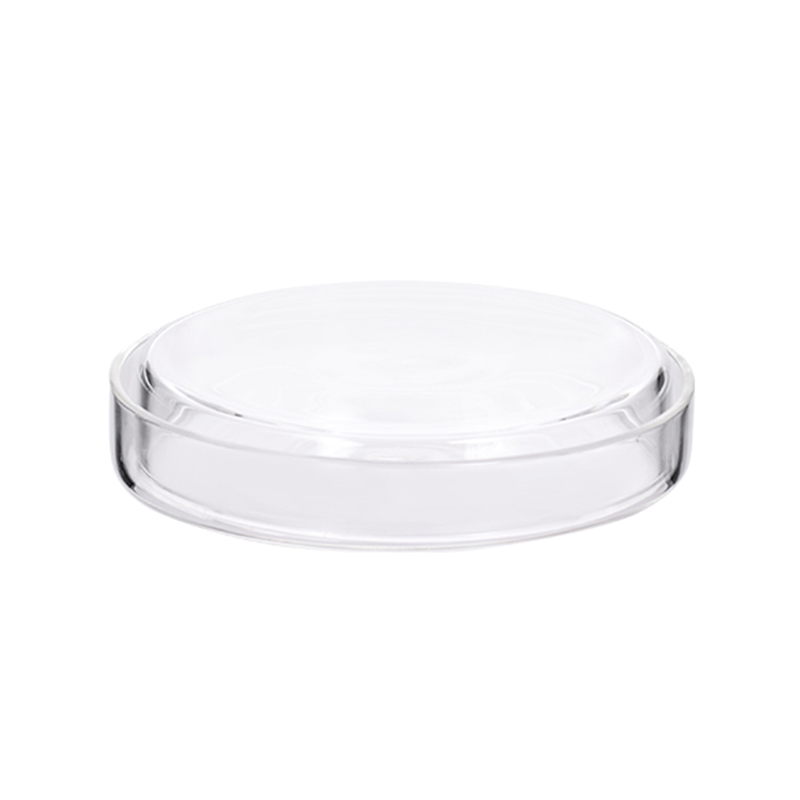
Economic and Logistical Factors in Bulk Procurement
Procuring laboratory consumables in large quantities involves navigating a complex matrix of economic variables, shipping logistics, and inventory management. For institutional purchasers, university procurement departments, and corporate life science buyers, the total cost of ownership extends far beyond the initial unit price. Factors such as supply chain stability, freight efficiency, minimum order thresholds, and packaging integrity directly dictate operational budgets and workflow continuity.
To eliminate supply chain bottlenecks and minimize unexpected delays, partnering directly with an experienced manufacturer is essential. Rather than relying on multi-layered distribution intermediaries that inflate costs and introduce communication gaps, large-scale buyers can collaborate directly with Shanghai Heqi Glassware Co., Ltd. Backed by established production bases across Songjiang, Chengdu, Jiaxing, and Yancheng, the company integrates advanced manufacturing and streamlined logistics to keep high-demand items—including lab culture dishes and auxiliary laboratory equipment—readily available for rapid dispatch.
Evaluating Supply Chain Stability and Direct Partnerships
Global supply chain volatility has made supply continuity a primary strategic concern for procurement managers. Over-reliance on overseas vendors with fragile distribution networks often results in stockouts, delayed project timelines, and inflated spot-market pricing.
Direct factory partnerships mitigate these vulnerabilities by establishing predictable production schedules and direct lines of communication. When sourcing lab culture dishes in bulk, procurement teams should evaluate potential partners based on structural manufacturing resilience:
| Procurement Metric |
Indirect Distributor Model |
Direct Factory Partnership (Shanghai Heqi) |
| Lead Time Reliability |
Variable; subject to multi-tier warehouse transfers and intermediary stock availability. |
Predictable and fast; direct access to ample factory inventory and automated production lines. |
| Supply Chain Transparency |
Opaque; limited visibility into raw material sourcing and actual manufacturing site conditions. |
Fully transparent; production executed across dedicated internal workshops under strict quality control. |
| Cost Efficiency |
Higher cumulative costs due to markup layers from multiple brokers and agents. |
Optimized cost structure through direct manufacturing, eliminating unnecessary intermediary margins. |
| Technical Responsiveness |
Slow feedback loops requiring communication relayed through multiple sales layers. |
Immediate technical support backed by an in-house team of R&D and mechanical design experts. |
Packaging Innovations for Bulk Orders
Transporting fragile plastic and glass laboratory consumables across international shipping lanes presents distinct physical challenges. Shock impact, vibrational friction during transit, and exposure to environmental moisture can result in cracked dishes, compromised sterile seals, or crushed outer cartons upon arrival at destination warehouses.
To safeguard product integrity during long-distance transit, industrial-grade packaging engineering is mandatory:
Sterile Peel-Pack Configurations: Individual or multi-unit sleeve packs manufactured from medical-grade breathable films that maintain aseptic barriers while preventing static cling and scratching.
Heavy-Duty Corrugated Cartons: Multi-walled outer shipping boxes engineered with high burst-strength ratings (>275 psi) to withstand stacking pressure in container freight.
Internal Cushioning and Partitioning: Custom-fitted corrugated dividers and honeycomb inserts that absorb lateral G-forces and prevent dish shifting during rough transit conditions.
Cost Optimization Strategies and Volume Pricing
Maximizing procurement return on investment requires balancing order volumes with holding costs and cash flow management. Bulk purchasers must evaluate pricing tiers, Minimum Order Quantities (MOQs), and freight consolidation opportunities to achieve optimal unit economics.
Rather than placing frequent small orders that incur cumulative shipping overhead, institutional buyers benefit from strategic inventory forecasting. By aligning purchasing schedules with tiered volume pricing, laboratories secure substantial cost reductions while locking in guaranteed supply allocations.
Furthermore, Shanghai Heqi Glassware Co., Ltd. adheres to a steadfast service philosophy encapsulated by the commitment: “One point of professionalism, one point of service, one point of companionship—allow me to be your reliable partner on the path forward!” Driven by this dedication, the company pairs its comprehensive production capabilities with flexible order support, ensuring that institutional clients receive tailored logistical solutions that match their exact budgetary and scheduling requirements.
Custom OEM/ODM Capabilities for Specialized Requirements
Large-scale distributors and specialized research institutions frequently require customized product configurations that go beyond off-the-shelf standard catalogs. Whether it involves proprietary branding, unique case pack counts, or specialized material modifications, custom manufacturing capability is a major differentiator.
Through its specialized workshops dedicated to glass processing, metalworking, and mechanical assembly, Shanghai Heqi Glassware Co., Ltd. leverages its internal R&D expertise—comprising chemical, mechanical, and electronic control specialists—to deliver bespoke OEM and ODM solutions. From custom-molded lab culture dishes featuring private-label branding to integrated pilot-scale equipment setups including glass reactors, rotary evaporators, and high-precision temperature circulation systems, the company provides comprehensive customization support designed to elevate partner brand equity and meet stringent laboratory demands.
Quality Assurance: Key Inspection Metrics for Procurement Teams
When purchasing lab culture dishes on an institutional or corporate scale, incoming quality control (IQC) forms the first line of defense against experimental failure and compromised research integrity. Procurement teams and laboratory directors cannot rely solely on manufacturer claims; they must establish rigorous, systematic inspection metrics to verify that every incoming batch meets demanding optical, mechanical, and aseptic standards. Minor deviations in flatness, thermal behavior, or sterility assurance can ruin weeks of cell culture propagation and result in substantial financial waste.
To ensure that quality benchmarks are met without exception, elite manufacturers implement multi-stage internal testing before products ever leave the production floor. For instance, Shanghai Heqi Glassware Co., Ltd. applies rigorous inspection protocols across its specialized workshops, leveraging dedicated R&D expertise in mechanical design and electronic control to test every batch of lab culture dishes against strict international parameters.
Optical Clarity and Distortion Testing
Because cell culture monitoring heavily relies on inverted phase-contrast microscopy and automated colony counting systems, optical transparency is a paramount quality parameter. Any localized distortion, haze, or striation in the polystyrene matrix can refract light improperly, obscure cellular morphology, or trigger false readings in automated screening instruments.
Procurement inspection teams should measure optical performance against established benchmarks:
| Optical Inspection Parameter |
Substandard Commercial Threshold |
High-Grade Industrial Standard (Shanghai Heqi) |
| Light Transmittance |
< 85% at visible spectrum (400-700 nm). |
> 90% light transmittance, ensuring crystal-clear microscopic resolution. |
| Haze and Birefringence |
Noticeable internal stress rings, flow lines, or surface cloudiness. |
Virtually zero haze; uniform refractive index across the entire growth area. |
| Bottom Flatness Distortion |
Visible focal plane shifting during high-magnification scanning. |
Ultra-flat bottom surface maintaining uniform focal depth across all viewing zones. |
Thermal Stability and Mechanical Strength
During routine laboratory workflows, lab culture dishes are subjected to thermal fluctuations ranging from refrigerated storage to warm incubator environments (37 degrees C), as well as mechanical handling by robotic stackers and laboratory personnel. Inferior polymers may warp, bow, or become brittle under these normal operating conditions.
Quality assurance protocols must verify structural resilience under stress:
Warping Resistance: Dishes must maintain dimensional stability during extended incubator exposure, preventing lid binding or uneven medium depth.
Impact and Drop Resistance: Outer walls and rims must withstand standard handling impacts without cracking or shattering, protecting operators from biological exposure.
Stacking Rigidity: Side walls and base rings must support the weight of stacked incubation tiers without compressing the ventilation gap or obstructing gas exchange.
Aseptic Integrity Verification: Endotoxin and Pyrogen Testing
Sterility alone is insufficient for sensitive mammalian cell cultures; biological consumables must also be free from pyrogens and bacterial endotoxins (lipopolysaccharides). Even sterilized dishes containing residual endotoxins can trigger severe inflammatory responses, apoptosis, or erratic cellular proliferation.
To guarantee complete biological inertness, quality assurance teams review lot-specific Certificates of Analysis (CoA) verifying:
Endotoxin Limits: Certified below 0.005 EU/mL, measured via Limulus Amebocyte Lysate (LAL) kinetic assays.
Cytotoxicity Screening: Confirmed non-cytotoxic via direct contact or elution assays using standard fibroblast cell lines.
Pyrogen-Free Certification: Verified absence of fever-inducing contaminants across all production lots.
Maintaining these exacting biological standards requires strict environmental control throughout manufacturing. Leveraging its long-standing production experience since March 2002, Shanghai Heqi Glassware Co., Ltd. operates state-of-the-art facilities across Songjiang, Chengdu, Jiaxing, and Yancheng, ensuring that every production run of lab culture dishes—as well as complementary laboratory equipment like rotary evaporators and glass reactors—undergoes stringent quality auditing before dispatch.
Traceability Protocols and Lot Numbering Systems
Robust traceability is essential for institutional compliance and internal quality audits. In the rare event of an analytical anomaly or packaging defect, procurement teams must be able to trace a specific case of lab culture dishes back to its exact production shift, raw material resin lot, and sterilization cycle.
Advanced manufacturing facilities encode comprehensive traceability data directly onto outer packaging labels:
Barcoded Lot Identification: Scannable lot numbers linking finished goods to raw material certificates and cleanroom logs.
Sterilization Indicator Dots: Color-changing chemical indicators on outer sleeves confirming successful exposure to gamma irradiation or EtO sterilization.
Expiration Dating: Clear shelf-life labeling ensuring that sterile barriers and polymer integrity remain fully intact over time.
By implementing rigorous inspection metrics and maintaining transparent traceability protocols, institutional buyers and large-scale distributors can secure a dependable supply of high-performance lab culture dishes. Backed by a service philosophy centered on “one point of professionalism, one point of service, one point of companionship—allow me to be your reliable partner on the path forward!”, Shanghai Heqi Glassware Co., Ltd. remains fully committed to delivering uncompromised quality and complete logistical reliability for partners worldwide.
Frequently Asked Questions (FAQ)
When institutional procurement directors, university laboratory managers, and corporate purchasing teams evaluate suppliers for high-volume laboratory consumables, several recurring technical and logistical questions arise. Clear, authoritative answers help streamline purchasing decisions and establish transparent expectations regarding product performance, customization options, and compliance standards.
To assist procurement professionals in making informed choices, we have compiled answers to the most common questions surrounding the specification, ordering, and application of lab culture dishes. Operating under the service philosophy of “one point of professionalism, one point of service, one point of companionship—allow me to be your reliable partner on the path forward!”, Shanghai Heqi Glassware Co., Ltd. is committed to providing comprehensive support and technical transparency for all clients across our global distribution network.
What is the standard Minimum Order Quantity (MOQ) for custom-branded lab culture dishes?
For custom OEM and ODM production runs—including private-label branding, specialized packaging configurations, or unique geometric modifications—Minimum Order Quantities are structured to maximize manufacturing efficiency while accommodating institutional scale. Typically, custom runs require baseline case thresholds that justify cleanroom setup and dedicated mold adjustments. Standard catalog items maintained in our regional production bases across Songjiang, Chengdu, Jiaxing, and Yancheng feature highly flexible order minimums to support rapid dispatch and immediate laboratory deployment.
How do TC-treated and non-treated culture surfaces differ in practical application?
The primary distinction lies in surface wettability and cellular affinity, which dictates how biological samples interact with the growth vessel:
TC-Treated Surfaces: Subjected to specialized plasma or corona discharge treatments to introduce hydrophilic functional groups. This increases surface energy, allowing anchorage-dependent mammalian cells to spread, attach, and proliferate efficiently.
Non-Treated Surfaces: Retain native hydrophobic polystyrene properties, making them ideal for suspension cell cultures, bacterial and fungal propagation, and analytical assays where cellular adhesion is strictly undesirable.
To ensure absolute consistency across every production lot, Shanghai Heqi Glassware Co., Ltd. employs a dedicated R&D team specialized in chemical engineering and electronic control, continuously monitoring plasma treatment parameters to guarantee uniform lot-to-lot wettability.
What measures are taken to prevent condensation buildup during high-temperature incubation?
In standard incubation environments (37 degrees C, high relative humidity), moisture vapor tends to condense on the underside of dish lids, creating optical droplets that obscure microscopic observation and interfere with automated imaging systems.
Professional-grade lab culture dishes incorporate specific design features to manage gas exchange and condensation:
Integrated Lid Vents: Small molded spacers on the inner rim of the lid maintain a microscopic gap, facilitating uniform carbon dioxide and oxygen exchange while minimizing stagnant moisture pockets.
Stacking Rings: Precision-molded ridges on the top of lids and bases ensure stable, slip-resistant nesting, preventing thermal insulation imbalances between stacked tiers.
Optimized Thermal Conductivity: Uniform polymer wall thickness promotes balanced heat transfer, reducing localized temperature differentials that drive heavy droplet formation.
Are factory production facilities audited for international medical device standards?
Yes. Maintaining rigorous international accreditation is mandatory for supplying institutional laboratories and pharmaceutical production lines. Manufacturing facilities must operate under certified quality management systems to guarantee safety, traceability, and batch reproducibility.
Purchasing teams reviewing compliance documentation should verify key international standards:
| Certification Standard |
Scope and Operational Focus |
Compliance Significance for Buyers |
| ISO 13485 |
Quality management systems specifically tailored for medical devices and laboratory consumables. |
Ensures stringent risk management, sterility assurance, and full product traceability from resin to final packaging. |
| ISO 9001 |
General industrial quality management and operational excellence frameworks. |
Validates consistent manufacturing processes, continuous improvement, and robust customer satisfaction protocols across production bases. |
| CE Marking & FDA Registration |
Regulatory compliance confirming adherence to international health, safety, and environmental legislation. |
Authorizes commercial distribution and guarantees that products satisfy statutory safety thresholds for global laboratory use. |
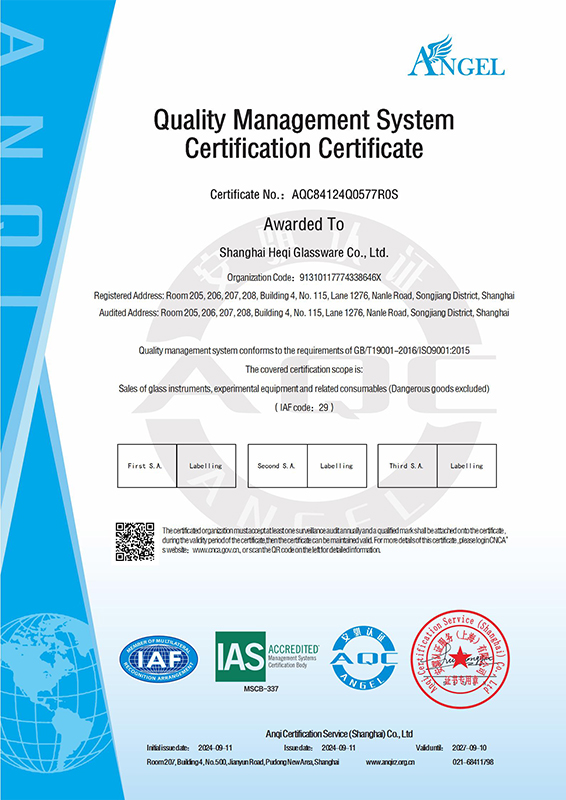
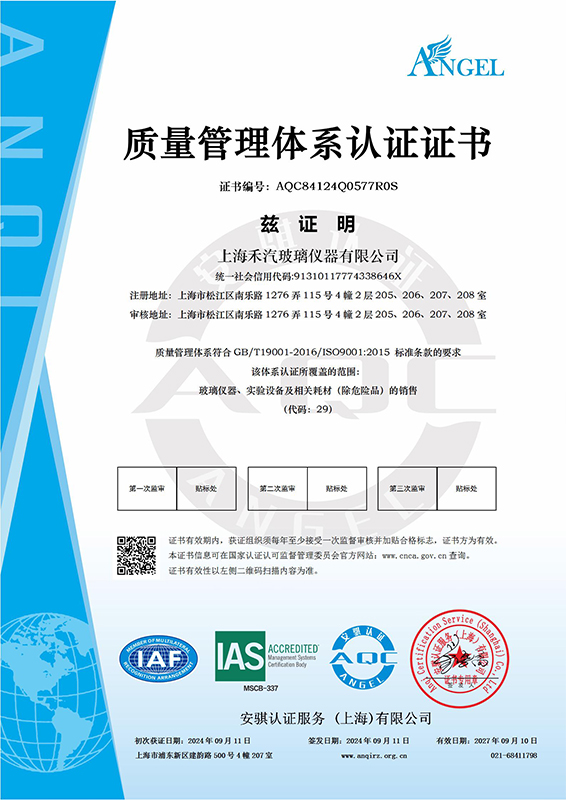
Through its integrated workshops dedicated to glass processing, metalworking, and mechanical assembly, Shanghai Heqi Glassware Co., Ltd. maintains strict compliance with ISO quality frameworks. Beyond supplying high-grade lab culture dishes, the company's extensive manufacturing portfolio—including advanced glass reactors, rotary evaporators, and temperature circulation systems—provides institutional buyers with a dependable, fully certified source for all core laboratory equipment and consumable needs.


 English
 Français
 Español