The Importance of Lab Vacuum Pumps in Laboratory Operations
Vacuum technology has become an essential part of modern laboratory operations. Many experimental processes require controlled low-pressure environments to improve efficiency, protect samples, and achieve accurate results. From chemical evaporation and filtration to pharmaceutical preparation and analytical testing, vacuum systems provide critical support for scientific research.
At the center of these systems are Lab Vacuum Pumps, which generate the required vacuum force by removing air and gases from enclosed equipment. As laboratory applications become more precise, vacuum pumps are developing toward cleaner operation, higher efficiency, lower noise, and better system compatibility.
A laboratory vacuum pump is more than a simple air extraction device. It is the power source that enables many important laboratory processes under reduced pressure conditions.
By creating a vacuum environment, laboratory vacuum pumps can change the physical characteristics of materials and improve the efficiency of experimental procedures.
| Laboratory Process |
Role of Vacuum Pump |
| Vacuum Evaporation |
Lowers boiling temperature and accelerates solvent removal |
| Vacuum Filtration |
Provides suction force for faster solid-liquid separation |
| Vacuum Drying |
Removes moisture and volatile substances from samples |
| Distillation |
Supports separation of heat-sensitive compounds |
| Analytical Equipment |
Maintains required pressure conditions for stable operation |
A stable vacuum source helps laboratories improve experimental consistency while reducing operational risks.
Vacuum Pump Technologies for Different Laboratory Needs
Laboratory vacuum pumps have developed into several technology categories. Each design provides different advantages depending on vacuum requirements, chemical exposure, and operating conditions.
| Pump Type |
Operating Characteristics |
Suitable Applications |
| Diaphragm Vacuum Pump |
Oil-free, clean operation, good chemical resistance |
Chemical experiments, filtration, solvent applications |
| Rotary Vane Vacuum Pump |
Strong vacuum capability and stable performance |
Vacuum drying, general laboratory vacuum systems |
| Scroll Vacuum Pump |
Low vibration, quiet operation, long service life |
Precision research and advanced laboratory environments |
| Water Circulating Vacuum Pump |
Simple structure and economical operation |
Basic laboratory vacuum applications |
Oil-free diaphragm pumps are increasingly preferred in laboratories where contamination control is important, while rotary vane pumps remain popular for applications requiring stronger vacuum performance.
Factors Affecting the Selection of Lab Vacuum Pumps
Choosing the correct laboratory vacuum pump requires consideration of the complete experimental environment rather than focusing on only one performance parameter.
Vacuum Requirement
Different experiments require different vacuum levels. Basic filtration applications may only need moderate vacuum, while advanced research systems may require deeper and more stable vacuum conditions.
Chemical Compatibility
Laboratories often handle solvents, acids, and other reactive substances. Pump materials and internal structures must be selected according to the chemical environment to ensure long-term reliability.
Operating Cleanliness
For sensitive experiments, oil-free vacuum pumps are often preferred because they reduce the risk of contamination and simplify maintenance.
Noise and Maintenance
Modern laboratories increasingly focus on comfortable working environments. Low-noise designs and reduced maintenance requirements help improve overall laboratory efficiency.
Applications of Lab Vacuum Pumps Across Industries
Chemical Research and Material Development
In chemical laboratories, vacuum pumps are widely used for evaporation, concentration, filtration, and distillation. By reducing pressure, they allow researchers to process materials at lower temperatures, which helps protect heat-sensitive compounds.
Pharmaceutical and Biotechnology Laboratories
Pharmaceutical research requires reliable and contamination-controlled equipment. Vacuum pumps are commonly integrated with rotary evaporators, drying systems, and sample preparation equipment to improve process efficiency.
Analytical Testing
Many analytical instruments depend on stable vacuum conditions. Laboratory vacuum pumps provide continuous pressure support to maintain equipment performance and improve measurement accuracy.
Education and General Laboratory Applications
Universities and research institutions also use laboratory vacuum pumps for teaching experiments, sample preparation, and routine laboratory procedures.
Building a Complete Laboratory Vacuum System
A vacuum pump is usually only one part of a complete laboratory vacuum setup. Reliable performance depends on the cooperation between multiple components.
| Vacuum System Component |
Main Function |
| Lab Vacuum Pump |
Provides vacuum power and maintains negative pressure |
| Vacuum Trap |
Captures solvent vapors, moisture, and contaminants |
| Glass Vacuum Tubing |
Provides chemical-resistant connection paths |
| Vacuum Gauge |
Monitors pressure conditions |
| Control Valves |
Adjusts and stabilizes vacuum levels |
A properly designed system improves safety, protects equipment, and ensures more consistent experimental results.
High Borosilicate Glass Components for Vacuum Applications
Supporting glass components are especially important in laboratory vacuum systems because they must withstand pressure differences, chemical exposure, and temperature changes.
High borosilicate glass is widely used for laboratory vacuum instruments due to its excellent thermal stability, chemical resistance, and transparency.
| Property |
Advantage |
| Low Thermal Expansion |
Reduces the risk of cracking caused by temperature changes |
| High Chemical Resistance |
Suitable for solvents and laboratory chemicals |
| Excellent Transparency |
Allows visual observation during experiments |
| Strong Thermal Stability |
Supports various laboratory conditions |
Shanghai Heqi Glassware: Professional Support for Laboratory Glass Instruments
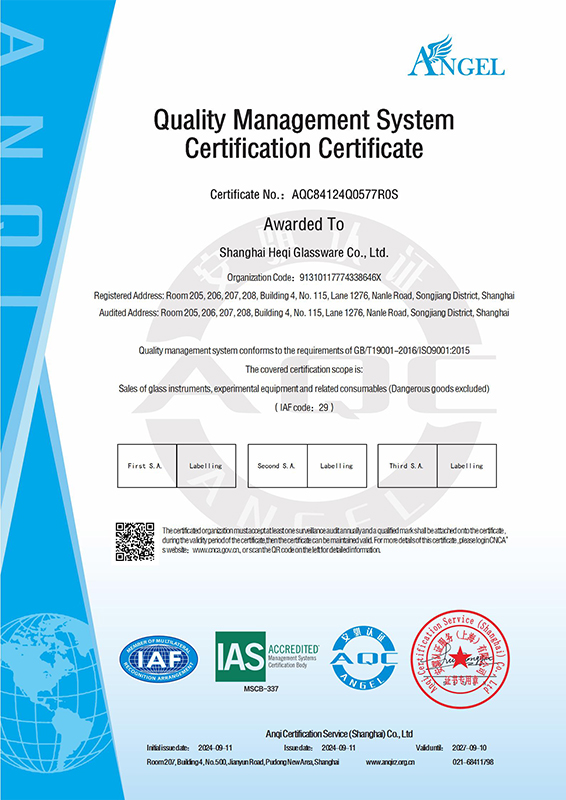
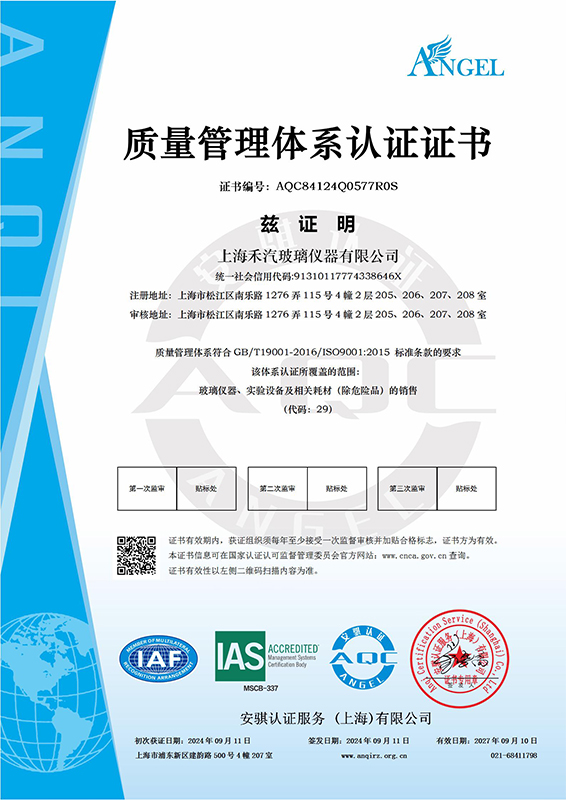
Shanghai Heqi Glassware Co., Ltd. specializes in the research, development, and production of high borosilicate glass instruments and laboratory equipment. The company is committed to providing reliable glass solutions for scientific research and industrial laboratory applications.
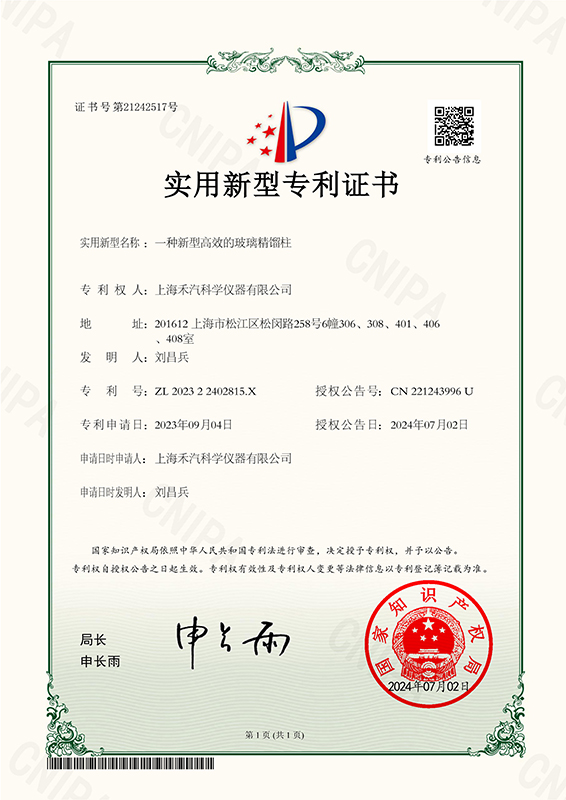
The company’s R&D team consists of more than ten experienced engineers who focus on the design optimization of high borosilicate glass instruments. By continuously integrating internationally advanced technologies and developing products based on customer requirements, Shanghai Heqi provides efficient solutions for different laboratory environments.
To maintain product innovation and technological competitiveness, more than 10% of annual revenue is invested in technological development. This continuous investment supports improvements in product design, manufacturing processes, and product performance.
During production, Shanghai Heqi’s professional production team follows strict quality standards. All factory personnel receive rigorous skills training, while automated production equipment and advanced quality control systems ensure stable and efficient manufacturing.
Following the principle that "details define quality", Shanghai Heqi focuses on every stage of production, from material selection and processing accuracy to final inspection.
In addition, the customer service team provides complete support throughout the customer journey, including product consultation, customized solutions, technical assistance, and after-sales service. Through efficient logistics management and professional technical support, Shanghai Heqi helps customers achieve reliable laboratory operations.
Future Development Trends of Lab Vacuum Pumps
With the increasing demand for precision research and advanced laboratory automation, laboratory vacuum pumps are moving toward smarter and more sustainable solutions.
| Future Trend |
Development Direction |
| Oil-Free Technology |
Cleaner operation and reduced contamination risk |
| Intelligent Control |
Automatic monitoring and improved process management |
| Energy Efficiency |
Lower power consumption and improved performance |
| Compact Design |
Space-saving solutions for modern laboratories |
| System Integration |
Better compatibility with automated laboratory equipment |
As scientific research continues to evolve, Lab Vacuum Pumps will remain a key technology supporting laboratories in chemistry, pharmaceuticals, biotechnology, and material science.


 English
 Français
 Español