Custom Lab Chromatography-Column,PTFE Stopcock,Fritted Discs

Home / Products / Chromatography / Chromatography-Column,PTFE Stopcock,Fritted Discs

Lab Chromatography-Column,PTFE Stopcock,Fritted Discs Suppliers

Grid
List

Made of high quality, Borosilicate 3.3 glass with a PTFE stopcock design for smooth, leak-free operation and excellent corrosion resistance to acidic and alkaline reagents. It has a fritted discs for filtering.

View More
About
Shanghai Heqi Glassware Co., Ltd.

One point of professionalism, one point of service, one point of companionship—allow me to be your reliable partner on the path forward!

Shanghai Heqi was founded in March 2002, It is China Lab Chromatography-Column,PTFE Stopcock,Fritted Discs Suppliers and Lab Chromatography-Column,PTFE Stopcock,Fritted Discs Manufacturers, Specializing in the R&D and production of standard-mouth glass instruments. Over the years, the company has established production bases in locations such as Songjiang, Chengdu, Jiaxing, and Yancheng. By integrating technology, craftsmanship, and management expertise, Heqi has adopted mechanized and semi-mechanized techniques to replace traditional manual methods. It has also introduced assembly-line industrial processes to replace simple workshop-style production, thereby reducing costs and improving quality.

To deliver on its service commitment of “you make a call, we handle the rest,” Heqi also supplies a range of high-quality glass instruments, lab consumables, and experimental equipment from both domestic and international brands. With ample inventory, fast delivery, and premium service, the company ensures full support for its clients.

In recent years, Shanghai Heqi has brought together experts in chemical R&D, mechanical design and processing, and electronic control to form a dedicated R&D team. The company has also set up three specialized workshops for glass, metalworking, and assembly. These facilities produce a variety of small and pilot-scale equipment, including glass reactors, rotary evaporators, distillation units, high- and low-temperature circulation systems, vacuum pumps, stirrers, and UV analyzers.

Leveraging its in-house capabilities in design, production, and custom fabrication of glass components, Shanghai Heqi continuously enhances product quality and service standards. It also supports the chemical and pharmaceutical industries by enabling customized small-scale and pilot-scale equipment solutions.
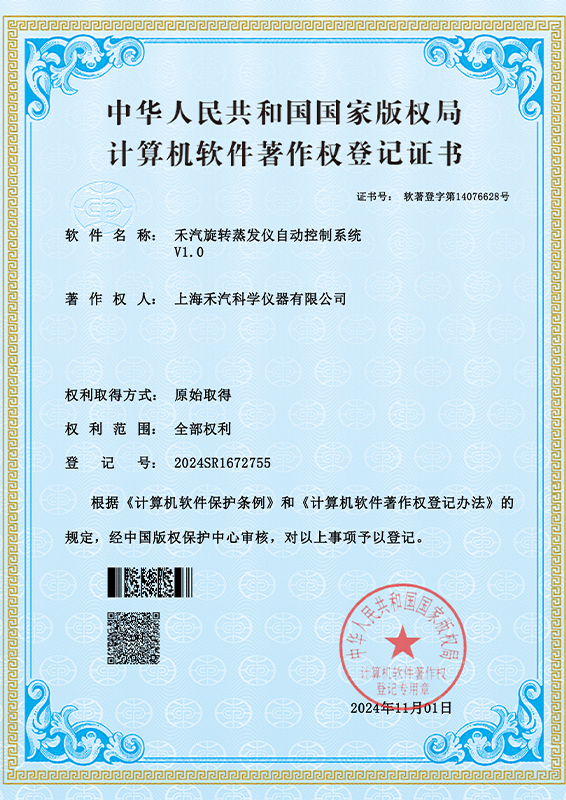
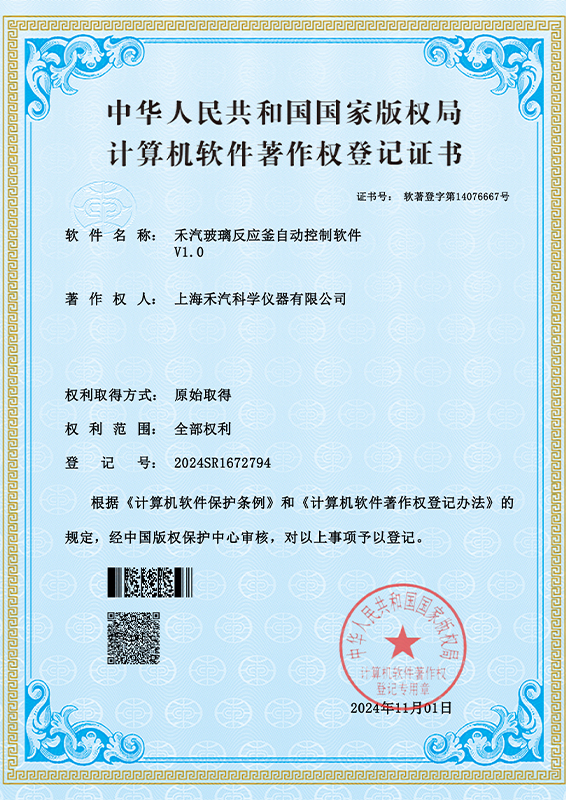
Certification
  • 1
  • 2
  • 3
  • 4
  • 5
  • 6
  • 7
Contact Us
Our custom service team is ready to provide you with expert advice and personalized solutions.
News
Industry Knowledge

How Does a Chromatography Column with Fritted Disc Work?

Porously Filtered Support and Stationary Phase Retention Mechanics

In analytical and preparative chemical separation, maintaining a uniform bed of stationary phase matrix—such as silica gel, alumina, or resin beads—is essential for achieving sharp chromatographic peaks. A lab chromatography-column equipped with fritted discs utilizes a porous glass membrane fused directly into the lower section of the column barrel above the valve outlet. This porous glass disc acts as a mechanical barrier that supports the packing media while permitting unobstructed passage of the liquid mobile phase. Traditional packing methods using loose glass wool or cotton plugs often suffer from irregular compaction, fluid channeling, and fiber shedding into collected fractions. The precision glass workshop at Shanghai Heqi Glassware Co., Ltd. fuses high-purity borosilicate fritted discs into standard-mouth glass columns, establishing a completely flat foundation that prevents stationary phase leakage without disturbing uniform solvent velocity.

Porosity Grade Classification and Particle Size Matching Protocols

Fritted Disc Porosity Grade Pore Size Range (microns) Standard Application Compatibility Flow Permeability Profile
Extra Coarse (EC) 170 - 220 Coarse filtration and preliminary support layers High volumetric flow rate
Coarse (C) 40 - 60 Preparative resin beds and large particle silica Unrestricted gravity flow
Medium (M) 10 - 15 Standard flash chromatography silica (40-63 microns) Balanced pressure drops
Fine (F) 4 - 5.5 Fine analytical media and micro-particle traps Requires vacuum or pressure support

Flow Rate Precision and Valve Actuation via PTFE Stopcock Interfaces

Downstream of the fritted disc support, controlling the elution velocity of the mobile phase determines phase equilibrium times and column efficiency. Integrating a grease-free PTFE stopcock at the lower column outlet provides micro-metered fluid control over the exiting liquid stream. Glass joint assemblies manufactured by Shanghai Heqi Glassware Co., Ltd. combine precision-bore glass stopcock barrels with inert fluoropolymer plugs, eliminating the need for silicone or hydrocarbon joint greases that would otherwise contaminate pure fractions or alter mass spectrometry baseline signals. The chemically inert PTFE stopcock resists swelling and binding when exposed to harsh organic solvents like dichloromethane, tetrahydrofuran, or ethyl acetate, allowing operators to maintain stable linear flow rates during extended purification runs.

Volumetric and Hydrodynamic Operating Limits for Glass Columns

Column Dimensions (Inner Diameter x Length) Porous Disc Diameter (mm) Maximum Recommended Operating Pressure Mobile Phase Delivery Method
15 mm x 300 mm 15 1.5 bar (22 psi) Gravity feed or low-pressure pump
25 mm x 400 mm 25 1.2 bar (17 psi) Standard compressed air flash pressure
50 mm x 500 mm 50 0.8 bar (11 psi) Gravity or vacuum-assisted elution
80 mm x 600 mm 80 0.5 bar (7 psi) Pilot-scale low-pressure liquid feed

Channeling Prevention and Hydrodynamic Pressure Distribution

The internal geometry of a lab chromatography-column with fritted discs directly impacts how eluent flows through the packed bed. When liquid mobile phase is applied under gravity or low air pressure, the uniform pore network of the fritted disc distributes hydrodynamic backpressure evenly across the bottom diameter of the packing bed. This uniform pressure profile prevents the formation of preferential flow pathways, known as channeling, where eluent bypasses sections of the stationary phase. Assembly protocols at Shanghai Heqi Glassware Co., Ltd. ensure that column barrels and fritted discs share identical thermal expansion coefficients, preventing edge gaps or stress cracks during thermal shifts or pressure surges during flash chromatography setups.

Chemical Compatibility and Thermal Decontamination Boundaries

Reagent / Cleaning Environment Borosilicate 3.3 Glass Body Fused Fritted Disc Membrane PTFE Stopcock Valve Assembly
Concentrated Mineral Acids (HCl, HNO3) Unaffected Unaffected (Ideal for acid washing) Highly resistant
Strong Alkalis (Concentrated NaOH) Etches slowly over prolonged exposure Avoid prolonged exposure to prevent pore enlargement Unaffected
Strong Organic Solvents (DCM, THF, Hexane) Universal resistance Universal resistance Zero swelling or degradation
Steam Autoclave Decontamination (121°C) Fully stable Fully stable Disassemble or loosen before baking

Maintenance Procedures for Porous Media Regeneration

Over repeated separation cycles, micro-particles from silica beds or insoluble sample residues can collect within the interstitial pores of fritted discs, causing increased backpressure and reduced flow rates. Regenerating the porous filter plate requires specific chemical flushing routines rather than mechanical scraping, which damages the sintered glass matrix. Soaking the lower column section in warm concentrated nitric acid or chromic acid solution oxidizes trapped organic impurities without altering pore size tolerances. Flushing the porous layer with high-purity water followed by acetone clears residual contaminants, returning the lab chromatography-column with fritted discs and PTFE stopcock to its baseline permeability state for subsequent separation workflows.

FAQ

Q: How does a fused fritted disc in a lab chromatography-column eliminate the need for cotton or glass wool plugs?

A: A porous glass fritted disc provides a permanently flat, rigid foundation that supports the stationary phase silica bed directly above the column outlet. Fabricated in specialized glass workshops at Shanghai Heqi Glassware Co., Ltd., these fused borosilicate discs ensure uniform flow distribution across the entire bed cross-section while preventing fibers or loose packing materials from shedding into collected fractions.

Q: Why is a grease-free PTFE stopcock critical when collecting high-purity fractions from a lab chromatography-column?

A: Traditional glass stopcocks require hydrocarbon or silicone joint greases for lubrication, which can leach into organic mobile phases like dichloromethane or hexane and contaminate eluted compounds. An inert PTFE stopcock valve operates completely dry, delivering a zero-contamination fluid path that maintains sample purity and preserves baseline integrity during mass spectrometry and NMR analysis.

Q: How do analysts match the porosity grade of fritted discs to specific silica gel particle sizes in a lab chromatography-column?

A: Disc porosity grades—ranging from Coarse (40-60 microns) to Medium (10-15 microns)—must be selected based on stationary phase particle dimensions. Matching the pore size ensures that the porous disc retains fine flash silica gel (40-63 microns) without clogging or causing excessive backpressure, allowing smooth solvent elution under gravity or low air pressure.

Q: What measures prevent thermal stress cracking at the interface between the fritted disc and the column barrel during hot solvent flushes?

A: Temperature shifts during solvent purification or thermal decontamination exert stress along glass fusion joints. Glassblowing teams at Shanghai Heqi Glassware Co., Ltd. utilize identical borosilicate 3.3 glass compositions for both the column barrel and the fritted disc, subjecting the fused assembly to controlled stress-relief annealing to ensure uniform thermal expansion coefficient matching.

Q: What cleaning protocols regenerate clogged fritted discs on a lab chromatography-column without damaging the porous structure?

A: Mechanical scraping degrades the porous glass matrix and alters pore size tolerances. Clogged fritted discs should be regenerated by reverse-flushing or soaking the column base in concentrated nitric acid or chromic acid solution to oxidize trapped organic impurities, followed by solvent rinses with pure water and acetone to restore baseline permeability.