Why Are High-Density Cork Flask Supports Critical for Laboratory Glassware Stabilization?
Securing round bottom reaction vessels and distillation flasks on flat laboratory benches requires specialized mounting accessories capable of cushioning delicate borosilicate glass while preventing unwanted rolling or tipping. Spherical glass containers lack flat resting bases, which makes them inherently unstable when placed directly on hard workbench surfaces. Cork Flask Supports serve as indispensable protective rings in academic, industrial, and clinical laboratories by offering an optimal combination of mechanical resilience, surface friction, thermal resistance, and electrical insulation. Derived from natural bark cellular matrix, high-grade cork rings absorb mechanical shocks, distribute heavy liquid loads, and safeguard expensive glassware from structural fractures during daily synthetic and analytical operations.
Natural Cellular Architecture and Mechanical Elasticity of Granulated Cork Compounds
The functional performance of premium Cork Flask Supports relies on the unique microscopic structure of natural cork material. Cork bark consists of a closed cell honeycomb architecture containing billions of air filled microscopic chambers per cubic centimeter. This natural suberin matrix gives the material exceptional compressibility and elastic recovery. When a heavy glass vessel filled with solvent or reaction mixture is placed onto a cork ring, the microscopic cells compress slightly under the load, distributing the weight evenly across the entire contact surface.
This uniform pressure distribution eliminates high stress contact points that could otherwise induce stress cracks or micro-fractures in heated borosilicate glass. Upon removing the vessel, the elastic cellular matrix regains its original geometric volume, ensuring long term durability through thousands of operational cycles. The elastic rebound properties of high density compressed cork granules prevent the support ring from taking a permanent deformation set, maintaining a firm and level resting surface for containers ranging from small analytical flasks to large multi-liter preparatory vessels.
Synthetic alternatives often lack this self-adjusting cellular elasticity, which makes natural cork the preferred choice for delicate glass stabilization. The lightweight nature of granulated cork compounds allows technical personnel to relocate glassware assemblies across fume hoods and analytical stations without introducing additional weight to sensitive balance platforms or mobile support carts.
Thermal Insulation and Electrical Resistance in High-Temperature Distillation Setups
Chemical synthesis and fractional distillation protocols frequently involve elevated operational temperatures, where boiling flasks are heated using heating mantles, oil baths, or direct thermal sleeves. Transferring a hot reaction vessel directly onto a cold marble, stainless steel, or epoxy benchtop subjects the borosilicate matrix to sudden thermal gradients, potentially causing catastrophic glass shattering and chemical exposure. High grade Cork Flask Supports exhibit extremely low thermal conductivity, creating an effective heat barrier between hot glass vessel bases and underlying workbench materials.
The suberin bound cellular structure of cork resists heat transfer, allowing hot glassware to cool gradually at ambient temperatures without subjecting the glass to rapid cooling shocks. Cork material naturally possesses high electrical resistance, making these support rings inherently safe for use around high voltage heating equipment, electronic stirrers, and specialized analytical apparatus where electrical conductivity could present safety hazards. The material retains structural integrity under elevated thermal exposure, remaining intact during routine contact with hot flask surfaces without melting or releasing volatile organic off gases into laboratory environments.
Friction Coefficients and Surface Bevel Geometries for Multi-Volume Vessel Stability
Preventing lateral displacement and rotational movement during mechanical agitation, overhead stirring, or manual reagent addition requires high surface friction between the vessel support ring and the glass sphere. Natural cork exhibits a naturally high friction coefficient against smooth, polished borosilicate surfaces. This dry surface grip creates a non slip hold that anchors the flask securely in place, even when liquid contents shift during energetic boiling or high speed stirring.
To accommodate various flask radii, Cork Flask Supports feature precision machined internal bevel angles. A single support ring with a tapered inner edge provides continuous circumferential contact for spherical vessels across a defined volume range. The angled inner shoulder cradles the lower curvature of the flask, lowering the center of gravity relative to the support plane and preventing top heavy multi-neck setups from tipping over. By combining non slip surface friction with optimized internal geometry, these support accessories ensure operational safety across diverse chemistry procedures.
|
Support Ring Material Grade
|
Mechanical Cushioning and Elastic Recovery
|
Thermal Insulation Performance
|
Electrical Non Conductivity
|
Chemical Contact Resilience
|
Structural Surface Friction
|
|
High Density Compressed Natural Cork
|
Superior elastic rebound across repeated load cycles
|
Excellent thermal barrier against rapid heat dissipation
|
Complete electrical insulation with zero electrical transfer
|
Moderate resistance to aqueous solutions and organic solvents
|
Exceptionally high grip on smooth borosilicate glass
|
|
Medium Density Standard Cork
|
Moderate elasticity for light to medium vessel loads
|
Good thermal barrier for standard heating protocols
|
High electrical resistance under dry laboratory conditions
|
Moderate resilience to occasional liquid splashes
|
High surface friction preventing rotational displacement
|
|
Chemically Treated Granulated Cork
|
High mechanical durability with reinforced binding agents
|
Strong thermal resistance up to high temperature limits
|
Reliable electrical non conductivity across operations
|
Enhanced resistance against mild acids and basic solutions
|
Consistent friction coefficient across varied environments
|
|
Premium Solid Cut Natural Cork
|
Maximum cellular elasticity and natural structural integrity
|
Outstanding heat insulation with natural suberin density
|
Complete electrical non conductivity in sensitive environments
|
Natural resistance to water and mild solvent splashes
|
Superior natural grip on dry and moist glass surfaces
|
How Do Professional Cork Flask Supports Manufactursr Operations Achieve Industrial Quality Control?
Transitioning from manual laboratory supply fabrication to high volume industrial equipment manufacturing requires precision machining, reliable material sourcing, and standardized production processes. Modern chemical and pharmaceutical facilities demand reliable hardware accessories that conform to exact geometric and functional specifications.
Advanced Molded Aggregation and Precision Machining Workflows at Production Facilities
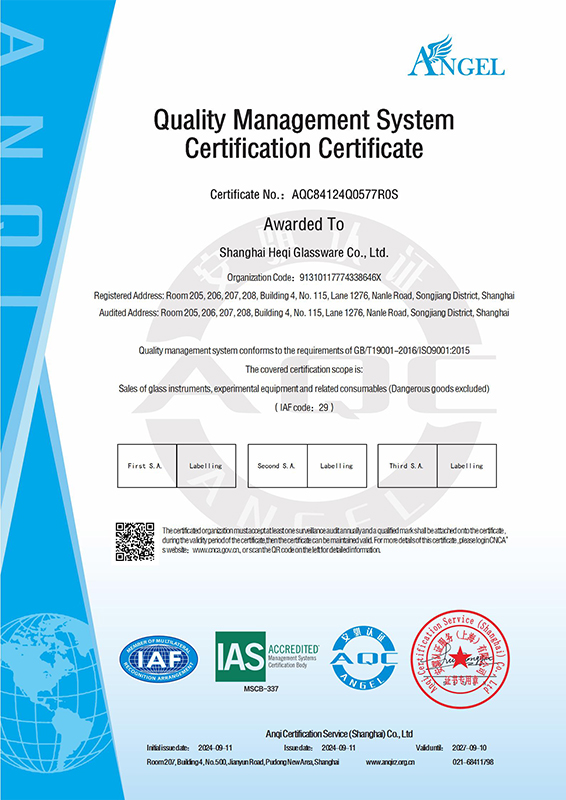
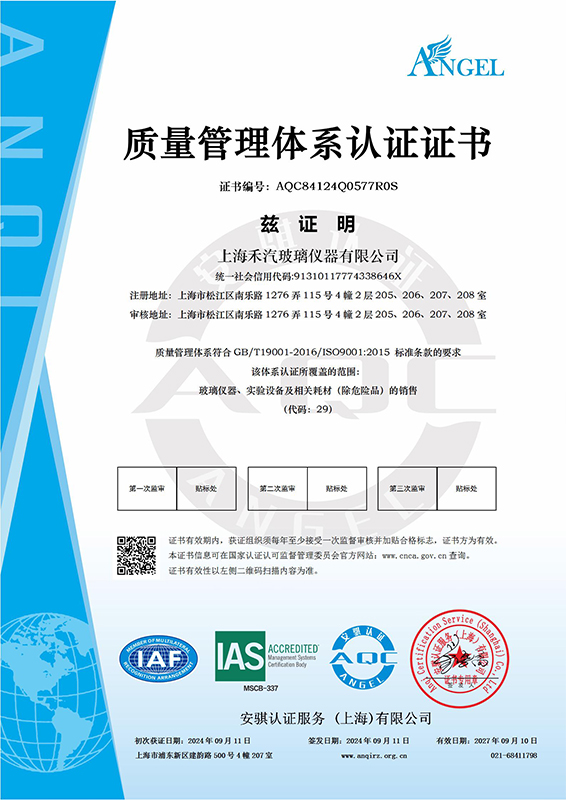
The production of high performance cork supporting rings has evolved from simple manual cutting to mechanized aggregation and automated CNC bevel machining. Leading industry entities such as Shanghai Heqi Glassware Co., Ltd. have modernized scientific accessory manufacturing by adopting integrated semi-mechanized and automated processing workflows.
Founded in March 2002, Shanghai Heqi Glassware Co., Ltd. has established comprehensive production infrastructure across strategic industrial centers in Songjiang, Chengdu, Jiaxing, and Yancheng. By integrating advanced technology, skilled craftsmanship, and modern management expertise, the organization replaced traditional workshop style manual manufacturing with standardized assembly line production. This industrial transition ensures that every cork support ring achieves uniform density, accurate inner bevel angles, and smooth surface finishes while lowering production costs and maintaining high quality consistency.
Automated granulation and binder curing processes ensure that natural cork particles are bonded under uniform hydraulic pressure. This eliminates internal void spaces or localized weak spots that could split under heavy vessel loads. Standardized dimensional control guarantees that replacement support rings fit perfectly into standardized fume hood layouts, analytical stations, and modular storage systems across commercial processing plants.
Technical Integration across Synthetic Reaction Assemblies and Secondary Auxiliaries
Laboratory glassware stabilization hardware must interface seamlessly with secondary synthesis and analytical equipment. Shanghai Heqi Glassware Co., Ltd. brings together specialized technical experts in chemical research, mechanical design and processing, and electronic control systems to form an integrated research and development team.
To support complex chemical processing operations, the company operates three specialized internal workshops:
-
Glass Workshop dedicated to precision hot glass processing, standard mouth joint grinding, custom glass blowing, and stress relieving thermal annealing cycles.
-
Metalworking Workshop focused on fabricating stainless steel mounting frames, structural rings, adjustable support clamps, and custom hardware accessories.
-
Assembly Workshop responsible for integrating glass, metal, and electronic components into complete, operational processing units.
This multi-departmental infrastructure enables the production of comprehensive synthesis systems, including glass reactors, rotary evaporators, distillation units, high and low temperature circulation systems, vacuum pumps, stirrers, and UV analyzers. Because support hardware is engineered alongside reaction vessels, Shanghai Heqi Glassware Co., Ltd. ensures physical compatibility between spherical processing flasks, high friction cork supports, and secondary mounting structures.
Supply Logistics and Custom Component Fabrication for Chemical Processing Infrastructure
Commercial research facilities and industrial production plants require dependable procurement networks to maintain continuous operations without unexpected downtime. Partnering with established China Lab Cork Flask Supports Suppliers provides strategic advantages in inventory availability, rapid order turnaround, and turnkey service fulfillment.
To fulfill its operational service commitment of you make a call, we handle the rest, Shanghai Heqi Glassware Co., Ltd. maintains extensive inventory reserves across its regional facilities. Ample warehousing allows rapid order processing and fast delivery schedules, enabling laboratories to equip new research facilities, replace worn consumables, and address sudden operational requirements without long procurement lead times.
In addition to standardized catalog offerings, industrial processing often requires customized support dimensions for non-standard spherical vessels, extra large receiving flasks, or pilot plant glass bodies. Shanghai Heqi Glassware Co., Ltd. leverages internal engineering capabilities to provide custom small scale and pilot scale equipment solutions. Whether a pharmaceutical facility requires specialized wide diameter cork rings or custom thick wall support bases, direct engineering collaboration ensures that client requirements are transformed into precise, functional hardware solutions.
FAQ:
How does the elasticity of natural Cork Flask Supports protect heavy glass vessels from structural failure?
The elasticity of natural cork stems from its unique closed cell honeycomb architecture filled with air pockets. When a heavy glass vessel filled with liquid is placed on the support ring, the cellular matrix compresses elastically under the load. This micro compression conforms to small surface irregularities on the glass, distributing the total weight evenly around the perimeter of the ring. By preventing concentrated pressure points, the cork ring minimizes structural mechanical stress on the borosilicate glass, significantly reducing the risk of cracking or sudden structural failure under heavy liquid loads.
What volume range of round bottom flasks can be supported by standard cork ring sizes?
Cork support rings are manufactured in a wide array of outer diameters and inner bevel dimensions to accommodate vessels ranging from small analytical micro flasks up to large multi-liter reaction vessels. Small cork rings with inner diameters around thirty to fifty millimeters are ideal for tiny fifty milliliter and one hundred milliliter flasks. Medium sized rings with inner diameters between seventy and one hundred millimeters securely hold five hundred milliliter, one liter, and two liter boiling flasks. Extra large cork supports with inner diameters exceeding one hundred twenty millimeters provide stable bases for five liter, ten liter, and twenty liter receiving or distillation flasks. Selecting the correct ring diameter ensures that the vessel base remains elevated off the bench while maintaining a broad, anti-tip stability footprint.
How do Cork Flask Supports resist thermal shock when hot reaction vessels are removed from heating mantles?
Natural cork possesses extremely low thermal conductivity due to its trapped air cell geometry and organic suberin composition. When a boiling flask at high temperature is removed from a heating mantle or hot oil bath, placing it directly onto a cold metal or stone benchtop can induce thermal shock, causing the glass to shatter. A cork support ring acts as an effective thermal insulator, preventing rapid heat transfer from the hot glass base to the bench surface. The heat dissipates slowly into the surrounding ambient air, allowing the borosilicate glass to cool at a safe, controlled rate while protecting underlying laboratory furniture from heat damage.
What routine care and maintenance practices extend the operational lifespan of cork support rings?
Maintaining cork support rings involves keeping them clean, dry, and free from prolonged exposure to harsh chemical liquids. Accidental liquid spills should be wiped off immediately with an absorbent towel to prevent deep fluid absorption into the cork matrix. For general cleaning, the rings can be wiped with a slightly damp cloth and mild neutral soap solution, followed by air drying at room temperature. Abrasive brushes or harsh chemical soaking should be avoided to prevent erosion of the compressed cork granules. Storing cork rings in a dry, well ventilated area away from direct ultraviolet light exposure prevents binder degradation and preserves structural flexibility over long service periods.
Why is the high friction surface coefficient of cork critical during mechanical stirring procedures?
Mechanical stirring and magnetic agitation generate dynamic rotational forces that can cause smooth glass vessels to shift, rotate, or walk across flat surfaces if not properly anchored. Natural cork features a high surface friction coefficient when in contact with smooth borosilicate glass. This natural grip holds the outer spherical body of the flask firmly in place, resisting rotational motion and lateral slippage caused by motorized stirrers or liquid turbulence. The non-slip contact stabilizes the overall setup, ensuring that ground glass joint connections to condensers or addition funnels remain vertically aligned without mechanical strain.
How do China Lab Cork Flask Supports Suppliers assist industrial facilities with custom glass stabilization solutions?
Established suppliers such as Shanghai Heqi Glassware Co., Ltd. offer custom engineering and specialized manufacturing capabilities that go beyond standard catalog dimensions. Industrial pilot plants and specialized research laboratories frequently utilize non-standard glass reactors, oversized receiving globes, or specialized jacketed synthesis vessels that require custom support geometries. Through internal design expertise, specialized tooling, and integrated glass, metalworking, and assembly workshops, custom support configurations can be produced to exact dimensional tolerances. Direct collaboration with experienced engineering teams ensures that custom cork support rings provide precise fitment, optimal weight distribution, and reliable operational stability for specialized chemical processing hardware.


 English
 Français
 Español