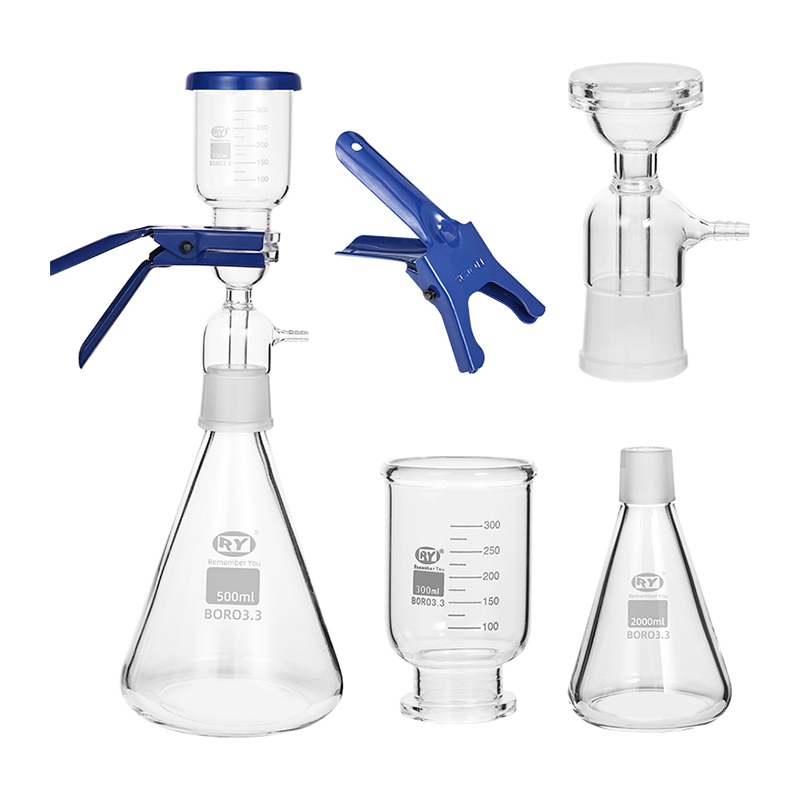
Key Industries Benefiting from Heavy-Duty Filtration Apparatus Deployment
The operational demands placed on a filtration apparatus vary substantially across different industrial sectors. While a water treatment facility prioritizes high volumetric throughput and low pressure drops, a pharmaceutical synthesis plant or petrochemical refinery requires absolute particulate retention, chemical inertness, and strict adherence to sanitary codes. Evaluating how specific industries utilize separation technology enables plant operators and technical directors to select equipment engineered for maximum reliability under sector-specific operating conditions.
Chemical and Petrochemical Processing
In chemical manufacturing, raw material purification, catalyst recovery, and intermediate solvent polishing are vital for maintaining reaction yields and preventing equipment fouling. Corrosive acids, aggressive organic solvents, and high-temperature streams require robust pressure housings paired with chemically resistant elements. To support chemical and pharmaceutical enterprises in optimizing these synthesis loops, Shanghai Heqi Glassware Co., Ltd. supplies specialized equipment and custom glass components designed to withstand harsh chemical environments, ensuring that every filtration apparatus deployed in a chemical plant maintains structural integrity and fluid purity.
Water and Wastewater Treatment
Industrial water conditioning and municipal desalination require continuous removal of suspended solids to protect downstream reverse osmosis membranes and ion-exchange columns. Large-scale filtration units deployed in these facilities must handle heavy solid loading with minimal manual intervention, utilizing automated backwash mechanisms to maintain continuous flow.
Food and Beverage Manufacturing
Sanitary hygiene is paramount in food and beverage processing, where fluid streams must remain entirely free of microbiological or particulate contamination. Apparatus units used in this sector require electropolished stainless steel surfaces and FDA-compliant gaskets to prevent bacterial growth and facilitate clean-in-place sterilization cycles.
Pharmaceutical and Biotechnology Sectors
Cleanroom environments, Water for Injection loops, and sterile air handling demand absolute filtration ratings down to 0.1 micrometers. Maintaining sterile boundaries in these applications requires precision-machined housings and verified integrity testing.
Parameter Comparison: Industrial Sector Filtration Requirements
The table below summarizes the key operational priorities and filtration specifications across major industrial sectors:
| Industrial Sector |
Primary Filtration Objective |
Key Operating Conditions |
Critical Apparatus Specifications |
| Chemical / Petrochemical |
Catalyst recovery and solvent polishing |
High temperature, aggressive acids, organic solvents |
SS316L and Hastelloy housings, PTFE seals, ASME code |
| Water Treatment and Desalination |
RO membrane pre-treatment and silt removal |
High volumetric flow, fluctuating solid loading |
Multi-cartridge vessels, automatic backwash strainers |
| Food and Beverage |
Clarification and sanitary fluid conditioning |
Frequent steam sterilization, CIP cycles |
Sanitary electropolished surfaces, FDA elastomer gaskets |
| Pharmaceutical and Biotech |
Sterile filtration and loop purification |
Strict microbial control, zero dead-leg design |
Absolute micron ratings, material traceability |
Technical Insight: When sourcing for regulated sectors like food processing or pharmaceuticals, always verify that your filtration apparatus supplier provides complete documentation, including material traceability certificates and compliance with sanitary design standards.
Procurement Guide: Selecting the Right Filtration Apparatus Manufacturer
For industrial operations, plant engineers, and large-scale technical directors, choosing the correct equipment vendor is just as critical as defining technical specifications. Sourcing a high-performance filtration apparatus requires partnering with a manufacturer that combines robust production infrastructure, stringent quality control protocols, and deep engineering expertise. Evaluating potential manufacturing partners against key operational criteria ensures long-term supply chain stability and operational safety.
Evaluating Factory Capabilities and Production Scale
The foundation of reliable equipment delivery lies in manufacturing scale and infrastructure. Technical teams must look beyond commercial intermediaries and assess actual factory footprints, CNC machining capabilities, and automated welding lines. Transitioning from basic workshop setups to advanced, mechanized manufacturing allows for tighter dimensional tolerances and superior vessel integrity.
Operational maturity and production footprint are critical indicators of manufacturing reliability. Since its founding in March 2002, Shanghai Heqi Glassware Co., Ltd. has established dedicated production bases across strategic manufacturing hubs including Songjiang, Chengdu, Jiaxing, and Yancheng. By replacing traditional manual methods with mechanized and semi-mechanized production techniques and introducing assembly-line industrial processes, the company has systematically optimized production costs while elevating manufacturing quality standards. This robust operational foundation enables the seamless fabrication of diverse laboratory, pilot-scale, and industrial equipment lines.
Quality Assurance and International Certifications
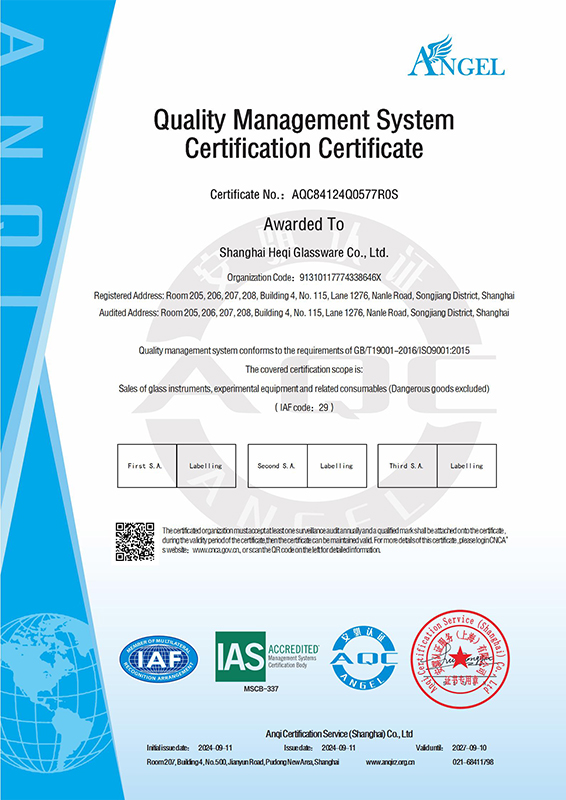
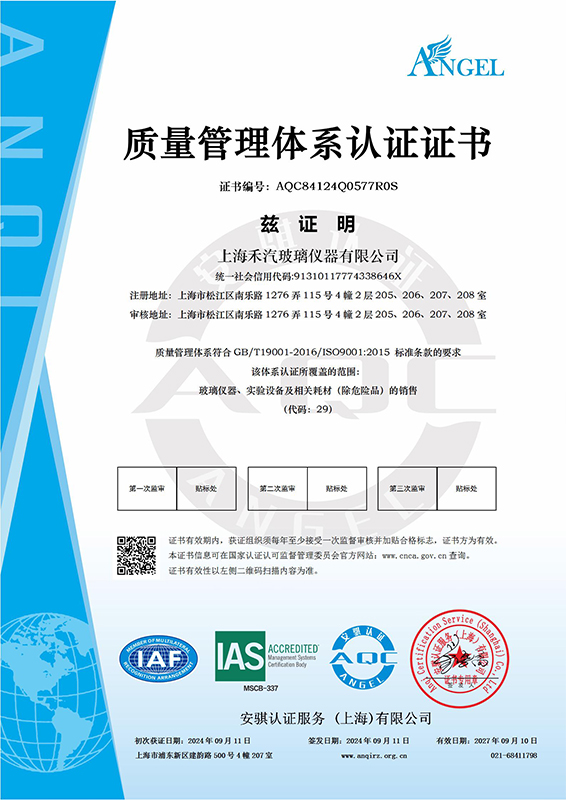
Compliance with global engineering and safety codes is non-negotiable for industrial installations. When specifying a filtration apparatus, engineering teams should verify that the manufacturer operates under recognized quality management frameworks and holds mandatory vessel fabrication certifications:
Quality Management Systems: ISO 9001 certification guaranteeing standardized quality control from raw material receipt to final testing.
Pressure Vessel Standards: ASME Stamp, PED compliance, and CE markings for pressure-bearing housings.
Material Traceability: EN 10204 material test reports confirming chemical composition and mechanical strength of stainless steels and exotic alloys.
Customization and Engineering Services
Industrial plant layouts frequently present unique spatial and hydraulic constraints that standard catalog equipment cannot satisfy. A qualified manufacturer must possess in-house design and engineering capabilities to tailor port dimensions, flow configurations, and vessel geometry to specific plant requirements.
Addressing custom requirements effectively requires cross-functional technical expertise. Shanghai Heqi Glassware Co., Ltd. brings together specialized professionals in chemical research and development, mechanical design, electronic control systems, and precision metalworking. Operating through dedicated workshops for glass, metal, and final assembly, the company collaborates closely with enterprise clients to design and deliver custom small-scale and pilot-scale equipment solutions, including specialized glass reactors, rotary evaporators, temperature circulation systems, and custom filtration apparatus assemblies, ensuring full alignment with unique operational workflows.
Parameter Comparison: Supplier Evaluation Criteria for Industrial Procurement
The matrix below outlines key evaluation criteria for assessing industrial equipment manufacturers during the vendor selection process:
| Evaluation Metric |
Basic and Standard Supplier |
Advanced Manufacturing Partner |
| Manufacturing Infrastructure |
Basic manual workshop setup and outsourced assembly |
Multi-base mechanized production with dedicated metal and glass workshops |
| Engineering Support |
Standard catalog sales with limited modification |
In-house research and development team spanning chemical, mechanical, and electronic disciplines |
| Material Traceability |
Basic commercial grade certification |
Full material test reports and compliance documentation |
| Customization Flexibility |
Rigid standard stock dimensions |
Custom fabrication for specialized plant layouts and pilot units |
| After-Sales Commitment |
Transactional warranty support only |
Comprehensive technical partnership, spare parts availability, and responsive service commitment |
Technical Insight: Prioritizing direct-from-factory partnerships with established manufacturing infrastructure significantly reduces lead times, eliminates intermediary markups, and ensures direct technical communication throughout the engineering lifecycle.
Economic Impact: Cost Analysis and ROI for Volume Operations
When large-scale enterprise operations evaluate capital equipment acquisition, financial decision-making extends far beyond the initial invoice price. For industrial processing plants, chemical facilities, and pharmaceutical production lines, the true financial footprint of a filtration apparatus is measured across its entire operational lifespan. Balancing upfront Capital Expenditure against long-term Operational Expenditure is essential for maximizing Return on Investment and minimizing unexpected plant overhead.
Balancing Upfront Investment and Operating Costs
Selecting a low-cost, substandard filtration apparatus often triggers a cascade of hidden operational expenses. Frequent filter element degradation, excessive pressure drops across the vessel, high pump energy consumption, and unplanned maintenance shutdowns can quickly surpass any initial purchase savings. Conversely, investing in heavy-duty, precision-engineered separation equipment ensures structural longevity, stable fluid dynamics, and predictable maintenance schedules.
Achieving a favorable economic balance requires streamlined manufacturing efficiency and optimized supply chains. Since its inception in March 2002, Shanghai Heqi Glassware Co., Ltd. has systematically replaced traditional manual fabrication with mechanized and semi-mechanized production techniques across its dedicated manufacturing bases in Songjiang, Chengdu, Jiaxing, and Yancheng. By introducing assembly-line industrial workflows and leveraging in-house production capabilities across its specialized metalworking and glass workshops, the company effectively reduces production overheads, enabling enterprise clients to secure high-performance filtration apparatus solutions at competitive volume pricing without sacrificing material quality or engineering rigor.
Minimizing Consumable and Replacement Costs
Consumable filter elements represent a recurring operational expense in continuous industrial processes. Selecting housings that optimize dirt-holding capacity and support high-efficiency filter media directly extends replacement intervals. Furthermore, utilizing standardized port dimensions and widely compatible sealing gaskets ensures that replacement elements can be sourced efficiently, minimizing inventory carrying costs and reducing equipment downtime.
Energy Efficiency and Pressure Drop Optimization
Fluid friction and resistance across a filtration apparatus directly influence the power consumption of upstream pumps and compressors. An improperly sized or poorly designed housing creates excessive pressure drops, forcing pumps to work harder and drawing significantly more electrical power over time. Optimizing flow paths and selecting appropriate micron ratings relative to fluid viscosity preserves system pressure and lowers overall plant energy consumption.
Parameter Comparison: Economic Impact of Equipment Quality
The comparative matrix below outlines the financial and operational contrasts between low-cost basic equipment and high-performance industrial filtration apparatus investments:
| Financial and Operational Metric |
Standard Low-Cost Apparatus |
Premium Industrial Filtration Apparatus |
| Initial Capital Expenditure |
Lower upfront invoice cost |
Competitive direct-from-factory volume pricing |
| Operating Expenditure |
High, frequent element replacement and seal failures |
Low, extended service intervals and robust metallurgy |
| Energy Consumption Impact |
High pressure drop leading to increased pump load |
Optimized flow dynamics minimizing pressure loss |
| Unplanned Downtime Risk |
Elevated due to structural fatigue or leakage |
Minimal, supported by rigorous factory testing |
| Total Cost of Ownership |
High over a standard operational lifecycle |
Optimized for long-term ROI and operational stability |
Technical Insight: Evaluating equipment through Total Cost of Ownership rather than initial purchase price ensures that your filtration apparatus investment delivers sustainable long-term savings and uninterrupted plant productivity.
Frequently Asked Questions on Industrial Filtration Apparatus
Navigating the technical specifications, material selections, and procurement procedures for industrial separation systems often raises specific operational questions. Below are expert answers to the most common inquiries encountered by plant engineers, laboratory directors, and technical specialists when sourcing and maintaining heavy-duty filtration equipment.
How do I determine the correct micron rating for my specific fluid application?
Selecting the appropriate micron rating depends on your downstream equipment protection requirements or final product purity targets. For instance, pre-treating reverse osmosis membranes typically requires nominal ratings between 1 to 5 micrometers, whereas sterile pharmaceutical loops demand absolute ratings of 0.2 micrometers or lower. Evaluating fluid viscosity, solid particle size distribution, and concentration load ensures optimal separation without premature blinding.
What is the difference between nominal and absolute filtration ratings?
A nominal rating indicates an approximate percentage efficiency of particulate capture at a stated particle size. In contrast, an absolute rating denotes a calibrated retention efficiency for particles of a specified size or larger under standardized test conditions. Critical industrial and laboratory applications requiring verified sterile boundaries or strict purity rely exclusively on absolute-rated elements.
How does material selection impact compatibility with aggressive chemical streams?
Exposing housings and sealing gaskets to harsh organic solvents, strong acids, or high temperatures requires careful metallurgical matching. While standard stainless steel handles many general industrial solutions, aggressive chemical streams often mandate exotic alloys, coatings, or specialized borosilicate glass components. To support laboratories and chemical processing facilities dealing with corrosive media, Shanghai Heqi Glassware Co., Ltd. integrates high-purity borosilicate glass components and corrosion-resistant metal housings into its specialized liquid handling systems, ensuring excellent chemical inertness and long-term structural reliability under severe operating conditions.
What parameters should be monitored to detect impending filter element failure?
Differential pressure across the vessel is the primary operational indicator. A sudden spike in differential pressure signals filter cake blinding or particle compaction, while an unexpected drop can indicate filter media rupture or bypass leakage. Monitoring flow rate consistency alongside differential pressure provides a reliable method for scheduling timely maintenance.
Can standard catalog filtration assemblies be customized for unique plant layouts?
Yes. Many industrial installations feature restricted spatial layouts, non-standard pipe diameters, or unique hydraulic requirements that off-the-shelf equipment cannot accommodate. Collaborating directly with an experienced manufacturing partner allows engineering teams to tailor vessel dimensions, flange configurations, and port orientations to meet precise operational constraints.
Parameter Comparison: Quick Troubleshooting Reference
The reference matrix below outlines common operational symptoms in filtration apparatus deployment and their primary corrective actions:
| Operational Symptom |
Likely Root Cause |
Recommended Corrective Action |
| Excessive Initial Pressure Drop |
Undersized housing or overly restrictive medium |
Upgrade to a larger vessel size or adjust micron rating relative to fluid viscosity |
| Rapid Element Blinding |
High solid loading or incorrect pre-filtration |
Implement multi-stage pre-filtration or increase active surface area |
| Downstream Particle Contamination |
Element rupture, seal bypass, or incorrect rating |
Inspect gasket integrity, verify O-ring material, and replace damaged elements |
| Housing Corrosion and Leaking |
Chemical incompatibility or gasket degradation |
Switch to specialized corrosion-resistant alloys or glass-lined assemblies |
Technical Insight: Keeping a clear log of operating pressures, flow rates, and maintenance cycles helps engineering teams optimize replacement schedules and maximize the operational lifespan of every filtration apparatus in your facility.


 English
 Français
 Español