The Basic Function of Lab Vacuum Manifolds
In advanced laboratory environments, vacuum systems are often required to support multiple experimental devices, instruments, and procedures simultaneously. A single vacuum source may need to provide stable suction for filtration units, evaporation systems, drying equipment, reaction setups, and analytical instruments.
Instead of installing independent vacuum pumps for every application, laboratories increasingly rely on centralized vacuum distribution solutions. Lab Vacuum Manifolds serve as important connection and control components within these systems, allowing one vacuum source to supply multiple vacuum outlets while maintaining independent operation and efficient laboratory management.
As scientific research continues to develop toward automation, multi-station operation, and improved resource efficiency, laboratory vacuum manifolds have become an essential part of modern vacuum infrastructure.
A Lab Vacuum Manifold is a vacuum distribution device that connects a vacuum source with multiple laboratory vacuum lines. Its primary purpose is to divide and control vacuum flow, allowing several experiments or instruments to share the same vacuum system.
In a typical laboratory setup, the vacuum pump generates negative pressure, while the vacuum manifold distributes this pressure through multiple ports. Each outlet can usually be controlled independently through valves, enabling researchers to adjust vacuum conditions according to different experimental requirements.
| Operation Stage |
Function |
| Vacuum Generation |
The vacuum pump removes gas from the system to create negative pressure |
| Vacuum Distribution |
The manifold transfers vacuum pressure to multiple connection ports |
| Flow Adjustment |
Individual valves regulate each vacuum branch |
| Experimental Operation |
Connected instruments perform filtration, evaporation, drying, or other processes |
| System Protection |
Additional components such as vacuum traps prevent contamination |
This distribution method improves laboratory efficiency while reducing the need for multiple vacuum sources.
Why Lab Vacuum Manifolds Are Widely Used
Traditional vacuum systems often require separate pumps and independent connections for different instruments. Although this approach can provide dedicated vacuum supply, it increases equipment costs, occupies more laboratory space, and makes system management more complicated.
Lab Vacuum Manifolds provide a more efficient alternative by creating a centralized vacuum network.
| Advantage |
Laboratory Benefit |
| Multi-Channel Operation |
Allows several experiments to use one vacuum source at the same time |
| Independent Control |
Each vacuum outlet can be adjusted separately according to experimental needs |
| Space Saving |
Reduces the number of vacuum pumps and complicated tubing arrangements |
| Improved Efficiency |
Makes laboratory workflows easier to organize and manage |
| Lower Operating Cost |
Reduces equipment investment and maintenance requirements |
Structural Design of Laboratory Vacuum Manifolds
The design of a vacuum manifold directly affects system stability, vacuum efficiency, and user convenience. A well-designed manifold must provide reliable sealing performance while allowing easy connection and operation.
| Component |
Purpose |
| Main Vacuum Connection |
Connects the manifold with a vacuum pump or centralized vacuum source |
| Branch Ports |
Provides multiple vacuum connection points for laboratory equipment |
| Control Valves |
Regulates vacuum flow for individual branches |
| Sealing System |
Prevents air leakage and maintains vacuum stability |
| Support Structure |
Provides mechanical strength and installation stability |
In chemical laboratories, transparent glass structures are especially valuable because researchers can visually monitor liquid movement, condensation, and possible contamination during operation.
Different Types of Lab Vacuum Manifolds
Glass Vacuum Manifolds
Glass vacuum manifolds are widely used in chemistry and research laboratories because high-quality glass materials provide excellent chemical resistance and visual inspection capability.
High borosilicate glass is commonly selected because it can withstand temperature changes and exposure to many laboratory chemicals. The transparent structure also allows users to monitor experimental conditions directly.
Stainless Steel Vacuum Manifolds
Stainless steel manifolds are preferred in applications requiring higher mechanical strength and durability. They are commonly used in industrial laboratories, analytical systems, and environments where impact resistance is important.
Custom Vacuum Manifolds
Different laboratories may have unique requirements regarding port numbers, connection methods, or experimental layouts. Customized vacuum manifolds can be designed according to specific system configurations.
Applications of Lab Vacuum Manifolds
Chemical Synthesis and Research
Chemical laboratories often operate multiple vacuum-based processes, including filtration, solvent evaporation, and reaction systems.
A vacuum manifold allows several devices to share one vacuum source while maintaining individual control. This improves laboratory efficiency and reduces equipment complexity.
Pharmaceutical Laboratories
Pharmaceutical research requires reliable and contamination-controlled environments. Vacuum manifolds are commonly integrated with evaporation systems, sample preparation equipment, and drying devices.
By providing stable vacuum distribution, manifolds help improve process consistency and laboratory productivity.
Biotechnology and Life Science Research
Biological laboratories often use vacuum systems for sample preparation, filtration, and purification processes. Vacuum manifolds allow multiple laboratory stations to operate efficiently within limited workspace.
Educational and Testing Laboratories
Universities and testing centers often need shared laboratory equipment. Vacuum manifolds provide a convenient solution by allowing multiple users or experiments to access a common vacuum system.
Material Selection for Laboratory Vacuum Manifolds
Material selection is one of the most important factors affecting vacuum manifold performance. Laboratory environments often involve chemical exposure, pressure changes, and repeated cleaning procedures.
High borosilicate glass is widely used in laboratory vacuum components because of its excellent properties.
| Material Characteristic |
Application Advantage |
| High Chemical Resistance |
Suitable for solvents, acids, and laboratory chemicals |
| Low Thermal Expansion |
Reduces damage caused by temperature changes |
| High Transparency |
Allows direct observation during experiments |
| Excellent Surface Quality |
Easy cleaning and reduced contamination risk |
| Long-Term Stability |
Maintains reliable performance during repeated use |
Integration with Complete Laboratory Vacuum Systems
A vacuum manifold usually operates as part of a larger vacuum system rather than independently.
| Component |
Function |
| Lab Vacuum Pump |
Creates the required vacuum pressure |
| Vacuum Manifold |
Distributes vacuum to multiple outlets |
| Vacuum Trap |
Captures vapors, moisture, and contaminants |
| Glass Tubing |
Provides chemical-resistant connections |
| Vacuum Gauge |
Monitors system pressure |
The combination of these components creates a safer, cleaner, and more efficient laboratory vacuum environment.
Precision Manufacturing of Laboratory Glass Vacuum Components
The reliability of laboratory vacuum systems depends heavily on the quality of each component. Vacuum manifolds require accurate dimensions, excellent sealing performance, and high-quality materials to ensure stable operation.
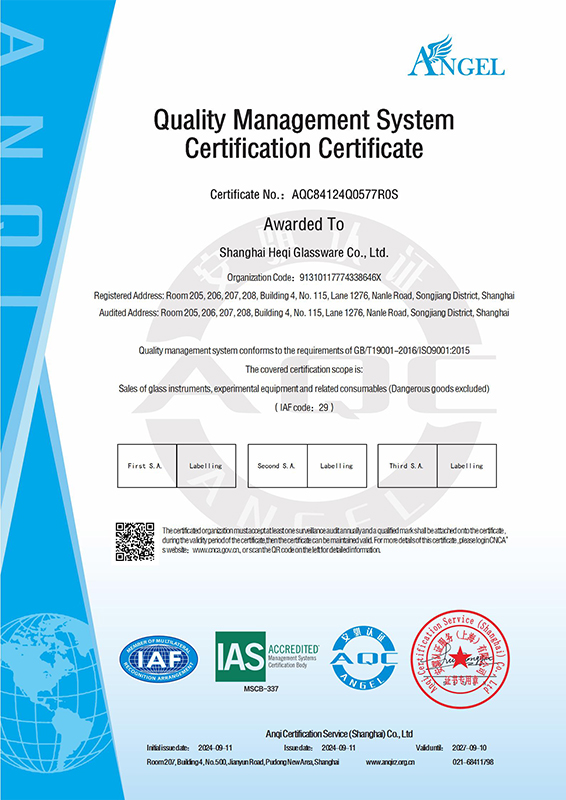
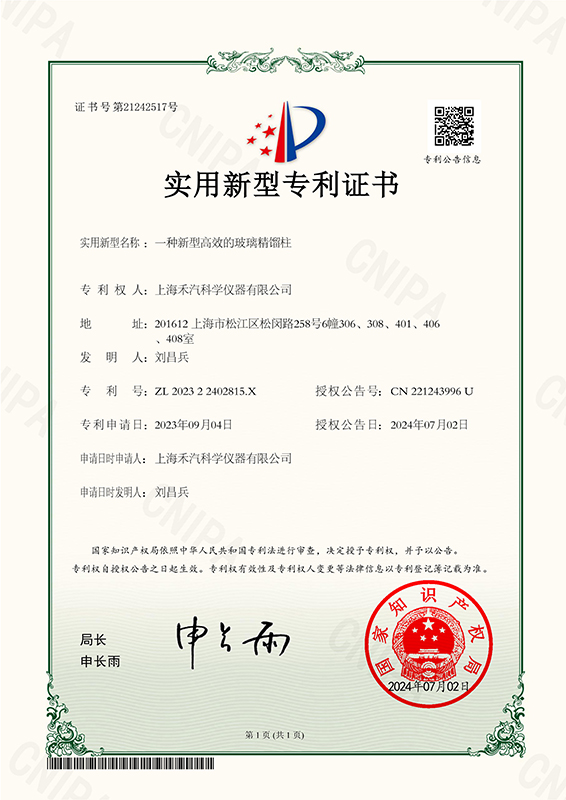
Shanghai Heqi Glassware Co., Ltd. specializes in the research, development, and production of high borosilicate glass instruments and laboratory equipment.
The company’s R&D team consists of more than ten experienced engineers dedicated to the design and optimization of glass laboratory instruments. By continuously integrating internationally advanced technologies and developing solutions based on customer requirements, Shanghai Heqi provides professional products for different laboratory applications.
To maintain technological advantages and product innovation, more than 10% of annual revenue is invested in technological development. This investment supports continuous improvements in product design, manufacturing processes, and quality performance.
During production, Shanghai Heqi’s professional production team follows strict manufacturing standards. All employees receive rigorous skills training, while automated production equipment and advanced quality control systems ensure consistent product quality.
Following the principle that "details define quality", the company focuses on every stage of production, including raw material selection, glass processing accuracy, product inspection, and final performance verification.
In addition, Shanghai Heqi provides comprehensive customer support through its professional service team, including product consultation, customized solutions, technical assistance, and after-sales service. Efficient logistics management and responsive technical support help customers achieve reliable laboratory operations.
Future Development Trends of Lab Vacuum Manifolds
With the increasing demand for automation, efficiency, and intelligent laboratory management, vacuum manifold technology continues to evolve.
| Trend |
Development Direction |
| Modular Design |
Flexible configurations for different laboratory layouts |
| Smart Monitoring |
Integration with digital vacuum control systems |
| Improved Materials |
Higher chemical resistance and longer service life |
| Compact Structure |
Better space utilization in modern laboratories |
| System Integration |
Improved compatibility with automated laboratory equipment |
As laboratories continue to pursue higher efficiency and reliability, Lab Vacuum Manifolds will remain an important component for building flexible, organized, and high-performance vacuum systems.


 English
 Français
 Español