Precision Volumetric Measurement: The Core Role of Graduated Cylinders in Modern Laboratories
In analytical chemistry, pharmaceutical research, and industrial quality control, the integrity of quantitative analysis relies heavily on the reliability of fundamental measurement tools. Among these, graduated cylinders serve as the indispensable backbone of daily laboratory operations, providing the primary means for measuring liquid volumes where volumetric flasks or pipettes are either unnecessary or impractical. For large-scale procurement managers, laboratory wholesalers, and institutional buyers, securing a consistent supply of high-precision graduated cylinders is a critical operational priority that directly impacts downstream testing accuracy and process safety.
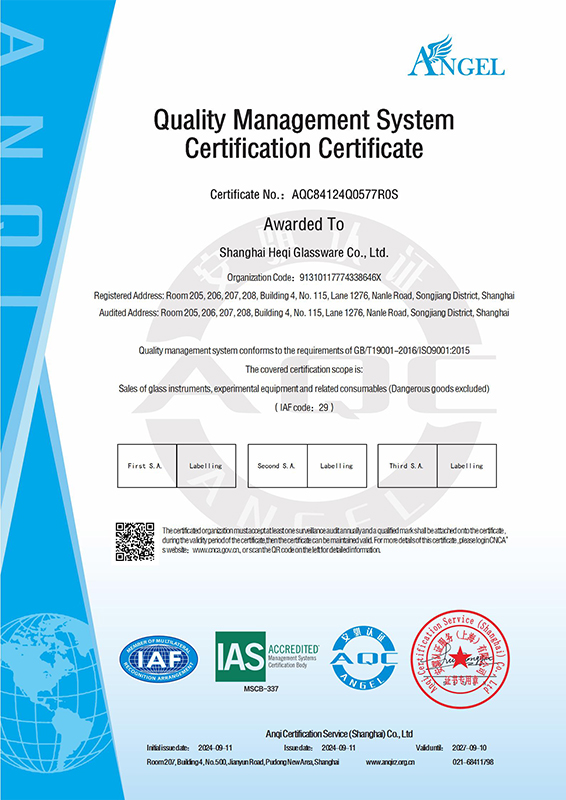
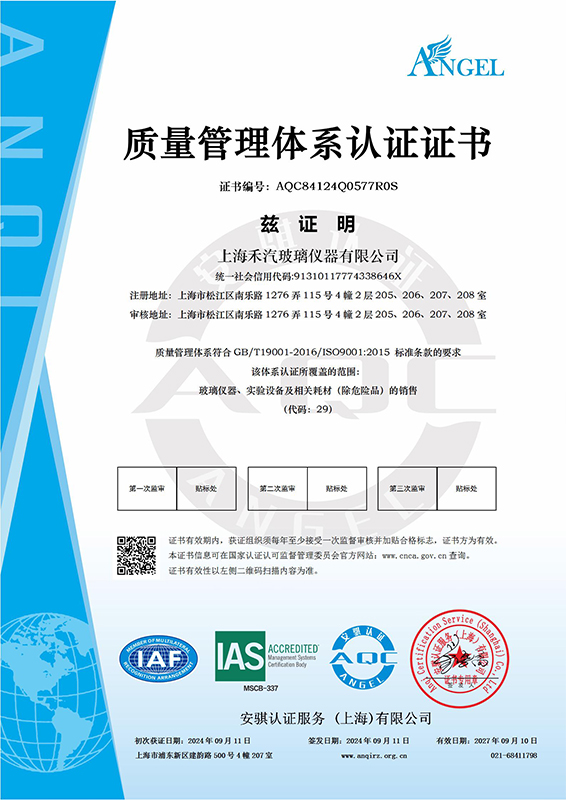
Founded in March 2002, Shanghai Heqi Glassware Co., Ltd. has spent over two decades specializing in the research, development, and production of standard-mouth glass instruments and precision laboratory apparatus. Driven by a core philosophy encapsulated in the corporate commitment—"One point of professionalism, one point of service, one point of companionship—allow me to be your reliable partner on the path forward!"—the company has systematically modernized traditional manufacturing. By establishing dedicated production bases across key industrial hubs such as Songjiang, Chengdu, Jiaxing, and Yancheng, Shanghai Heqi Glassware Co., Ltd. has successfully integrated advanced technology, meticulous craftsmanship, and rigorous management expertise. Transitioning from traditional manual fabrication to mechanized, semi-mechanized, and assembly-line industrial processes allows the company to eliminate structural inconsistencies, significantly reduce production costs, and deliver superior quality glass instruments to global markets.
Material Superiority: Why Borosilicate Glass 3.3 is the Industry Standard for Graduated Cylinders
When sourcing graduated cylinders for professional laboratories, material selection dictates both operational longevity and data reliability. While various polymers exist, low-expansion borosilicate glass remains the gold standard for analytical environments due to its exceptional physical and chemical properties.
| Performance Parameter |
Borosilicate Glass 3.3 |
Standard Soda-Lime Glass |
Polypropylene (PP) / Plastics |
| Thermal Expansion Coefficient |
Extremely low (3.3 × 10⁻⁶ K-1) |
Moderate to High (9.0 × 10⁻⁶ K-1) |
High thermal expansion |
| Max Operating Temperature |
Up to 500°C (Short-term) |
Approx. 300°C |
Typically 121°C to 135°C |
| Chemical Resistance |
Exceptional against acids, water, and organic solvents |
Moderate; susceptible to strong alkalis |
Good chemical resistance, prone to solvent absorption |
| Optical Clarity & Lifespan |
Permanent crystal clarity; no clouding over time |
Clear, but prone to surface scratching |
Gradual surface haze and scratching with repeated washing |
| Autoclavability |
Fully autoclavable repeatedly without degradation |
Autoclavable, thermal shock risk |
Autoclavable at 121°C (limited cycles) |
The superior thermal shock resistance of borosilicate glass 3.3 ensures that graduated cylinders can withstand rapid temperature shifts—such as transitioning from a hot washing cycle to ambient testing conditions—without cracking or structural fatigue. Furthermore, its high chemical inertness prevents leaching or contamination when handling aggressive acids, concentrated bases, or complex organic reagents. Leveraging its deep technical heritage, Shanghai Heqi Glassware Co., Ltd. utilizes premium-grade borosilicate raw materials across its glass production workshop. This manufacturing discipline ensures that every graduated cylinder maintains crystal-clear optical transparency and precise graduation legibility, even after undergoing hundreds of high-temperature sterilization and cleaning cycles in demanding industrial and academic laboratories.
Calibration Standards, Tolerance Classes, and Quality Compliance
Volumetric accuracy separates standard consumer glassware from professional-grade laboratory instruments. For B2B procurement teams, understanding international calibration standards is vital for maintaining compliance with ISO, ASTM, and GLP (Good Laboratory Practice) guidelines. Graduated cylinders are typically categorized into two primary accuracy tiers: Class A and Class B.
Class A Graduated Cylinders: Designed for high-precision analytical work, quantitative research, and certified testing environments. These cylinders feature strict, tighter error limits (typically half the tolerance allowed for Class B) and are individually calibrated or batch-certified with permanent serial tracking.
Class B Graduated Cylinders: Engineered for general laboratory coursework, routine qualitative preparation, and standard industrial mixing. While exhibiting slightly wider tolerance margins, they offer robust durability and cost-effective scaling for high-volume deployments.
Reading precision also depends heavily on the execution of graduation lines and numerical markings. High-quality manufacturing requires permanent enamel or amber-staining techniques fused directly into the glass surface at high temperatures, ensuring that solvent exposure or physical abrasion will not erode the scale lines over time.
To support the diverse requirements of international distributors and institutional clients, Shanghai Heqi Glassware Co., Ltd. operates advanced glass processing lines equipped with automated calibration inspection systems. Beyond manufacturing its core line of graduated cylinders, the company embraces a comprehensive service model designed to fulfill the philosophy of "you make a call, we handle the rest." By maintaining ample inventory of high-quality glass instruments, lab consumables, and complementary experimental equipment sourced through strict quality vetting, Shanghai Heqi Glassware Co., Ltd. ensures that global procurement partners can access complete, single-source fulfillment with rapid delivery schedules and guaranteed compliance.
Comprehensive Product Configurations and Sizing Specifications
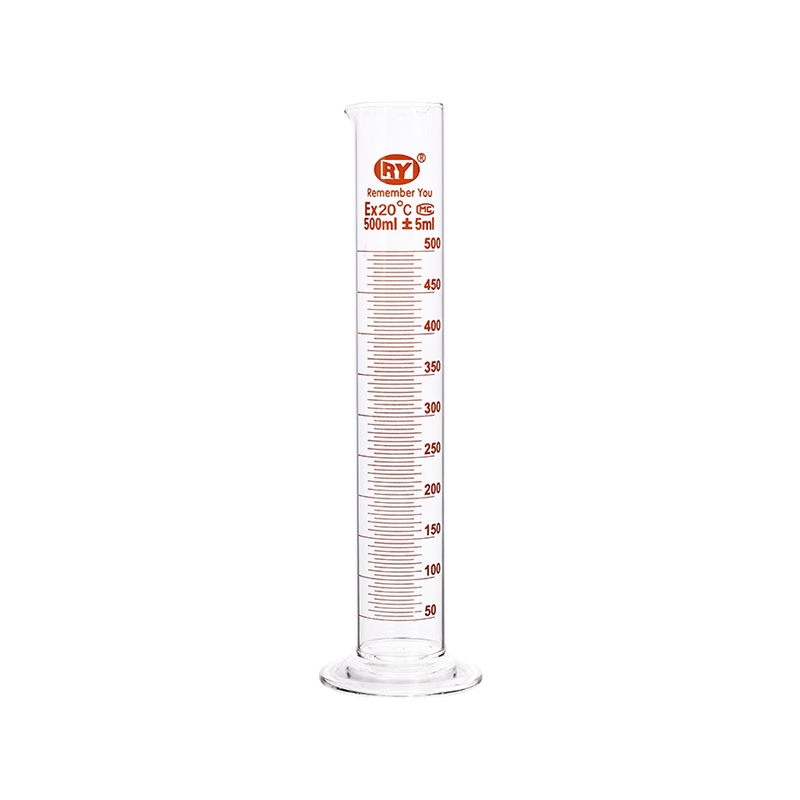
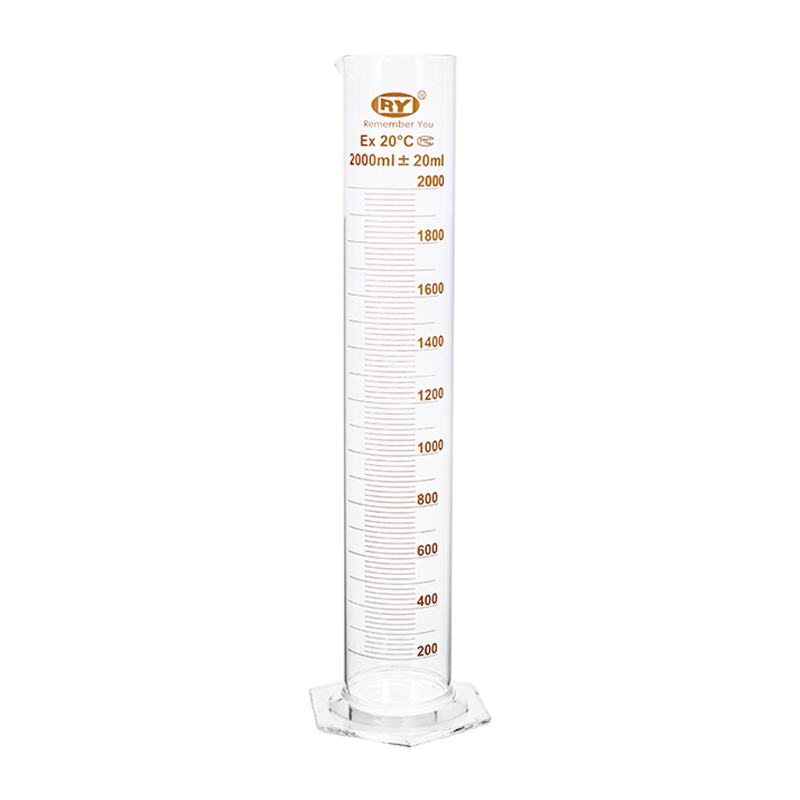
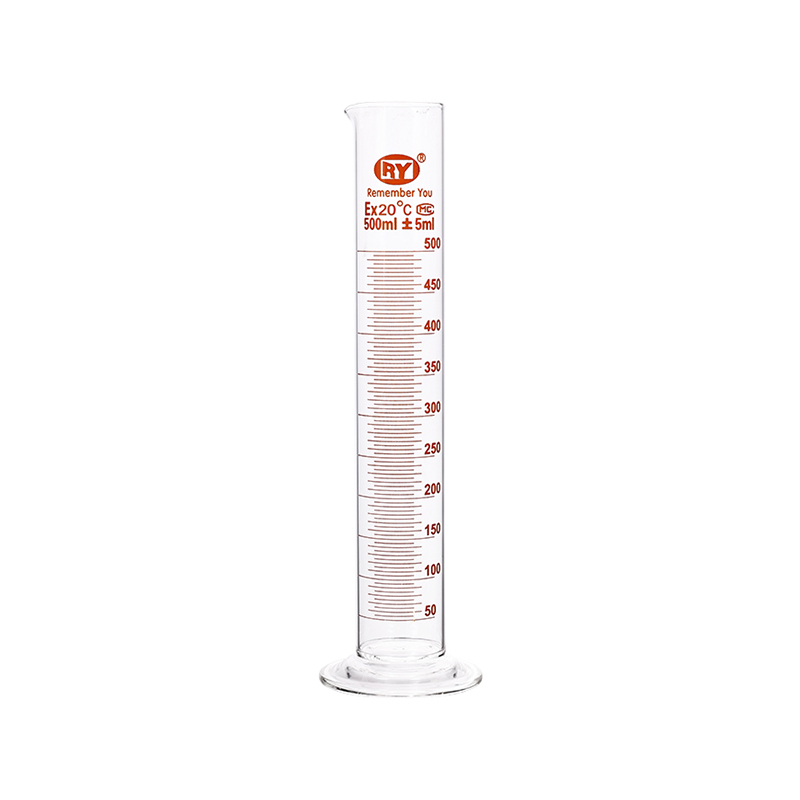
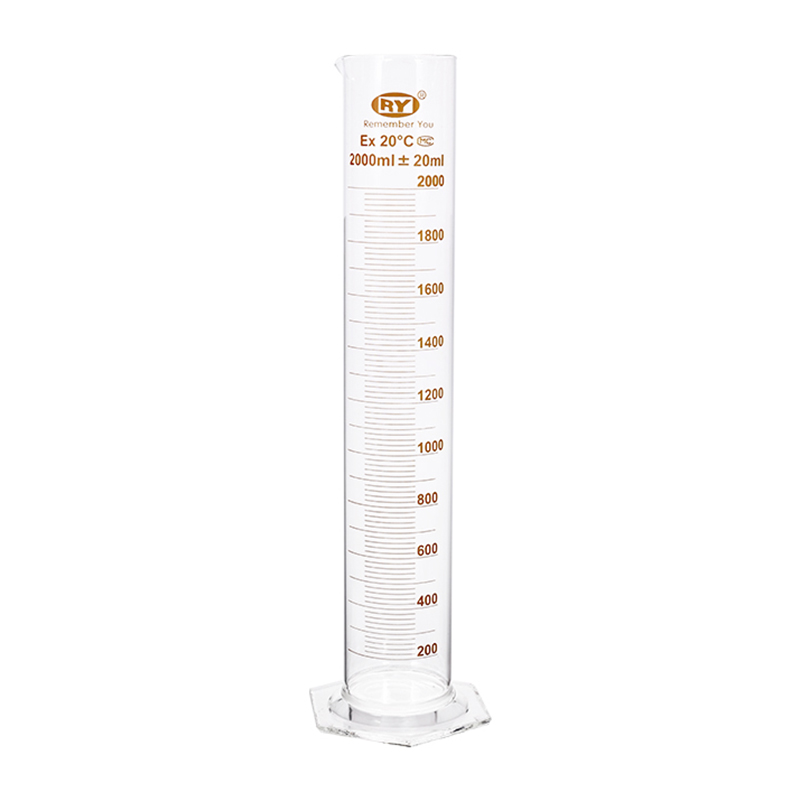
Operational efficiency in a modern facility requires a comprehensive range of capacities and ergonomic designs tailored to specific liquid handling workflows. Graduated cylinders are deployed across wide volumetric ranges, scaling from micro-scale 10ml vessels used in delicate titrations up to heavy-duty 2000ml industrial cylinders utilized in bulk manufacturing and formulation plants.
Procurement officers must evaluate structural stability features when selecting inventory for busy labs. Cylinders featuring hexagonal heavy-glass bases offer significantly enhanced roll resistance and stability on uneven bench surfaces compared to traditional round-base variants. Additionally, precision-engineered pour spouts are critical design elements; a well-formed, fire-polished spout eliminates liquid clinging and capillary creep down the outer wall, ensuring clean, drop-free transfers during hazardous reagent handling.
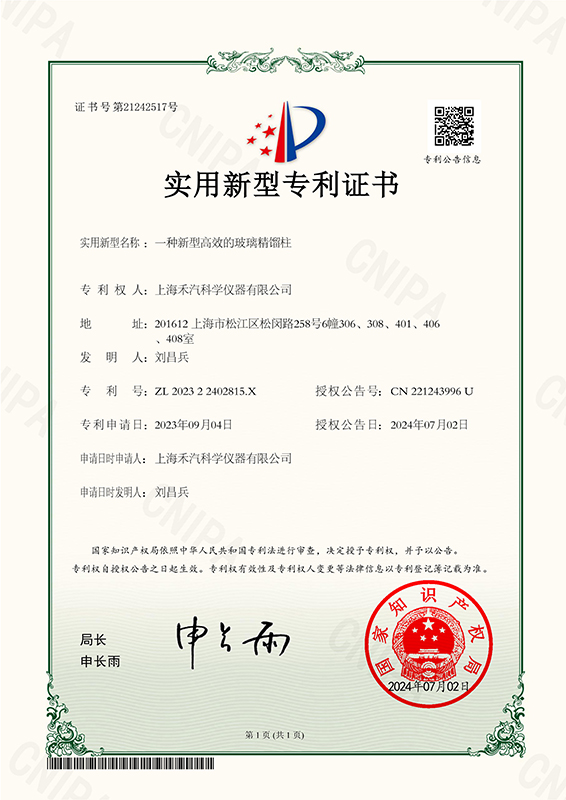
To complement these volumetric glass instruments, Shanghai Heqi Glassware Co., Ltd. leverages its multi-faceted R&D team—comprising experts in chemical engineering, mechanical design, and electronic control—alongside specialized internal workshops dedicated to glassworking, metalworking, and final assembly. This robust infrastructure allows the company to support chemical and pharmaceutical enterprises not only with standard glassware inventory but also with integrated small-scale and pilot-scale equipment solutions, such as glass reactors, rotary evaporators, distillation units, high- and low-temperature circulation systems, vacuum pumps, stirrers, and UV analyzers.
Bulk Procurement, Packaging, and Global Supply Chain Logistics
For international importers and large-scale industrial buyers, the procurement lifecycle extends far beyond factory-gate pricing; it encompasses rigorous export packaging, damage mitigation, customs documentation support, and predictable lead times. Glassware transport presents unique logistical challenges due to fragility, making drop-tested, multi-layer corrugated carton architecture and reinforced, fumigation-free wooden palletization non-negotiable requirements for international shipping.
Wholesale buyers must partner with manufacturers capable of maintaining stable tier-pricing models and flexible minimum order quantities (MOQs) that align with commercial distribution scaling. Furthermore, dependable suppliers must provide complete documentation packages, including certificate of conformity, material safety data sheets, and clear commercial invoicing to streamline customs clearance across global ports.
Shanghai Heqi Glassware Co., Ltd. approaches global supply chain management with a dedication to long-term commercial partnership. Grounded in the foundational pledge of being a reliable companion on the path forward, the company combines its extensive production bases in Songjiang, Chengdu, Jiaxing, and Yancheng with efficient inventory logistics to minimize lead times and ensure stable, uninterrupted fulfillment. By maintaining strict control over every stage of design, in-house fabrication, and custom component manufacturing, Shanghai Heqi Glassware Co., Ltd. delivers the stability, cost control, and responsiveness that global B2B procurement leaders demand.
Frequently Asked Questions & Technical Insights
What are the precise tolerance differences between Class A and Class B graduated cylinders for bulk wholesale orders?
Class A graduated cylinders adhere to strict international standards (such as ISO 4788) with tighter error limits, making them suitable for certified analytical testing and rigorous quality control. Class B cylinders possess twice the error tolerance of Class A and are optimized for general educational, preparatory, and industrial mixing applications where extreme micro-precision is secondary to operational durability.
How does Shanghai Heqi Glassware Co., Ltd. ensure consistent volumetric accuracy across mass-produced glass batches?
Shanghai Heqi Glassware Co., Ltd. combines automated industrial drawing and precision-annealing processes with rigorous digital optical inspection and calibration lines within its dedicated glass workshops, ensuring every batch meets strict dimensional and volumetric standards.
Can institutional buyers and distributors request custom branding or specialized graduation formatting for large orders?
Yes. Leveraging its in-house design, mechanical tooling, and custom fabrication capabilities, Shanghai Heqi Glassware Co., Ltd. supports customized manufacturing requirements, including private-label branding, specialized capacity formatting, and tailored packaging configurations for wholesale distributors.
What is the recommended protocol for cleaning and sterilizing borosilicate glass graduated cylinders in industrial settings?
Borosilicate glass 3.3 graduated cylinders should be cleaned using appropriate laboratory detergents or mild acid washes, followed by deionized water rinses. Because of their exceptional thermal shock resistance and high strain point, they can be safely sterilized via standard steam autoclaving up to 121°C or dry-heat sterilization ovens without causing calibration drift or structural warping.
How do the supply chain services of Shanghai Heqi Glassware Co., Ltd. support international procurement managers?
Operating under the service principle of "you make a call, we handle the rest," Shanghai Heqi Glassware Co., Ltd. maintains ample stock inventories across its manufacturing bases, provides streamlined export packaging and logistics support, and integrates comprehensive lab equipment solutions to ensure seamless cross-border fulfillment.


 English
 Français
 Español