The Application Value of Lab PTFE Plugs Stopcocks in Modern Laboratories
Lab PTFE Plugs Stopcocks are precision control components in laboratory fluid control systems, primarily used to regulate the flow of liquids, gases, and vacuum media within experimental apparatus. They are typically installed in glass reaction equipment, dripping devices, distillation systems, vacuum pipelines, and gas-protected experimental setups, serving as crucial components connecting experimental equipment to control the experimental process.
In chemical research and development, pharmaceutical experiments, and materials science, researchers frequently require precise control of reaction conditions. For example, in organic synthesis, the rate of reactant dripping needs to be controlled; in vacuum experiments, a stable pressure environment needs to be maintained; and in gas-protected experiments, switching between different gas paths is required. These operations demand valves with excellent sealing performance, stable chemical compatibility, and long-term reliable operation.
Compared to traditional glass piston valves, the most significant advantage of Lab PTFE Plugs Stopcocks is the use of polytetrafluoroethylene (PTFE) material as the key sealing and control component. PTFE possesses extremely high chemical inertness, enabling it to withstand a wider range of complex chemical media. Therefore, it is particularly suitable for corrosive environments, high-purity experiments, and experimental systems requiring frequent operation.
As laboratory automation continues to increase, the reliability requirements for components in experimental equipment are also rising. Although PTFE piston valves are small components, their performance directly affects the stable operation of the entire experimental system, thus making them an important part of laboratory equipment manufacturing and scientific research applications.
Characteristics of PTFE Material and Its Advantages in Laboratory Valves
The core advantage of Lab PTFE Plugs Stopcocks stems from the PTFE material itself. Polytetrafluoroethylene (PTFE) is a high-performance fluoroplastic with highly stable chemical properties due to its unique molecular structure, making it widely used in chemical equipment, sealing materials, medical devices, and laboratory instruments.
In laboratory environments, many common materials are susceptible to chemical reactions. For example, some plastics may swell or age due to organic solvents, and some metals may be corroded by acids and alkalis. PTFE, however, resists a wide range of chemicals, including various acids, alkalis, organic solvents, and corrosive media, thus having a broader range of applications.
In addition to its corrosion resistance, PTFE also has a low coefficient of friction. This means that the piston experiences less resistance during rotation, resulting in smoother operation and reducing the likelihood of jamming. For experimental systems requiring frequent flow adjustments, such as dripping devices, gas control equipment, and continuous experimental platforms, PTFE piston valves offer a better user experience.
Furthermore, PTFE has excellent non-stick properties, making it less prone to adsorbing experimental samples, effectively reducing the impact of residues on subsequent experiments. This is especially important for pharmaceutical research and development, high-purity chemical experiments, and analytical testing.
Structural Design and Manufacturing Process of Lab PTFE Plugs Stopcocks
Lab PTFE Plugs Stopcocks typically consist of a PTFE piston, valve body, connection interface, and adjustment mechanism. Depending on application requirements, the product can be designed with different structures such as straight-through, three-way, and multi-channel to meet the connection needs of different experimental systems.
The PTFE piston is the core component of the entire valve, and its machining accuracy directly affects product performance. Although PTFE material has a certain degree of flexibility, precise control of dimensional tolerances is still necessary to maintain a good fit between the piston and valve body.
High-quality PTFE piston valves require attention to several aspects during manufacturing, including:
Material purity: High-purity PTFE reduces impurity release and improves experimental reliability;
Dimensional accuracy: Precise machining ensures sealing performance and smooth operation;
Structural design: A reasonable flow channel design reduces fluid resistance and improves control accuracy;
Surface treatment: Good surface quality reduces friction and extends service life.
For laboratory equipment manufacturers, although piston valves are not large devices, their quality stability affects the performance of the entire experimental setup. Therefore, it is very important to choose a supplier with precision machining capabilities and a quality control system.
Applications of Lab PTFE Plugs Stopcocks in Various Fields
Lab PTFE Plugs Stopcocks are widely used in scientific research and industrial R&D, covering fields such as chemistry, pharmaceuticals, biology, new materials, and fine chemicals.
In chemical synthesis experiments, reaction conditions often require strict control. Researchers may need to add reagents slowly to avoid violent reactions or side effects. PTFE stopcocks help achieve stable liquid flow regulation, improving the controllability of the experimental process.
In organic chemistry and fine chemical research, many experiments use corrosive organic solvents or special chemical media. Due to PTFE's excellent chemical resistance, it can maintain stable operation in complex environments.
In pharmaceutical R&D, experimental equipment needs to meet high cleanliness requirements while avoiding interference between materials and drug components. PTFE stopcocks are commonly used in small-scale reaction systems, solvent control devices, and sample processing equipment, providing reliable support for drug development.
PTFE stopcocks are also an important component in vacuum and gas control systems. For example, in Schlenk experiments, frequent vacuum extraction and inert gas switching are required, and a stable and reliable piston valve helps researchers maintain experimental conditions.
Furthermore, in emerging fields such as new energy materials, catalyst development, and polymer materials research, as experimental conditions become increasingly complex, the demand for corrosion-resistant and highly stable experimental components is also constantly increasing.
Lab PTFE Plugs Stopcocks vs. Other Laboratory Valves
|
Comparison Items
|
Lab PTFE Plugs Stopcocks |
Glass Plugs Stopcocks |
Plastic Valves |
Metal Valves |
| Main Materials |
PTFE (Polytetrafluoroethylene) |
Borosilicate Glass |
PP, PVC, PE, etc. |
Stainless Steel, Alloys |
| Chemical Resistance |
Excellent, suitable for various corrosive media |
Excellent |
Average |
Varies depending on metal type |
| Operational Performance |
Low friction, smooth rotation |
Requires ground joint matching |
Simple operation |
High strength |
| High Frequency Operation Capability |
Excellent |
Average |
Medium |
Good |
| Transparent Observation |
Not supported |
Supported |
Partially supported |
Not supported |
| Vacuum Application |
Good |
Excellent |
Relatively weak |
Requires special design |
| Sample Contamination Risk |
Low |
Low |
Material influence may exist |
Metal contamination may occur |
| Main Applications |
Corrosion experiments, high-purity experiments |
Glass reaction systems |
General liquid control |
Industrial fluid control |
From an application perspective, Glass Plugs Stopcocks are more suitable for scenarios requiring close observation of experimental processes and high compatibility with glass instruments, while Lab PTFE Plugs Stopcocks are better suited for complex chemical environments and high-frequency operation requirements.
Key Factors for B2B Procurement of Lab PTFE Plugs Stopcocks
For laboratory equipment manufacturers, research institutions, laboratory consumable suppliers, and international distributors, the capabilities of suppliers are typically evaluated from multiple aspects when procuring Lab PTFE Plugs Stopcocks.
First is the quality of the product material. While PTFE has excellent properties, different grades of material vary in purity, density, temperature range, and long-term stability. High-quality PTFE material ensures product stability during long-term use.
Second is manufacturing and processing capabilities. Laboratory valves are precision components requiring strict control over dimensional accuracy and assembly quality. Poor matching between the piston and valve body can lead to leaks, operational difficulties, or reduced lifespan.
Furthermore, B2B customers are increasingly focused on whether suppliers can provide customized services. For example:
- Different interface sizes;
- Special connection methods;
- Customized flow channel design;
- OEM brand production;
- Stable bulk supply.
For overseas customers, the supplier's quality system, delivery capabilities, and technical response speed are also important factors in establishing long-term partnerships.
Shanghai Heqi Glassware's Laboratory Equipment and Component Manufacturing Capabilities
Shanghai Heqi Glassware Co., Ltd. is a professional enterprise specializing in the R&D, production, and supply of laboratory glassware, serving chemical R&D, pharmaceutical companies, research institutions, and laboratory equipment suppliers.
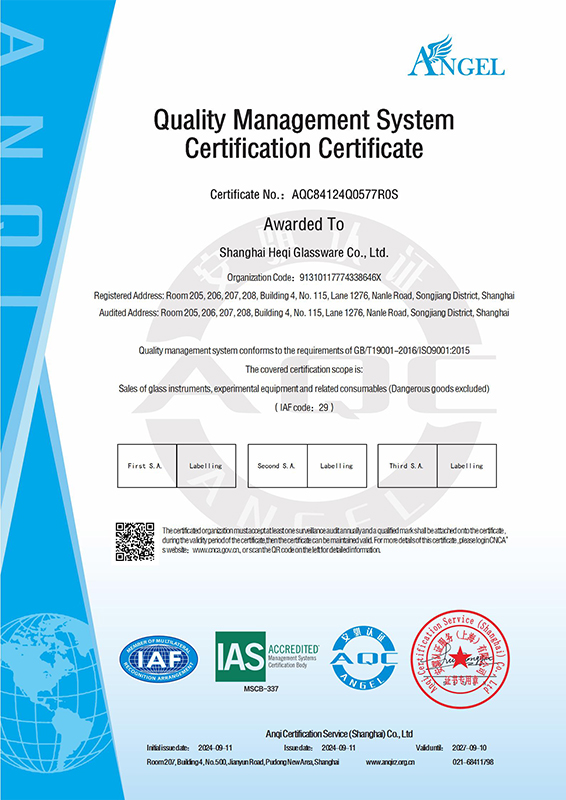
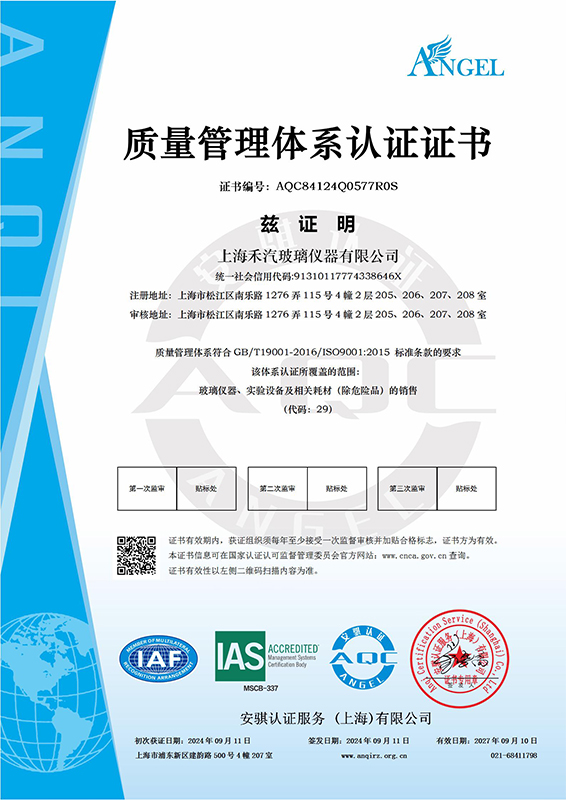
Founded in 2002, the company focuses on the R&D and manufacturing of standard-mouth glassware. After years of development, Shanghai Heqi has established production bases in Songjiang, Chengdu, Jiaxing, and Yancheng. Through the integration of technology, processes, and management experience, and the introduction of mechanized and semi-mechanized production methods, the company is gradually replacing traditional manual manufacturing, improving production efficiency and product consistency.
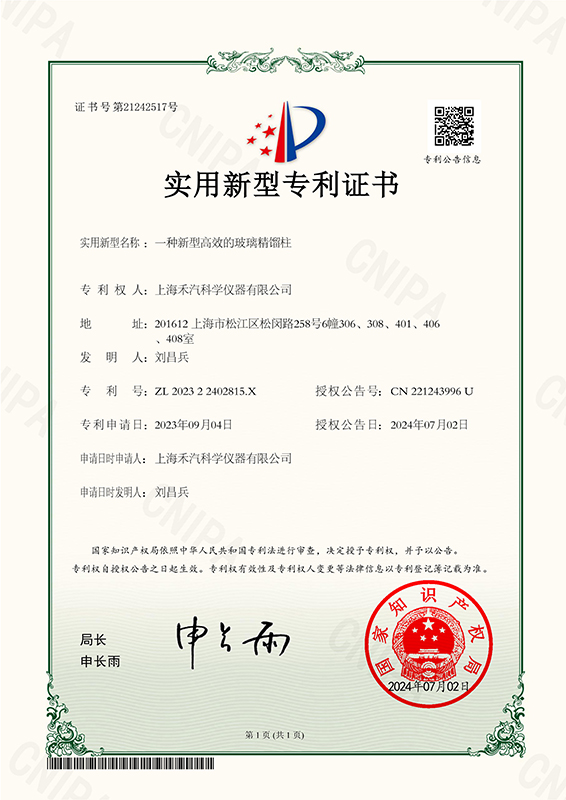
To meet the diverse needs of customers for laboratory equipment and supporting components, the company has established glass processing, metal processing, and assembly production systems, and assembled an R&D team composed of professionals in chemical R&D, mechanical design and processing, and electronic control.
Currently, the company offers a variety of experimental equipment and related products, including:
- Glass Reactors
- Rotary Evaporators
- Distillation Units
- High and Low Temperature Circulation Systems
- Vacuum Pumps
- Laboratory Stirrers
- Laboratory Glass Components
Leveraging its independent design, production, and processing capabilities, Shanghai Heqi can provide comprehensive solutions for laboratory PTFE plugs, stopcocks, laboratory glass components, and pilot-scale experimental equipment, tailored to the specific needs of its clients.
Development Trends of Lab PTFE Plugs Stopcocks
As the scientific research industry moves towards precision, automation, and specialization, laboratory fluid control components are constantly being upgraded.
In the future, Lab PTFE Plugs Stopcocks will place greater emphasis on improving material performance, optimizing structure, and enhancing system integration capabilities. For example, higher purity PTFE materials, more precise processing technologies, longer service life, and compatibility with automated laboratory equipment will all become important directions for product development.
Especially in the fields of pharmaceuticals, new energy materials, semiconductor chemistry, and fine chemicals, where experimental conditions are becoming increasingly complex, the demand for high-performance, corrosion-resistant components will continue to grow.


 English
 Français
 Español