Structure and Working Principle of Laboratory Microsyringe
A Laboratory Microsyringe is a precision instrument designed for accurately measuring, transferring, and injecting very small volumes of liquids in laboratory environments. With excellent accuracy, repeatability, and chemical compatibility, microsyringes are widely used in analytical chemistry, chromatography, pharmaceutical research, biotechnology, environmental testing, and scientific laboratories.
Unlike conventional laboratory syringes, Laboratory Microsyringes are specifically developed for microliter-level liquid handling. They enable researchers to control sample volumes precisely, making them essential tools in applications where even small measurement deviations may affect experimental results.
For laboratories, research institutions, laboratory equipment distributors, and analytical instrument suppliers, selecting a reliable Laboratory Microsyringe manufacturer is important to ensure product consistency, stable performance, and long-term supply capability.
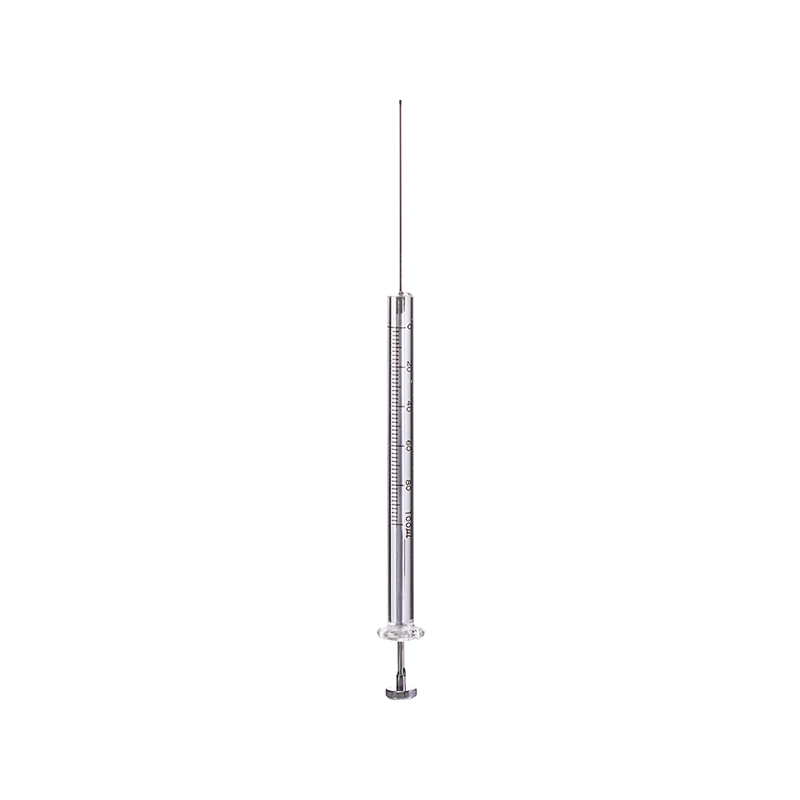
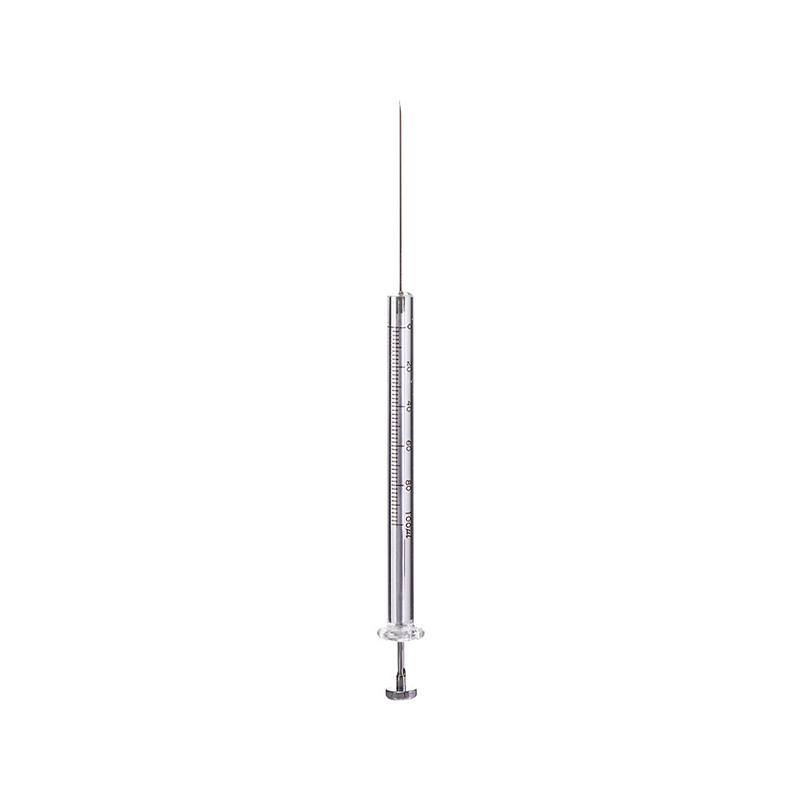
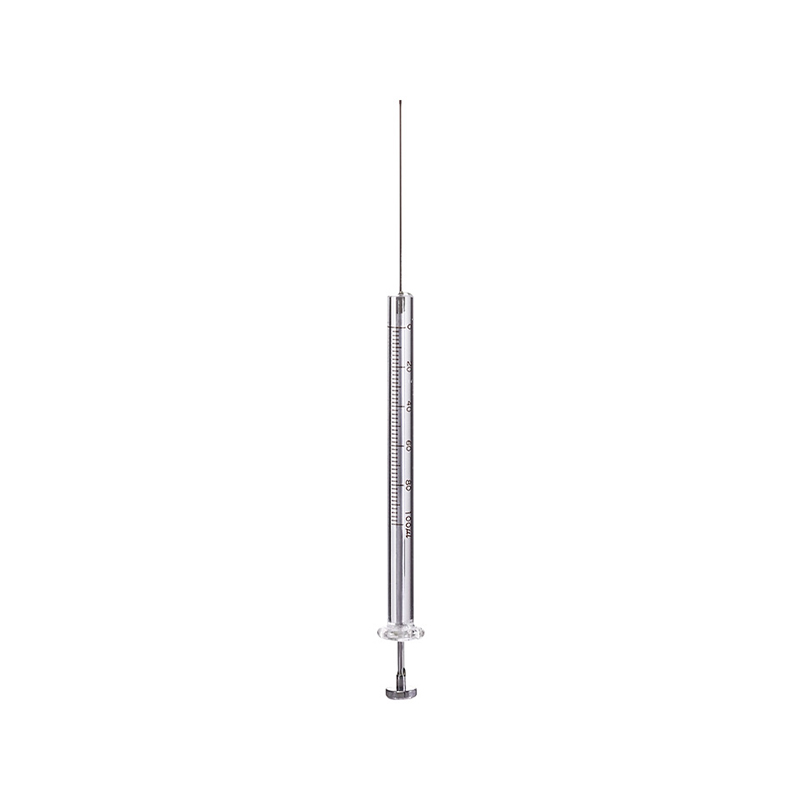
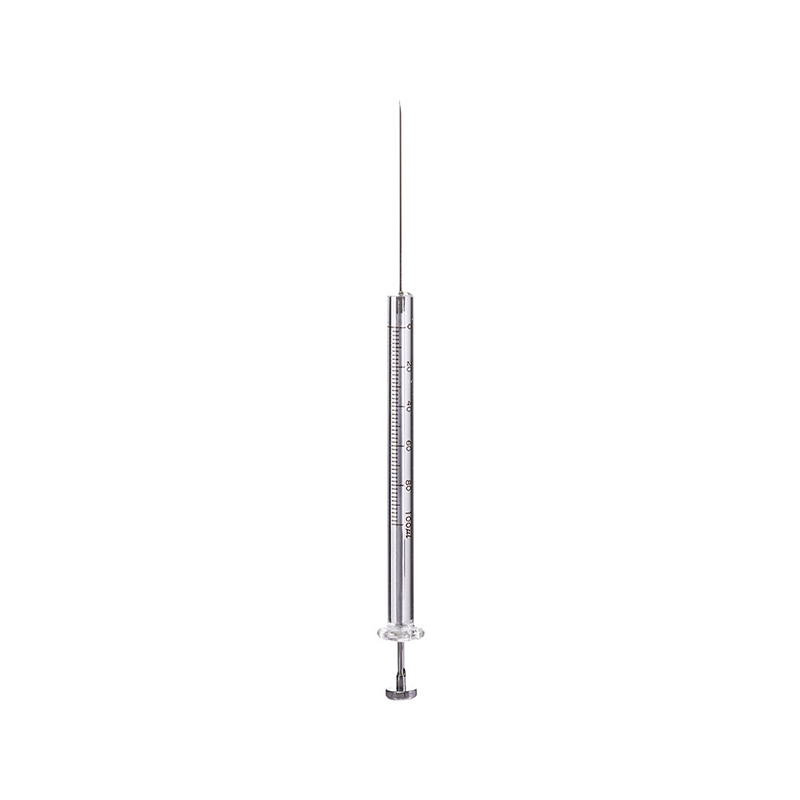
A Laboratory Microsyringe consists of several precision components, including a glass barrel, plunger, needle or connection fitting, and sealing structure. Each component plays an important role in maintaining accurate liquid control and repeatable performance.
The glass barrel is usually manufactured from high-quality transparent glass, allowing users to clearly observe liquid levels and improve measurement accuracy. The precision plunger moves smoothly inside the barrel, controlling liquid aspiration and dispensing with high accuracy.
The basic working process includes:
- Liquid aspiration through controlled plunger movement
- Accurate volume measurement inside the calibrated barrel
- Precise liquid dispensing through the needle or outlet
- Repeatable operation for analytical testing and sample preparation
Through precision manufacturing and stable material selection, Laboratory Microsyringes provide reliable solutions for demanding laboratory applications.
Main Materials Used in Laboratory Microsyringe Manufacturing
The materials used in Laboratory Microsyringes directly influence chemical compatibility, durability, and measurement accuracy. Professional laboratory microsyringes are commonly manufactured with borosilicate glass because of its excellent transparency, chemical resistance, and dimensional stability.
| Component |
Common Material |
Main Function |
| Syringe Barrel |
Borosilicate Glass |
Provides chemical resistance, transparency, and volume accuracy |
| Plunger |
Glass or Precision Alloy |
Controls liquid movement smoothly and accurately |
| Needle |
Stainless Steel |
Provides precise sample transfer and injection |
| Sealing Components |
PTFE or Chemical-Resistant Materials |
Improves sealing performance and prevents leakage |
Borosilicate glass is widely selected for analytical applications because it maintains stable performance under different laboratory conditions and resists many chemical reagents.
Applications of Laboratory Microsyringe
Laboratory Microsyringes are used across multiple industries where precise liquid handling and sample injection are required.
Chromatography Analysis
In gas chromatography (GC) and liquid chromatography (HPLC) applications, microsyringes are used to inject precise sample volumes into analytical systems. High accuracy and repeatability directly influence testing reliability.
Pharmaceutical Research
Pharmaceutical laboratories use Laboratory Microsyringes for formulation research, drug analysis, and controlled sample preparation where accurate liquid measurement is essential.
Chemical Research
In chemical laboratories, microsyringes are commonly used for reagent addition, standard solution preparation, and experimental analysis requiring microliter-level accuracy.
Biotechnology and Life Science
Microsyringes support biological sample handling, research experiments, and analytical procedures where precision and contamination control are important.
Environmental Testing
Environmental laboratories use microsyringes for trace analysis of water, soil, and other samples requiring accurate injection and measurement.
Types of Laboratory Microsyringe
According to different application requirements, Laboratory Microsyringes can be divided into several categories.
| Type |
Features |
Typical Applications |
| Fixed Needle Microsyringe |
Needle permanently connected with syringe body for stable operation |
Routine analytical injection |
| Removable Needle Microsyringe |
Needle can be replaced according to different requirements |
Flexible laboratory applications |
| Gas Tight Microsyringe |
Enhanced sealing performance for volatile samples |
Gas analysis and special chemical applications |
| High Precision Microsyringe |
Higher accuracy and repeatability |
Advanced analytical instruments and research |
Key Factors When Selecting Laboratory Microsyringe
Choosing the right Laboratory Microsyringe requires consideration of application requirements, liquid characteristics, accuracy expectations, and operating conditions.
| Selection Factor |
Important Considerations |
| Volume Accuracy |
Ensures reliable measurement and repeatable experimental results |
| Chemical Compatibility |
Materials should resist the liquids and chemicals being handled |
| Leak Prevention |
Reliable sealing improves safety and reduces sample loss |
| Durability |
Strong construction helps reduce replacement frequency |
| Customization Requirements |
Special sizes and specifications may be required for different applications |
Quality Control of Laboratory Microsyringe Manufacturing
Producing high-quality Laboratory Microsyringes requires strict control throughout the entire manufacturing process. Precision glass processing, component assembly, and inspection procedures all influence final product performance.
Important quality control factors include:
- Raw material quality inspection
- Glass dimensional accuracy control
- Surface smoothness inspection
- Plunger movement performance testing
- Leak prevention verification
- Calibration accuracy testing
- Protective packaging inspection
Shanghai Heqi Glassware Quality Assurance
Shanghai Heqi Glassware Co., Ltd. focuses on providing reliable laboratory glassware solutions through strict quality management and advanced manufacturing technology.
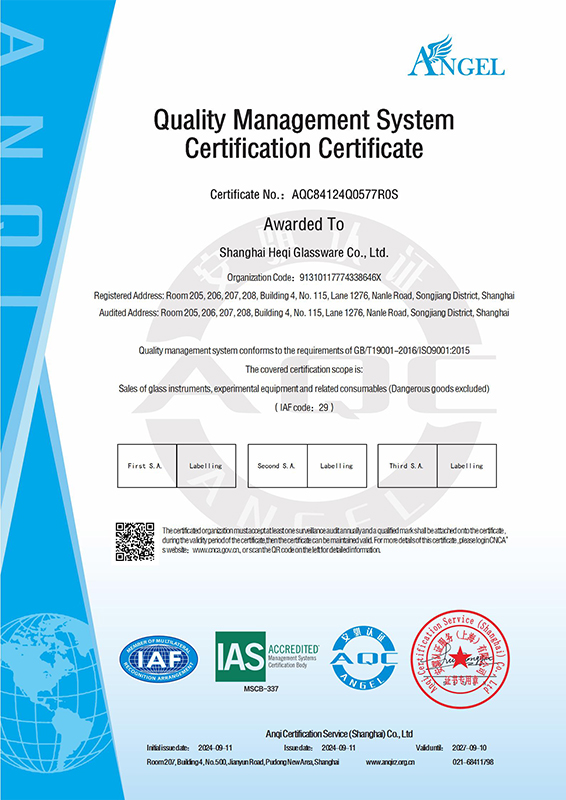
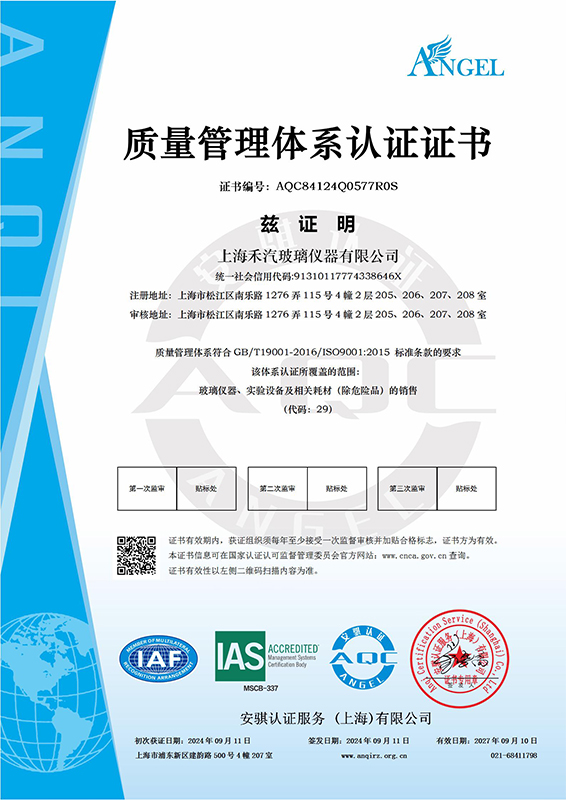
All products strictly follow the ISO9001 quality management system to meet international customer requirements. Through advanced production techniques and rigorous inspection processes, each product is carefully controlled from raw materials to finished products.
Premium Raw Material Selection
Shanghai Heqi Glassware uses premium glass materials with excellent heat resistance, corrosion resistance, and impact resistance. Material sources are traceable to ensure compliance with environmental and safety standards.
Production Process Control
The company applies automated and semi-automated production equipment to minimize human error and improve product consistency. Each production stage includes dedicated quality checkpoints, controlling every step from glass processing and forming to final inspection.
Finished Product Inspection
Before delivery, products undergo comprehensive inspection procedures to ensure reliable performance.
| Inspection Item |
Purpose |
| Dimensional Testing |
Ensures compatibility with international laboratory equipment |
| Transparency Testing |
Guarantees clear observation during laboratory operation |
| Surface Cleanliness Inspection |
Reduces contamination risks during experiments |
| Performance Testing |
Verifies product reliability under working conditions |
OEM and Customized Laboratory Microsyringe Solutions
Different industries and markets may require different specifications of Laboratory Microsyringes. Professional manufacturers can provide customized solutions according to customer requirements.
- Customized syringe capacities
- Special glass barrel dimensions
- Different needle specifications
- Customized packaging solutions
- OEM and private label services
Shanghai Heqi Glassware Co., Ltd. provides flexible laboratory glassware customization services for distributors, laboratory equipment suppliers, and OEM partners worldwide.
B2B Purchasing Considerations for Laboratory Microsyringe
For distributors, wholesalers, and scientific instrument suppliers, purchasing Laboratory Microsyringes involves more than product specifications. Supplier reliability, production capability, and quality consistency are also important factors.
| Purchasing Factor |
Importance |
| Manufacturing Experience |
Ensures stable quality and professional support |
| Quality Management System |
Reduces procurement risks |
| Production Capacity |
Supports long-term and bulk supply requirements |
| Customization Capability |
Helps meet different market demands |
| International Cooperation Experience |
Improves global business communication efficiency |
Sustainable Manufacturing and Future Development
With increasing demand for precision laboratory instruments, manufacturers are continuously improving production efficiency, reducing waste, and developing more sustainable manufacturing processes.
Shanghai Heqi Glassware Co., Ltd. actively adopts eco-friendly materials and production methods to reduce waste emissions and promote sustainable development within the laboratory instrument industry.
Why Choose Shanghai Heqi Glassware for Laboratory Microsyringe Solutions?
For global laboratory equipment distributors, research institutions, and OEM partners, Shanghai Heqi Glassware provides dependable laboratory glassware solutions based on professional manufacturing experience and strict quality management.
- ISO9001 quality management system compliance
- Strict raw material selection and traceability control
- Advanced automated and semi-automated production equipment
- Comprehensive product inspection procedures
- Flexible OEM customization solutions
- Commitment to sustainable manufacturing
With continuous innovation and quality improvement, Shanghai Heqi Glassware Co., Ltd. continues to provide high-quality Laboratory Microsyringe and laboratory glassware solutions for customers worldwide.


 English
 Français
 Español