1. The Critical Role of High-Performance Lab Distillation Packing Materials in Chemical Separation
In fractional distillation, vacuum purification, and solvent recovery, the efficiency of a column is defined by its internal contact surface. High-performance Lab Distillation Packing Materials serve as the structural framework where continuous gas-liquid mass transfer occurs. By creating an expansive, highly wetted surface within a confined column diameter, quality packing materials ensure rapid phase exchange, low liquid hold-up, and sharp separation boundaries between close-boiling components.
For analytical laboratories, pilot plants, and pharmaceutical R&D facilities, selecting the correct Lab Distillation Packing Materials directly impacts separation resolution, cycle times, and yield purity. Suboptimal packing leads to channeling, high pressure drops, column flooding, and excessive thermal stress on heat-sensitive active pharmaceutical ingredients (APIs) or fine chemicals.
When scaling processes from benchtop glass columns to pilot-scale fractionation units, consistency in packing geometry and surface treatment is paramount. Experienced equipment manufacturers like Shanghai Heqi Glassware Co., Ltd.—who have specialized in standard-mouth glass instruments and complete distillation assemblies since March 2002—recognize that high-precision glassware must be paired with engineered packing internals. Whether operating under deep vacuum or atmospheric pressure, the interaction between column wall distribution and packing efficiency dictates whether a separation achieves multi-stage purity or fails due to bypass effects.
2. Technical Classification & Types of Lab Distillation Packing Materials
Selecting appropriate Lab Distillation Packing Materials requires an understanding of structural geometry. Distillation packings fall into two main structural categories: structured packings and random packings. Each geometry offers specific fluidodynamic advantages tailored to particular column diameters, vapor velocities, and separation goals.
2.1 Structured Packing Materials
Structured packings consist of crimped metallic, fluoropolymer, or ceramic sheets/gauzes assembled into uniform cylindrical bundles. These bundles are engineered to match the exact inner diameter of the distillation column.
- Wire Gauze Packing (Metal Mesh Corrugated Packing): Fabricated from woven metal wire mesh, this structured packing utilizes intense capillary action to spread reflux liquid evenly across the wire surfaces. It exhibits an exceptionally low Height Equivalent to a Theoretical Plate (HETP) and minimal pressure drop per stage. It is ideal for laboratory and pilot columns separating heat-sensitive isomer mixtures, essential oils, and pharmaceutical intermediates under high vacuum.
- Corrugated Sheet Packing (Perforated/Embossed Metal Sheet): Constructed from perforated corrugated metal sheets, this variant provides robust mechanical strength and high hydraulic capacity. While its surface area is lower than woven wire gauze, its resistance to fouling and structural durability make it suitable for high-throughput laboratory distillation towers and pilot units.
2.2 Random Packing Materials
Random packings are small, individually manufactured geometric shapes dumped loose into the distillation column. They form a randomized, highly porous bed that promotes vapor turbulence and continuous redistribution of liquid droplets.
- Dixon Rings / Theta Rings: Widely considered the gold standard for small-diameter laboratory fractional distillation (10 mm to 50 mm column IDs). Manufactured from fine-mesh wire gauze shaped into a single cylinder with a central dividing mesh partition, Dixon rings achieve immediate capillary wetting. They deliver exceptionally low HETP values (often below 2 cm), making them indispensable for high-purity laboratory separations.
- Raschig Rings: The classic cylindrical random packing with equal length and diameter. Available in glass, ceramic, and metal, Raschig rings offer low production costs and broad chemical compatibility, though they exhibit higher pressure drops and higher liquid hold-up than modern geometries.
- Pall Rings: An advanced evolution of the Raschig ring featuring internal tabs stamped into the cylinder walls. These open windows allow vapor and liquid to pass freely through the interior of the ring, increasing capacity, reducing pressure drop, and significantly diminishing wall-channeling effects.
- Berl & Intalox Saddles: Saddle-shaped packing geometries designed to prevent nested stacking within the bed. Their open saddle profile promotes uniform liquid distribution and reduces resistance to rising vapors.
2.3 Selection Comparison Matrix
The following parameters provide a direct engineering comparison of common Lab Distillation Packing Materials across standard operational metrics:
| Packing Type |
Material Options |
Specific Surface Area (m²/m³) |
Void Fraction (%) |
Typical HETP (cm) |
Pressure Drop (mbar/m) |
Suitable Column ID (mm) |
Primary Application Field |
| Dixon Rings (Theta) |
316L SS, Phosphor Bronze |
1,500 - 3,500 |
85 - 92% |
1.2 - 3.5 |
0.5 - 2.0 |
10 - 50 |
High-purity laboratory fractionation, isotope separation |
| Wire Gauze Structured |
316L SS, Titanium, Monel |
500 - 1,200 |
90 - 95% |
5.0 - 12.0 |
0.2 - 1.0 |
25 - 300+ |
Vacuum distillation of thermally sensitive fine chemicals |
| Corrugated Sheet |
304/316L SS, PTFE |
250 - 500 |
88 - 93% |
15.0 - 30.0 |
0.5 - 1.5 |
50 - 500+ |
Pilot-scale solvent recovery, high-capacity stripping |
| Pall Rings |
SS, PTFE, Glass |
200 - 450 |
85 - 90% |
15.0 - 25.0 |
1.0 - 3.0 |
40 - 200 |
General laboratory organic solvent purification |
| Raschig Rings |
Borosilicate Glass, Ceramic |
150 - 350 |
65 - 75% |
20.0 - 40.0 |
3.0 - 8.0 |
25 - 150 |
Corrosive acid purification, educational bench setups |
| Intalox Saddles |
Ceramic, PTFE, Metal |
250 - 400 |
75 - 82% |
18.0 - 30.0 |
1.5 - 4.0 |
30 - 200 |
Corrosive gas absorption, acid distillation columns |
3. Material Guide for Lab Distillation Packing Materials
Chemical compatibility, temperature limits, and mechanical durability dictate the base material selection for Lab Distillation Packing Materials. Choosing the wrong material can lead to metallic contamination of products, packing corrosion, or thermal deformation under vacuum stress.
3.1 316L / 304 Stainless Steel
Stainless steel is the workhorse material for laboratory and pilot-scale distillation. Grade 316L contains molybdenum, providing superior resistance to organic acids, solvents, and neutral halide solutions compared to Grade 304.
- Advantages: Exceptional mechanical integrity, high thermal conductivity, high temperature limit (up to 400°C+), and uniform wetted surfaces.
- Best Uses: General organic chemical distillation, pharmaceutical intermediate processing, and high-vacuum structured packing columns.
3.2 Borosilicate Glass
High-purity borosilicate 3.3 glass packing materials (primarily glass Raschig rings, glass beads, and helices) are completely inert to almost all chemical substances, excluding hydrofluoric acid and concentrated hot phosphoric acid.
At Shanghai Heqi Glassware Co., Ltd., specialized glass processing facilities in Songjiang, Chengdu, Jiaxing, and Yancheng produce precision borosilicate column bodies perfectly paired with inert packing internals for transparent, zero-contamination laboratory separation systems.
- Advantages: Total visual clarity allowing real-time monitoring of liquid distribution, reflux behavior, and flooding boundaries; zero metallic ion leaching.
- Best Uses: Ultra-pure reagent production, halogenated compound distillation, and trace-analytical sample preparation.
3.3 PTFE & Specialty Fluoropolymers
Polytetrafluoroethylene (PTFE) and PFA packings provide universal chemical resistance against aggressive mineral acids, strong bases, and reactive organic solvents.
- Advantages: Hydrophobic surface chemistry resistant to fouling; operational stability from -180°C up to +260°C; total chemical inertness.
- Considerations: PTFE packings require specialized surface treatment or pre-wetting protocols during initialization due to inherent hydrophobicity, which can initially reduce film spreading.
- Best Uses: Distillation of concentrated hydrochloric acid, nitric acid, and aggressive fluorinated organic compounds.
3.4 Titanium & Special Alloys
For extreme chemical processing environments where standard stainless steels undergo pitting or stress corrosion cracking, advanced metal alloys are required.
- Titanium (Grade 2): Unmatched resistance to wet chlorine gas, chlorite solutions, and nitric acid at elevated temperatures.
- Hastelloy C-276 / Monel 400: High-performance nickel alloys utilized in specialty organic synthesis involving hot organic acids, acid chlorides, and seawater mixtures.
- Best Uses: Specialized industrial pilot plants, specialized defense/aerospace chemical R&D, and harsh halide separation processes.
4. Key Performance Metrics B2B Buyers Must Evaluate
Procurement specialists and process engineers evaluating Lab Distillation Packing Materials must look beyond unit price. Assessing quantitative performance metrics ensures the chosen packing meets the specific hydraulic and separation requirements of the target system.
4.1 HETP (Height Equivalent to a Theoretical Plate)
HETP measures the packed bed height required to achieve one theoretical equilibrium stage of separation.
Formula Relationship:
Z = N × HETP
Where Z represents the total packed bed height (cm) and N represents the required number of theoretical equilibrium plates determined by Fenske-Underwood-Gilliland calculations.
Engineering Impact: A smaller HETP value means higher separation efficiency within a shorter column. Wire mesh Dixon rings (HETP 1.5 - 3 cm) allow complex multi-component separations within benchtop ceiling clearances, whereas coarse ceramic Raschig rings (HETP 30 - 40 cm) require significantly taller column installations.
4.2 Pressure Drop (ΔP) & Flooding Limit
The movement of vapor rising through the packing void spaces encounters mechanical friction.
Pressure Drop Impact: Excessively high ΔP raises the bottom pot temperature required for boiling, which accelerates thermal degradation of delicate compounds. Structured wire gauze packings maintain exceptionally low pressure drops (≤ 0.5 mbar/m per stage), making them essential for high-vacuum distillation.
Flooding Limit: Flooding occurs when the upward drag force of vapor prevents reflux liquid from flowing downward under gravity. The liquid fills the packing void spaces, causing system pressure to spike and ending effective separation. High-capacity packings maximize void fraction without compromising structural support.
4.3 Specific Surface Area (a_p) & Void Fraction (ε)
Specific Surface Area (a_p, measured in m²/m³): Defines the total geometric surface area available for gas-liquid contact per unit volume. Higher a_p boosts mass transfer rates but generally reduces channel dimensions.
Void Fraction (ε, percentage %): The ratio of open void volume to total packing bed volume. High void fractions (> 90%) minimize vapor resistance, enabling high throughput velocities and low liquid hold-up.
4.4 Wetting Behavior & Mass Transfer Coefficient
For a packing material to perform at its theoretical limit, its entire geometric surface must be continuously covered by a thin, flowing liquid film.
Capillary Action: Mesh and woven materials achieve near 100% surface wetting upon initial liquid contact through capillary action.
Pre-Wetting Protocols: Smooth metallic, plastic, or ceramic random packings often require pre-wetting (operating the column at total reflux until flooding occurs briefly) to establish a continuous liquid film across the packing surface before settling into steady-state collection.
5. Direct Factory Advantages & Procurement Solutions for Bulk Buyers
Procuring Lab Distillation Packing Materials for large-scale laboratory outfitting, pilot-plant fabrication, or global distribution networks requires a manufacturing partner with integrated engineering, production, and quality management capabilities.
5.1 Factory-Direct Pricing & Cost Optimization
Sourcing directly from an established manufacturer eliminates multi-tier trading markups, providing bulk buyers and equipment OEMs with competitive unit pricing. Shanghai Heqi Glassware Co., Ltd. operates modern production facilities across Songjiang, Chengdu, Jiaxing, and Yancheng. By transitioning from traditional manual workshop methods to automated and semi-mechanized assembly-line manufacturing processes, the company consistently reduces unit production costs while maintaining strict dimensional tolerances across large batch runs.
5.2 Custom OEM/ODM Capabilities
Standard off-the-shelf packing sizes do not always fit specialized column designs or unique pilot skid spaces.
- Tailored Manufacturing: Custom mesh counts, wire diameters, ring dimensions, and pre-cut structured packing diameters engineered to match exact column inner diameters (10 mm to 500+ mm).
- Interdisciplinary R&D: Shanghai Heqi's dedicated cross-disciplinary team—combining chemical R&D, mechanical engineering, and electronic control specialists—operates specialized glass, metalworking, and assembly workshops. This enables complete, custom-built distillation packages incorporating precision packed columns, glass reactors, rotary evaporators, and circulation systems under a single design umbrella.
One point of professionalism, one point of service, one point of companionship—allow me to be your reliable partner on the path forward! Guided by our core operational promise, "you make a call, we handle the rest," Shanghai Heqi Glassware Co., Ltd. provides seamless technical support, custom fabrication, and rapid inventory fulfillment to clients worldwide.
5.3 Quality Assurance & Material Compliance
Global procurement teams require verified material traceabilities to satisfy environmental and industrial quality standards.
- Material Test Certificates (MTC): Every shipment of metal, fluoropolymer, or glass packing is supplied with full mill test certification detailing exact alloy compositions (e.g., nickel/chromium weight percentages for 316L SS via XRF analysis).
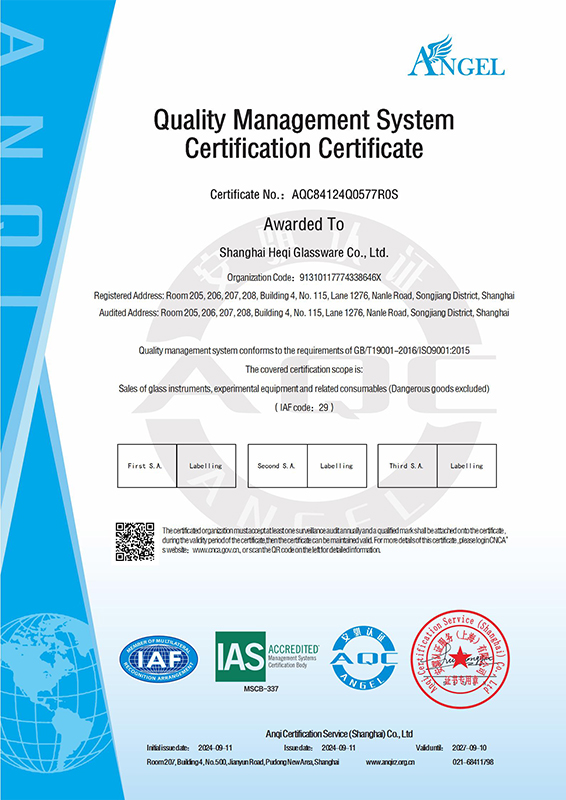
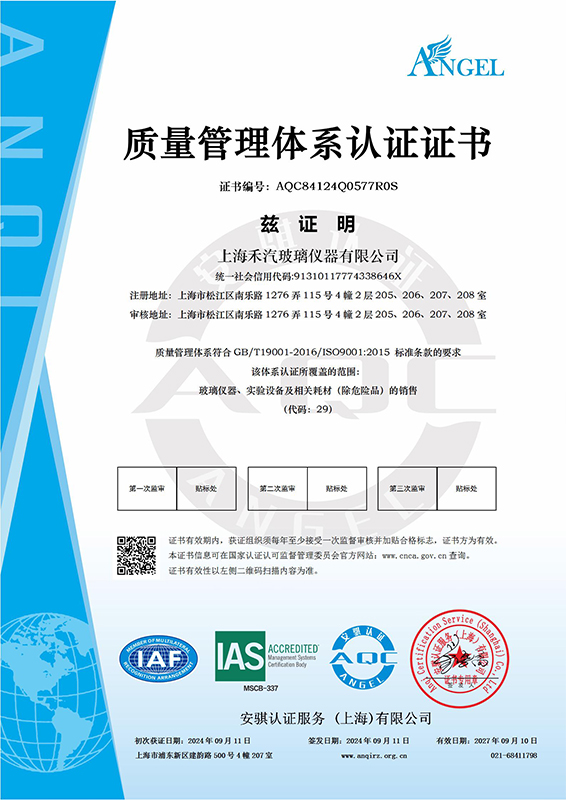
- Compliance Standards: ISO 9001 certified manufacturing controls ensure batch-to-batch consistency in mesh density, wire gauge, and dimensional roundness, while meeting international RoHS and REACH compliance criteria.
5.4 Global Logistics & Export Packaging
Delicate wire-mesh packings like Dixon rings and structured corrugated bundles can deform under pressure during international ocean or air transport.
- Protective Export Packaging: Packings are packed in sealed, anti-static, moisture-proof poly-bags, encased in reinforced shock-absorbing high-density foam shells, and shipped in international-grade wooden crates or heavy-wall corrugated export cartons.
- Supply Chain Security: With extensive inventory reserves and multi-regional dispatch hubs, high-volume orders ship quickly to reduce downtime for major lab upgrades and equipment production schedules.
6. Frequently Asked Questions (FAQ)
Part A: Commercial & Procurement FAQs
What is the Minimum Order Quantity (MOQ) for custom Lab Distillation Packing Materials?
For standard stock items (such as standard 316L stainless steel Dixon rings or glass Raschig rings), MOQs start as low as 1 kg or 1 liter to facilitate preliminary testing and pilot evaluation. For custom OEM structured packing sizes, specialized alloy wire meshes (such as Titanium or Hastelloy), or non-standard diameters, the MOQ is determined based on raw material coil lengths and production tooling requirements. Contact our technical sales team for tailored OEM quotes.
Can you provide Material Test Certificates (MTC) and ISO compliance documentation with each shipment?
Yes. Shanghai Heqi Glassware Co., Ltd. enforces strict quality management controls across all production bases. Every commercial shipment is accompanied by official Material Test Certificates (MTC) verifying chemical composition and mechanical properties, along with our ISO 9001 quality management documentation and RoHS/REACH compliance certifications upon request.
What are the typical lead times for high-volume Lab Distillation Packing Materials orders?
Standard-specification packing materials in common alloys (304/316L SS) are maintained in inventory for rapid dispatch, often shipping within 3 to 5 business days. For bulk industrial orders or custom OEM fabrications requiring specialized metal weaving and laser cutting, typical manufacturing lead times range from 2 to 3 weeks depending on total order volume and custom tooling specifications.
How are delicate mesh packings (like Dixon Rings) packaged to prevent damage during transit?
Dixon rings and fine mesh structured bundles are sensitive to crushing forces. We package small mesh rings in sealed rigid inner containers packed with shock-absorbing foam inserts. Structured corrugated packings are bound with protective metallic support bands, vacuum-sealed in heavy-gauge protective plastic sleeves, and secured within custom export-grade plywood crates to guarantee zero structural deformation during overseas transit.
Part B: Technical & Application FAQs
How do I calculate the volume of Lab Distillation Packing Materials needed for my column diameter and height?
To calculate the total packed bed volume (V) required, use the standard cylinder volume formula based on the internal column diameter (D) and desired packing bed height (H):
V = π × (D / 2)² × H
Example: For a laboratory glass column with an internal diameter (D) of 50 mm (0.5 dm) and a packed height (H) of 1,000 mm (10 dm):
V = 3.14159 × (0.25 dm)² × 10 dm = 1.963 Liters
We recommend adding a 5% to 8% volume safety allowance to account for random packing settling, bed compaction, and top/bottom support grid spacing.
When should I choose Dixon Rings over standard Pall Rings for laboratory distillation?
Dixon rings are constructed from fine wire mesh and leverage intense capillary force to distribute liquid film instantly. They are the ideal choice for small column diameters (10 mm to 50 mm) where achieving a high number of theoretical plates in a compact space is critical (HETP 1.5 - 3 cm).
Standard Pall Rings are solid metal, plastic, or glass structures best suited for larger column diameters (>50 mm up to pilot scale) and systems handling higher throughput volumes, higher particulate risk, or processes where extremely low unit cost outweighs ultra-high theoretical plate efficiency.
How do you properly clean and regenerate stainless steel Lab Distillation Packing Materials after contamination?
Contaminated stainless steel packings (316L SS) can be regenerated using a sequential cleaning protocol:
- Solvent Wash: Flush the packing bed with a suitable high-solubility solvent (such as acetone, ethanol, or hexane) to dissolve residual heavy organic tars or polymer residues.
- Ultrasonic Bath: Submerge random packings in an ultrasonic bath containing a 5% alkaline detergent solution at 60°C for 20–30 minutes to remove particulate deposits embedded within the fine mesh pores.
- Acid Passivation (Optional): If minor oxidation or metallic scaling has occurred, perform a brief wash in a mild 10% citric acid solution to restore the chromium oxide passive layer.
- Rinse & Dry: Thoroughly rinse with deionized water until the effluent pH measures neutral (7.0), then dry in a clean forced-air oven at 110°C before reinstalling.
What causes column flooding in packed lab distillation columns, and how can packing selection fix it?
Column flooding occurs when the upward velocity of rising vapor exerts a drag force that exceeds the gravitational pull on the descending liquid reflux. This causes liquid to accumulate in the column packing void spaces, increasing column pressure drop and stopping theoretical plate mass transfer.
- Causes: Operating above the hydraulic capacity limit, excessive boil-up rates, using ring sizes that are too small relative to column diameter, or packing beds fouled by chemical residues.
- Packing Selection Solutions: Upgrade to packings with a higher void fraction (ε > 90%), such as moving from solid Raschig rings to open Pall rings or structured wire gauze packing. Alternatively, select a packing with larger nominal dimensions to widen the open cross-sectional vapor flow area, shifting the flooding velocity threshold higher.


 English
 Français
 Español