Why Are Ergonomic Lab Flask Supports Critical for Spherical Glassware Management?
Securing spherical vessels on flat working surfaces demands specialized support structures designed to handle non-linear contact geometry, varying mechanical loads, and aggressive chemical environments. Traditional support methods, such as rigid metallic rings or porous cork stands, often fail to provide the combined benefits of chemical inertness, multi-size adaptability, and shock absorption. The integration of modern elastomeric materials and multi-tiered structural designs has elevated the functional role of flask supports from simple bench accessories to essential safety components in active laboratory workflows.
Structural Engineering and Chemical Resistance of Molded Rubber Formulations
The primary defense against glassware slippage and chemical damage lies in the material composition of the support media. Advanced Lab Flask Supports are manufactured from high-density, synthetic rubber formulations engineered to withstand harsh laboratory conditions. Unlike natural cork or cellulose materials, molded rubber is non-porous and completely impervious to a wide spectrum of liquid spills, including concentrated acids, strong bases, polar organic solvents, and halogenated compounds.
When corrosive reagents or volatile organic liquids splash onto the support surface during pouring or refluxing operations, the high-grade rubber matrix prevents chemical absorption and structural degradation. Liquid spills remain on the surface where they can be quickly wiped away without compromising the structural integrity of the ring. Synthetic rubber exhibits an exceptionally high coefficient of friction against smooth borosilicate glass. This natural tackiness creates an immediate non-slip grip around the vessel base, preventing rotation during mechanical stirring or accidental lateral dislodgement when laboratory personnel work around the bench.
The lightweight nature of molded rubber allows scientists to relocate flask assemblies easily without adding unnecessary dead weight to sensitive analytical balances or portable experimental setups. The elastomeric lattice maintains elasticity across a wide operational temperature range, resisting cracking, hardening, or swelling even after repeated exposure to solvent vapors and routine washing procedures.
Multi-Level Step Designs and Universal Accommodation of Spherical Vessels
A recurring challenge in active research facilities is managing diverse sizes of round-bottom vessels without cluttering workbenches with dozens of single-purpose stands. The multi-level step design solves this spatial and operational challenge by integrating concentric stepped rings into a single molded structure.
Each inner step represents a precise mechanical shoulder calibrated to support specific outer diameter curvatures. When a small five-milliliter or fifty-milliliter flask is placed onto the support, it settles securely into the lower, narrower stepped tier. Larger vessels, such as two-liter, five-liter, or ten-liter boiling flasks, rest securely on the upper, wider stepped rings. This multi-tiered geometry ensures that the vessel base remains suspended slightly above the bench surface while establishing multiple points of mechanical contact around the outer perimeter of the glass sphere.
Distributing the vessel mass across continuous stepped shoulders eliminates high-pressure point contacts that could otherwise stress micro-fissures in the borosilicate glass. Lowering the center of gravity relative to the contact ring maximizes stability, preventing top-heavy assemblies, such as flasks fitted with tall condensers, heavy liquid addition funnels, or overhead stirring shafts, from tipping sideways. The universal nature of the stepped structure allows chemical technicians to move seamlessly between synthesis steps using different vessel volumes without constantly swapping out support hardware.
Vibration Isolation and Thermal Protection in High-Energy Reaction Workflows
Modern chemical processing involves continuous mechanical energy inputs from magnetic stirrers, high-speed overhead mechanical mixers, and vacuum rotary motion systems. Placing rigid glass vessels directly onto hard bench tops or metal surfaces transfers mechanical vibrations back into the glass matrix, increasing structural fatigue and risking stress fractures over extended operational cycles.
Elastomeric rubber Lab Flask Supports serve as passive mechanical dampeners that absorb low- and high-frequency vibrations generated by motorized laboratory drives. Cushioning the contact interface reduces acoustic resonance and prevents tiny micro-vibrations from walking the flask across the bench surface during unattended overnight runs.
Rubber materials possess inherently low thermal conductivity, making them excellent thermal insulators. When a boiling flask is removed from a hot oil bath, heating mantle, or heating jacket, placing it directly onto a cold marble, stainless steel, or epoxy benchtop can trigger catastrophic thermal shock, causing the glass to shatter instantly. A synthetic rubber support ring acts as a protective thermal barrier, allowing hot glass to cool gradually at ambient room temperatures while safeguarding underlying laboratory surfaces from direct heat transfer and thermal damage.
|
Vessel Support Type
|
Chemical Corrosion Resistance
|
Liquid Spill Resilience
|
Multi-Size Accommodating Capability
|
Mechanical Vibration Absorption
|
Longevity and Sanitation
|
|
Molded Synthetic Rubber Supports
|
High resistance to acids, bases, and organic solvents
|
Non-porous material prevents fluid absorption
|
Multi-tiered stepped concentric geometry
|
Excellent elastomeric shock dampening
|
Durable, washable, and resistant to degradation
|
|
Natural Granulated Cork Rings
|
Low resistance to strong acids and oxidizers
|
Highly porous, absorbs liquids, and stains easily
|
Single fixed bevel angle per ring
|
Moderate cellular dampening
|
Flakes over time, difficult to sanitize
|
|
Stainless Steel Wire Rings
|
Superior resistance to solvents, susceptible to acid pitting
|
Non-porous surface, liquids pass through
|
Single fixed ring diameter
|
Zero vibration absorption, rigid contact
|
Durable, but can scratch glass surfaces
|
|
Rigid Polypropylene Rings
|
Moderate chemical resistance to solvents
|
Non-porous surface, easily wiped clean
|
Stepped or sloped inner profile
|
Low dampening, rigid plastic contact
|
Durable, but prone to thermal warping at high temperatures
|
How Do Industrial Lab Flask Supports Manufacturers Bridge Safety and Scale in Synthesis Workflows?
Transitioning from bench-scale academic chemistry to pilot-scale commercial manufacturing requires robust quality assurance, reliable material sourcing, and precise equipment integration. Specialized scientific equipment producers play a vital role in providing standardized support hardware that meets strict industrial safety standards.
Industrialized Assembly Line Manufacturing and Precision Molded Consistency
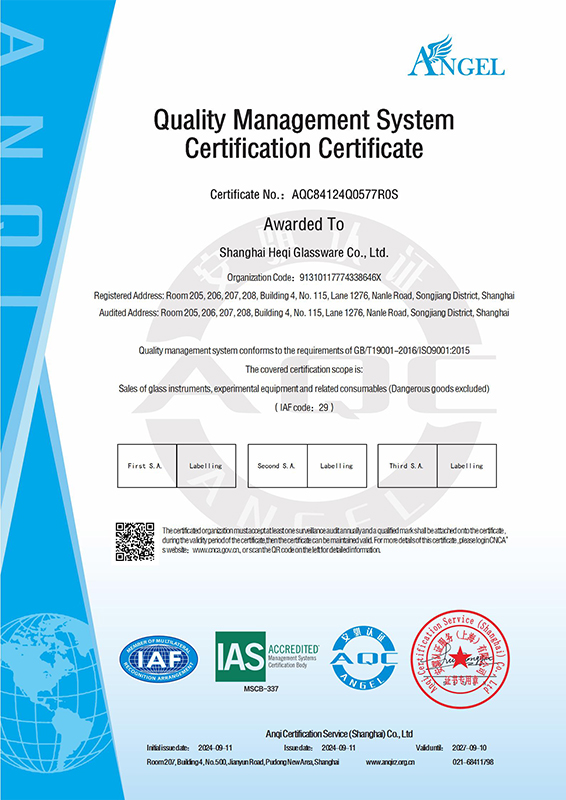
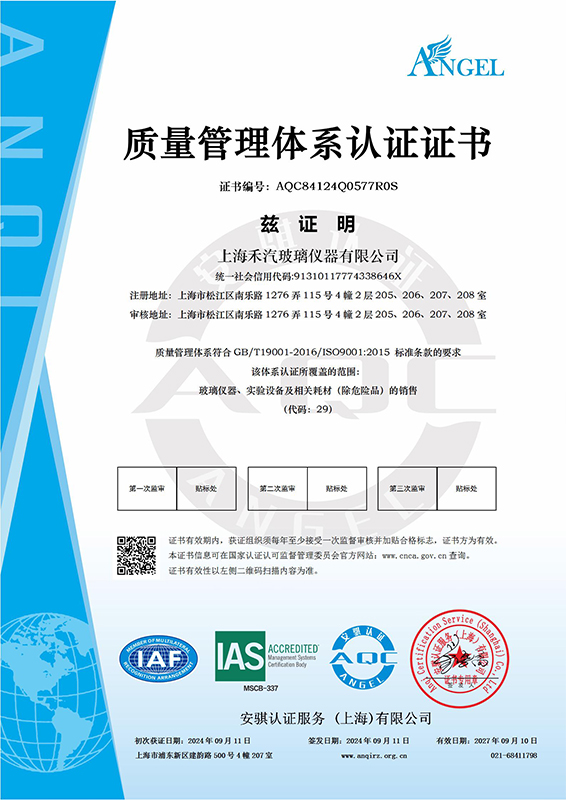
The production of high-performance laboratory hardware has evolved from small-scale manual casting to highly automated industrial workflows. Established entities such as Shanghai Heqi Glassware Co., Ltd. have modernized scientific manufacturing by replacing traditional manual techniques with advanced mechanized and semi-mechanized molding processes.
Founded in March 2002, Shanghai Heqi Glassware Co., Ltd. has expanded its specialized production footprint across strategic industrial bases in Songjiang, Chengdu, Jiaxing, and Yancheng. By integrating technology, craftsmanship, and modern management expertise, the organization has adopted assembly-line industrial processes to replace workshop-style manufacturing. This industrial transition guarantees that every molded rubber flask support achieves uniform material density, exact concentric stepped tolerances, and flawless surface finish while significantly lowering production costs and improving overall quality standards.
Standardized injection molding ensures that elastomeric compounds are cured uniformly, eliminating internal air pockets or structural weak spots that could fail under heavy mechanical loads. Reliable physical dimensions ensure that replacement supports fit identically into standardized laboratory layouts, fume hood modules, and analytical stations across large industrial facilities.
Cross-Disciplinary R and D Integration in Glassware and Support Auxiliaries
Developing effective supporting hardware requires a deep understanding of the glassware systems they are designed to protect. Shanghai Heqi Glassware Co., Ltd. brings together dedicated technical experts in chemical research and development, mechanical design and processing, and electronic control systems to form an integrated research and development team.
To support complex chemical synthesis and processing operations, the company operates three specialized internal workshops:
-
Glass Workshop focused on precision hot glass processing, standard-mouth joint grinding, custom glass blowing, and stress-relieving annealing processes.
-
Metalworking Workshop dedicated to fabricating stainless steel support frames, mounting clamps, structural rings, and custom hardware.
-
Assembly Workshop responsible for integrating glass, metal, and electronic components into complete, operational processing units.
This cross-disciplinary infrastructure enables the manufacture of comprehensive synthesis hardware, including glass reactors, rotary evaporators, distillation units, high- and low-temperature circulation systems, vacuum pumps, stirrers, and UV analyzers. Because the supporting hardware is designed alongside the reaction glassware, Shanghai Heqi Glassware Co., Ltd. ensures perfect physical compatibility between spherical processing vessels and their elastomeric support rings.
Supply Chain Logistics, Turnkey Fulfillment, and Custom Component Engineering
Commercial research organizations require fast, dependable procurement networks to keep ongoing production lines operating without interruption. Partnering with established China Lab Flask Supports Suppliers provides distinct supply chain advantages regarding product availability, cost efficiency, and turnkey service fulfillment.
To fulfill its operational service commitment of "you make a call, we handle the rest," Shanghai Heqi Glassware Co., Ltd. maintains extensive ready-to-ship inventory across its regional production facilities. Ample warehousing allows rapid order processing and fast delivery schedules, enabling laboratories to set up new experimental lines, replace consumable items, and respond to sudden operational demands without long lead times.
In addition to standardized product lines, industrial synthesis frequently requires customized glass components and non-standard vessel supports. Shanghai Heqi Glassware Co., Ltd. leverages in-house design and fabrication capabilities to support customized small-scale and pilot-scale equipment solutions. Whether a pharmaceutical facility requires specialized wide-mouth reaction vessel supports or custom-angled glass adapters, direct engineering collaboration ensures that specialized requirements are transformed into precise, functional hardware solutions.
Interfacing Flask Stabilization with Secondary Gas and Vapor Processing Hardware
Spherical vessels rarely operate in isolation. In typical organic synthesis protocols, reaction flasks are directly coupled to complex vertical apparatuses, such as reflux condensers, addition funnels, gas dispersion tubes, and desiccant towers.
When conducting moisture-sensitive or air-sensitive chemistry, maintaining gas-tight seals across standard ground glass joints is essential. Heavy or off-center gas purification hardware mounted to the neck of a round-bottom flask creates significant bending moments at the glass joints. If the base of the flask is resting on an unstable or uneven support, the entire assembly can tilt, breaking the hermetic seal or snapping the ground joint neck.
Using high-friction rubber supports provides a firm, vibration-dampened base that maintains perfect vertical alignment of the reaction vessel. This stable foundation allows continuous gas purification through an attached Lab Drying Apparatus without placing mechanical stress on ground glass connections. Partnering with an experienced Lab Drying Apparatus Manufacturer ensures that drying tubes, vacuum drying pistols, and desiccant towers interface seamlessly with stabilized flask assemblies, protecting air-sensitive organometallic compounds and pharmaceutical intermediates from moisture contamination.
FAQ:
How does a synthetic rubber Lab Flask Supports construction outperform traditional natural cork rings?
Synthetic rubber offers significant advantages over traditional cork rings in chemical resistance, liquid spill resilience, mechanical grip, and long-term durability. Natural cork is a porous, fibrous material that readily absorbs spilled acids, organic solvents, and biological fluids. Once absorbed, these chemicals can degrade the internal cellular structure of the cork, causing it to crumble, flake, or leave debris on laboratory benches.
Absorbed chemicals pose cross-contamination risks when different flasks are placed on the same cork ring. In contrast, synthetic rubber features a smooth, non-porous surface that prevents liquid absorption entirely. Spills remain on the exterior surface and can be wiped off or sanitized with standard laboratory disinfectants. Rubber provides a significantly higher coefficient of friction against smooth glass surfaces, offering superior anti-slip stability compared to the relatively slick surface of dry cork.
What range of round bottom flask volumes can a stepped multi-level ring accommodate?
A standard multi-level stepped flask support ring is engineered to hold a wide spectrum of spherical glass volumes within a single compact footprint. The concentric inner steps typically feature escalating inner diameter shoulders designed to support flasks ranging from small fifty-milliliter analytical flasks up to large five-liter or ten-liter preparatory synthesis vessels.
The smallest inner tier securely catches the narrow curvature of 50 mL, 100 mL, and 250 mL flasks, keeping their bases elevated above the benchtop. The intermediate stepped levels support medium-sized 500 mL, 1000 mL, and 2000 mL boiling flasks. The widest upper step provides a broad, stable platform for heavy 3000 mL and 5000 mL reaction vessels. This universal design eliminates the need for technicians to purchase and store multiple single-sized support rings, optimizing workspace organization in active fume hoods.
How should rubber flask supports be cleaned after exposure to aggressive organic solvents or acids?
Cleaning synthetic rubber flask supports is straightforward due to the non-porous nature of the high-density elastomeric material. Following an accidental liquid spill of acid, base, or solvent, the support ring should be rinsed promptly with copious amounts of water or diluted neutralizing solutions to remove concentrated chemical residues.
For routine cleaning and decontamination, the supports can be washed using standard neutral laboratory detergents and soft sponges or soft-bristled brushes. Abrasive scouring pads or metal scrapers should be avoided to prevent scratching the molded smooth surface. After washing, rinse the supports thoroughly with deionized or distilled water and allow them to air dry at ambient room temperature. Synthetic rubber supports are resistant to common laboratory cleaning alcohols, such as isopropyl alcohol and ethanol, allowing quick surface sanitization between experimental workflows.
Can rubber flask supports withstand direct contact with hot glassware coming off heating mantles?
High-grade synthetic rubber flask supports possess excellent thermal insulation properties and can handle short-term contact with hot glassware removed from heating mantles, oil baths, or hot water circuits. The elastomeric compound acts as a thermal barrier, preventing rapid heat transfer from the hot glass to cold laboratory bench surfaces, thereby mitigating thermal shock risks.
While the rubber can comfortably withstand typical post-reaction cooling temperatures up to 120 to 150 degrees Celsius without melting or burning, prolonged exposure to extreme temperatures exceeding 200 degrees Celsius should be avoided to preserve long-term elastomeric flexibility. For extremely hot vessels fresh from high-temperature distillations, allowing the glass to air-cool slightly on an insulated heat pad before transferring it to the rubber support ring extends the operational lifespan of the support.
Why is weight distribution critical when stabilizing multi-neck reaction flasks on benchtop supports?
Multi-neck reaction flasks introduce asymmetrical weight distribution due to the additional glass necks, attached addition funnels, temperature probes, reflux condensers, and mechanical stirrer drives. When these heavy auxiliary components are installed on side necks, the overall center of mass shifts away from the central vertical axis of the vessel.
If the flask is resting on a narrow or flat support surface, this uneven weight distribution can cause the entire assembly to tip over, resulting in glass breakage, reagent loss, and chemical exposure hazards. A multi-level stepped rubber support ring provides continuous, three-hundred-and-sixty-degree shoulder support around the lower spherical curvature of the flask. The high-friction rubber surface grips the glass firmly, counteracting off-center gravitational forces and stabilizing asymmetric mechanical loads across complex multi-neck setups.
How do specialized China Lab Flask Supports Suppliers assist in custom pilot-plant support configurations?
Leading China Lab Flask Supports Suppliers provide comprehensive manufacturing capabilities that extend beyond standardized off-the-shelf laboratory consumables. Commercial chemical synthesis and pilot-plant operations frequently utilize custom-built glass reactors, oversized receiving flasks, and specialized multi-jacketed vessels that do not conform to standard benchtop glassware dimensions.
Experienced suppliers leverage internal mold-making, CNC machining, and specialized polymer formulation capabilities to produce custom-sized support rings tailored to specific vessel geometries and weight requirements. Companies such as Shanghai Heqi Glassware Co., Ltd. utilize integrated glass, metalworking, and assembly workshops to design complete mounting frameworks. These custom systems combine heavy-duty elastomeric support pads with structural stainless steel mountings, ensuring that large pilot-scale glass vessels remain perfectly stabilized under dynamic mechanical loads and continuous industrial operation.


 English
 Français
 Español