Understanding Lab Flat Bottom Flasks: Design and Core Applications
When outfitting a modern laboratory or scaling up a chemical processing line, selecting the correct foundational glassware dictates both experimental efficiency and workflow safety. Among the most versatile pieces of laboratory apparatus found on a benchtop is the lab flat bottom flask. Designed to fulfill specific operational requirements where convenience and stability are paramount, these vessels bridge the gap between heavy-duty reaction vessels and everyday utility glassware.
Definition and Structural Characteristics
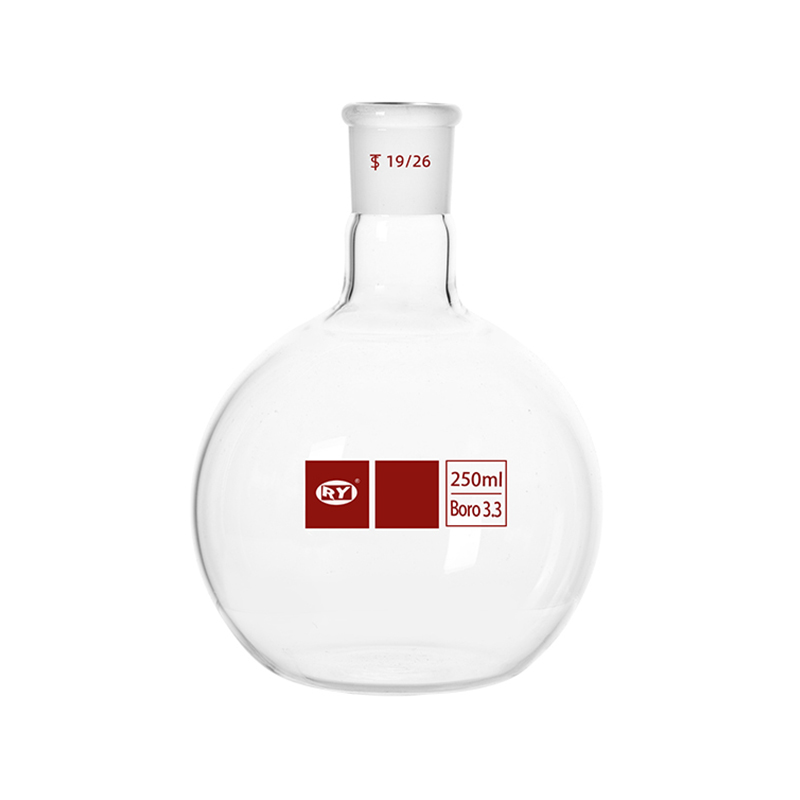
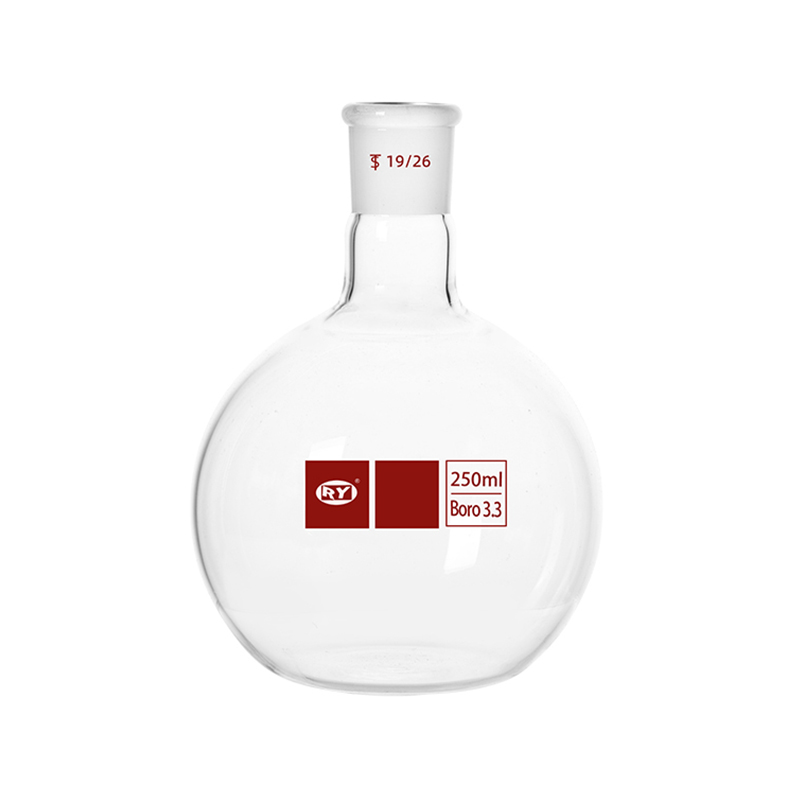
A lab flat bottom flask is a specialized container typically characterized by a spherical or conical body terminating in a cylindrical neck, featuring a uniquely flattened base. This distinct architectural choice allows the vessel to stand upright on benchtops, hot plates, and magnetic stirrers without requiring auxiliary support devices such as ring stands or cork rings.
At Shanghai Heqi Glassware Co., Ltd., production processes leverage advanced mechanized and semi-mechanized techniques across specialized manufacturing bases in Songjiang, Chengdu, Jiaxing, and Yancheng. This industrial transition from traditional manual methods to assembly-line processes ensures uniform glass distribution across the flat base, minimizing localized stress points that typically result from uneven manual blowing.
Primary Laboratory Uses
The design profile of lab flat bottom flasks makes them exceptionally well-suited for a variety of low-intensity and routine laboratory tasks:
Solution Preparation and Dissolution: Technicians frequently utilize these flasks to dissolve solutes, prepare buffers, and mix chemical reagents. The wide-bodied base allows for effective swirling without splashing.
Brief Heating and Boiling: Because they sit flush against heating surfaces, they are ideal for gentle boiling applications, media preparation, and simple dissolution procedures where uniform heat transfer from a hot plate is required.
Biological Culturing and Media Mixing: In microbiology and life science laboratories, these flasks serve as reliable containers for cultivating non-pathogenic suspensions and preparing growth media.
Comparison with Round Bottom Alternatives
Selecting between a flat-bottomed vessel and its round counterpart depends heavily on thermal dynamics and operational pressure limits.
| Performance Parameter |
Lab Flat Bottom Flasks |
Round Bottom Flasks |
| Benchtops Stability |
Self-standing; does not require a support ring or clamp for upright placement. |
Spherical base; strictly requires a cork ring, clamp, or tripod stand to remain upright. |
| Thermal Stress Distribution |
Good for uniform flat heating surfaces, but the flat interface concentrates thermal stress under extreme heating. |
Excellent; spherical geometry evenly distributes thermal expansion and mechanical stress across the entire surface. |
| Pressure Limits |
Designed primarily for atmospheric pressure applications; unsuitable for high-vacuum or pressurized reactions. |
Highly capable of withstanding negative pressure (vacuums) and elevated internal pressures due to symmetrical arch strength. |
| Primary Use Cases |
Routine mixing, brief heating, titrations, and solution preparation. |
Distillation, reflux reactions, high-temperature synthesis, and vacuum rotary evaporation. |
Understanding these distinctions helps large-scale operations and institutional facilities optimize their inventory procurement. While round bottom flasks dominate high-pressure and high-vacuum synthesis, lab flat bottom flasks remain indispensable for daily, high-turnover laboratory workflows where quick placement and removal from heat sources save valuable operational time.
Material Science: Selecting the Right Glass for Your Lab Flat Bottom Flasks
The integrity, safety, and longevity of any laboratory glassware depend fundamentally on the raw materials used in its construction. When manufacturing high-performance lab flat bottom flasks, material science dictates resistance to thermal shock, chemical inertness, and mechanical durability. Choosing the correct glass composition prevents contamination, reduces equipment failure rates, and ensures predictable performance during intensive daily laboratory operations.
Borosilicate Glass 3.3 Properties
For standard laboratory environments, Borosilicate Glass 3.3 serves as the industry baseline and the primary material of choice. Its unique chemical and physical properties make it exceptionally reliable for a wide array of thermal and chemical applications:
Low Coefficient of Thermal Expansion: With a minimal expansion coefficient (approximately 3.3 x 10⁻⁶ K-1), Borosilicate Glass 3.3 expands and contracts very little when subjected to rapid temperature changes, significantly lowering the risk of cracking.
High Chemical Corrosion Resistance: It exhibits outstanding resistance to water, neutral and acidic solutions, strong acids, and saline solutions. Even under prolonged exposure to corrosive chemicals, leaching is kept to an absolute minimum, protecting the purity of sensitive experimental solutions.
Thermal Shock Resistance: Laboratories frequently transition glassware from ambient temperatures to heat sources. Borosilicate formulation allows lab flat bottom flasks to withstand sudden temperature differentials safely without structural degradation.
At Shanghai Heqi Glassware Co., Ltd., deep expertise in standard-mouth glass instrument manufacturing ensures that these material properties are fully optimized through precision annealing processes. Since its founding in March 2002, the company has integrated advanced technology and strict craftsmanship across its production bases in Songjiang, Chengdu, Jiaxing, and Yancheng, ensuring that every batch of borosilicate glassware maintains strict structural uniformity.
Quartz Glass Variants
For specialized applications involving extreme thermal thresholds or specific optical requirements, quartz glass variants are utilized in select lab flat bottom flasks:
Extreme Temperature Resistance: Quartz can endure continuous operating temperatures far exceeding standard borosilicate glass, making it ideal for specialized high-heat setups.
High Purity and UV Transmission: Quartz glass offers exceptional chemical purity and high transparency to ultraviolet radiation, which is essential for photochemical reactions and specialized analytical procedures.
Wall Thickness and Mechanical Strength
Mechanical failure in glassware often originates from uneven wall thickness, which creates localized hot spots and structural weak points under handling or heating. To prevent this, modern manufacturing requires strict control over glass distribution. Shanghai Heqi Glassware Co., Ltd. has largely replaced traditional manual methods with mechanized and semi-mechanized production techniques, supplemented by assembly-line industrial processes. This transition eliminates the inconsistencies typical of simple workshop-style production, ensuring uniform wall thickness across the body and flat base of every lab flat bottom flask. Consistent wall thickness optimizes mechanical strength, ensuring that the flasks withstand everyday laboratory handling, magnetic stirring friction, and regular washing cycles safely and dependably.
Standard Specifications and Customization Options for Professional Buyers
Equipping laboratories, pilot-scale facilities, or industrial chemistry units requires glassware that integrates seamlessly into existing setups. Because experimental scales and apparatus configurations vary widely, having access to standardized options alongside flexible customization capabilities is essential for maintaining efficient workflows.
Capacity Ranges and Dimensional Standards
Lab flat bottom flasks are manufactured in a broad spectrum of sizes to accommodate everything from micro-scale synthesis to bulk solution preparation. Standard volume tiers typically include:
Small Scale (50ml to 250ml): Ideal for titrations, small-volume mixing, and localized benchtop reactions.
Medium Scale (500ml to 2000ml): The most common sizes for general laboratory solution preparation, media mixing, and routine heating tasks.
Large Scale (3000ml to 5000ml+): Heavy-duty vessels utilized for pilot-scale operations, bulk reagent storage, and larger fluid volumes.
Neck Finishes and Joint Types
The utility of any flask is largely defined by its neck configuration, which determines how securely it connects to condensers, stoppers, and other apparatus. Common configurations include:
Standard Taper Ground Glass Joints (e.g., 24/40, 19/26): Precision-ground joints that provide a tight, leak-free seal with standard laboratory adapters, thermometers, and distillation columns without requiring rubber stoppers.
Screw Threads (GL Threads): Plastic or glass screw necks fitted with sealing rings and caps, ideal for secure liquid transfer lines and airtight containment.
Beaded Rims: Simple, fire-polished rims designed specifically for use with rubber stoppers, corks, or silicone tubing connections.
Specializing in the research, development, and production of standard-mouth glass instruments since March 2002, Shanghai Heqi Glassware Co., Ltd. has built comprehensive production bases across Songjiang, Chengdu, Jiaxing, and Yancheng. This manufacturing infrastructure allows the company to produce a vast array of standard joint sizes and neck styles with high dimensional accuracy.
OEM/ODM Customization Capabilities
Off-the-shelf catalog items do not always satisfy specialized industrial or institutional demands. When unique experimental setups or proprietary apparatus designs are involved, custom fabrication becomes a necessity.
Leveraging its in-house capabilities in design, glass component production, and metalworking, Shanghai Heqi Glassware Co., Ltd. supports clients through customized small-scale and pilot-scale equipment solutions. Dedicated workshops for glass manipulation, metalworking, and final assembly enable the tailoring of distinct features, including:
Non-Standard Capacities and Unique Body Geometries: Tailoring flask dimensions to fit specialized heating mantles or restricted space envelopes.
Custom Neck Angles and Multiple Necks: Adding side arms, secondary necks, or angled ports for complex multi-reagent additions.
Volumetric Tolerances and Laser-Etched Markings: Applying custom graduations, calibration lines, or permanent laser-etched inventory barcodes to streamline asset tracking and precise volume estimation.
Quality Control, Compliance, and International Standards
In analytical laboratories and industrial production facilities, glassware failure is not merely an inconvenience—it represents a safety hazard, a potential chemical spill, and a costly interruption of active processes. Ensuring structural integrity requires uncompromising quality control protocols and strict adherence to recognized international manufacturing benchmarks.
Manufacturing Standards
To guarantee safety, thermal endurance, and inter-brand compatibility, high-quality lab flat bottom flasks must conform to established global standards. Key regulatory standards include:
ISO 3585: Defines the classification and properties of Borosilicate Glass 3.3, establishing strict limits on chemical composition, linear expansion coefficients, and transformation temperatures.
ISO 4797: Specifies the structural requirements, dimensions, neck tolerances, and wall thickness criteria for conical and flat-bottom boiling flasks.
Compliance with these specifications ensures that every flask integrates smoothly into existing laboratory infrastructure and behaves predictably under thermal stress.
Rigorous Factory Testing Protocols
Moving away from simple workshop-style production, modern industrial manufacturing relies on systematic, multi-stage testing to catch microscopic flaws before products leave the factory floor. At Shanghai Heqi Glassware Co., Ltd., production processes incorporate strict evaluation checkpoints across manufacturing facilities in Songjiang, Chengdu, Jiaxing, and Yancheng:
Polariscope Inspection: Every batch of lab flat bottom flasks undergoes optical polariscope screening to detect residual mechanical stress trapped during the glass-blowing and annealing phases. Eliminating internal stress points is vital to preventing unexpected shattering during heating.
Thermal Shock Resistance Testing: Sample units are subjected to abrupt temperature differentials to verify that the borosilicate matrix can handle rapid heating and cooling cycles without structural compromise.
Volumetric Calibration Accuracy: For graduated or calibrated flasks, automated and manual verification checks ensure that liquid volume indicators adhere to strict tolerance margins.
Packaging and Logistics Integrity
Transporting fragile scientific glassware across national and international supply chains demands advanced protective engineering. A high-quality product loses its value if it arrives at a facility damaged. Shanghai Heqi Glassware Co., Ltd. implements robust export-grade packaging methodologies designed to withstand the rigors of long-distance transit:
Drop-Test Validation: Packaging configurations are rigorously tested to absorb high-impact shocks from multiple angles.
Reinforced Corrugated Cartons: Multi-layered outer boxes protect against external compression during freight handling.
Custom Inner Partitioning: Individual cellular dividers and custom molded cushioning isolate each flask, preventing glass-on-glass friction and drastically reducing breakage rates upon delivery.
Sourcing Direct from the Manufacturer
Procuring laboratory glassware efficiently requires careful navigation of the supply chain. For institutional facilities, university labs, and industrial manufacturing plants, securing reliable access to high-volume lab flat bottom flasks without compromising on quality or budget is a continuous priority. Partnering directly with an established producer streamlines acquisition while addressing the core concerns of cost stability, lead time predictability, and supply chain transparency.
Cost Optimization through Direct Partnerships
Relying on multiple intermediate distribution layers often introduces unnecessary markups, inflating operational expenditures over time. Establishing a direct relationship with a primary producer eliminates these overhead costs. Since its founding in March 2002, Shanghai Heqi Glassware Co., Ltd. has developed specialized production bases across Songjiang, Chengdu, Jiaxing, and Yancheng. By substituting traditional manual methods with mechanized, semi-mechanized techniques and assembly-line industrial processes, the company achieves significant production efficiencies. These cost-saving efficiencies are passed directly to institutional and industrial clients, enabling predictable long-term pricing structures for bulk orders of lab flat bottom flasks.
Supply Chain Resilience and Lead Times
Supply chain interruptions can halt active research projects or disrupt commercial production lines. A dependable manufacturing partner must maintain robust production capacity, adequate raw material reserves, and flexible scheduling capabilities to prevent sudden stockouts.
Shanghai Heqi Glassware Co., Ltd. addresses logistical reliability through extensive in-house manufacturing capabilities. Supported by dedicated workshops specializing in glass manipulation, metalworking, and final assembly, the company maintains ample inventory across its distribution network. This integrated approach ensures fast delivery times and minimizes lead-time volatility, even when fulfilling high-volume or recurring replenishment orders.
Evaluating Supplier Credibility
When vetting manufacturing partners for critical laboratory apparatus, wholesale and institutional buyers typically evaluate several key performance indicators to ensure long-term reliability:
| Evaluation Metric |
Factory-Direct Standard (Shanghai Heqi Glassware Co., Ltd.) |
Informal Workshop Standard |
| Manufacturing Infrastructure |
Multi-base production footprint (Songjiang, Chengdu, Jiaxing, Yancheng) with dedicated glass, metal, and assembly workshops. |
Single localized workshop with heavy reliance on manual or rudimentary artisan tools. |
| Process Standardization |
Mechanized and assembly-line industrial processing ensuring uniform wall thickness and precise joint dimensions. |
Variable manual blowing techniques leading to inconsistent wall strength and high defect rates. |
| Inventory and Fulfillment |
Ample warehouse inventory with established logistics channels for rapid international and domestic dispatch. |
Limited stock availability, prone to production bottlenecks and extended wait times. |
| Customization Flexibility |
In-house R&D and engineering teams supporting tailored small-scale and pilot-scale equipment modifications. |
Rigid catalog options with little to no capacity for custom glassware configurations. |
By prioritizing partners that demonstrate verifiable manufacturing scale, strict quality assurance protocols, and responsive custom fabrication support, facilities can secure a steady, high-performance inventory of lab flat bottom flasks tailored to their exact operational needs.
Frequently Asked Questions (FAQ)
Navigating the selection, operation, and upkeep of laboratory glassware often raises practical questions for laboratory managers, researchers, and technical operators. Below are answers to some of the most common inquiries regarding lab flat bottom flasks, designed to help optimize your daily experimental workflows.
What are the temperature limits for standard borosilicate lab flat bottom flasks?
Standard borosilicate glass (specifically Borosilicate 3.3) used in lab flat bottom flasks is engineered to withstand high temperatures and rapid thermal shifts.
Maximum Continuous Operating Temperature: Safe for continuous use up to approximately 500°C under normal atmospheric conditions.
Short-Term Thermal Limit: Can endure brief exposures up to 550°C without permanent structural deformation.
Thermal Shock Differential: Typically safe for sudden temperature changes up to 100°C to 120°C. However, when utilizing heating mantles or hot plates, heat should be applied gradually to prevent localized thermal stress across the flat base.
Can lab flat bottom flasks be used for vacuum distillation?
Generally, lab flat bottom flasks are not recommended for high-vacuum applications, vacuum distillation, or pressurized reactions.
Structural Reason: The flat base geometry lacks the uniform arch strength found in spherical vessels. Under negative internal pressure (vacuum), flat surfaces are prone to inward collapse and implosion.
Alternative Recommendation: For vacuum setups, rotary evaporation, or high-pressure distillation, round bottom flasks should always be utilized due to their superior stress distribution.
What is the standard minimum order quantity (MOQ) and lead time for custom lab flat bottom flasks?
Lead times and order minimums depend heavily on whether the items are standard catalog pieces or custom fabrications.
Standard Inventory: Shanghai Heqi Glassware Co., Ltd. maintains ample warehouse inventory across its production bases in Songjiang, Chengdu, Jiaxing, and Yancheng, allowing for rapid dispatch and short lead times on standard glassware configurations.
Custom Orders (OEM/ODM): For custom capacities, unique neck angles, or specialized volumetric markings utilizing the company's dedicated glass, metalworking, and assembly workshops, production timelines typically range from 2 to 4 weeks depending on design complexity.
How should lab flat bottom flasks be properly cleaned and maintained to extend lifespan?
Proper maintenance preserves optical clarity, prevents chemical cross-contamination, and prevents structural weakening:
Chemical Cleaning: Rinse with appropriate solvents or mild laboratory detergents immediately after use to prevent residue baking.
Avoid Abrasive Tools: Never use metal brushes, harsh scouring pads, or abrasive powders, as microscopic scratches on the inner or outer walls compromise the glass's mechanical strength and thermal shock resistance.
Drying and Annealing Care: Allow flasks to cool naturally after heating. Avoid quenching hot glassware in cold water to prevent thermal shock fractures.
Are your lab flat bottom flasks certified for precision volumetric analysis?
It is important to distinguish between utility glassware and certified measuring instruments.
Flask Function: Standard lab flat bottom flasks are designed primarily for mixing, boiling, solution preparation, and reaction containment rather than high-precision volumetric measurement.
Graduation Accuracy: While flasks produced by Shanghai Heqi Glassware Co., Ltd. can be custom-printed with approximate volume graduations or laser-etched identification markers to assist with fluid estimation, precise quantitative analysis requiring Class A compliance should utilize dedicated volumetric flasks or burettes.


 English
 Français
 Español