What is a Lab Distillation and Fractionating Column?
Precision separation of liquid mixtures forms the bedrock of chemical engineering, pharmaceutical synthesis, and advanced materials research. At the heart of these purification workflows lies the lab distillation and fractionating column—a specialized vertical vessel engineered to achieve multi-stage vapor-liquid equilibrium. By facilitating continuous counter-current contact between ascending vapors and descending liquid condensate, these columns separate chemical components based on minute differences in their boiling points.
Understanding the fundamental mechanisms and structural architecture of these systems is vital for laboratory directors, process engineers, and procurement specialists seeking reliable, high-purity production results. Recognizing this need for uncompromising quality, Shanghai Heqi Glassware Co., Ltd. has spent over two decades specializing in the research, development, and advanced manufacturing of precision glass instruments and pilot-scale chemical equipment. Founded in March 2002, the company leverages integrated production bases across Songjiang, Chengdu, Jiaxing, and Yancheng, combining advanced mechanized fabrication with meticulous craftsmanship to support global chemical and pharmaceutical laboratories.
Core Definition and Fundamental Role
A fractionating column is an essential apparatus designed to intensify the separation efficiency of standard batch or continuous distillation setups. Unlike simple distillation, which relies on a single vaporization-condensation cycle and is inadequate for separating liquids with close boiling points, a fractionating column creates a thermal gradient along its height. This gradient forces repeated vaporization and condensation steps internally, allowing high-purity low-boiling fractions to reach the condenser while high-boiling fractions return to the boiling flask.
In modern chemical processing, these columns serve critical functions including:
Purifying volatile organic solvents for sensitive analytical and synthetic procedures.
Isolating high-purity active pharmaceutical ingredients (APIs) and reaction intermediates.
Fractionating complex natural extracts and essential oils without thermal degradation.
Facilitating solvent recycling and green chemistry initiatives in industrial research laboratories.
Working Principle: Vaporization, Condensation, and Theoretical Plates
The operational efficacy of any distillation system is governed by thermodynamics and mass transfer principles. When a liquid mixture inside a reaction flask is heated to its boiling point, a vapor phase rich in the more volatile component rises into the fractionating column. As this vapor encounters cooler surfaces along the column packing or trays, partial condensation occurs. The resulting liquid (reflux) flows downward, meeting the ascending hot vapor.
This counter-current interaction results in continuous heat and mass transfer:
1. The ascending vapor strips lower-boiling components from the descending liquid.
2. The descending liquid absorbs higher-boiling components from the rising vapor.
3. Each complete vaporization-condensation cycle is mathematically defined as a theoretical plate.
The separation efficiency is directly proportional to the number of theoretical plates contained within the column. To quantify physical performance, engineers utilize the Height Equivalent to a Theoretical Plate (HETP) metric, where a lower HETP indicates superior separation capability within a compact vertical height.
Industrial vs. Laboratory Scale: Bridging Benchtop and Pilot Production
A persistent challenge in chemical manufacturing is scaling up separation processes from benchtop discovery to full-scale industrial production. Laboratory distillation systems must accurately simulate large-scale plant behavior while offering the flexibility required for exploratory research. Shanghai Heqi Glassware Co., Ltd. addresses this gap by integrating expertise across chemical research, mechanical design, and electronic control. Operating dedicated workshops for glassworking, metalworking, and equipment assembly, the company produces versatile small and pilot-scale systems—including glass reactors, rotary evaporators, specialized distillation units, and temperature circulation systems.
By ensuring that laboratory-scale fractionating columns replicate the hydrodynamic characteristics, reflux ratios, and thermal profiles of industrial columns, researchers can optimize parameters efficiently before committing to capital-intensive manufacturing scaling.
The Role of Fractionating Columns in Modern Laboratory Distillation
Advanced laboratory operations and pilot-scale chemical synthesis demand rigorous control over separation precision, product yield, and thermal safety. Modern fractionating columns act as the critical core of these setups, incorporating sophisticated internal geometries and thermal management dynamics to handle complex chemical mixtures that simple distillation units cannot resolve.
Enhancing Separation Efficiency through Column Internals
The internal architecture of a fractionating column dictates its vapor-liquid contacting efficiency. Whether utilizing randomized packings, structured wire-mesh structures, or precision-engineered trays, column internals are engineered to maximize interfacial surface area while minimizing pressure drop. High surface area promotes rapid mass transfer, enabling the isolation of high-purity fractions even from challenging multi-component organic mixtures.
To support diverse experimental protocols and rigorous research requirements, Shanghai Heqi Glassware Co., Ltd. supplies an extensive inventory of high-quality glass instruments, lab consumables, and specialized experimental equipment. Backed by robust manufacturing capabilities across its multiple production bases—located in Songjiang, Chengdu, Jiaxing, and Yancheng—the company ensures that institutional and industrial laboratories have immediate access to high-performance column internals tailored to specific chemical requirements.
Separating Boiling Point Differences in Complex Synthesis
In advanced organic synthesis, reaction mixtures frequently contain unreacted starting materials, byproducts, and target compounds with close boiling points—sometimes differing by less than 10 degrees Celsius to 15 degrees Celsius. Simple distillation fails in these scenarios due to azeotrope formation or vapor entrainment. High-efficiency fractionating columns provide the necessary theoretical plates to achieve sharp separation cuts, ensuring that synthesized compounds meet strict purity benchmarks required for downstream analytical and industrial applications.
Reflux Ratio Management and Thermal Control
Precise thermal regulation and reflux ratio management are vital for optimizing product recovery and purity. The reflux ratio—the proportion of condensed liquid returned to the column relative to the amount withdrawn as product—directly influences separation sharpness. Higher reflux ratios enhance purity at the expense of processing speed, whereas lower ratios increase throughput at the cost of separation resolution. Modern distillation assemblies integrate advanced temperature sensors and precision heating mantles to maintain stable thermal gradients throughout the column height.
Key Types and Designs of Fractionating Columns
Selecting the appropriate column design depends heavily on operating pressure, liquid viscosity, chemical aggressiveness, and required separation capacity. Engineering teams must evaluate structural formats to optimize performance for specific laboratory and pilot-scale applications.
Packed Columns
Packed columns are filled with specialized packing elements designed to maximize surface area per unit volume without obstructing vapor and liquid flow.
Random Packings: Elements such as Raschig rings, Berl saddles, and Pall rings tumbled randomly into the column shell. They offer cost-effective, versatile solutions for general laboratory and pilot applications where moderate efficiency is required.
Structured Packings: Precision-crimped metal or ceramic gauze sheets arranged in structured geometric patterns. They provide exceptionally low pressure drops and high theoretical plate counts, making them ideal for vacuum distillation and heat-sensitive compounds.
Tray and Plate Columns
Tray columns utilize horizontal plates or stages installed at regular intervals down the column height. Liquid flows across each tray while vapor bubbles up through perforations.
Sieve Trays: Simple perforated plates offering high capacity and low maintenance, ideal for clean systems with stable vapor-liquid loads.
Bubble Cap Trays: Feature caps over riser tubes, maintaining a liquid seal even at low vapor rates and preventing liquid weeping.
Valve Trays: Equipped with liftable valves that adjust automatically to varying vapor loads, providing excellent operational flexibility across wide flow ranges.
Specialized Materials of Construction
Chemical compatibility is paramount when selecting distillation equipment. Borosilicate glass remains the gold standard for laboratory visibility and universal chemical resistance against acids and corrosive solvents (excluding hydrofluoric acid and hot concentrated phosphoric acid). For high-pressure or heavy-duty industrial applications, stainless steel (such as 316L) and specialty alloys (like Hastelloy or PTFE-lined vessels) are deployed. Shanghai Heqi Glassware Co., Ltd. utilizes its in-house glassworking and metalworking workshops to fabricate custom reactors and distillation assemblies tailored to unique material specifications, ensuring safe handling of corrosive chemical environments.
Critical Performance Specifications for Procurement
When sourcing distillation equipment for institutional laboratories or pilot-plant production facilities, technical buyers must evaluate several critical performance parameters to ensure operational success, repeatability, and long-term durability. Understanding these specifications prevents costly operational bottlenecks and ensures that the selected apparatus meets rigorous chemical processing standards.
Parameter Comparison of Column Types
| Column Type |
Typical HETP Range |
Pressure Drop |
Throughput Capacity |
Primary Application |
| Random Packed Column |
150 to 300 mm |
Medium to High |
Moderate |
General solvent recovery, routine lab distillation, and standard organic purifications. |
| Structured Packed Column |
50 to 150 mm |
Very Low |
High |
Vacuum distillation, heat-sensitive compounds, high-purity API isolation. |
| Sieve/Valve Tray Column |
300 to 600 mm |
Medium |
High |
Pilot-scale production, high-liquid-load operations, and multi-component fractionation. |
Material Compatibility and Purity Standards
Preventing sample contamination is vital in pharmaceutical research and analytical chemistry. Equipment must feature inert product-contact surfaces to ensure that sensitive compounds do not leach metallic impurities. Borosilicate 3.3 glass provides exceptional thermal shock resistance and universal chemical inertness, making it the preferred material for transparent reaction and distillation workflows.
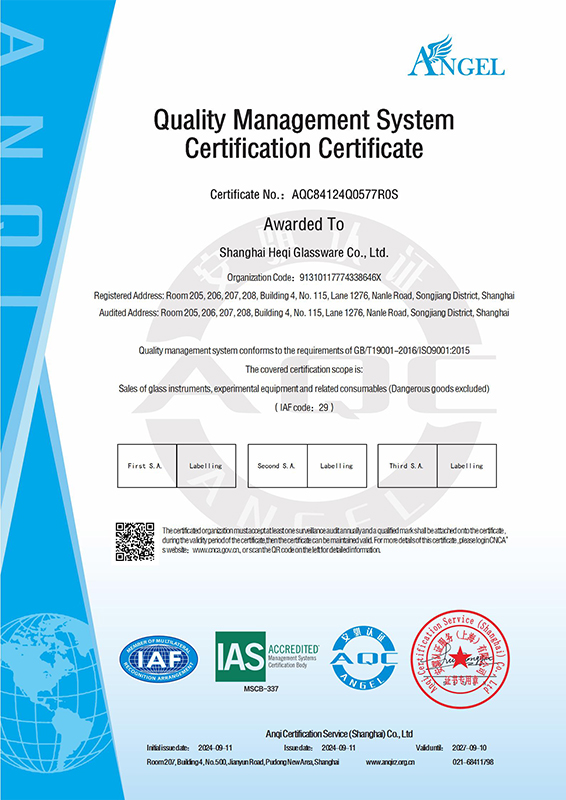
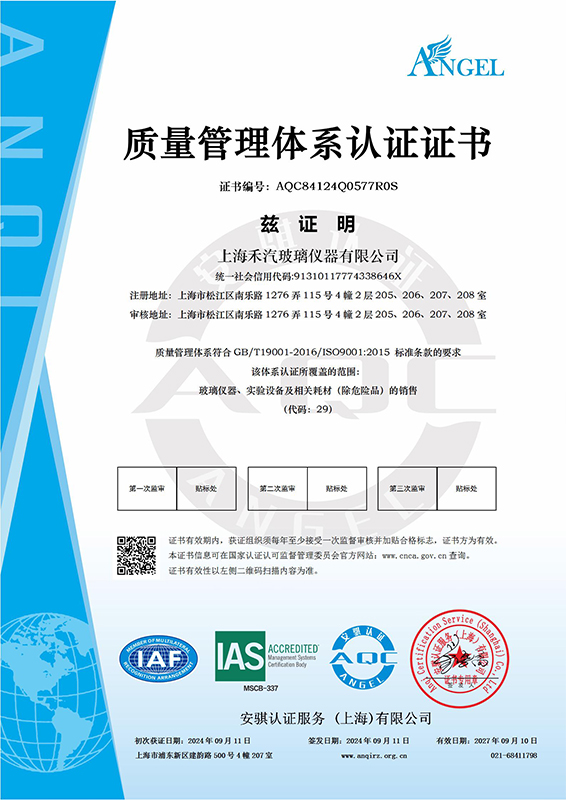
To ensure that laboratories receive fully compliant apparatus, Shanghai Heqi Glassware Co., Ltd. integrates strict quality management systems across its advanced production bases in Songjiang, Chengdu, Jiaxing, and Yancheng. By replacing traditional manual methods with mechanized manufacturing and assembly-line industrial processes, the company ensures complete manufacturing traceability and reliable material consistency across all supplied glass instruments and experimental units.
Thermal Stability and Vacuum Limits
Distillation processes often operate under extreme thermal and pressure conditions. Equipment must withstand continuous operating temperatures up to 300 degrees Celsius for standard glass assemblies—and significantly higher thresholds for specialized alloy variants—while maintaining structural integrity under deep vacuum conditions down to 0.1 mbar. Operating under high vacuum is essential for boiling high-boiling-point substances at substantially reduced temperatures, thereby preventing thermal decomposition.
Application Sectors for High-Purity Distillation Systems
High-performance fractionating columns and precision distillation setups are deployed across diverse industries where purity, thermal control, and separation accuracy are non-negotiable. Large-scale purchasing managers and institutional buyers rely on robust, highly specialized equipment to maintain strict regulatory compliance and optimal production yields.
Pharmaceutical and API Manufacturing
In drug discovery, chemical synthesis, and commercial active pharmaceutical ingredient (API) production, solvent recovery, reaction byproduct removal, and the isolation of high-purity intermediates require certified, reliable distillation units. Precision temperature control and inert product-contact surfaces prevent thermal degradation and sample contamination.
To meet the rigorous demands of pharmaceutical research and pilot-scale production, Shanghai Heqi Glassware Co., Ltd. brings together an experienced R&D team composed of experts in chemical research, mechanical design, and electronic control. Operating specialized workshops for glassworking, metalworking, and equipment assembly, the company produces versatile small and pilot-scale systems—including glass reactors, rotary evaporators, high- and low-temperature circulation systems, vacuum pumps, stirrers, and UV analyzers—ensuring complete support for pharmaceutical laboratories.
Petrochemical and Chemical Synthesis
Complex hydrocarbon refining, intermediate compound separation, and the batch fractionation of specialty chemicals rely heavily on multi-plate fractionating columns to achieve strict purity grades. Industrial researchers need durable columns that can withstand continuous operational stress and aggressive chemical environments without losing separation efficiency.
Flavor, Fragrance, and Essential Oils
Natural extracts and aromatic compounds are frequently extremely heat-sensitive. Exposing delicate botanical extracts to high temperatures can alter their molecular profile and ruin their aromatic qualities. Utilizing structured packed columns under high vacuum allows refiners to isolate delicate compounds at substantially lower boiling points, successfully preserving authentic sensory profiles and therapeutic properties.
To deliver on its core service commitment of providing seamless support and ensuring ample inventory for urgent laboratory needs, Shanghai Heqi Glassware Co., Ltd. also supplies an extensive range of high-quality glass instruments, lab consumables, and experimental equipment from trusted sources, backed by fast delivery and premium service to ensure full operational continuity for clients worldwide.
Evaluating Manufacturers: What Large-Scale Buyers Must Consider
Procuring specialized distillation and fractionation equipment for institutional research facilities or industrial pilot plants requires partnering with established manufacturers capable of delivering customized engineering, rigorous quality assurance, and responsive after-sales technical support. Large-scale purchasing managers must look beyond basic catalog items and evaluate the core manufacturing capabilities, supply chain stability, and technical expertise of their equipment providers.
Custom Engineering and Design Capabilities
Every chemical synthesis or solvent recovery workflow presents unique operational constraints, spatial limitations, and thermal requirements. A reliable manufacturing partner must possess the in-house capability to tailor column dimensions, packing types, reflux heads, and auxiliary heating or cooling setups to precise specifications.
To meet these complex requirements, Shanghai Heqi Glassware Co., Ltd. has brought together an expert R&D team specializing in chemical research, mechanical design, and electronic control. Supported by specialized in-house workshops dedicated to glassworking, metalworking, and equipment assembly, the company possesses the flexibility to design and fabricate customized small and pilot-scale systems—ranging from integrated glass reactors and rotary evaporators to specialized distillation units and thermal circulation systems—tailored directly to unique client specifications.
Quality Assurance, Pricing, and Supply Chain Reliability
Timely project execution and consistent material quality depend heavily on robust manufacturing schedules and reliable logistics. Industrial procurement teams require transparency regarding material traceability, compliance standards, and production timelines.
Founded in March 2002 with specialized production bases established across Songjiang, Chengdu, Jiaxing, and Yancheng, Shanghai Heqi Glassware Co., Ltd. has successfully transitioned from traditional manual methods to mechanized and semi-mechanized techniques. By introducing assembly-line industrial processes to replace simple workshop-style production, the company effectively reduces operational costs while significantly improving product quality and consistency. Furthermore, backed by ample inventory, fast delivery schedules, and a commitment to handling client needs comprehensively, the company ensures seamless support for global laboratories and industrial buyers seeking direct manufacturing advantages.
Frequently Asked Questions (FAQ)
Q1: How do I calculate the required number of theoretical plates for my specific distillation process?
Insight: The required number of theoretical plates depends on the relative volatility of the mixture components, the desired distillate and bottom purities, and the selected reflux ratio. Common estimation methods include the McCabe-Thiele graphical technique for binary mixtures and Fenske-Underwood equations for multi-component systems. Engineering and technical support teams frequently assist purchasing clients by running process simulations to determine optimal column height and packing specifications for custom applications.
Q2: What is the primary advantage of structured packing over random packing in a fractionating column?
Insight: Structured packing offers a significantly lower pressure drop and a smaller Height Equivalent to a Theoretical Plate (HETP) compared to random packing. This makes structured packing ideal for vacuum distillation of heat-sensitive compounds, as lower pressure drops prevent localized overheating, reduce energy consumption, and maximize overall separation efficiency.
Q3: Can laboratory distillation columns be customized for hazardous or corrosive chemical processing?
Insight: Yes. While standard borosilicate glass handles most mineral acids and organic solvents, aggressive media such as hydrofluoric acid or strong hot alkalis require specialized materials. To accommodate these rigorous laboratory requirements, Shanghai Heqi Glassware Co., Ltd. utilizes its specialized workshops for glassworking, metalworking, and assembly to configure systems using custom-engineered corrosion-resistant materials, specialized alloy linings, or PTFE components tailored to specific chemical environments.
Q4: What are standard lead times and logistics considerations for procuring bulk laboratory or pilot distillation units?
Insight: Standard modular laboratory glassware and distillation kits are typically maintained in ample inventory for rapid dispatch to ensure full operational support for clients. Custom-engineered pilot-scale systems involving specialized metalworking, custom glassblowing, and integrated electronic control panels require specific fabrication schedules. Partnering directly with a manufacturer like Shanghai Heqi Glassware Co., Ltd.—which operates robust production bases across locations such as Songjiang, Chengdu, Jiaxing, and Yancheng—ensures transparent lead times, secure global logistics, and volume purchasing advantages.


 English
 Français
 Español