What is a Lab Filtering Flask and How Does It Work?
Definition & Core Function
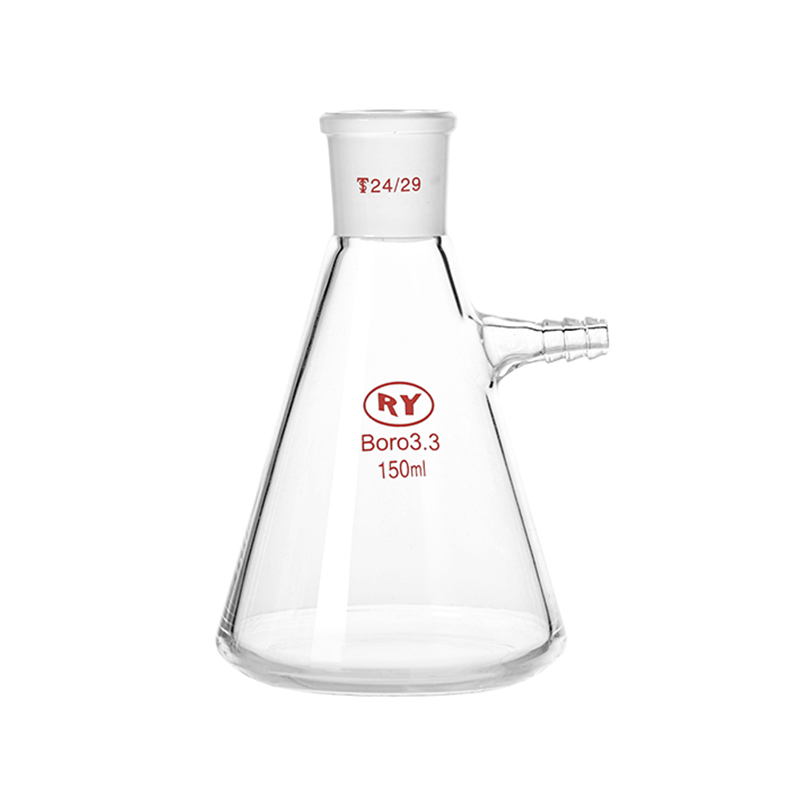
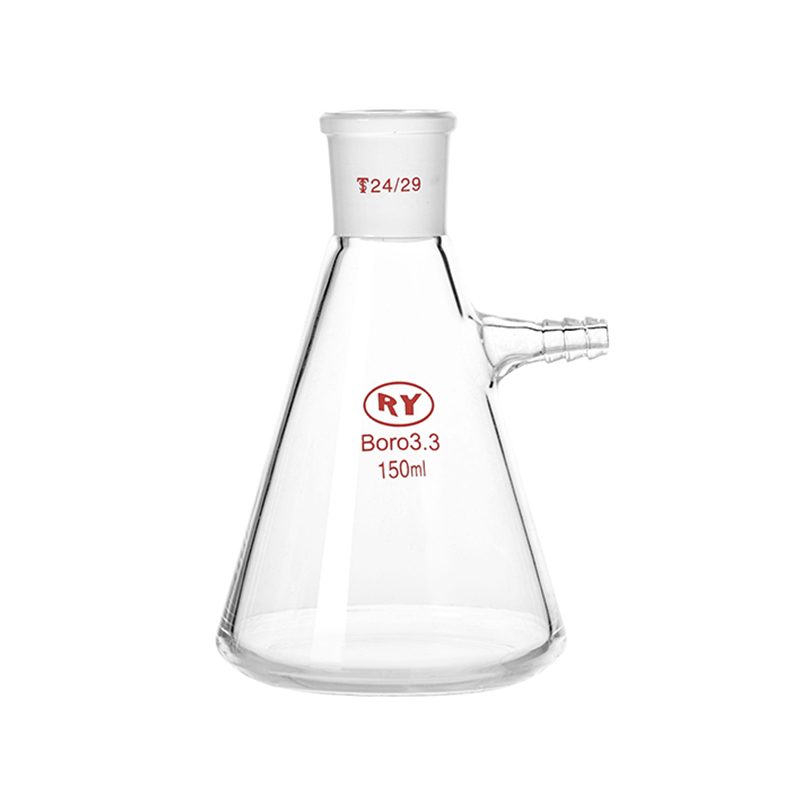
A lab filtering flask, frequently referred to as a Buchner flask, vacuum flask, or suction flask, is a heavy-walled specialized glassware component designed primarily for filtration under reduced pressure. Unlike standard mixing or heating glassware, its fundamental purpose is to accelerate liquid-solid separation processes through vacuum assistance. Whether handling routine analytical procedures or high-throughput preparatory chemistry, selecting a reliably manufactured lab filtering flask ensures both structural integrity and operational safety in demanding laboratory environments. Since its establishment in March 2002, Shanghai Heqi Glassware Co., Ltd. has specialized in the research, development, and production of standard-mouth glass instruments, leveraging advanced manufacturing techniques to support industrial-scale filtration requirements.
Key Design Features
The structural anatomy of a reliable lab filtering flask is engineered specifically to handle mechanical stress and maintain airtight vacuum seals. Key design characteristics include:
- Heavy-Wall Construction: Thickened walls provide the structural strength necessary to prevent implosion when a negative pressure differential is applied.
- Side-Arm Hose Connection: A precision-tooled side arm allows secure attachment of flexible vacuum tubing to external vacuum sources, aspirators, or diaphragm pumps. Shanghai Heqi Glassware Co., Ltd. incorporates optimized side-arm designs to ensure tight tubing grips and minimize slippage risks during continuous operations.
- Standard Taper Joints: Precision-ground glass necks accommodate standard rubber stoppers, adapters, and Buchner funnels snugly, ensuring that vacuum suction is preserved throughout the filtration run.
Operating Principle
The operational mechanics of a lab filtering flask rely on differential pressure to drive liquids through filter media at speeds significantly faster than standard gravity filtration. When connected to a vacuum source via the side arm, the internal pressure of the flask drops below atmospheric pressure. This pressure gradient forces the filtrate rapidly through filter paper or sintered discs resting on a funnel above the flask, trapping solid precipitates while pulling the liquid phase cleanly into the vessel body.
To maintain precision across diverse applications, laboratory and pilot-scale facilities often match their glassware with compatible equipment. Integrating a robust lab filtering flask with supporting hardware—such as vacuum pumps and circulation systems—streamlines workflows. Drawing upon its in-house specialized workshops for glass, metalworking, and assembly, Shanghai Heqi Glassware Co., Ltd. produces comprehensive small and pilot-scale equipment setups, ensuring seamless compatibility between filtration glassware and vacuum control systems.
Specifications and Comparative Parameters
For large-scale laboratory setups and pilot plants, evaluating technical parameters ensures that the chosen glassware matches specific operational capacities and pressure tolerances. Below is a detailed parameter comparison guide for standard industrial-grade configurations:
| Parameter Specification |
Standard Laboratory Grade |
Heavy-Duty Industrial Pilot Grade |
| Typical Capacity Range |
250 mL to 2,000 mL |
5,000 mL to 20,000 mL |
| Wall Thickness Profile |
Standard uniform heavy wall |
Reinforced thick wall with stress-relief annealing |
| Glass Material Composition |
Borosilicate Glass 3.3 |
Borosilicate Glass 3.3 with high chemical purity |
| Maximum Operating Vacuum |
Up to 0.095 MPa |
Up to 0.098 MPa (reinforced structural tolerance) |
| Thermal Shock Resistance |
Delta T 100 degrees K to 120 degrees K |
Delta T 120 degrees K to 140 degrees K |
| Side-Arm Configuration |
Integrated glass tubing or detachable plastic safety barb |
Heavy-duty reinforced glass side arm or screw-thread detachable connector |
By transitioning from traditional manual methods to mechanized and semi-mechanized assembly-line production processes across its established bases in Songjiang, Chengdu, Jiaxing, and Yancheng, Shanghai Heqi Glassware Co., Ltd. ensures that every lab filtering flask meets strict dimensional tolerances and performance benchmarks.
Key Materials and Manufacturing Standards for Industrial Applications
Borosilicate Glass 3.3
When outfitting high-capacity laboratories or pilot-scale production facilities, the raw material composition of a lab filtering flask dictates its operational lifespan and safety. Borosilicate Glass 3.3 serves as the universal gold standard for laboratory glassware due to its exceptionally low coefficient of thermal expansion. This chemical composition ensures that the flask can endure drastic temperature fluctuations without fracturing. Furthermore, Borosilicate Glass 3.3 provides superior chemical inertness, resisting degradation or leaching when exposed to aggressive acids, organic solvents, and corrosive solutions. Upholding these stringent material standards, Shanghai Heqi Glassware Co., Ltd. utilizes high-purity glass compositions across its manufacturing bases in Songjiang, Chengdu, Jiaxing, and Yancheng, ensuring exceptional chemical resistance and thermal reliability for every lab filtering flask produced.
Wall Thickness and International Compliance Standards
Unlike standard boiling flasks or Erlenmeyer vessels intended for heating and mixing, a lab filtering flask must endure continuous external atmospheric pressure when a vacuum is pulled. Because of this mechanical stress, uniform wall thickness and precise annealing are critical. Compliance with internationally recognized standards—such as ASTM E1406 for specification-grade filtering flasks or ISO 6556—guarantees that the glassware maintains structural integrity under rigorous operating conditions. Mechanical strength testing, including hydrostatic pressure checks and thermal shock evaluations, ensures that vessels can handle high-throughput environments without unexpected failures.
Customization Capabilities and Precision Fabrication
Industrial applications frequently demand specialized configurations that go beyond off-the-shelf catalog items. Whether adapting glassware for specialized reactor setups, integrating amber-tinted coatings for light-sensitive compounds, or adding custom graduated volume markings, tailoring the equipment to unique workflow requirements is essential. Leveraging specialized workshops dedicated to glass, metalworking, and assembly, Shanghai Heqi Glassware Co., Ltd. combines advanced technology with expert craftsmanship. This capability allows for custom fabrication of small-scale and pilot-scale components, ensuring that every lab filtering flask aligns perfectly with specific volumetric, connection, and mounting parameters required by modern chemical and pharmaceutical operations.
Material Performance and Quality Parameters
To assist technical evaluators and facility managers in selecting appropriate equipment, the table below outlines the core material and manufacturing parameters associated with industrial-grade glassware:
| Material and Manufacturing Metric |
Technical Specification |
Operational Benefit |
| Glass Type |
Low-expansion Borosilicate Glass 3.3 |
Minimizes thermal stress and prevents cracking during rapid temperature shifts. |
| Hydrolytic Resistance |
ISO 719 / DIN 12 111 (Class HGB 1) |
Prevents alkali leaching into sensitive aqueous solutions or chemical reagents. |
| Acid Resistance |
DIN 12 116 (Class S 1) |
Ensures surface durability against prolonged exposure to concentrated acids. |
| Annealing Point |
Approx. 560 degrees C to 580 degrees C |
Relieves internal mechanical stresses induced during the glass-blowing process. |
| Dimensional Tolerance |
Conforming to ISO 6556 / ASTM E1406 |
Guarantees exact neck diameters and side-arm dimensions for airtight sealing. |
The Role of Lab Filtering Flask in Modern Industrial Filtration
Vacuum Filtration Assemblies and Component Integration
In modern laboratory and pilot-scale workflows, a lab filtering flask rarely operates in isolation. It serves as the central collection vessel within a complete vacuum filtration assembly, working in tandem with Buchner funnels, sintered glass filters, reliable filter paper, and external vacuum sources. Maintaining a tight, leak-free connection across all these components is vital for achieving rapid solvent recovery, efficient catalyst separation, and clean precipitate collection. Recognizing that seamless equipment integration drives overall laboratory efficiency, Shanghai Heqi Glassware Co., Ltd. applies its mechanical design and electronic control expertise to produce complementary hardware—such as precision vacuum pumps, stirrers, and high- and low-temperature circulation systems—ensuring that every lab filtering flask fits effortlessly into sophisticated, multi-unit experimental setups.
Applications Across Diverse Industrial Sectors
The versatility of the lab filtering flask makes it an indispensable asset across a wide spectrum of scientific and manufacturing industries:
- Pharmaceutical Research and Quality Control: Used extensively in active pharmaceutical ingredient (API) purification, recrystallization filtration, and batch purity verification.
- Chemical Synthesis and Fine Chemicals: Essential for separating solid by-products from reaction mixtures and isolating target organic or inorganic compounds.
- Environmental Testing and Water Analysis: Deployed in monitoring facilities for suspended solids filtration, gravimetric analysis, and particulate testing.
- Food and Beverage Quality Assurance: Utilized in routine laboratory testing for microbial analysis, sediment collection, and extract clarification.
Efficiency Gains in High-Volume Production Facilities
Transitioning from traditional gravity filtration to vacuum-assisted systems fundamentally alters laboratory throughput. By utilizing a heavy-walled lab filtering flask connected to a regulated vacuum source, filtration times that once took hours can be reduced to mere minutes. This acceleration prevents bottlenecks in high-volume production and analytical testing facilities. To support these demanding environments, Shanghai Heqi Glassware Co., Ltd. has evolved from traditional manual methods to mechanized and semi-mechanized production lines across its manufacturing bases, guaranteeing consistent vessel quality, ample inventory, and fast delivery to keep industrial operations running without interruption.
Filtration Assembly Performance Parameters
To help technical teams evaluate how filtration setups perform under varying operational demands, the comparison table below outlines key performance metrics for standard laboratory versus industrial-scale assemblies:
| Performance Metric |
Standard Laboratory Setup |
Industrial Pilot-Scale Setup |
| Filtration Speed |
Moderate (optimized for analytical sample prep) |
High-throughput (optimized for rapid batch processing) |
| Compatible Vacuum Source |
Water aspirator or small diaphragm pump |
Heavy-duty chemical-resistant vacuum pump system |
| Flask Capacity Range |
250 mL to 2,000 mL |
5,000 mL to 20,000 mL |
| Sealing Mechanism |
Standard rubber stoppers or neoprene adapters |
Ground glass joints or specialized flange connections |
| System Integration |
Standalone filtration flask and funnel |
Integrated with glass reactors, distillation units, and automated circulation systems |
Why Choosing the Right Lab Filtering Flask Matters for Procurement
Safety and Structural Compliance Under Vacuum Stress
Operating glassware under reduced pressure introduces inherent physical risks, most notably the danger of sudden vessel implosion. When a lab filtering flask is subjected to high vacuum levels, any microscopic surface flaw, uneven wall thickness, or substandard glass composition can lead to catastrophic failure. Prioritizing rigorous manufacturing standards ensures that safety margins are maintained even under continuous operational stress. To mitigate workplace hazards, Shanghai Heqi Glassware Co., Ltd. applies strict quality control protocols and mechanized manufacturing processes across its facilities in Songjiang, Chengdu, Jiaxing, and Yancheng, guaranteeing that every lab filtering flask delivers reliable structural resilience and operator safety.
Evaluating Total Cost of Ownership (TCO)
For facility managers and equipment planners, initial purchase price represents only one component of financial evaluation. Total Cost of Ownership (TCO) is heavily influenced by glassware durability, resistance to chemical corrosion, and thermal shock longevity. Investing in a premium lab filtering flask reduces the frequency of replacements, minimizes unexpected downtime during critical production runs, and prevents costly sample contamination caused by glass degradation. Backed by an experienced R&D team specializing in mechanical design and glass processing, Shanghai Heqi Glassware Co., Ltd. engineers robust solutions designed to maximize operational lifespan and lower long-term replacement expenses for laboratories and pilot plants.
Ensuring Batch Consistency Across Workstations
Large-scale analytical laboratories and multi-station production facilities require absolute uniformity across their equipment inventory. Variations in flask volume capacity, neck dimensions, or side-arm angles can disrupt standardized testing protocols and complicate tubing connections. Uniform batch consistency ensures that replacement parts, rubber stoppers, and vacuum assemblies fit seamlessly across all workstations. By replacing simple workshop-style production with streamlined industrial processes, Shanghai Heqi Glassware Co., Ltd. maintains strict dimensional accuracy across its extensive inventory of glass instruments, ensuring predictable performance and full operational support for clients worldwide.
Evaluation Metrics for Glassware Selection
To assist operational planners in assessing the long-term value and reliability of laboratory glassware, the table below compares key criteria influencing equipment selection:
| Evaluation Criterion |
Standard Commercial Grade |
Industrial-Grade Quality Standard |
| Failure Rate Under Vacuum |
Moderate risk over prolonged heavy usage |
Minimized via specialized stress-relief annealing |
| Chemical Resistance Longevity |
Prone to surface etching after repeated acid exposure |
High resistance; maintains smooth interior surface over time |
| Replacement Frequency |
High turnover due to thermal and mechanical fatigue |
Extended service life, reducing operational overhead |
| Inventory Availability |
Often subject to extended backorders |
Ample stock reserves ensuring fast delivery and supply chain stability |
Factors to Evaluate When Sourcing Lab Filtering Flasks in Bulk
Capacity Range and Dimensional Scaling
Selecting the appropriate vessel size is the foundational step when outfitting analytical laboratories or pilot production plants. Operating requirements dictate whether a compact benchtop workstation or a large-scale manufacturing process is needed. Flask capacities range from micro-scale 100 mL units used for precise titrations and small batch separations to heavy-duty 20,000 mL vessels deployed in pilot-scale chemical synthesis. To accommodate diverse operational footprints, Shanghai Heqi Glassware Co., Ltd. offers a comprehensive inventory spanning micro to industrial scales. By integrating modern assembly-line industrial processes across its production bases in Songjiang, Chengdu, Jiaxing, and Yancheng, the company ensures a wide selection of standard-mouth glass instruments tailored to exact volumetric specifications.
Side-Arm Specifications and Tubing Security
The side arm of a lab filtering flask is a critical connection point that directly influences operational safety and workflow continuity. Traditional configurations feature a straight glass hose connection, which requires careful tubing selection and secure clamps to prevent slippage under heavy vacuum pressure. Advanced designs incorporate replaceable plastic safety side-arms or screw-thread detachable connectors that enhance grip security and eliminate the risk of glass breakage during tubing removal. Ensuring secure and dependable accessory integration is vital for maintaining airtight seals during continuous, high-throughput filtration cycles.
Supplier Qualification and Quality Assurance Protocols
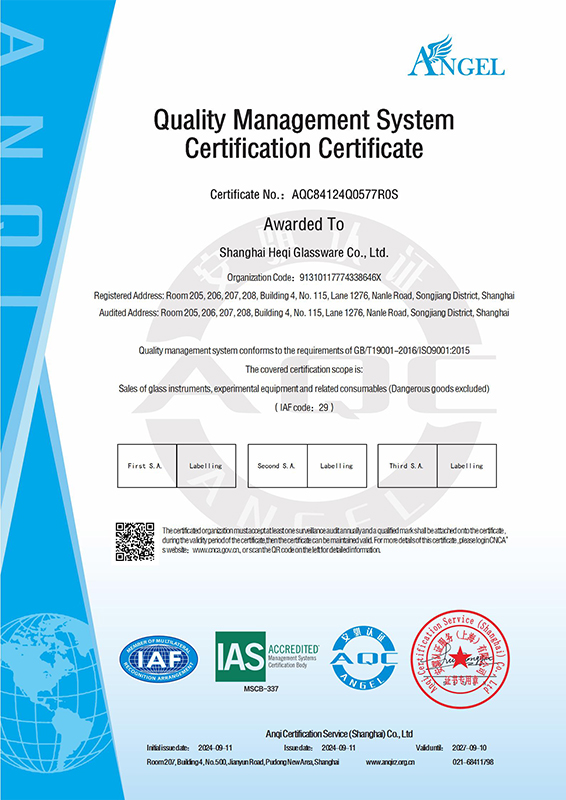
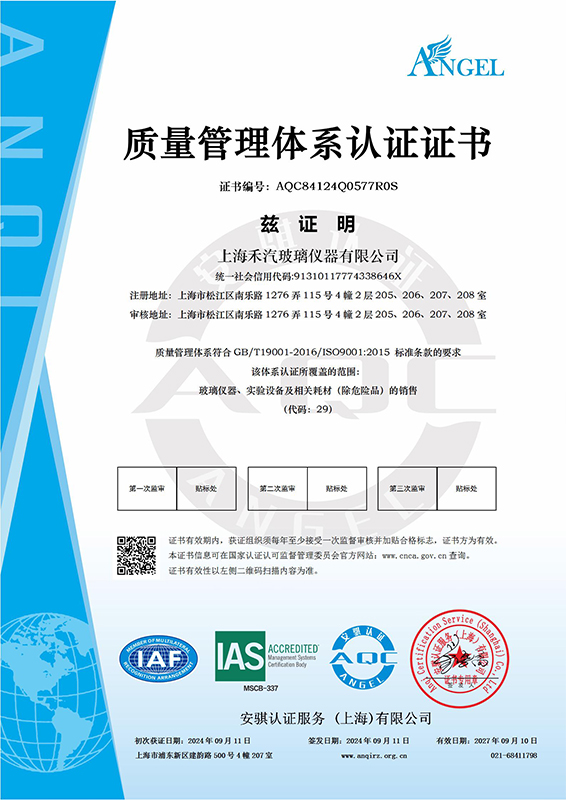
Evaluating a manufacturing partner involves reviewing their technical certifications, factory audit procedures, and quality control infrastructure. Reliable suppliers implement rigorous testing protocols, including hydrostatic pressure checks, thermal stress examinations, and dimensional tolerance inspections. In addition to producing precision glassware, Shanghai Heqi Glassware Co., Ltd. brings together a dedicated R&D team composed of chemical, mechanical, and electronic control experts. This multidisciplinary expertise drives strict quality control across specialized workshops for glass, metalworking, and assembly, ensuring that every lab filtering flask meets international manufacturing standards. Furthermore, the company provides full support through ample inventory reserves and fast delivery services to keep large-scale projects running smoothly.
Packaging, Logistics, and Supply Chain Reliability
Fragile laboratory glassware requires specialized packaging to withstand long-distance transit without sustaining micro-cracks or structural damage. Evaluating a partner's logistics capabilities involves checking for drop-tested export packaging, secure palletization options, and reliable replacement guarantees for transit-related breakage. Maintaining a stable supply chain prevents unexpected project delays, ensuring that facilities remain fully stocked with essential laboratory consumables, experimental equipment, and glass instruments.
Technical and Logistical Evaluation Parameters
To help technical planners and facility managers assess sourcing options, the comparison table below outlines key logistical and manufacturing metrics:
| Sourcing Metric |
Standard Commercial Sourcing |
Direct Factory Supply (Shanghai Heqi Glassware Co., Ltd.) |
| Inventory Availability |
Often limited, prone to extended backorders |
Ample stock reserves ensuring immediate dispatch |
| Customization Flexibility |
Restricted to standard off-the-shelf catalog items |
Custom fabrication for specialized glass components and pilot-scale equipment |
| Packaging and Transit Security |
Standard commercial boxing |
Drop-tested export packaging with breakage protection guarantees |
| Quality Control Standard |
Basic visual inspection |
Multi-stage testing across specialized glass and assembly workshops |
| Order Fulfillment Speed |
Variable lead times |
Fast delivery supported by multiple production and distribution bases |
Frequently Asked Questions (FAQ) and Technical Insights
What is the difference between a standard Erlenmeyer flask and a lab filtering flask?
While both vessels feature a conical body shape, their structural engineering and intended applications are entirely different. A standard Erlenmeyer flask is manufactured with uniform, thinner walls designed to facilitate rapid thermal transfer during heating, mixing, or titration processes. Conversely, a lab filtering flask is engineered with heavy-walled borosilicate glass specifically reinforced to withstand external vacuum pressure without collapsing. Using a standard heating flask under vacuum conditions creates a severe risk of implosion. To ensure absolute safety in analytical and pilot-scale environments, Shanghai Heqi Glassware Co., Ltd. produces heavy-duty filtration vessels designed to withstand rigorous pressure differentials safely.
Can a lab filtering flask be autoclaved?
Yes, borosilicate glass 3.3 filtering flasks can withstand standard laboratory sterilization cycles and autoclave temperatures. Because the glass possesses a very low coefficient of thermal expansion, it handles steam sterilization without thermal shock fractures. However, operators must ensure that any attached tubing, rubber stoppers, or plastic side-arm components are also rated for autoclaving, and that all vacuum pressure is fully relieved prior to the sterilization cycle.
What vacuum levels are safe for standard filtering flasks?
Operational safety limits depend heavily on vessel volume, wall thickness, and overall physical condition. Standard laboratory filtering flasks are typically rated for negative pressures up to approximately 0.095 MPa (712 mmHg of vacuum). Industrial and pilot-grade vessels with reinforced walls can handle up to 0.098 MPa. Operators should routinely inspect glassware for micro-cracks, star fractures, or deep scratches before applying a vacuum. Any compromised vessel should be immediately retired from service.
How do I select the correct rubber stopper or adapter size for the flask neck?
Maintaining an airtight seal between the filtration funnel and the flask neck is critical for achieving optimal vacuum suction. To choose the correct interface, measure the internal diameter of the flask's standard-mouth opening and the outer diameter of the funnel stem. Neoprene adapter cones or bored rubber stoppers are commonly used to bridge size differences. Shanghai Heqi Glassware Co., Ltd. specializes in standard-mouth glass instruments, ensuring that flask neck dimensions conform strictly to international standards for effortless compatibility with standard laboratory adapters and funnels.
What are the standard lead times and order fulfillment terms for bulk custom orders?
Managing project timelines effectively requires reliable supply chain partnerships. When sourcing specialized glass instruments or pilot-scale equipment—such as glass reactors, rotary evaporators, and circulation systems—lead times depend on customization requirements and order volume. Operating from established production bases in Songjiang, Chengdu, Jiaxing, and Yancheng, Shanghai Heqi Glassware Co., Ltd. maintains ample inventory reserves and streamlined assembly-line processes. This infrastructure allows the company to fulfill standard catalog orders with fast delivery timelines while supporting bespoke custom fabrications for unique industrial applications.
Technical Parameters Reference Summary
To provide a quick technical reference for laboratory planners, the summary table below highlights core operational limits and compatibility metrics for filtering flasks:
| Technical Parameter |
Standard Operating Guideline |
| Maximum Safe Vacuum Limit |
Up to 0.095 MPa to 0.098 MPa (depending on vessel capacity and wall reinforcement) |
| Max Sterilization Temperature |
Up to 121 degrees C to 134 degrees C (standard autoclave compatibility) |
| Recommended Cleaning Agents |
Neutral lab detergents or mild acid washes; avoid strongly abrasive scouring pads |
| Neck Compatibility |
Standard taper joints matching standard rubber stoppers and adapter cones |


 English
 Français
 Español