Custom Lab Acid Buret

Home / Products / Burets / Acid Buret

Lab Acid Buret Suppliers

Grid
List

This buret is made of top-grade borosilicate glass for excellent heat and chemical resistance. It has a glass stopcock design for smooth, leak-free operation and excellent corrosion resistance to acidic reagents.

View More
About
Shanghai Heqi Glassware Co., Ltd.

One point of professionalism, one point of service, one point of companionship—allow me to be your reliable partner on the path forward!

Shanghai Heqi was founded in March 2002, It is China Lab Acid Buret Suppliers and Lab Acid Buret Manufacturers, Specializing in the R&D and production of standard-mouth glass instruments. Over the years, the company has established production bases in locations such as Songjiang, Chengdu, Jiaxing, and Yancheng. By integrating technology, craftsmanship, and management expertise, Heqi has adopted mechanized and semi-mechanized techniques to replace traditional manual methods. It has also introduced assembly-line industrial processes to replace simple workshop-style production, thereby reducing costs and improving quality.

To deliver on its service commitment of “you make a call, we handle the rest,” Heqi also supplies a range of high-quality glass instruments, lab consumables, and experimental equipment from both domestic and international brands. With ample inventory, fast delivery, and premium service, the company ensures full support for its clients.

In recent years, Shanghai Heqi has brought together experts in chemical R&D, mechanical design and processing, and electronic control to form a dedicated R&D team. The company has also set up three specialized workshops for glass, metalworking, and assembly. These facilities produce a variety of small and pilot-scale equipment, including glass reactors, rotary evaporators, distillation units, high- and low-temperature circulation systems, vacuum pumps, stirrers, and UV analyzers.

Leveraging its in-house capabilities in design, production, and custom fabrication of glass components, Shanghai Heqi continuously enhances product quality and service standards. It also supports the chemical and pharmaceutical industries by enabling customized small-scale and pilot-scale equipment solutions.
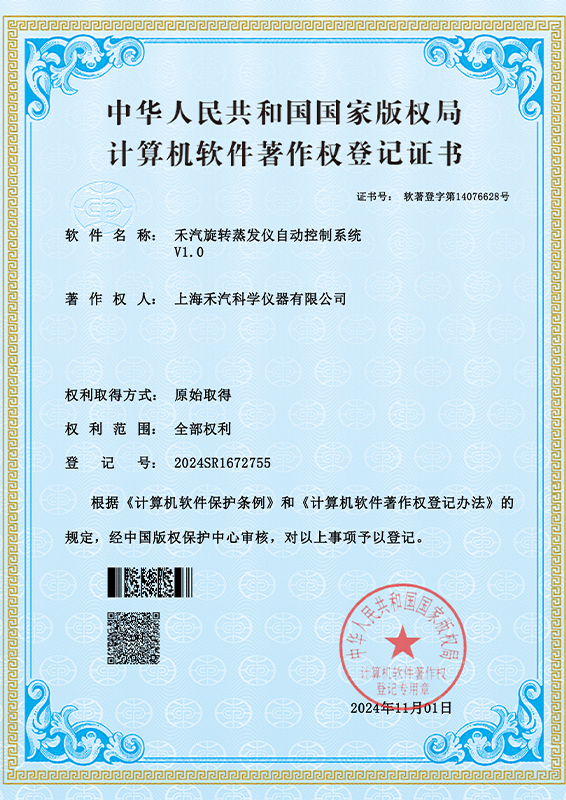
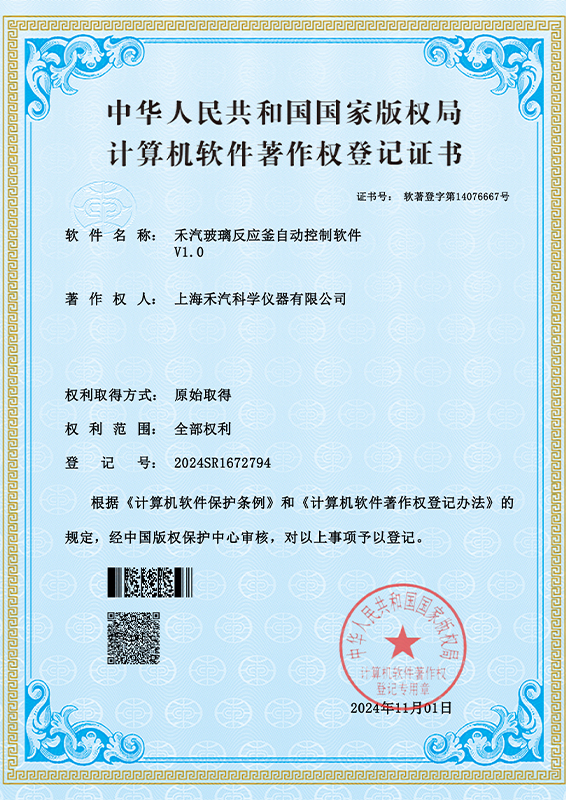
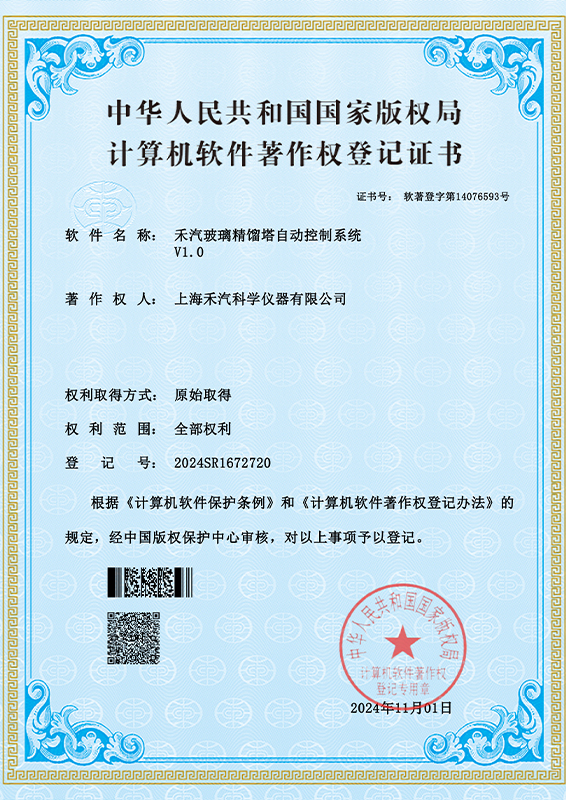
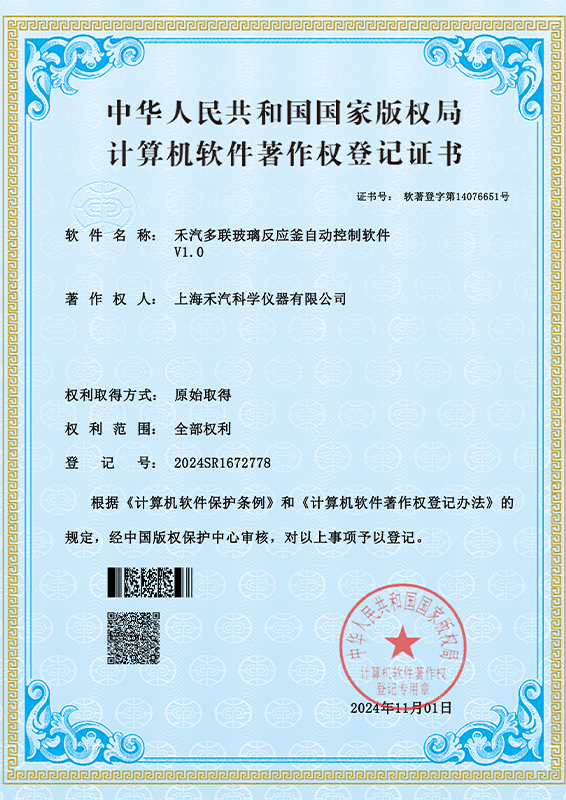
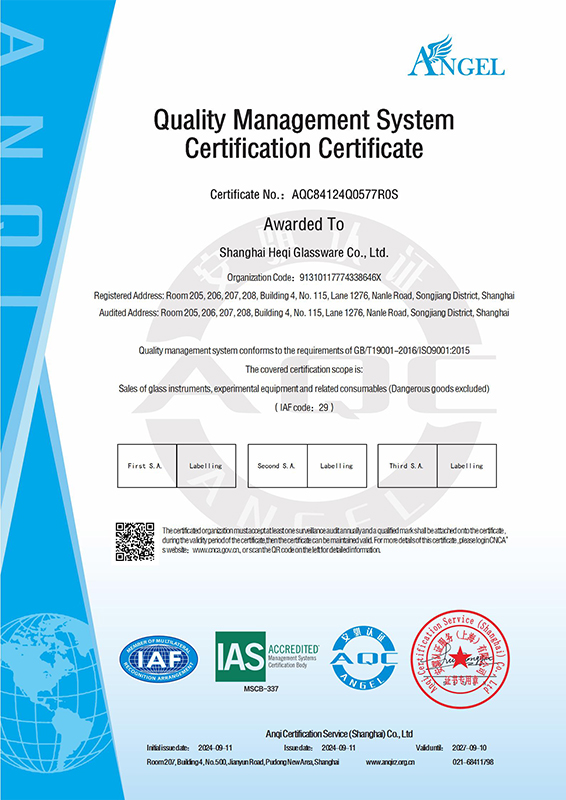
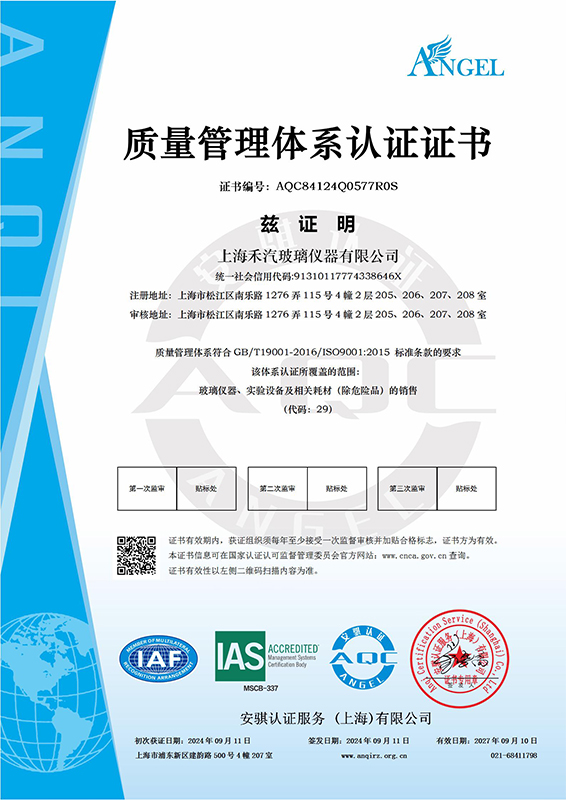
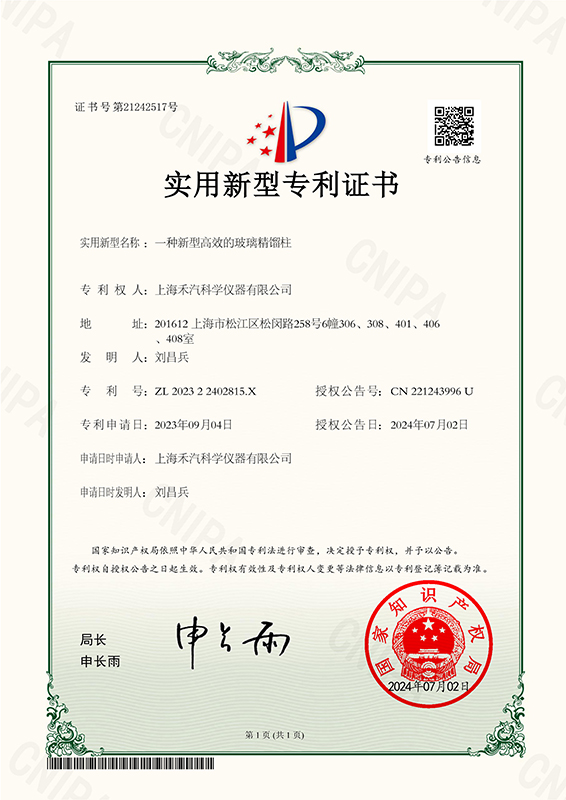
Certification
  • 1
  • 2
  • 3
  • 4
  • 5
  • 6
  • 7
Contact Us
Our custom service team is ready to provide you with expert advice and personalized solutions.
News
Industry Knowledge

Why Are Acid Burets Essential for Precise Acid-Base Titration?

Chemical Resistance of Glass Stopcock Assemblies to Corrosive Titrants

Acid-base titrations frequently utilize strong mineral acids, including hydrochloric, sulfuric, and nitric acid solutions, which degrade flexible rubber tubing and base-buret fittings. A lab acid buret employs a ground-glass stopcock or chemically inert PTFE valve mechanism, eliminating synthetic rubber joints that dissolve or swell when contacting low-pH reagents. This specialized valve construction isolates acidic solutions within non-reactive borosilicate channels throughout prolonged analytical procedures. Production facilities at Shanghai Heqi Glassware Co., Ltd. apply precision grinding to stopcock barrels, creating tight seals that hold aggressive acidic liquids securely without requiring grease lubricants that could alter sample purity.

Comparative Volumetric Equipment Specifications in Titration Workflows

Equipment Category Dispensing Valve Type Reagent Compatibility Range Volumetric Precision Rating
Dedicated Lab Acid Buret Precision Ground-Glass / PTFE Plug Strong Mineral Acids & Oxidizers Class A (±0.05 mL)
Standard Base Buret Rubber Tubing with Pinchcock Bead Alkaline & Neutral Solutions Class B (±0.10 mL)
Volumetric Transfer Pipette Fixed Single Volumetric Fill Line Broad Liquid Reagent Range Fixed Volume Transfer Only
Graduated Cylindrical Vessel Open Pouring Spout Design General Chemical Storage Low Precision Measurement

Volumetric Bore Calibration and Flow Control Precision

Analytical accuracy during neutralization titrations depends on the ability to control fluid delivery rates near calculated equivalence points. A lab acid buret features a uniform internal bore diameter combined with a tapered glass dispensing tip, permitting dropwise delivery of titrants in micro-volumes down to 0.01 mL per drop. This fine flow control allows laboratory analysts to observe subtle indicator color transitions without overshooting critical endpoints. Specialized workshops operated by Shanghai Heqi Glassware Co., Ltd. perform individual volumetric calibrations on glass columns, ensuring consistent scale graduations from top zero lines to lower outlet boundaries under standard 20°C ambient laboratory conditions.

Elimination of Air Bubble Retention in Acid Outflow Channels

Trapped gas bubbles within buret dispensing tips introduce measurement errors by displacing liquid volume during active titrations. The narrow, rigid structural design of a lab acid buret tip encourages continuous fluid contact, minimizing air entrapment when filling the column from stock reagent bottles. Because the stopcock mechanism forms a rigid, continuous path with the upper barrel, liquid momentum purges residual air pockets quickly during initial flushing, ensuring that all dispensed volume indicated on the outer scale corresponds directly to the solution volume delivered into the receiving flask.

Volumetric Operational Parameters and Calibration Metrics

Operational Variable Class A Standard Spec Class B Standard Spec
50 mL Total Volumetric Tolerance ± 0.05 mL max margin ± 0.10 mL max margin
Outflow Delivery Time Range 30 to 60 seconds full discharge 15 to 30 seconds full discharge
Maximum Thermal Exposure Limit 120°C under controlled heating 120°C under controlled heating
Minimum Drop Dispensing Size 0.01 mL to 0.02 mL per drop 0.03 mL to 0.05 mL per drop

Thermal Expansion Stability and Volumetric Linearity

Exothermic reactions during strong acid-base mixing can elevate local fluid temperatures slightly within titration setups. Borosilicate 3.3 glass used in a lab acid buret possesses a low linear thermal expansion coefficient, preventing internal barrel expansion when handling warm solutions or operating in non-conditioned environments. This dimensional stability guarantees that scale markings remain aligned with true volumetric measurements. Glassware manufacturing standards maintained by Shanghai Heqi Glassware Co., Ltd. ensure that column walls resist thermal stress during cleaning cycles, preserving volumetric linearity over repeated analytical operations.

Integration with Pilot-Scale Reaction and Distillation Systems

Beyond manual benchtop titrations, acidic fluid delivery is required in complex chemical synthesis and pilot-scale process monitoring. A lab lab acid buret equipped with standard ground-glass joints connects directly to reaction flasks, distillation headers, and vacuum extraction apparatus. This structural compatibility allows precise, closed-system addition of acid catalysts or neutralizing agents into reacting media, protecting laboratory personnel from hazardous acidic vapors while maintaining steady reagent flow rates during pilot-scale distillation and synthesis sequences.

FAQ

Q: Why is a lab acid buret designed with a ground-glass or PTFE stopcock instead of a flexible rubber tube assembly?

A: Acidic titrants, particularly concentrated mineral acids and oxidizing agents, cause synthetic rubber and flexible tubing to degrade, swell, or leach impurities into the reagent. A lab acid buret utilizes a precision ground-glass key or chemically inert PTFE valve plug that resists acidic corrosion. In specialized manufacturing facilities like those operated by Shanghai Heqi Glassware Co., Ltd., stopcock barrels are ground to exacting tolerances to ensure a smooth, leak-free seal without needing greases that could contaminate analytical samples.

Q: How does the internal bore geometry of a lab acid buret facilitate precise end-point detection in acid-base neutralization titrations?

A: A lab acid buret features a highly uniform internal barrel diameter paired with a tapered dispensing tip, enabling controlled dropwise delivery down to 0.01 mL per drop. This micro-volume control allows analysts to introduce titrant incrementally near the equivalence point, facilitating sharp, accurate indicator color transitions without overshooting the volumetric boundary.

Q: What techniques prevent air bubble entrapment in the tip of a lab acid buret during initial filling?

A: The rigid, direct fluid channel between the stopcock and the narrow dispensing tip encourages continuous liquid momentum. Opening the stopcock fully during the initial flush purges trapped air pockets rapidly. High-precision glass fabrication from Shanghai Heqi Glassware Co., Ltd. ensures smooth interior wall transitions at the lower outlet, preventing air pockets from clinging to the glass matrix and distorting volume measurements.

Q: How does borosilicate 3.3 glass construction protect a lab acid buret against thermal variations during exothermic reactions?

A: Borosilicate 3.3 glass exhibits a low linear thermal expansion coefficient, enabling the buret column to maintain constant internal dimensions even if localized heat generates during acid-base mixing or warm rinsing cycles. This thermal stability ensures that permanent volumetric scale graduations remain accurate under varying laboratory room temperatures.

Q: In what ways can a lab acid buret be mounted into closed pilot-scale reaction and distillation apparatuses?

A: Standardized ground-glass joints allow a lab acid buret to integrate directly into glass reactors, distillation heads, or vacuum manifolds. This enables controlled, sealed addition of acidic catalysts or reagents during multi-step synthesis procedures, protecting operators from hazardous acidic vapors while maintaining steady fluid delivery into reacting mixtures.