English
 Français
 Español
Beaker vs Flask: Key Differences, Pros & Cons, and How to Choose the Right One
Walk into any chemistry lab, and you’ll spot them on every bench: the wide-mouthed beaker and the slender-necked flask. They might look interchangeable to a newcomer, but after two decades of manufacturing glassware at Shanghai Heqi, I can tell you that each shape is engineered for a distinct purpose. Choosing the wrong one can cost you time, accuracy, or even safety. In this guide, we’ll break down the real differences between beakers and flasks — from design philosophy to day-to-day handling — so you can make confident choices for your next procedure.
The Beaker: A Versatile Workhorse
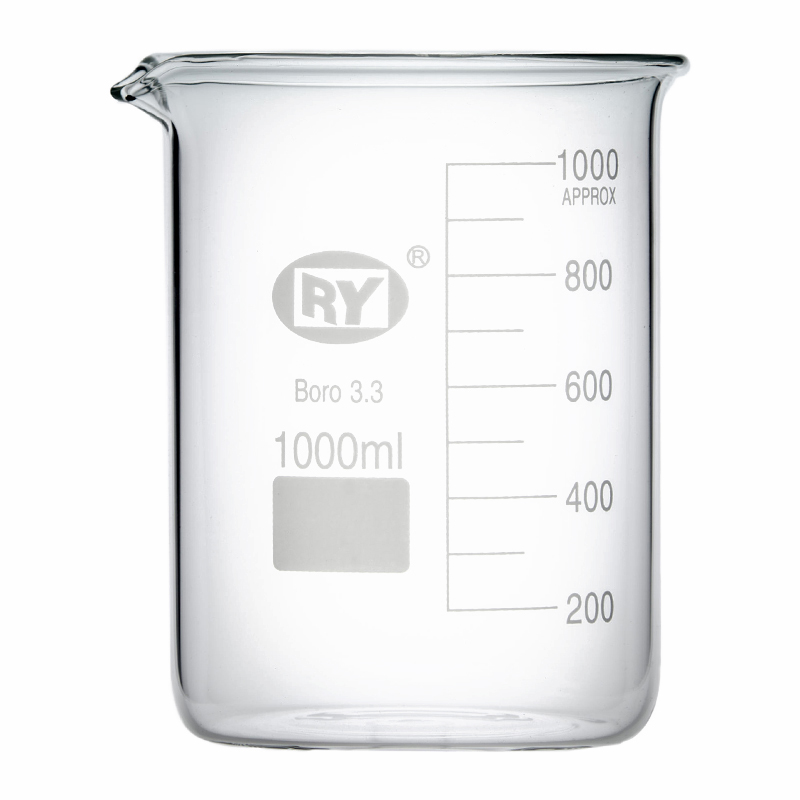
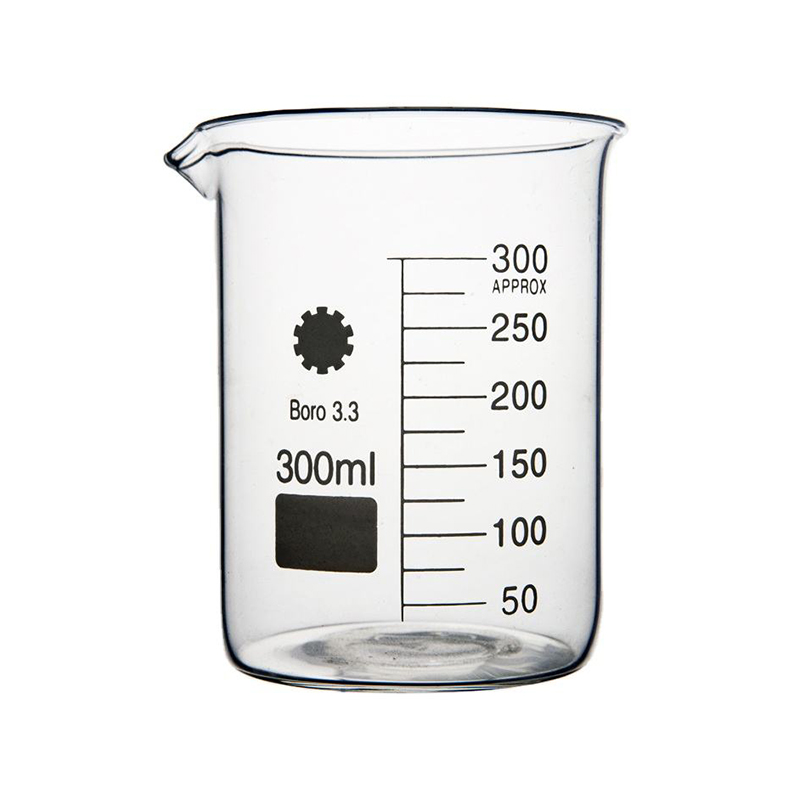
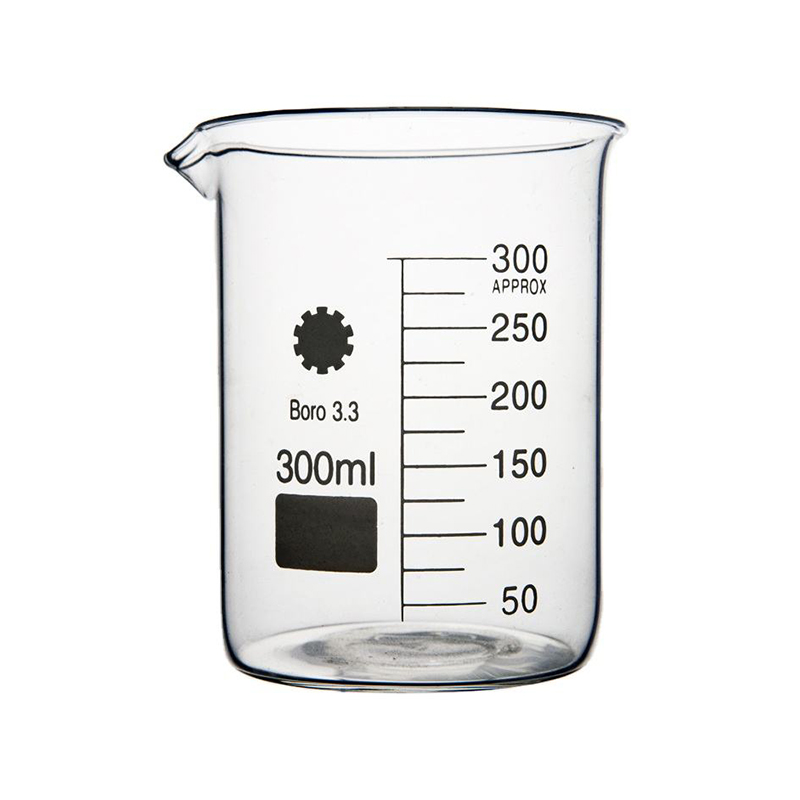
The classic beaker is defined by its straight sidewalls, wide opening, and a small pouring spout (or lip). Most beakers have graduated markings, but these are only approximate — typically within ±5% of the stated volume. This design is intentional: beakers are built for convenience, not for pinpoint accuracy. I’ve seen seasoned chemists use them for everything from dissolving solids to heating solutions on a hot plate, because the wide mouth makes it easy to insert stirring rods, thermometers, or pH probes.
When a Beaker Shines
- Mixing & stirring – The open top lets you whisk or stir without splashing.
- Heating – Flat bottoms provide excellent contact with hot plates or sand baths.
- Approximate volume work – Quick estimates, simple dilutions, or rough transfers.
- Precipitation & crystallization – Wide openings simplify scraping and recovery.
Of course, that wide mouth is also a weakness: evaporative losses can be significant, and the lack of a narrow neck means you can’t shake the contents vigorously without spillage. For precise measurements, you’d never rely on a beaker’s graduation lines. But for its intended role — a sturdy, all-purpose container — the beaker is hard to beat.
At our facility in Shanghai, we’ve been producing high-quality borosilicate 3.3 beakers for years. Our thick-walled low-form beaker, for instance, is a staple in labs that need durability and thermal shock resistance. If you’re looking for a workhorse you can trust, this design has proven itself in countless organic synthesis and analytical workflows.
 Thick-Walled Low Form Borosilicate BeakerThis borosilicate 3.3 glass beaker has thick walls for enhanced durability and thermal shock resistance. It is ideal for rough mixing, heating, and temporary holding in labs where speed and accessibility are prioritized over measurement precision.View Product →
Key Takeaway
Use a beaker when speed and accessibility matter more than measurement precision. It’s the go-to container for rough mixing, heating, and temporary holding.
The Flask: Precision and Control
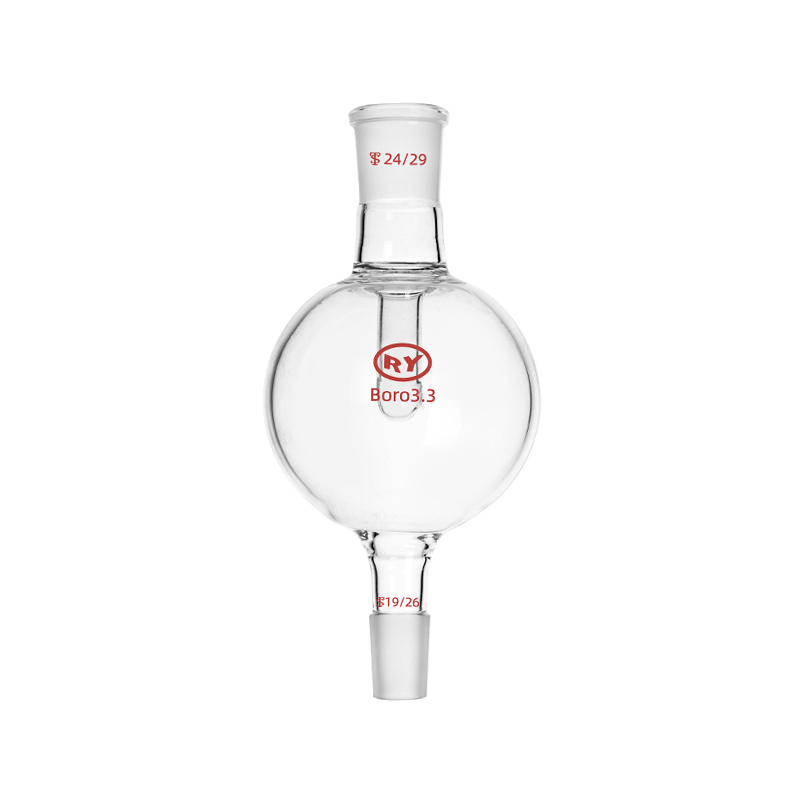
Flasks come in many shapes — Erlenmeyer, round-bottom, pear-shaped, volumetric — but they share a defining feature: a narrow neck relative to the body. This design is no accident. The narrow opening reduces evaporation, prevents splashing during swirling, and allows you to insert a stopper or attach a condenser. The tapers and curves also make flasks ideal for controlled reactions, titrations, and distillation.
Common Flask Types and Their Superpowers
- Erlenmeyer flask – The conical body promotes easy mixing by swirling. Perfect for titration and culturing.
- Round-bottom flask – Even heat distribution and compatibility with heating mantles. Essential for reflux and distillation.
- Volumetric flask – Designed for one exact volume at a given temperature. The thin neck and calibration mark deliver Class A precision (±0.05% or better).
- Pear-shaped flask – Often used in rotary evaporation; the tapered shape aids solvent recovery.
Because flasks often need to be sealed or connected to other apparatus, most of our flasks come with standard ground joints (14/23, 19/26, 24/40, etc.). This modular system lets you build complex setups — reflux, distillation, or gas evolution — quickly and without leaks.
Several years ago, we invested in automated forming lines to produce our Erlenmeyer flasks with consistently thick walls and precisely ground necks. The result is a flask that can withstand repeated thermal cycling while providing a reliable vacuum-tight seal. If you frequently run titrations or need a vessel that minimizes evaporation, an Erlenmeyer flask with a standard taper joint is a wise choice.
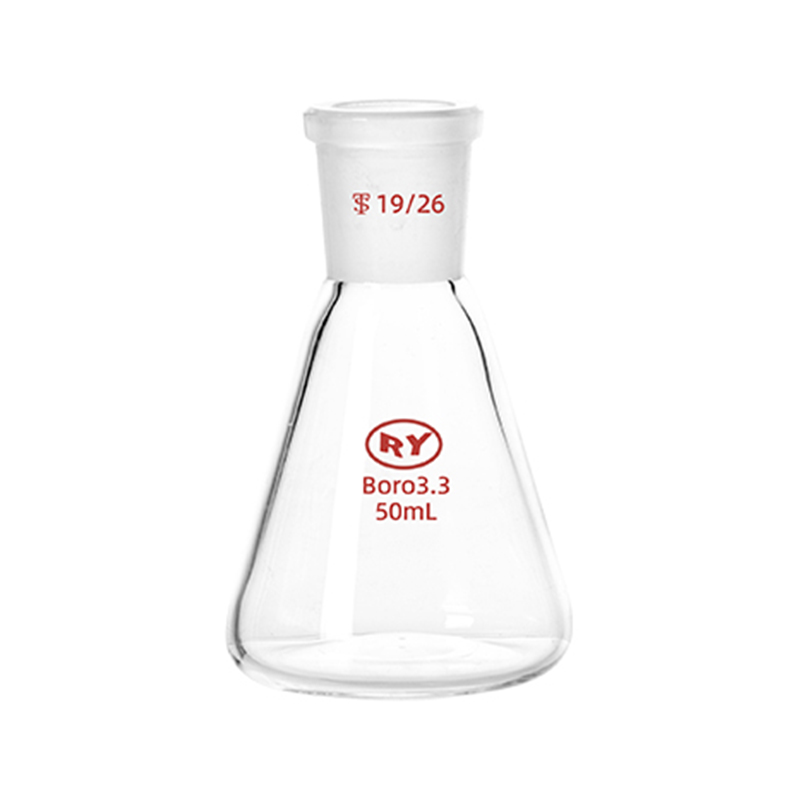 Standard Joint Erlenmeyer FlaskMade from thick-walled borosilicate glass, this Erlenmeyer flask features a precision ground taper joint for a vacuum-tight seal. It withstands repeated thermal cycling and is well suited for titrations, distillation, and other assembly-based reactions requiring controlled evaporation.View Product →
Key Takeaway
Reach for a flask when you need accuracy, controlled evaporation, or the ability to attach a condenser, stopper, or other ground‑joint accessories. The narrow neck is a feature, not a limitation.
Beaker vs. Flask: Side-by-Side Comparison
To make the differences clear at a glance, here’s a quick comparison of the two glassware families:
| Aspect | Beaker | Flask |
|---|---|---|
| Shape | Straight sides, wide mouth | Narrow neck, tapered or round body |
| Accuracy of graduations | Approximate (±5% typical) | Erlenmeyer: approximate; volumetric: Class A (±0.05%) |
| Ease of stirring | Excellent (open top) | Good (requires swirling or magnetic stir bar) |
| Evaporation control | Poor (large opening) | Excellent (narrow neck reduces loss) |
| Suitability for reflux/distillation | Not designed for it | Ideal (can be fitted with condenser via ground joint) |
| Cleaning effort | Easy (wide mouth, access to interior) | Moderate (narrow neck may need brush) |
| Primary use case | Mixing, heating, rough measuring | Reactions, precise measurement, distillation |
How to Decide: Practical Guidelines
After years of talking with lab managers and researchers, I’ve found that the choice usually boils down to three questions:
- Do you need an accurate volume? If yes, skip the beaker and use a volumetric flask or a graduated cylinder. For work that only requires an estimate, a beaker is fine.
- Will you heat the contents under reflux? Then you need a round‑bottom flask (or an Erlenmeyer with a heat‑resistant design) fitted with a condenser. Beakers will lose too much solvent and can’t be reliably sealed.
- Are you mixing multiple reagents by swirling? An Erlenmeyer flask’s conical shape lets you swirl efficiently without splashing. A beaker works if you use a stir rod, but swirling tends to spill.
Every lab should stock a range of both beakers and flasks. The trick is knowing which tool fits the job. For general‑purpose tasks — making buffers, dissolving solids, performing rough extractions — I always reach for a beaker first. When precision or containment matters, I switch to a flask.
Our factory produces both families with the same care: all items are made from high‑borosilicate 3.3 glass, annealed for stress relief, and checked for dimensional consistency. If you’d like to see our full lineup, our standard ground‑joint glassware collection includes everything from beakers to multi‑neck flasks that can be seamlessly connected. For applications requiring exact volumetric accuracy, we also offer a range of Class A precision glassware verified to meet ASTM tolerances.
Final Thoughts
Neither beakers nor flasks are inherently “better” — they are complementary tools designed for different priorities. The wider mouth of a beaker gives you speed and accessibility; the narrow neck of a flask gives you control and precision. Understanding these trade-offs will help you work more efficiently and avoid common pitfalls such as inaccurate measurements or excessive solvent loss. Next time you’re setting up an experiment, pause and ask yourself: does this procedure value convenience or containment? Your glassware choice will follow naturally.