English
 Français
 Español
Borosilicate Glass 3.3: Properties, Composition, Thermal Shock and Lab Applications
Content
- 1 What the 3.3 in Borosilicate Glass 3.3 Actually Means
- 2 Key Properties at a Glance
- 3 Thermal Shock Resistance and Why the Number Matters
- 4 Chemical Resistance and Its Limits
- 5 Where Borosilicate Glass 3.3 Is Used in the Laboratory
- 6 Practical Bench Notes for Working With 3.3 Glassware
- 7 Choosing 3.3 Glassware That Fits Your Work
Walk into almost any working chemistry lab and the glassware on the bench quietly shares one specification: borosilicate glass 3.3. The number is not a brand, a clarity grade or a marketing label. It is a material designation tied to a single physical property, the coefficient of mean linear expansion, and it predicts a great deal about how a flask, condenser, bottle or reactor behaves when it is heated, chilled, evacuated or filled with aggressive chemistry. Understanding where the 3.3 comes from makes the choice of borosilicate 3.3 lab glassware far less of a guess.
What the 3.3 in Borosilicate Glass 3.3 Actually Means
Borosilicate glass 3.3 is defined by its coefficient of mean linear expansion: about 3.3 × 10⁻⁶ per kelvin, measured between 20 and 300 °C. That figure is written into ISO 3585, the standard that describes the properties of this glass family, and it is the reason the material is usually called simply "3.3" instead of being given a proprietary name. The standard permits a tolerance of roughly plus or minus 0.1 × 10⁻⁶ per kelvin, which is why products from different manufacturers remain dimensionally and thermally interchangeable.
The low expansion comes from the composition. A typical 3.3 glass contains roughly 81 % silicon dioxide (SiO2), about 13 % boron trioxide (B2O3), around 4 % sodium oxide (Na2O), and a couple of percent aluminium oxide (Al2O3) along with small amounts of potassium oxide. Boron is the key addition: it enters the silica network and limits how much the structure stretches when it is warmed. If you would like the chemistry in more detail, our note on borosilicate glass composition and the 3.3 figure goes through the oxides one by one.
Because both the composition and the expansion are standardised, 3.3 glass satisfies several classifications at once. It corresponds to USP Type I borosilicate glass, to ASTM E438 Type I Class A, and to the material designated as borosilicate glass 3.3 in DIN ISO 3585. For a laboratory, that overlap is practical rather than academic: it means a volumetric flask bought for pharmacopoeial work and a reaction flask bought for a synthesis bench can share the same base material and the same thermal behaviour.
Key Properties at a Glance
The table below collects the figures that matter most when you are planning an experiment, writing a method or checking whether a supplier's claim holds up.
| Property | Typical value for 3.3 glass |
|---|---|
| Coefficient of mean linear expansion (20-300 °C) | 3.3 × 10⁻⁶ K-1 |
| Density at 25 °C | approx. 2.23 g/cm3 |
| Transformation temperature | approx. 525 °C |
| Annealing point | approx. 560 °C |
| Softening point | approx. 825 °C |
| Maximum short-term working temperature | approx. 450 °C |
| Recommended long-term service temperature | approx. 230 °C |
| Resistance to sudden temperature change | about 100-120 K for thin walls |
| Hydrolytic resistance | ISO 719 HGB 1 / ISO 720 HGA 1 |
| Visible light transmission at 4 mm wall | approx. 91-92 % |
| Thermal conductivity at 20 °C | approx. 1.2 W/(m K) |
Thermal Shock Resistance and Why the Number Matters
How well a glass survives a sudden temperature change depends mostly on its expansion coefficient, because expansion is what creates internal stress when one part of a vessel is hotter than another. With roughly one third the expansion of soda-lime glass, borosilicate 3.3 tolerates differences that would crack an ordinary drinking glass. In everyday terms, a thin-walled 3.3 vessel can usually take a step change of about 100 to 120 K, while soda-lime glass of similar thickness may fail at 40 K or less.
Where the Simple Number Stops Being Simple
Wall thickness and geometry matter as much as the coefficient itself. Heat moves slowly through glass, so a thick wall develops larger internal gradients than a thin one. Abrupt transitions, such as a heavy base meeting a thin side wall or a joint fused at high temperature, concentrate stress. That is why two flasks made from the same 3.3 tubing can behave very differently when one is rinsed under a cold tap and the other is left to cool in air.
Most breakage blamed on "bad glass" is really a handling problem: heating one side of a flask with a bare flame, pouring cold solvent into a hot vessel, clamping a joint under bending load, or forcing a ground taper that has picked up grit. Annealing at the factory removes manufacturing stress once; gentle handling at the bench keeps it removed.
Chemical Resistance and Its Limits
Borosilicate 3.3 is classified as a highly resistant glass under ISO 719 and ISO 720, and it meets the acid resistance requirements of ISO 1776. It resists water, dilute and concentrated acids, salt solutions and most organic solvents without measurable attack, which is why it is used for reagent storage, volumetric measurement, chromatographic columns and reactor systems in fine chemicals and pharmaceuticals.
There are well known exceptions, and ignoring them is expensive:
- Hydrofluoric acid and any fluoride-containing mixture attack the silica network quickly and should never be stored or handled in glass.
- Hot concentrated phosphoric acid and hot concentrated alkali such as sodium or potassium hydroxide dissolve glass slowly but steadily.
- Alkaline solutions left standing in a bottle for months leach sodium from the surface and leave a cloudy, etched film.
- Repeated hot alkaline dishwasher cycles fog the surface of volumetric ware and can affect the fine bore of burettes and pipettes.
For routine cleaning, neutral or mildly acidic detergents followed by a distilled water rinse are kinder than strong alkaline baths, particularly for Class A measuring ware where surface condition influences accuracy.
Where Borosilicate Glass 3.3 Is Used in the Laboratory
Because the material combines thermal stability, chemical inertness and optical clarity, it turns up almost everywhere in a working lab:
- Reaction work: single-neck and multi-neck round-bottom flasks, jacketed reaction flasks, benchtop reactors and larger pilot-scale vessels with matching lids and stirrer adapters.
- Reflux and condensation: Liebig, Allihn, Graham and air condensers, cold fingers and complete reflux assemblies.
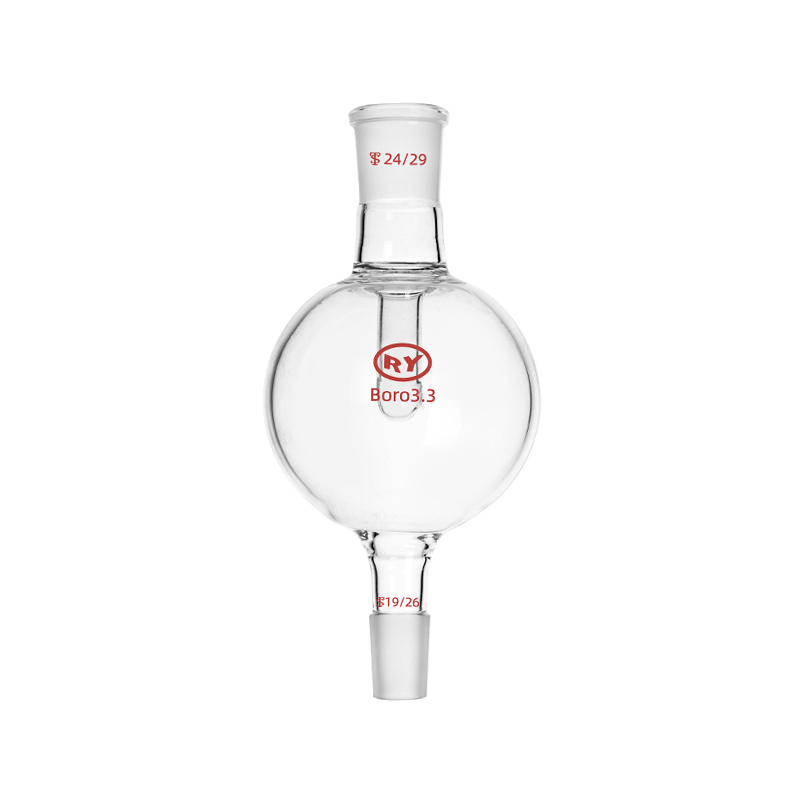
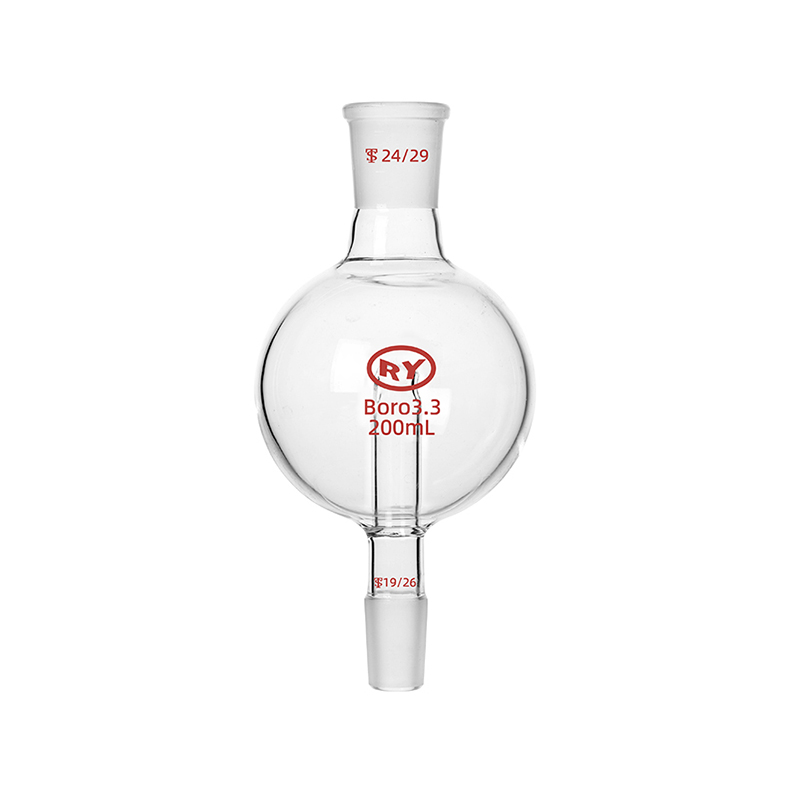
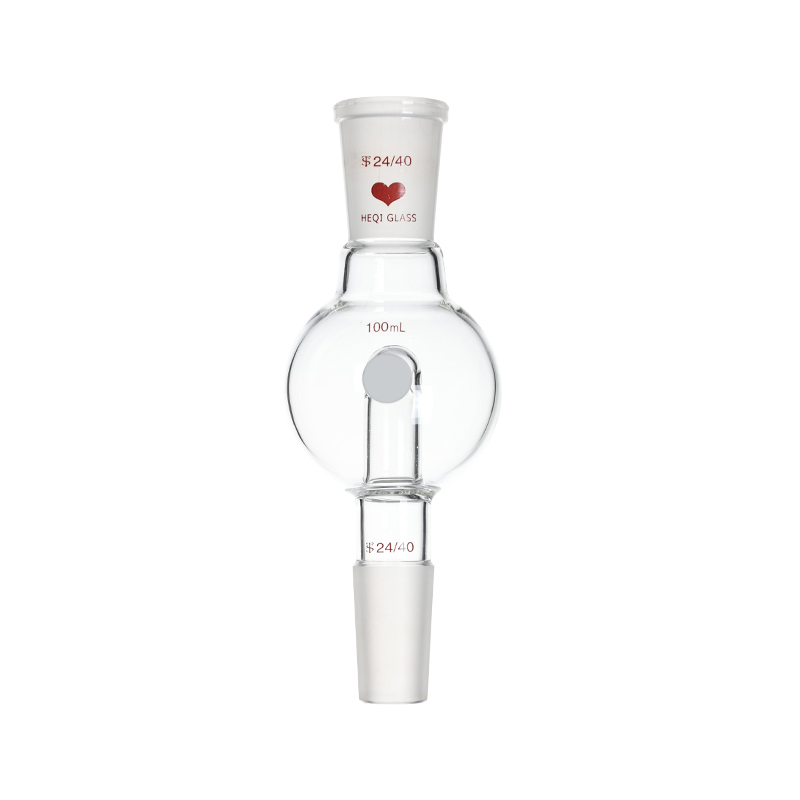
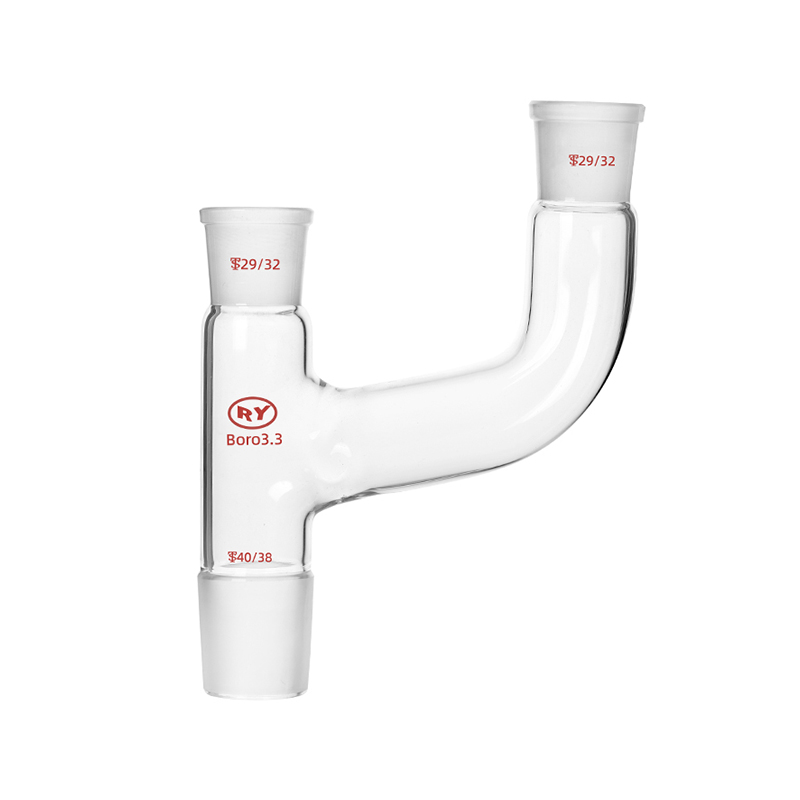
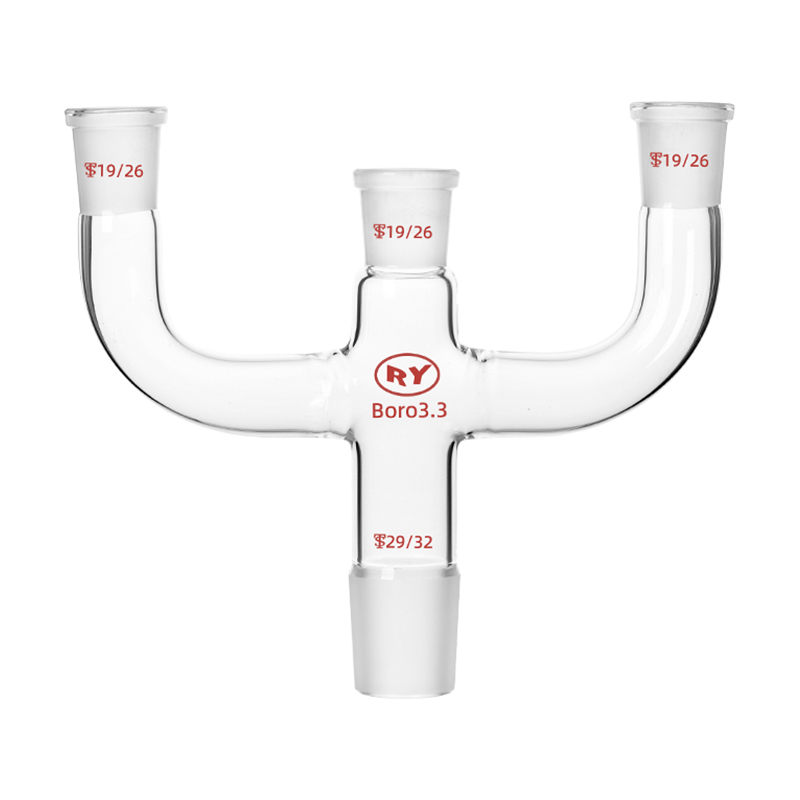
- Distillation and evaporation: distillation heads, fractionating columns, packing materials, vacuum take-off adapters, anti-splash bulbs and rotary evaporator components.
- Filtration: sintered glass funnels and crucibles, filter flasks and full vacuum filtration assemblies.
- Storage and handling: reagent bottles with screw caps, sample vials, desiccators, gas washing bottles and solvent reservoirs.
- Measurement and analysis: volumetric flasks, burettes, graduated pipettes, graduated cylinders, chromatography columns, TLC developing tanks and NMR tubes.
- Process and pilot scale: glass reactor systems, transfer lines and sight glasses for plants handling corrosive media.
If your work centres on synthesis, the three-neck round-bottom flask in Class A 3.3 glass is the piece you will reach for most often. It accepts a stirrer, a thermometer or addition funnel and a condenser at the same time, and the standard tapers keep it interchangeable with everything else in the joint system.
 Class A Three-Neck Round-Bottom Flask for Laboratory SynthesisA Class A three-neck round-bottom flask for organic synthesis and controlled heating, available in sizes from 50 mL to 2000 mL with standard joints.View Product →
On the storage side, a blue-cap reagent bottle in 3.3 high borosilicate glass is the quiet workhorse of the shelf: the screw cap seals without grease, the wall is thick enough for everyday handling, and the material shrugs off the acids and solvents most commonly kept within reach.
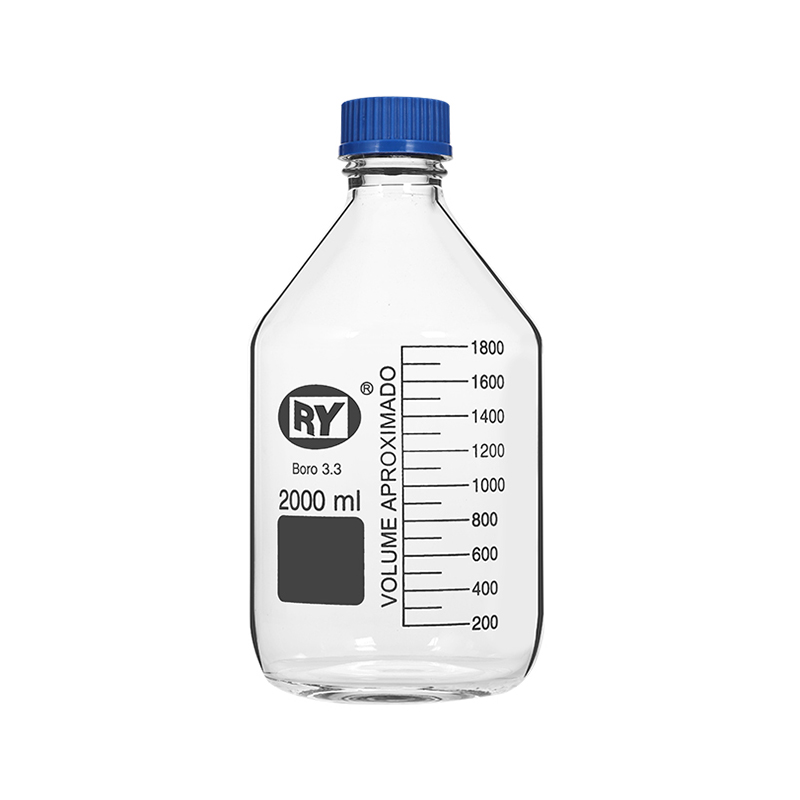 Blue Cap Threaded Reagent Bottle in 3.3 Borosilicate GlassA blue-cap 3.3 borosilicate reagent bottle for secure laboratory reagent storage, available from 100 mL to 20000 mL with a threaded seal.View Product →
Practical Bench Notes for Working With 3.3 Glassware
A few habits keep 3.3 glassware in service for years rather than months:
- Assemble ground joints clean and dry where possible. If a stopcock needs lubrication, use PTFE sleeves or a sparing touch of silicone grease, and clean it off afterwards.
- Support multi-neck flasks and heavy condensers with clamps placed above the joint. Glass should never carry its own weight at an angle.
- Seal joints by gentle rotation rather than force. A seized taper usually starts with a bent, dirty or over-tightened joint.
- Heat slowly with a mantle, oil bath or heating block. Avoid direct flame and never apply local heat to a thin spot or a repaired area.
- Cool gradually. Rinsing a flask straight from a 200 °C bath under cold water is the most common cause of unexplained breakage.
- Watch temperature differences rather than absolute temperatures. 3.3 glass handles 300 °C comfortably; it objects to a 150 K gradient across a few centimetres of wall.
- Check rims and joints for fine cracks before any vacuum work. Evacuated glassware stores a surprising amount of energy.
Choosing 3.3 Glassware That Fits Your Work
When you compare catalogues, ask for the expansion figure rather than the word "borosilicate". Neutral glass and other high-expansion materials are sometimes described loosely as borosilicate, yet they behave quite differently on a hotplate. Beyond the material, check the joint sizes against the glassware you already own, the wall thickness for the thermal load you expect, and whether measuring ware carries a Class A marking.
Shanghai Heqi Glassware has been producing standard ground joint glassware since 2002, with our own glass, metalworking and assembly workshops, and we supply both our own pieces and other manufacturers' instruments so that a laboratory can build a complete setup in one order. If you are unsure whether a particular flask or bottle is genuine 3.3, we are happy to talk through the specification with you before you buy.
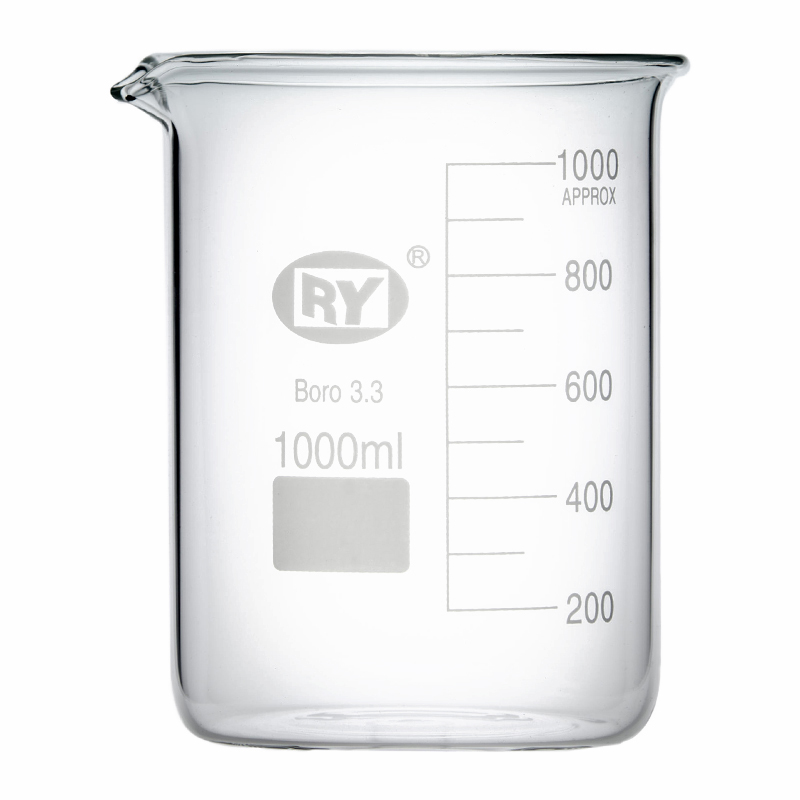
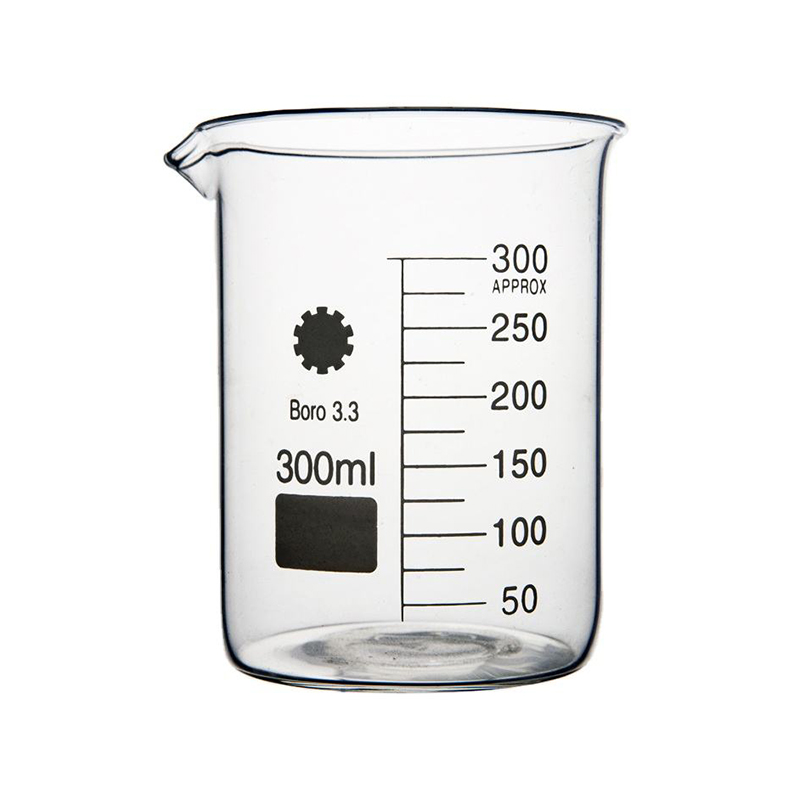
Even a plain low-form beaker benefits from the same discipline. A 3.3 beaker with a thick wall and a flat base heats evenly on a hotplate, survives a quick move to a cold bench, and lets you watch the solution without straining your eyes.
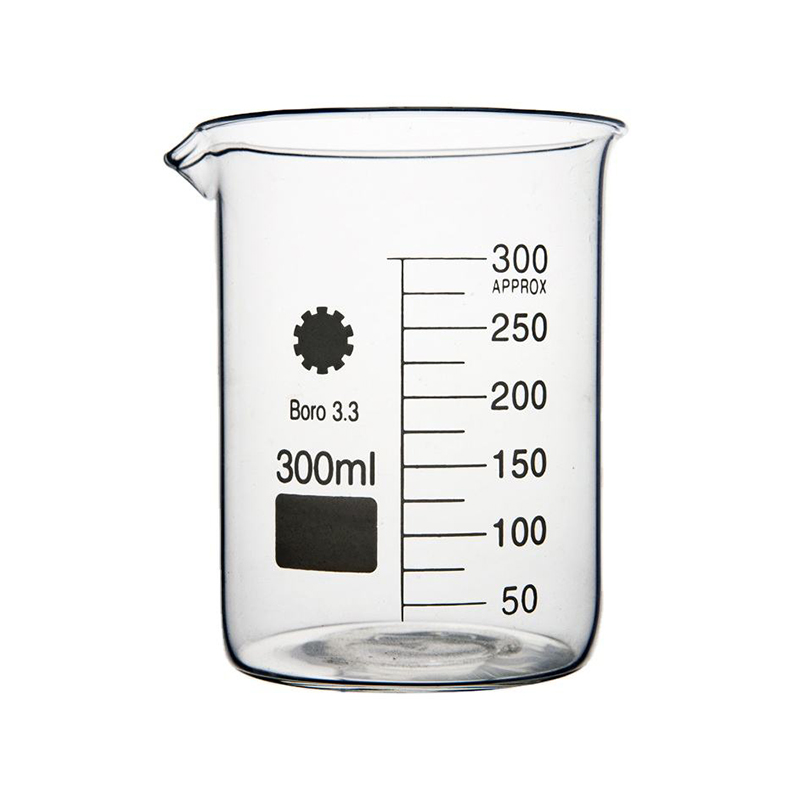 Low Form Borosilicate Glass Beaker for Laboratory ChemistryA low-form 3.3 borosilicate beaker for even heating and clear reaction observation, with a pour spout and flat base for stirring.View Product →
Borosilicate glass 3.3 is one of the few laboratory standards that has stayed unchanged for decades, and that stability is the whole point. The number tells you the expansion, the expansion tells you the thermal behaviour, and the standard tells you that a joint from one maker will still fit a condenser from another. Choose your glassware on those terms, treat the joints gently, keep hot alkaline baths away from it, and it will keep working at your bench for a very long time.