OEM/ODM Laboratory Burets

Home / Products / Burets

Laboratory Burets Manufacturers

Grid
List

Burettes include acid burettes, alkaline burettes, and universal burettes. Typically crafted from borosilicate glass, they are corrosion-resistant and user-friendly. The brown light-proof variant is designed for light-sensitive reagents. Flexibly adaptable from routine analysis to micro-research, these instruments ensure efficient and reliable performance in scientific research and quality inspection scenarios.

View More
About
Shanghai Heqi Glassware Co., Ltd.

One point of professionalism, one point of service, one point of companionship—allow me to be your reliable partner on the path forward!

Shanghai Heqi was founded in March 2002, It is China Laboratory Burets Manufacturers and Laboratory Burets Factory, Specializing in the R&D and production of standard-mouth glass instruments. Over the years, the company has established production bases in locations such as Songjiang, Chengdu, Jiaxing, and Yancheng. By integrating technology, craftsmanship, and management expertise, Heqi has adopted mechanized and semi-mechanized techniques to replace traditional manual methods. It has also introduced assembly-line industrial processes to replace simple workshop-style production, thereby reducing costs and improving quality.

To deliver on its service commitment of “you make a call, we handle the rest,” Heqi also supplies a range of high-quality glass instruments, lab consumables, and experimental equipment from both domestic and international brands. With ample inventory, fast delivery, and premium service, the company ensures full support for its clients.

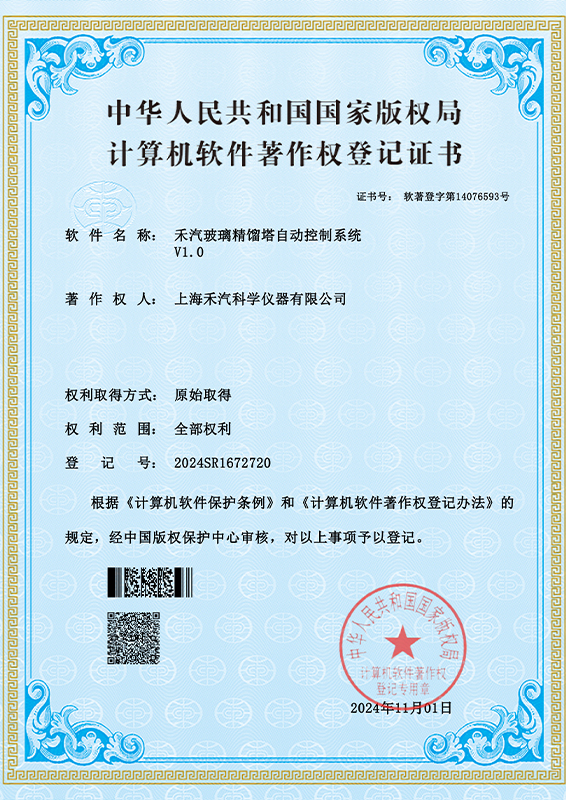
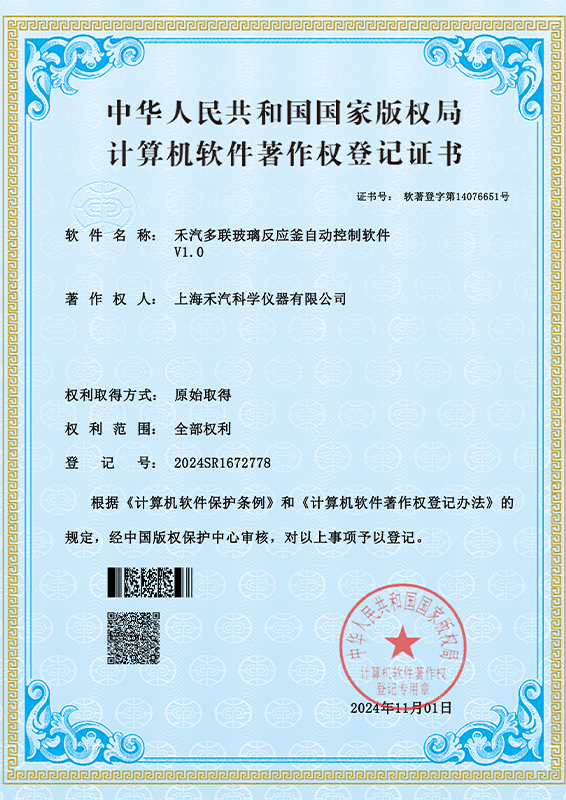
In recent years, Shanghai Heqi has brought together experts in chemical R&D, mechanical design and processing, and electronic control to form a dedicated R&D team. The company has also set up three specialized workshops for glass, metalworking, and assembly. These facilities produce a variety of small and pilot-scale equipment, including glass reactors, rotary evaporators, distillation units, high- and low-temperature circulation systems, vacuum pumps, stirrers, and UV analyzers.

Leveraging its in-house capabilities in design, production, and custom fabrication of glass components, Shanghai Heqi continuously enhances product quality and service standards. It also supports the chemical and pharmaceutical industries by enabling customized small-scale and pilot-scale equipment solutions.
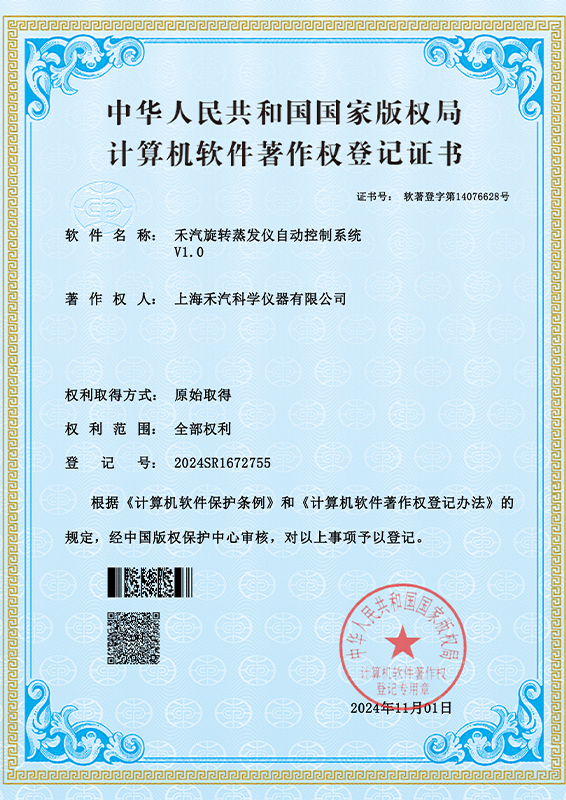
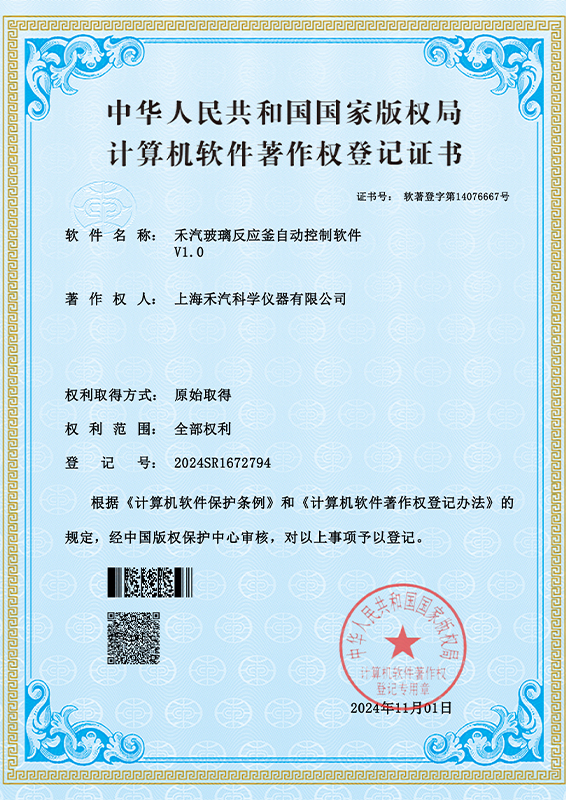
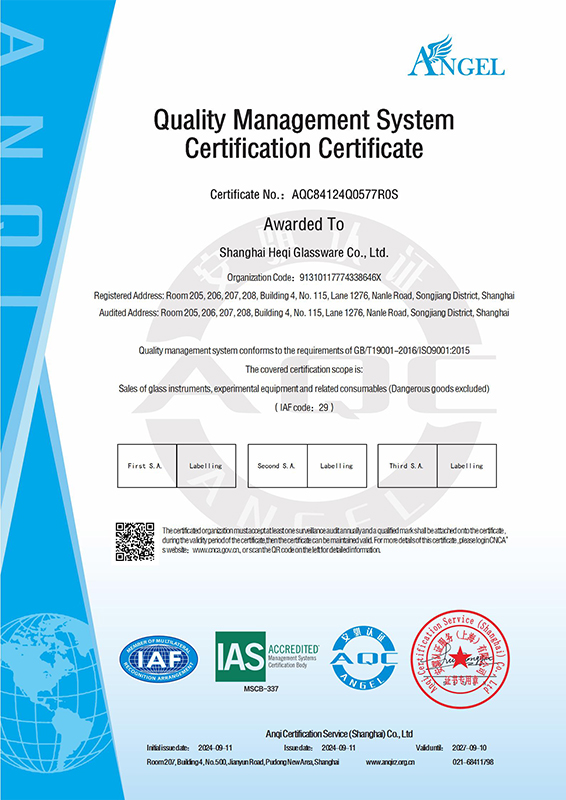
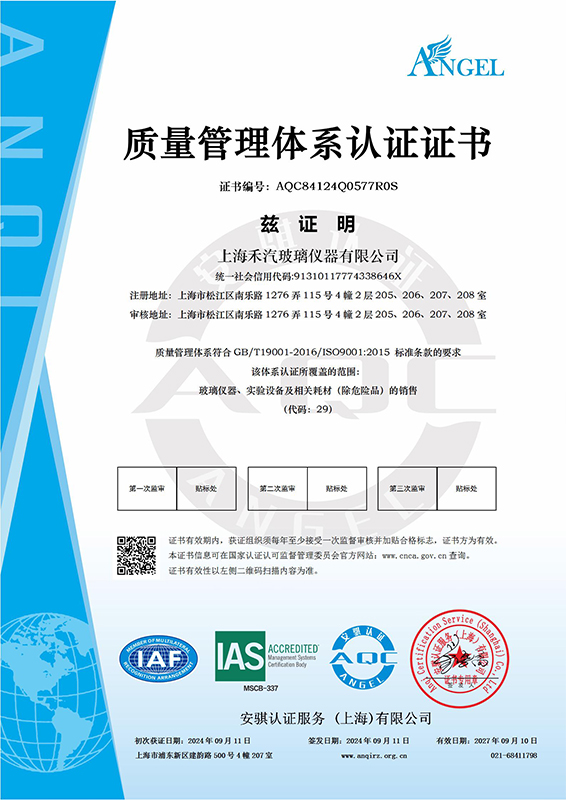
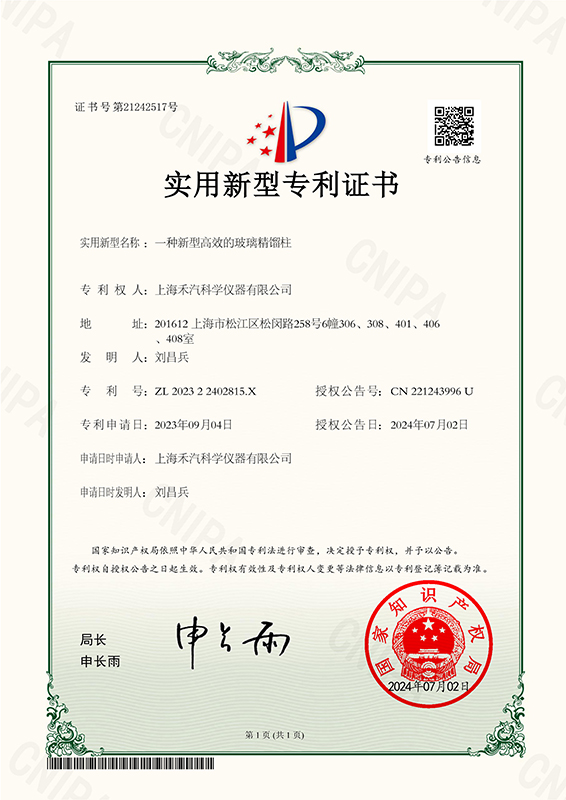
Certification
  • 1
  • 2
  • 3
  • 4
  • 5
  • 6
  • 7
Contact Us
Our custom service team is ready to provide you with expert advice and personalized solutions.
News
Industry Knowledge

Why Do Professional Laboratories Prefer Glass Burets?

Chemical Inertness and Volumetric Stability Under Harsh Reagents

Precision titration workflows require volumetric measuring instruments that maintain structural dimensions and chemical resistance when contacting acidic, basic, or organic titrants. Borosilicate glass substrates provide near-total chemical inertness, preventing trace element leaching, matrix contamination, or volumetric expansion caused by chemical absorption. Unlike polymer alternatives that may absorb organic solvents or soften when exposed to concentrated acids, laboratory burets fabricated from high-grade glass maintain physical internal diameters over decades of continuous use. Engineering facilities at Shanghai Heqi Glassware Co., Ltd. leverage controlled thermal processing to manufacture glass burets with consistent wall uniformity, ensuring that chemical titrants do not react with the inner barrel walls or compromise quantitative analytical data.

Volumetric Accuracy Comparison Between Container Substrates

Substrate Parameter Borosilicate Glass Burets Polymer (PMP/PP) Burets
Thermal Expansion Coefficient 3.3 x 10^-6 K^-1 68 x 10^-6 K^-1
Organic Solvent Resistance High across ketones, aromatics, and halogenated solvents Variable swelling in aromatic hydrocarbons
Optical Clarity Retention Permanent transparency without clouding Gradual discoloration with UV exposure
Volumetric Drift Over Time Zero dimensional drift under recommended temperatures Potential stress relaxation drift over repeated use

Optical Transparency and Meniscus Definition for Precise Readings

Accurate volumetric delivery relies on the clear visual identification of the liquid meniscus against calibrated scale lines. The high optical clarity of clear glass allows analysts to observe both lower convex and upper concave liquid boundaries without optical distortion or wall refraction interference. Permanently fused ceramic graduations applied to glass laboratory burets remain readable against light-colored or dark titrant solutions, facilitating precise parallax error reduction during manual volume measurements. This optical stability helps research and quality control laboratories achieve repeatable volumetric determinations in acid-base, redox, and complexometric titrations.

Precision Manufacturing and Dimensional Calibration Tolerance

Calibration Class 50 mL Capacity Tolerance Limit Delivery Time Benchmark
Class A Precision Calibration ± 0.05 mL volumetric boundary 30 to 60 seconds controlled outflow
Class B Commercial Calibration ± 0.10 mL volumetric boundary 15 to 30 seconds rapid outflow
Micro-Buret Specification (10 mL) ± 0.02 mL volumetric boundary 40 to 100 seconds micro-flow control

Stopcock Precision Mechanics and Leak-Free Flow Control

The dispensing assembly at the base of a glass buret determines liquid drop velocity and prevents micro-leakage during critical titration endpoints. Glass burets accommodate ground-glass key stopcocks or precision-molded PTFE stopcock plugs that fit tightly into ground glass barrels without requiring heavy grease lubricants. In specialized assembly workshops such as those operated by Shanghai Heqi Glassware Co., Ltd., stopcock housings are ground to exacting tolerances. This mechanical alignment allows fine needle-valve control, enabling operators to titrate single micro-drops under 0.02 mL without liquid seepage around the stopcock key.

Surface Energy Mechanics and Liquid Delivery Efficiency

The cleanliness and low surface roughness of smooth glass walls influence drainage complete delivery without droplet retention. Properly cleaned glass exhibits uniform wetting characteristics, allowing aqueous solutions and titrants to flow smoothly down the internal column without leaving isolated drops above the meniscus level. When laboratory burets are cleaned using standard acid flushes or neutral detergents, the surface tension enables predictable liquid drainage, ensuring that the volume indicated on the graduated scale matches the exact volume discharged into the receiving reaction flask.

Thermal Expansion Boundaries and Autoclaving Protocols

Operational Variable Standard Laboratory Protocol Limit Glass Substrate Response
Autoclave Temperature Ceiling 121°C at 15 psi steam pressure No dimensional warping or scale fading
Thermal Shock Threshold Maximum ΔT of 120°C sudden shift Resists cracking under steady thermal shifts
Scale Fusing Process High-temperature ceramic firing (> 500°C) Permanent enamel integration into glass matrix

Integration into Multi-Component Analytical Distillation Units

In addition to standalone manual titration, glass burets connect directly with standard-mouth glass instruments, pilot-scale distillation units, and reaction systems. Ground-glass joint connections allow burets to integrate into closed-loop chemical additions where volatile or moisture-sensitive titrants must be added slowly under inert nitrogen atmospheres. Manufacturing facilities at Shanghai Heqi Glassware Co., Ltd. produce standardized ground-joint adapters that link laboratory burets to glass reactors and auxiliary vacuum systems, providing versatile fluid delivery channels across multi-step pilot production processes.

FAQ

Q: Why are borosilicate glass laboratory burets preferred over plastic alternatives for precise quantitative titrations?

A: Borosilicate glass offers an extremely low coefficient of thermal expansion and near-total chemical inertness, preventing volumetric distortion and chemical degradation when handling aggressive acids, bases, or organic solvents. In specialized production facilities like those operated by Shanghai Heqi Glassware Co., Ltd., glass laboratory burets are manufactured with uniform inner bores and permanently fused graduations, ensuring long-term volumetric stability without the swelling or clouding risks associated with polymer materials.

Q: How does stopcock assembly precision affect micro-drop delivery control in glass laboratory burets?

A: The stopcock assembly controls fluid outflow speed and prevents leakage at critical titration endpoints. Glass laboratory burets fitted with precision-ground PTFE or glass stopcock plugs fit tightly into ground-glass barrels without requiring heavy grease lubricants. This tight mechanical tolerance allows analysts to achieve fine needle-valve control, dispensing single micro-drops under 0.02 mL smoothly without fluid seepage around the key.

Q: What optical features on high-accuracy laboratory burets help minimize parallax errors during liquid level readings?

A: High optical transparency combined with sharp, permanently fired ceramic graduation lines allows clear identification of the liquid meniscus. Many high-grade glass laboratory burets also feature Schellbach stripe backings—a blue line on a white background—which creates a distinct optical split at the meniscus center, enabling rapid, error-free volumetric readings under varying ambient laboratory lighting.

Q: In what ways can glass laboratory burets be integrated into pilot-scale distillation or reactor setups?

A: Standardized ground-glass joint connections allow laboratory burets to be mounted directly onto glass reactors, vacuum extraction manifolds, and distillation units. Facilities at Shanghai Heqi Glassware Co., Ltd. craft standard-mouth glass adapters that link burets to closed-loop reaction systems, facilitating controlled, drop-by-drop reagent addition under sealed inert gas or vacuum conditions.

Q: What cleaning protocols prevent chemical residue build-up and maintain drainage performance in laboratory burets?

A: Laboratory burets should be flushed immediately after use with compatible solvents followed by neutral detergent or dilute acid washes, avoiding abrasive scrubbing tools that scratch the inner barrel. Proper rinsing ensures complete surface wetting without droplet retention, allowing titrants to drain uniformly so the delivered liquid volume matches the graduated scale markings precisely.