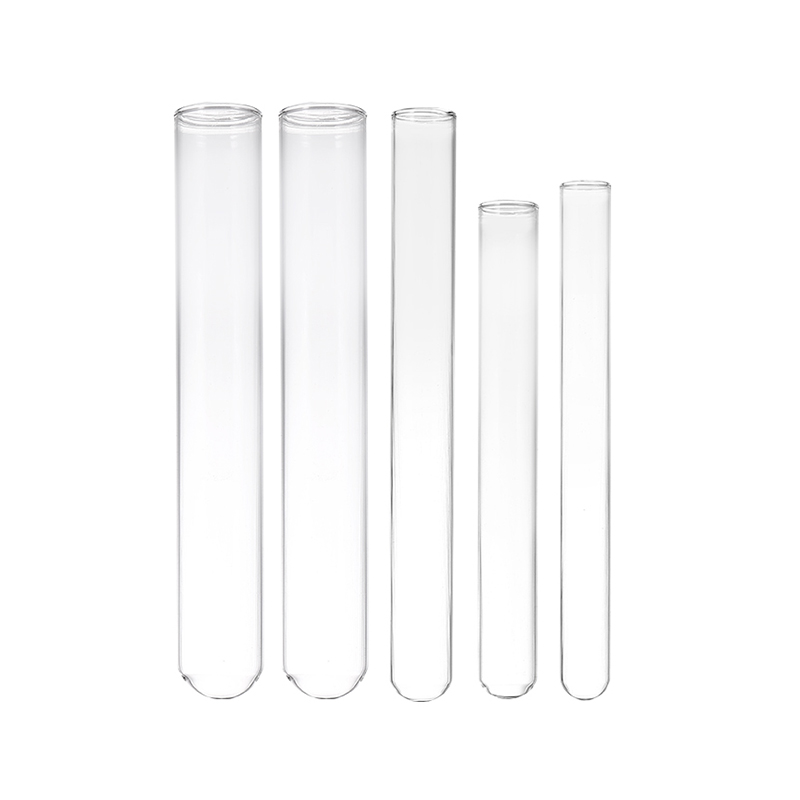
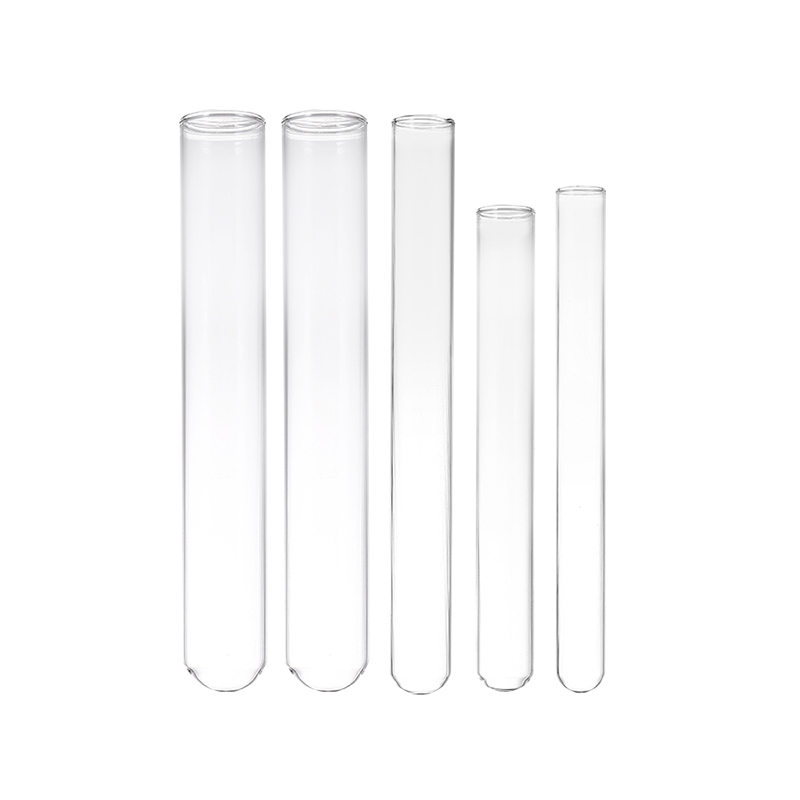
What Are Lab Test Tubes?
Lab test tubes are one of the most fundamental and widely used laboratory instruments in scientific research, chemical analysis, medical testing, education, and industrial laboratories. As a simple but highly functional laboratory container, a test tube is designed for holding, mixing, heating, observing, and storing different types of samples and reagents.
Although laboratory test tubes have a simple appearance, their manufacturing requirements are highly specialized. A reliable lab test tube must provide excellent chemical resistance, thermal stability, mechanical strength, dimensional accuracy, and surface quality. These characteristics directly influence experimental safety, testing accuracy, and operational efficiency.
With decades of development in laboratory technology, glass test tubes have evolved into various types and specifications to meet different applications. From basic chemical experiments to advanced pharmaceutical research, high-quality lab test tubes remain an essential component of modern laboratory systems.
Lab test tubes are cylindrical laboratory containers generally manufactured from laboratory-grade glass materials. They usually consist of a straight tube body, an open upper end, and a rounded or flat bottom design.
The main purpose of a test tube is to provide a safe and convenient container for small-volume experiments. Researchers use test tubes for sample preparation, chemical reactions, heating processes, biological cultivation, and analytical testing.
Compared with ordinary glass containers, professional laboratory test tubes are produced under strict quality standards. They require controlled wall thickness, smooth surfaces, accurate dimensions, and reliable resistance to chemical and thermal stress.
Basic Structure of Lab Test Tubes
Although test tubes have a relatively simple structure, every part plays an important role in laboratory performance.
Tube Body
The tube body provides the main space for holding samples and reagents. The diameter and length are designed according to different experimental requirements and capacity needs.
Opening and Rim
The opening of a test tube is usually fire-polished to create a smooth edge. A high-quality rim prevents injury during operation and improves compatibility with stoppers, caps, and other laboratory accessories.
Bottom Design
Different bottom structures are available according to application requirements. Rounded bottoms are common for general experiments, while flat bottoms provide better stability when placed on laboratory surfaces.
Common Types of Lab Test Tubes
Laboratory test tubes are available in various designs to meet the requirements of different industries and experiments.
| Type |
Main Features |
Applications |
| Glass Lab Test Tubes |
Standard laboratory tubes with excellent transparency and chemical resistance |
General chemical experiments, sample observation, and laboratory testing |
| Borosilicate Test Tubes |
High thermal resistance and excellent chemical durability |
Heating experiments, chemical reactions, and professional laboratories |
| Culture Test Tubes |
Designed for biological applications and often used with caps or plugs |
Microbiology, cell culture, and biotechnology research |
| Boiling Test Tubes |
Thicker walls and larger capacity for high-temperature applications |
Heating chemicals and high-temperature reactions |
| Screw Cap Test Tubes |
Secure sealing design to prevent leakage and contamination |
Sample storage, transportation, and laboratory analysis |
| Customized Test Tubes |
Produced according to specific drawings and technical requirements |
Special laboratory equipment and industrial applications |
Glass Materials Used for Lab Test Tubes
The choice of glass material determines the performance, durability, and application range of laboratory test tubes. Professional manufacturers select different glass materials according to temperature, chemical, and mechanical requirements.
Borosilicate Glass Test Tubes
Borosilicate glass is the most popular material for high-quality laboratory test tubes. Due to its low thermal expansion coefficient, it can withstand rapid temperature changes and repeated heating cycles.
Advantages of borosilicate glass test tubes include:
- Excellent thermal shock resistance
- High resistance to acids, alkalis, and chemical solvents
- Suitable for sterilization and repeated laboratory use
- High transparency for clear sample observation
- Long service life and stable performance
Quartz Glass Test Tubes
Quartz glass test tubes are used in specialized applications requiring extremely high temperature resistance and superior optical performance. They are commonly found in advanced research laboratories, semiconductor testing, and high-temperature experiments.
Soda Lime Glass Test Tubes
Soda lime glass tubes provide an economical solution for routine laboratory applications where moderate chemical and temperature resistance is sufficient.
Applications of Lab Test Tubes
Chemical Research and Analysis
Chemical laboratories use test tubes for reagent mixing, reaction observation, sample preparation, and small-scale synthesis experiments. The transparency of glass allows researchers to directly observe color changes, precipitation, and reaction processes.
Pharmaceutical Industry
In pharmaceutical research and quality control laboratories, test tubes are widely used for sample analysis, formulation research, chemical testing, and preparation procedures.
Glass test tubes are preferred in many pharmaceutical applications because they can withstand sterilization and maintain excellent chemical stability.
Medical and Clinical Testing
Medical laboratories use test tubes for sample handling, testing procedures, and laboratory analysis. Clean surfaces, reliable sealing options, and chemical resistance are important factors for medical applications.
Biological and Biotechnology Research
Culture test tubes are commonly used in microbiology and biotechnology fields. Their ability to withstand sterilization makes them suitable for microorganism cultivation and biological experiments.
Education Laboratories
Schools and universities rely on laboratory test tubes for chemistry and biology teaching. Their simple operation and clear visibility make them ideal tools for student experiments.
Important Performance Requirements of Lab Test Tubes
Thermal Resistance
Many laboratory experiments require heating or temperature changes. High-quality test tubes must maintain structural stability under thermal stress to reduce the risk of cracking.
Chemical Resistance
Laboratory test tubes may come into contact with acids, solvents, and other chemicals. Good chemical resistance prevents corrosion and ensures experimental reliability.
Mechanical Strength
Strong glass structure helps test tubes withstand handling, transportation, and repeated laboratory operations.
Dimensional Precision
Accurate tube diameter, length, and wall thickness ensure compatibility with laboratory racks, caps, stoppers, and automated equipment.
Surface Quality
Smooth inner and outer surfaces reduce contamination risks, improve cleaning efficiency, and support repeated laboratory use.
Manufacturing Process of Lab Test Tubes
The production of professional laboratory test tubes involves multiple precision manufacturing steps. Each process requires strict control to ensure consistent product performance.
Raw Material Selection
Shanghai Heqi Glassware Co., Ltd. carefully selects premium glass materials with high heat resistance, corrosion resistance, and impact resistance.
All raw material sources are traceable to ensure compliance with environmental and safety standards, providing customers with reliable and stable glass products.
Glass Forming and Processing
Through advanced production technology and automated or semi-automated equipment, glass materials are processed into tubes with accurate dimensions and consistent quality.
The production process includes glass forming, cutting, blowing, shaping, polishing, and finishing operations.
Strict Production Process Control
Shanghai Heqi applies dedicated quality checkpoints throughout every manufacturing stage. From initial processing to final inspection, each step is carefully monitored to minimize errors and ensure product consistency.
Finished Product Inspection
Before shipment, all lab test tubes undergo comprehensive inspection procedures, including:
- Dimensional accuracy testing
- Transparency inspection
- Surface cleanliness inspection
- Appearance quality inspection
- High-temperature performance testing
- High-pressure testing when required
Quality Assurance at Shanghai Heqi Glassware
Shanghai Heqi Glassware Co., Ltd. is committed to delivering high-quality laboratory glassware through strict quality management and advanced manufacturing technology.
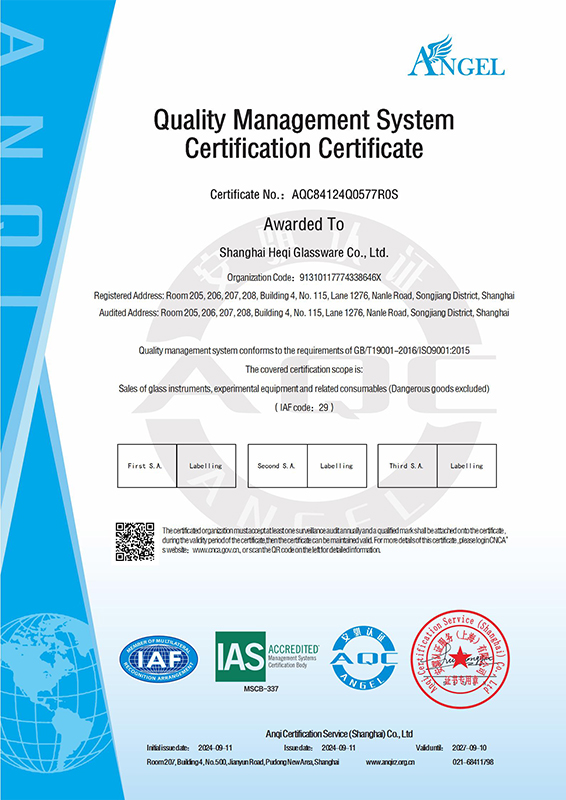
The company strictly follows the ISO9001 quality management system and integrates quality control into every stage of production. From selecting premium raw materials to precision processing and final inspection, every procedure is designed to meet international quality standards.
With professional production capabilities and continuous improvement in manufacturing processes, Shanghai Heqi provides reliable lab test tubes and customized glassware solutions for laboratories, research institutions, medical organizations, and industrial customers worldwide.
Sustainable Manufacturing and Environmental Responsibility
Shanghai Heqi Glassware focuses not only on product quality but also on sustainable development. The company adopts environmentally friendly materials and optimized production processes to reduce waste emissions and improve resource efficiency.
By combining advanced manufacturing technology with responsible production practices, Shanghai Heqi contributes to the sustainable development of the laboratory instrument industry.
How to Choose the Right Lab Test Tubes?
When selecting laboratory test tubes, customers should consider the following factors:
- Application purpose and experimental conditions
- Required temperature resistance
- Chemical compatibility with samples
- Tube size, capacity, and wall thickness
- Requirement for sterilization and reuse
- Customization requirements
Choosing suitable lab test tubes helps improve laboratory efficiency, safety, and experimental accuracy. With professional manufacturing experience, strict quality control, and customized production capabilities, Shanghai Heqi Glassware Co., Ltd. provides dependable laboratory glassware solutions for customers around the world.


 English
 Français
 Español