Introduction to Rotary Evaporation Technology
Core definition and working principle of a Lab Rotary Evaporator, detailing how motorized rotation forms a thin film under negative pressure to maximize evaporation efficiency while preventing bumping.
Key applications in chemical, pharmaceutical, biotechnology, and material science industries for solvent removal, concentration, and powder drying.
Why reliable solvent removal is critical for industrial and research-scale laboratory workflows, setting the foundation for high-purity yield and scalable production.
Integrating Company Expertise: Since its founding in March 2002, Shanghai Heqi Glassware Co., Ltd. has transitioned from specializing in standard-mouth glass instruments to integrating chemical R&D, mechanical design, and electronic control. Operating dedicated workshops for glass, metalworking, and assembly across production bases in Songjiang, Chengdu, Jiaxing, and Yancheng, the company brings advanced mechanized and assembly-line industrial processes to the production of high-performance lab equipment.
Capacity and Flask Sizes: Scaling Up from Benchtop to Pilot Production
Evaluating 1L, 2L, 5L, 10L, 20L, and 50L Lab Rotary Evaporator models for different throughput requirements. Smaller units (1L to 5L) are ideal for benchtop research and small-batch sample preparation, whereas larger systems (10L to 50L) serve pilot-scale production lines requiring high-volume solvent recovery.
To support diverse operational scales, Shanghai Heqi Glassware Co., Ltd. utilizes specialized metalworking and assembly workshops across its manufacturing bases in Songjiang, Chengdu, Jiaxing, and Yancheng to engineer robust mechanical frames and glassware setups tailored to specific capacity demands.
Heating Bath Performance and Temperature Control
The heating bath is a critical subsystem for maintaining thermal stability during distillation. Key parameters include bath material (typically PTFE-coated or stainless steel for corrosion resistance), temperature range (ambient to 180 degrees Celsius or 99 degrees Celsius depending on water/oil media), and control accuracy (digital PID controllers providing stability within plus or minus 1 degree Celsius).
Built-in safety measures such as dry-burn protection and independent overheating cut-offs ensure long-term operational safety in demanding laboratory environments.
Sealing Systems and Vacuum Integrity
High-performance vacuum sealing relies on advanced PTFE composite materials combined with fluorine rubber rings. This combination ensures exceptional resistance to aggressive organic solvents and maintains a deep vacuum level (typically below 395 Pa or 3 mmHg) even during continuous high-speed rotation.
Maintaining high vacuum integrity directly correlates with lower boiling points, protecting heat-sensitive compounds and accelerating overall evaporation rates.
Motor Types and Rotation Speed Control
Choosing the right drive mechanism impacts both reliability and safety. Brushless DC motors and induction motors are preferred over traditional brushed options for continuous, spark-free operation in explosive or volatile solvent atmospheres.
Standard rotation speeds typically range from 10 to 280 RPM, adjustable via digital interfaces to optimize the fluid film thickness across different flask sizes and viscosities.
Rotary Evaporator Specification Comparison Guide
| Technical Parameter |
Benchtop Scale (1L - 5L) |
Pilot Scale (10L - 20L) |
Industrial Scale (50L) |
| Evaporation Flask Capacity |
1L, 2L, 5L |
10L, 20L |
50L |
| Receiving Flask Capacity |
0.5L - 2L |
5L - 10L |
20L - 30L |
| Rotation Speed Range |
10 - 280 RPM (Adjustable) |
10 - 140 RPM (Adjustable) |
10 - 130 RPM (High-torque drive) |
| Max Evaporation Rate |
1L/h - 2L/h (Water) |
5L/h - 10L/h (Water) |
Up to 20L/h+ (Water) |
| Bath Temperature Range |
Ambient to 99 degrees Celsius / 180 degrees Celsius |
Ambient to 99 degrees Celsius / 180 degrees Celsius |
Ambient to 99 degrees Celsius / 180 degrees Celsius |
| Vacuum Sealing Type |
Advanced PTFE / Fluorine Rubber |
Advanced PTFE / Mechanical Seal |
Heavy-Duty PTFE / Dual-Channel Seal |
| Motor Type |
Brushless DC Motor |
High-Torque Induction Motor |
Heavy-Duty Explosion-Proof Motor |
Glassware Quality and Chemical Resistance
High-borosilicate glass (GG-17 / Borosilicate 3.3) serves as the industry standard for all wetted components, providing exceptional thermal shock resistance and high chemical inertness against most acids, organic solvents, and water.
Leveraging its dedicated glass workshop established over decades of manufacturing excellence, Shanghai Heqi Glassware Co., Ltd. crafts these precision glass components in-house at its production bases, ensuring uniform wall thickness, optimal structural integrity, and rigorous quality control for heavy-duty laboratory operations.
Condenser Configurations
Condenser design directly dictates recovery rates and cooling efficiency. Standard configurations include vertical condensers for space-saving setups, diagonal options for smaller footprints, and high-efficiency double-coil or reflux condensers designed to maximize cooling surface area.
For large-scale solvent processing, secondary or receiving condensers are often integrated to capture low-boiling-point volatiles and prevent vapor emissions into the laboratory atmosphere.
Built-In Safety Mechanisms
Operating with volatile organic solvents demands fail-safe engineering. Essential safety features include automatic motor lift-off during power outages to prevent sample overheating in the hot bath, dry-run protection to safeguard heating elements, and dedicated grounding designs.
To further support specialized processing environments, Shanghai Heqi Glassware Co., Ltd. integrates custom electronic control units and safety cut-offs developed by its dedicated R&D team, providing large-scale purchasers with reliable, stable operation during continuous, high-volume production cycles.
Pharmaceutical Formulations and Active Pharmaceutical Ingredient (API) R&D
In pharmaceutical laboratories and pilot plants, removing solvents cleanly without degrading active compounds is a daily necessity. A Lab Rotary Evaporator is heavily relied upon for concentrating synthesis solutions, recovering expensive organic solvents, and drying intermediate powders under tightly controlled vacuum levels.
Ensuring purity and compliance in these processes requires robust equipment backed by rigorous manufacturing standards. Drawing upon its advanced production infrastructure across Songjiang, Chengdu, Jiaxing, and Yancheng, Shanghai Heqi Glassware Co., Ltd. supplies precision-engineered glass reactors and rotary evaporation units that meet the strict chemical inertness and reliability demands of pharmaceutical research and active ingredient processing.
Botanical Extraction and Natural Product Processing
Botanical processing lines—ranging from essential oil production to herbal extract concentration—generate massive volumes of liquid solvents like ethanol, methanol, or hexane that must be rapidly and safely reclaimed to maintain economic viability and environmental safety.
Large-scale rotary systems allow processors to handle high throughputs continuously, stripping solvents at lower temperatures to preserve the delicate aromatic profiles, active compounds, and heat-sensitive constituents of natural extracts.
Chemical Synthesis and Petrochemical Testing
Organic synthesis laboratories frequently deal with complex reaction mixtures containing high-boiling or low-boiling fractions. Rotary evaporation simplifies the isolation of target reaction products by cleanly separating solvents from viscous residues.
Petrochemical analysis and quality control laboratories similarly depend on these systems for sample preparation, fraction isolation, and accurate solvent recovery testing, where equipment durability and deep vacuum stability are absolute prerequisites.
Cost-Efficiency through Direct Manufacturing
Procurement managers constantly look for ways to optimize facility budgets without compromising equipment reliability. Sourcing a Lab Rotary Evaporator directly from the manufacturer eliminates intermediary markups, ensuring highly competitive wholesale pricing for large-scale laboratory expansions and enterprise-level deployments.
To deliver on its long-standing service commitment of providing responsive support and streamlined solutions, Shanghai Heqi Glassware Co., Ltd. has evolved from traditional manual methods into mechanized, assembly-line industrial production across its major manufacturing bases in Songjiang, Chengdu, Jiaxing, and Yancheng. This structural shift effectively reduces production costs while driving up quality consistency for bulk purchasers.
Strict Quality Control and International Certifications
Laboratory safety and compliance depend heavily on uniform manufacturing standards. Industrial-grade units must undergo rigorous pressure testing, thermal shock assessments for high-borosilicate glass components, and electrical safety inspections before leaving the factory floor.
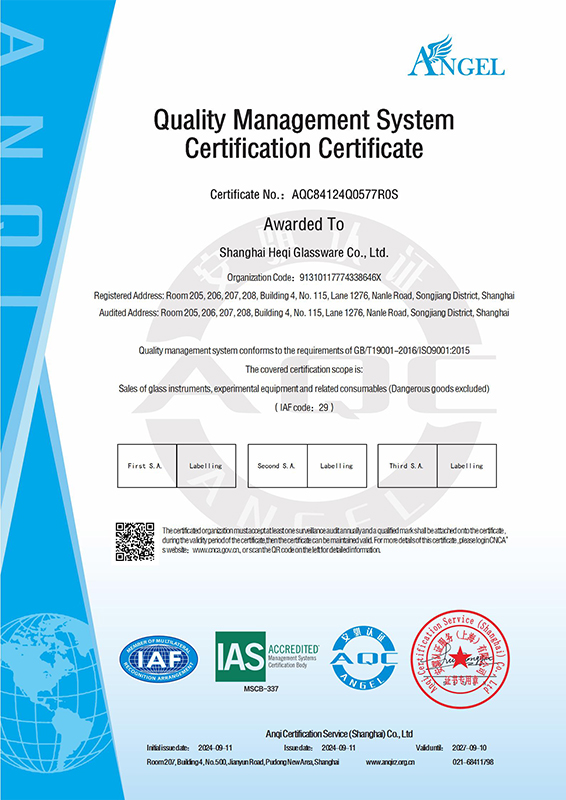
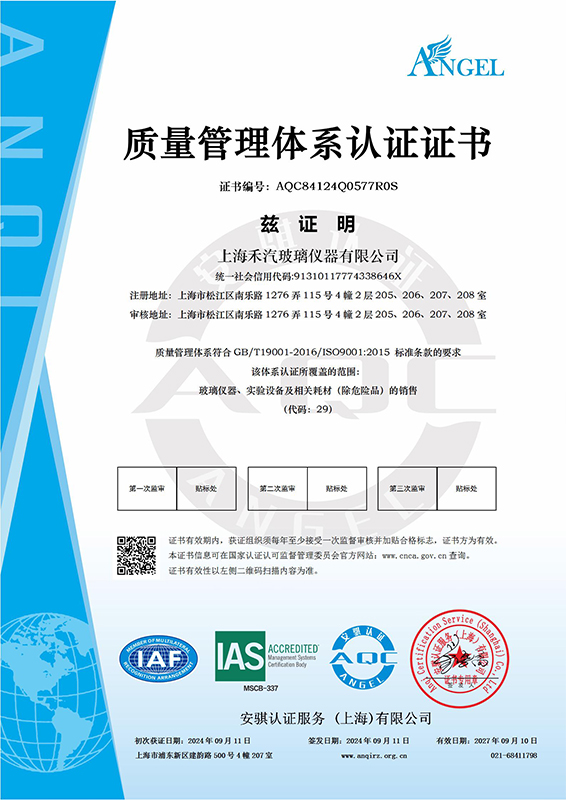
Integrating expertise in mechanical design, electronic control, and specialized glass crafting, Shanghai Heqi Glassware Co., Ltd. operates dedicated workshops for glass, metalworking, and assembly. This integrated oversight guarantees that every rotary evaporation unit meets stringent quality benchmarks for global industrial deployment.
OEM/ODM Customization Capabilities
Standard catalog models do not always fit specialized pilot plants or custom laboratory layouts. Facility engineers often require tailored flask sizes, specific electrical configurations (such as distinct voltage and frequency ratings), or modified vapor duct geometries.
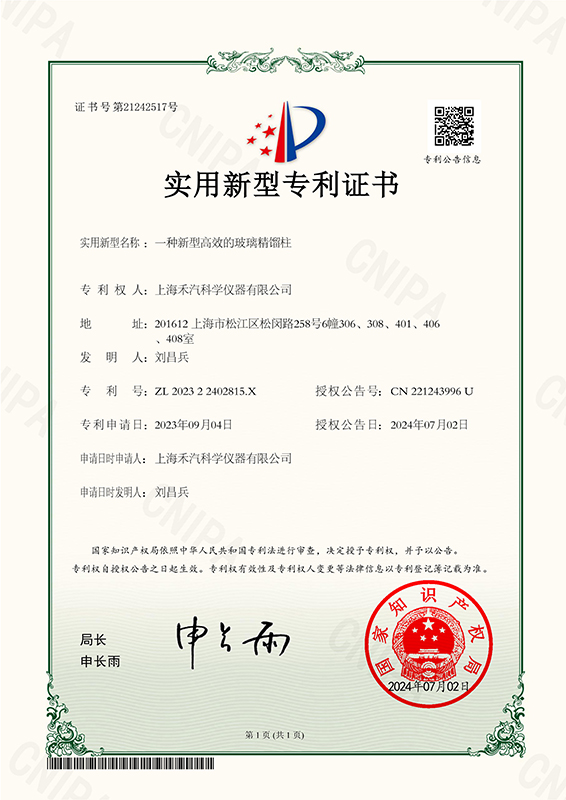
Backed by an in-house R&D team consisting of chemical, mechanical, and electronic specialists, Shanghai Heqi Glassware Co., Ltd. excels at custom fabrication. The company routinely supports chemical and pharmaceutical enterprises by designing and building specialized small-scale and pilot-scale equipment tailored to exact operational parameters.
Robust Supply Chain and Reliable Global Logistics
Large infrastructure projects require predictable timelines and secure transit handling. Equipment delays can stall entire research pipelines or delayed facility commissioning dates.
Maintaining ample inventory across domestic production and distribution nodes allows for fast order processing. Combined with professional export-grade crating and secure logistics management, procurement teams receive their heavy-duty glass instruments and experimental equipment safely and on schedule.
Warranty Coverage and Spare Parts Availability
Sourcing heavy-duty laboratory machinery requires long-term operational security. Enterprise buyers look for robust multi-year warranties covering core mechanical and electrical assemblies, alongside readily accessible replacement components such as PTFE sealing rings, evaporation flasks, and heating elements.
To ensure uninterrupted facility operations and honor its service commitment of providing total client support, Shanghai Heqi Glassware Co., Ltd. maintains ample inventory of standard-mouth glass instruments, lab consumables, and experimental replacement parts across its operational bases. This ensures rapid dispatch and minimal downtime for client laboratories worldwide.
Technical Assistance and Operator Training
Commissioning a complex rotary evaporation system—especially pilot-scale units ranging from 10L to 50L—demands clear documentation and expert guidance. Comprehensive installation manuals, wiring diagrams, and digital troubleshooting guides help facility technicians integrate the equipment smoothly into existing utility lines.
When complex configurations arise, direct access to engineering expertise makes a tangible difference. Leveraging its specialized R&D team composed of mechanical design, electronic control, and chemical engineering specialists, Shanghai Heqi Glassware Co., Ltd. provides responsive remote technical assistance and custom operational guidance to ensure safe, optimized equipment performance.
Bulk Ordering, Lead Times, and Commercial Partnership Programs
Enterprise procurement involves careful scheduling, volume planning, and flexible commercial terms. Managing large facility rollouts requires predictable production schedules, transparent container load planning, and scalable pricing structures for multi-unit orders.
To streamline large-scale purchasing projects, Shanghai Heqi Glassware Co., Ltd. combines advanced assembly-line industrial processes with flexible commercial arrangements. Whether supplying standard rotary evaporators or custom-fabricated glass reactors and circulation systems from its workshops in Songjiang, Chengdu, Jiaxing, and Yancheng, the company delivers reliable execution, efficient lead times, and dedicated partnership support for long-term global clients.
What is the typical lead time for bulk orders of industrial-scale rotary evaporators?
Standard production timelines for bulk or customized equipment generally range from 2 to 4 weeks, depending on the scale and complexity of the units (such as 20L or 50L systems).
To ensure efficient project scheduling, Shanghai Heqi Glassware Co., Ltd. leverages its established production bases in Songjiang, Chengdu, Jiaxing, and Yancheng, maintaining structured assembly-line processes and ample inventory of core components to minimize wait times for large-scale enterprise deployments.
How do we ensure the glassware and sensitive components arrive intact during international shipping?
Transporting fragile high-borosilicate glass and heavy metal chassis overseas requires rigorous protective packaging. Units are secured using export-grade reinforced wooden crating, custom-molded shock-absorbing foam inserts, and double-walled internal cushioning.
Comprehensive transit insurance protocols and secure crating methods are standard practice for all shipments handled by Shanghai Heqi Glassware Co., Ltd., protecting your investment from the factory floor to your laboratory doorstep.
Can your factory customize the voltage and plug types to match our regional electrical standards?
Yes, electrical compatibility is essential for international laboratory integration. Heating baths, motorized lift mechanisms, and rotation drives can be tailored to match regional power requirements.
Common electrical customization options include:
Voltage Ratings: 110V / 220V / 380V options available
Frequency Standards: 50Hz / 60Hz single-phase or three-phase configurations
Plug Types: Regional variations including North American (Type A/B), European (Type C/F), UK (Type G), and Australian (Type I) standards
What are the primary maintenance practices required to maximize the lifespan of a heavy-duty rotary evaporator?
Regular upkeep ensures long-term vacuum integrity and mechanical reliability. Key maintenance steps include:
PTFE Seals Inspection: Periodically check and clean sealing rings for chemical residue or wear; replace immediately if vacuum leakage occurs.
Heating Bath Descaling: Regularly drain and clean stainless steel or PTFE baths to prevent mineral scale buildup, especially when using hard water.
Vacuum Pump Maintenance: Flush and change diaphragm or rotary vane pump oil to maintain optimal ultimate vacuum pressure.
Glassware Cleaning: Rinse high-borosilicate glass components with appropriate solvents or mild cleaning solutions after every high-viscosity distillation run.
How does your factory handle warranty claims and technical troubleshooting for overseas enterprise clients?
Resolving technical inquiries swiftly is critical for maintaining laboratory productivity. When issues arise, direct engineering support is accessible to diagnose and resolve operational roadblocks.
Backed by a dedicated R&D and assembly team, Shanghai Heqi Glassware Co., Ltd. provides rapid-response troubleshooting, digital video guidance, and immediate international dispatch of replacement parts—such as glass condensers, seals, and heating elements—ensuring full operational continuity for global partners.


 English
 Français
 Español