English
 Français
 Español
Borosilicate Glass Composition: Understanding SiO2, B2O3, and the 3.3 Standard
Your new 500 mL round-bottom flask is engraved with the number "3.3." The supplier describes it as borosilicate glass, but that label does not tell you the whole story. The real definition starts with composition: about 80% silicon dioxide (SiO2), 13% boron trioxide (B2O3), 4% sodium or potassium oxide, and 2-3% aluminium oxide by weight. These numbers are not arbitrary; they create a glass that can withstand rapid heating, chemical solvents, and vacuum without cracking. Understanding borosilicate glass composition will help you select the right glassware for your laboratory and avoid the disappointing performance of lower-grade substitutes.
The Typical Borosilicate Glass Composition
Borosilicate glass is not a single formula. Different manufacturers and standards use slightly different oxide percentages, but the product called "borosilicate 3.3" or "high-boro 3.3" falls within a narrow range that gives it a coefficient of thermal expansion of about 3.3 x 10^-6 per kelvin.
| Oxide | Typical Content | Role in the Glass Network |
|---|---|---|
| SiO2 | 70-80 wt% | Main network former; provides high softening point and acid resistance |
| B2O3 | 8-13 wt% | Lowers thermal expansion; improves resistance to thermal shock |
| Na2O / K2O | 3-5 wt% | Fluxes for melting; reduces production temperature |
| Al2O3 | 2-3 wt% | Improves chemical durability and reduces devitrification |
The "3.3" designation, common in laboratory glassware, is a shorthand for the coefficient of thermal expansion. It is not a brand name. A flask marked "3.3" or "borosilicate 3.3" should meet this composition range and the standards behind DIN ISO 3585 or ASTM E438.
What Each Oxide Does Inside the Glass
Silica (SiO2) forms the backbone of the glass network. A high proportion of silica gives borosilicate glass its high working temperature and excellent resistance to mineral acids, including sulfuric, nitric, and hydrochloric acids at moderate concentrations. Boric oxide (B2O3) is the defining component. It inserts into the silica network and reduces the overall coefficient of thermal expansion. This is why a borosilicate beaker can be placed on a hot plate and then rinsed with cold solvent without cracking, while a soda-lime beaker would fail under the same stress.
Sodium and potassium oxides are added as fluxes. They lower the melting temperature so that silica can be worked at practical furnace temperatures. However, these alkali oxides also increase electrical conductivity and chemical solubility. If too much alkali is used, the glass becomes vulnerable to water attack. Aluminium oxide (Al2O3) counters that risk: it stabilizes the network and improves hydrolytic resistance. That is why neutral borosilicate glass is often specified for pharmaceutical storage where leachable ions could contaminate the contents.
Why Composition Dictates Laboratory Performance
Three practical properties are directly tied to the oxide percentages. The first is thermal shock resistance. A lower expansion coefficient means less physical stress when one part of the vessel is hot and another is cold. A borosilicate flask with a coefficient near 3.3 x 10^-6 per kelvin can survive a temperature difference of 160 K or more, which is why it is standard for reflux setups and reaction vessels.
The second is chemical durability. The high silica content makes the glass very stable against water, acids, and salt solutions. Boric oxide and alumina further lower the leaching of alkali ions into your reaction mixture, which is critical for trace analysis and pharmaceutical synthesis.
The third is mechanical strength. Borosilicate glass is stiffer than ordinary soda-lime glass, but it is still a brittle material. Composition alone does not determine wall thickness. A thin "borosilicate" test tube may perform differently from a thick-walled one. For high-vacuum work or pressurised reactions, look for thick-wall versions and proper glassblowing quality.
How to Recognise True Borosilicate Glassware
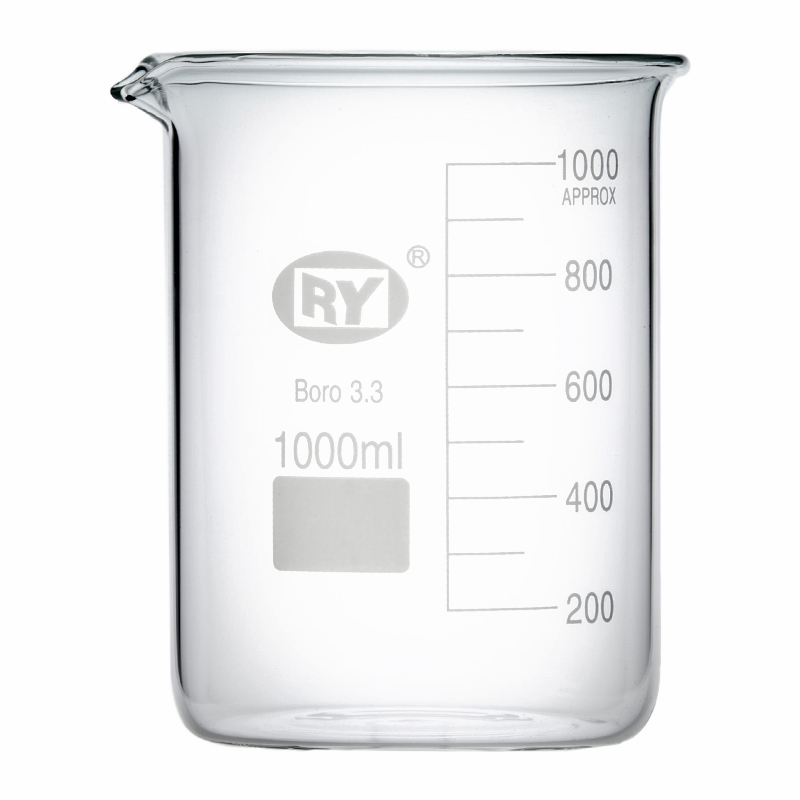
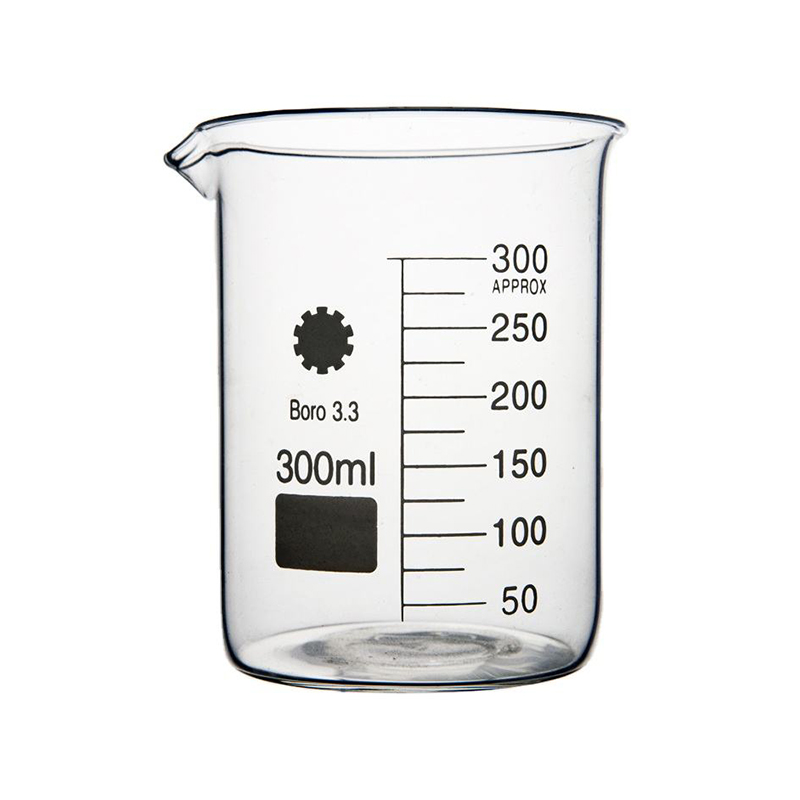
The word "glass" on a product page is not enough. A genuine borosilicate lab item will normally carry a marking such as "3.3", "BORO 3.3", "DIN ISO 3585", or "high-boro 3.3". Some cheaper imported items use the term "borosilicate" loosely; a quick look at the spec sheet will tell you whether the boron oxide content is above 8%. If you are buying beakers for daily heating and mixing, choose a low-form borosilicate beaker with thick walls that explicitly lists 3.3 high-boro glass in the specification.
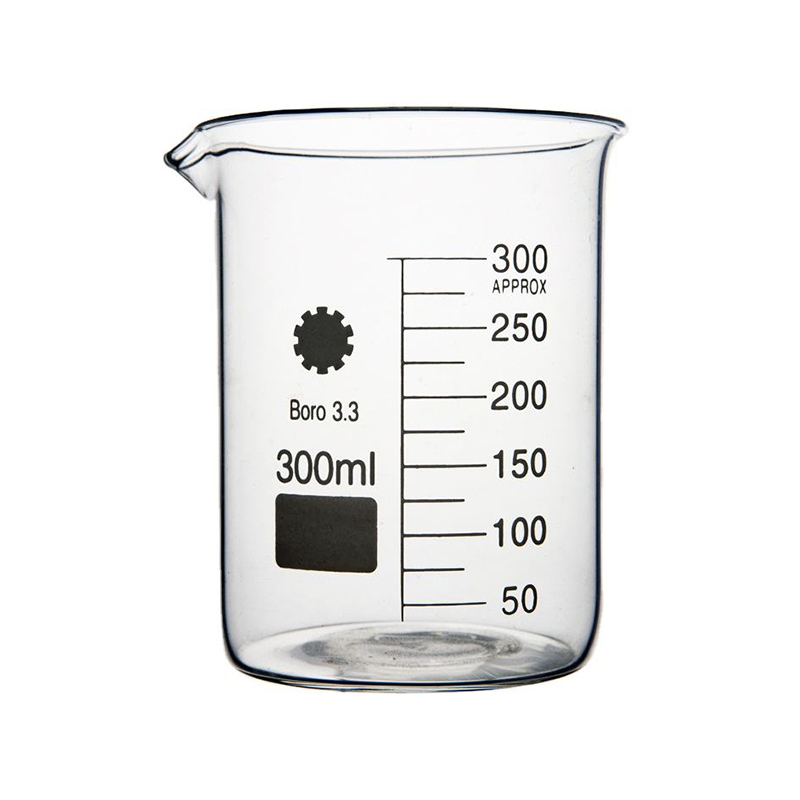 Wholesale Low Form Beaker Chemistry Laboratory Borosilicate Glass Transparent BeShanghai Heqi Glassware Co., Ltd. is China wholesale Low Form Beaker Chemistry Laboratory Borosilicate Glass Transparent Beaker Suppliers...View Product →
For volumetric glassware such as measuring flasks and pipettes, composition is only half the story. The product should also meet Class A tolerance for capacity. A Class A borosilicate volumetric flask is manufactured and calibrated to tight limits, so it gives reliable results in quantitative work. If the item is only stamped "glass" and does not mention material or tolerance, treating it as ordinary soda-lime glass is a safer assumption.
Choosing the Right Borosilicate Ware for Your Application
Reactions under reflux require a round-bottom flask with a uniform geometry and a standard-taper joint. A single-neck round-bottom flask with Class A tolerance is a good starting point for most organic syntheses because it can be heated evenly and then attached to a condenser without adapter geometry issues.
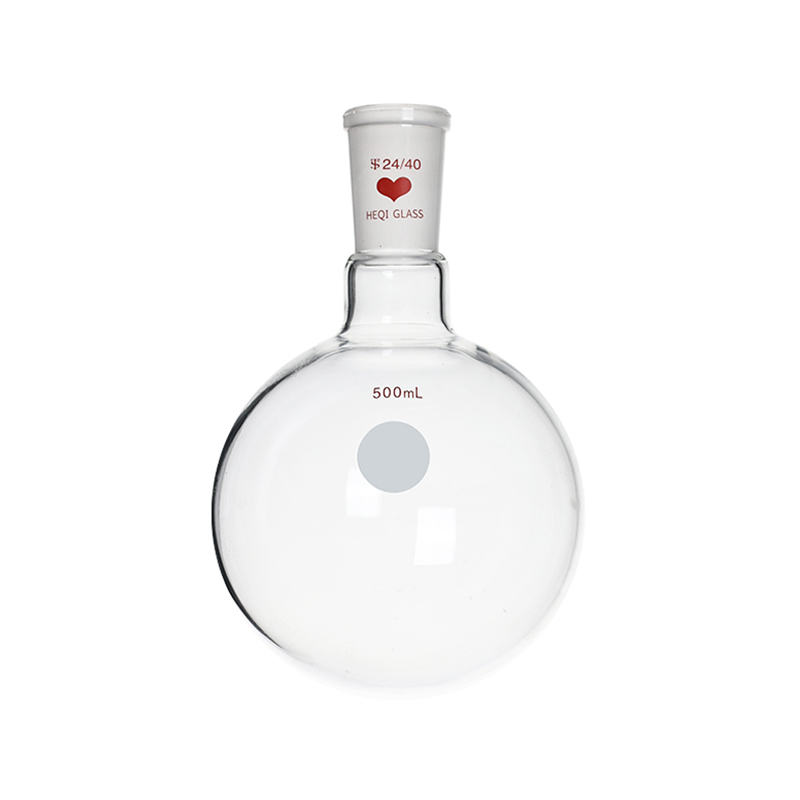 Wholesale Single Neck Round Bottom Flask (Class A) Suppliers, Factory - ShanghaiShanghai Heqi Glassware Co., Ltd. is China wholesale Single Neck Round Bottom Flask (Class A) Suppliers and Factory,Class A single neck r...View Product →
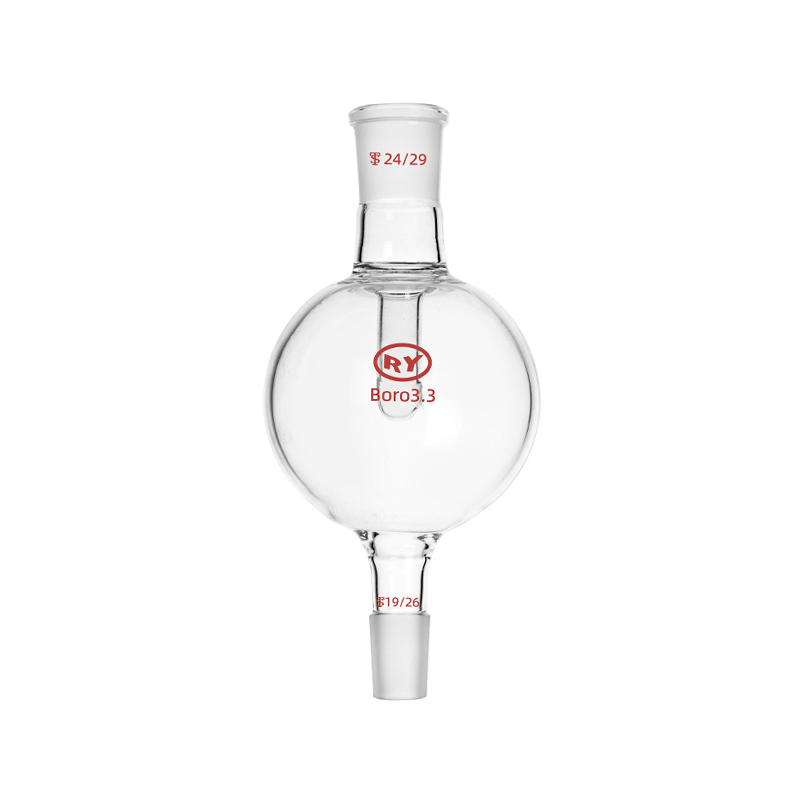
Condensers and vacuum adapters are equally dependent on the same material family. A Liebig or Allihn condenser made from 3.3 borosilicate will tolerate the repeated temperature cycling of a distillation run. The standard-taper outer and inner joints are ground to accurate dimensions, so they can be combined with other ground-joint pieces in the same system.
For solvent storage and cell culture media, a blue-cap reagent bottle made from 3.3 borosilicate glass is preferred when you need low leachables and clear visibility of contents. For filtration, fritted glass funnels with sintered discs are manufactured with the same borosilicate composition so that the sealed-in disc expands and contracts at the same rate as the funnel body. That match matters more than many buyers realise.
If you scale up to pilot-plant glass reactors, confirm that every wetted part is made from the same low-expansion borosilicate family. Mixed materials in a custom glass reactor can create differential expansion stresses at the joints, which may lead to breakage during a temperature hold or cool-down step.
Practical Takeaways for Procurement
- Require a material statement. The label should mention "borosilicate 3.3" or "high-boro 3.3", not just "glass".
- Check the standards. DIN ISO 3585, ASTM E438, and the Chinese QB/T standard for borosilicate glass all define the composition and thermal properties.
- Match the glass to the operation. Use thick-wall, Class A items for quantitative analysis and vacuum work; use standard wall thickness for routine synthesis and teaching.
- For custom components, ask the supplier about the glass type, the annealing process, and the joint standard so that connectors from different product lines fit together.
The Bottom Line
Borosilicate glass composition is the real reason laboratory glassware can be trusted under heat, vacuum, and chemical stress. A typical formula of around 80% silica, 13% boric oxide, 4% alkali oxide, and 2-3% alumina gives the glass its low thermal expansion and high chemical durability. When you buy a flask, beaker, or condenser, look for the "3.3" marking and verify the material specification. That one check will prevent cracked glass, contaminated samples, and unexpected lab downtime.