Key Advantages of Standard Ground Joint Glassware
The value of standard ground joints isn't really about any single product — it's about the flexibility the standardization itself provides across an entire lab setup, and that's worth spelling out clearly.
- Universal interchangeability — components sharing the same taper size fit together regardless of which specific product line they come from, letting labs mix and match flasks, condensers, and adapters as a process evolves rather than being locked into one product family.
- Reliable vacuum-tight sealing — a properly ground joint, with or without grease depending on the application, provides a dependable seal for both atmospheric and reduced-pressure work.
- No proprietary hardware required — unlike some quick-connect or specialty fitting systems, standard ground joints don't require any special clips, o-rings, or manufacturer-specific accessories to function properly.
- Easy to expand or reconfigure — a lab building out a distillation or reflux setup over time can add components gradually, confident that anything sharing the same taper size will connect properly to what's already in place.
- Widely understood by lab staff — because this joint system is the de facto industry standard, new staff and students generally already understand how to assemble and disassemble these connections without additional training specific to our products.
The main trade-off compared to some proprietary quick-connect systems is assembly speed, though for most reflux, distillation, and general synthesis work, that's a minor consideration against the flexibility ground joints provide.
These advantages compound when a lab standardizes across its glassware inventory rather than mixing several different systems, since staff spend less time hunting for compatible parts and more time actually running experiments. We're happy to walk through your current inventory and suggest where standardizing on this product category might simplify day-to-day operations, particularly for labs juggling several different glassware systems left over from different past suppliers.
Where Standard Ground Joint Glassware Is Used
Ground joint glassware is genuinely general-purpose, which is exactly why it forms the backbone of most wet-chemistry lab setups rather than being limited to a specific niche.
- Reflux and distillation assemblies — the classic use case, where a flask, condenser, and receiving vessel are connected through matching ground joints to form a complete reaction or separation train.
- Chemical and pharmaceutical R&D — synthesis work routinely requires flexible glassware configurations that can be reassembled differently for each new reaction or procedure.
- University and vocational teaching labs — standardized joints make it practical to stock a shared pool of components that students can assemble into different configurations across various experiments.
- Pilot-scale process development — teams testing and iterating on a process at small scale benefit from being able to reconfigure their glass train quickly as conditions change.
- Solvent recovery and extraction operations — setups that need to be adjusted for different solvent boiling points or extraction methods rely on the same interchangeability.
- Analytical sample preparation — distillation and extraction steps in analytical workflows often use standard ground joint glassware precisely because of its predictable, well-understood sealing performance.
If your lab regularly reconfigures glassware between different procedures, standardizing on one or two taper sizes across your inventory is usually the most practical long-term approach.
Across all of these settings, the common thread is a need for dependable, repeatable performance rather than a highly specialized one-off solution, which is exactly the kind of use case this product category is built around. If your application doesn't fit neatly into the categories above, it's still worth reaching out, since many processes combine elements of more than one of these use cases and we can usually still recommend a suitable configuration.
Standard Ground Joint Glassware Specifications
The table below lists the common taper sizes and related specifications for ground joint products in our catalog. All sizes follow internationally recognized taper standards, so components should be compatible with equivalent ground joint glassware from other reputable manufacturers as well as our own product range.
| Parameter | Typical Value |
| Base Material | Borosilicate Glass 3.3 |
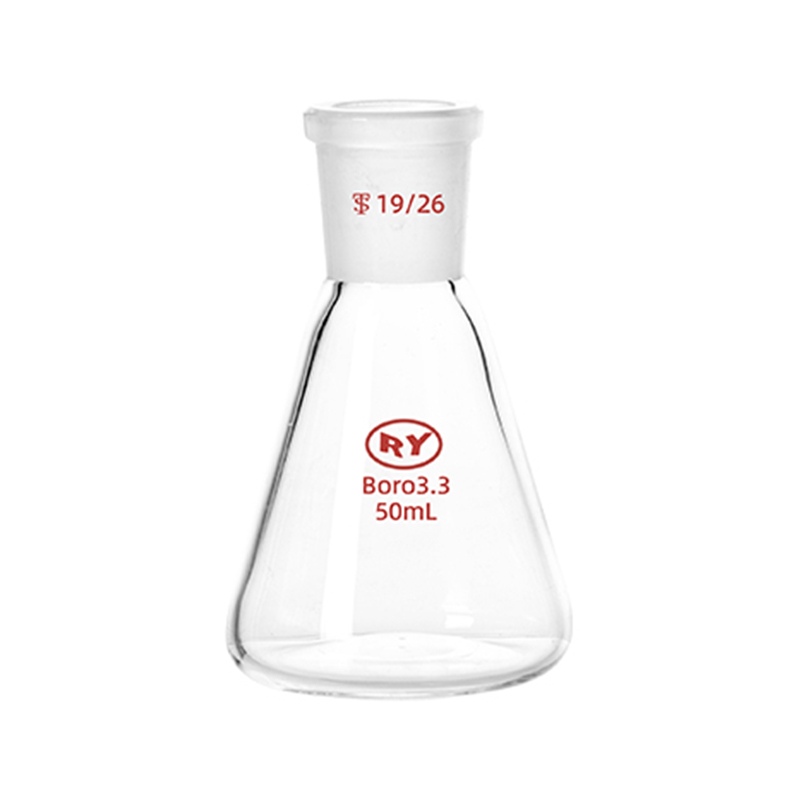
| Common Taper Sizes | 14/23, 19/26, 24/29, 29/32, 34/35 |
| Taper Standard | International interchangeable ground joint standard |
| Grinding Tolerance | Precision-ground to standard interchangeability tolerances |
| Surface Finish | Fine ground matte finish for consistent seal contact |
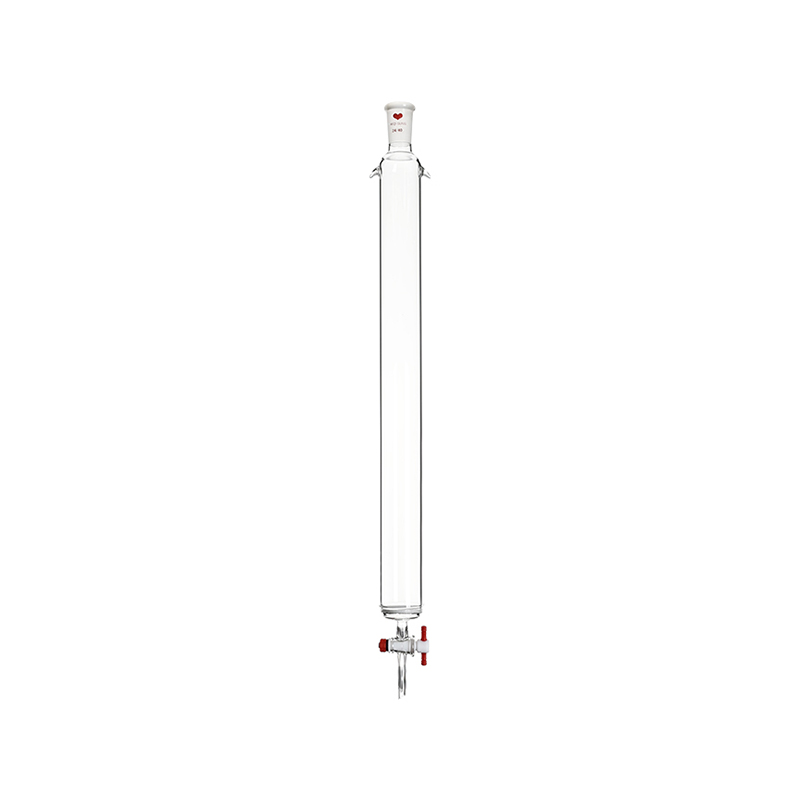
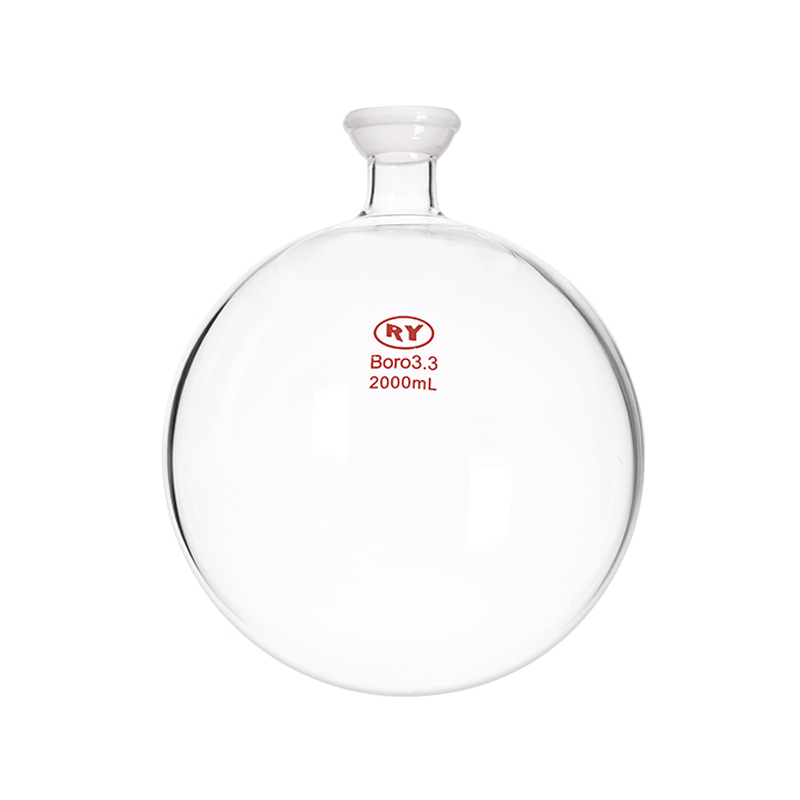
| Available Product Forms | Flasks, condensers, adapters, distillation heads, connecting tubes |
| Sealing Options | Vacuum grease, PTFE sleeves, or dry fit depending on application |
| Custom Sizes | Available on request for non-standard taper requirements |
If you're unsure which taper size matches your existing equipment, sending us a rough measurement of the joint's largest diameter is usually enough for us to confirm the correct standard size.
We periodically review these specifications against evolving international standards to make sure our production tolerances stay aligned with what buyers expect from a reputable manufacturer, and we're glad to share more detailed dimensional drawings for any specific item in this range on request. If a particular parameter isn't listed here, it's worth asking directly rather than assuming a default value, since some characteristics can vary meaningfully between product variants within the same general category, particularly for custom taper sizes that fall outside the common standard range and any specialized adapter geometry used for less common lab configurations.
Frequently Asked Questions
Will your ground joints fit glassware from other manufacturers?
In most cases yes, as long as the taper size matches (14/23, 19/26, 24/29, and so on), since these are internationally standardized dimensions rather than a proprietary design.
Do I need grease on every ground joint?
Not necessarily. Short-duration, atmospheric-pressure connections often work fine dry. Vacuum work or extended assembly generally benefits from grease or a PTFE sleeve for a more reliable seal.
How do I identify the taper size of an existing piece of glassware?
Measuring the largest diameter of the ground section is usually enough for us to confirm the standard size, or we can walk you through identifying it from a photo.
Can ground glass joints wear out over time?
With normal care, they hold up well for years. Excessive force during assembly or disassembly, or leaving joints greased and assembled for very long periods, are the most common causes of premature wear.
What happens if a ground joint gets stuck?
Gentle rotation combined with light tapping and, if needed, mild heating of the outer joint can often free a stuck connection. We're happy to advise on technique for a specific stuck joint if you run into this.
Do you offer non-standard taper sizes?
Yes, custom taper sizes can be produced on request, though standard sizes are recommended wherever possible for easier future compatibility with other equipment.
Can I mix and match joints from different flask sizes as long as the taper matches?
Yes, taper size is what determines compatibility, not the overall size or shape of the connected component, so mixing is generally fine as long as the numbers match.
Sealing Options for Ground Joint Connections
A ground joint can be sealed a few different ways depending on the application, and choosing the right approach matters more than people sometimes expect, since the wrong choice can lead to either a slow leak or a stuck, hard-to-separate joint down the line.
For general atmospheric-pressure work, a dry-fit ground joint without any grease often provides an adequate seal on its own, particularly for short-duration assembly and disassembly. For applications requiring a more reliable seal, including any reduced-pressure or vacuum work, a thin film of vacuum grease applied to the joint surface fills microscopic imperfections and significantly improves sealing performance, though it does require occasional cleaning and reapplication, and can occasionally lead to a joint sticking if left assembled for extended periods without being checked.
As an alternative to grease, a PTFE sleeve fits between the two ground glass surfaces, providing a reliable seal without any lubricant at all, which avoids both the mess of grease and the risk of joints seizing after long-term assembly. This is generally the preferred option for setups that will remain assembled for extended periods, or for applications where grease contamination of the sample would be a concern. Whichever method you choose, matching the taper size precisely between components is the single most important factor in achieving a reliable seal in the first place.
Getting this right the first time is generally simpler than troubleshooting a marginal seal after a process is already underway, so we'd always recommend confirming the appropriate sealing approach for your specific application before finalizing your order, particularly if you're working with an unfamiliar reagent, an unusual operating temperature, or an application outside typical everyday lab conditions where standard assumptions might not hold.
Payment Terms & Shipping
Ground joint glassware ships under our standard commercial terms across the full range of components in this tag.
- Payment methods — T/T, L/C, and Alibaba Trade Assurance are all accepted, with a 30% deposit and balance due before shipment typical for new buyers, adjustable for established accounts placing recurring orders.
- Sample orders — available for most standard components, useful if you're confirming joint compatibility with existing equipment before committing to a full glass train order.
- Lead times — standard taper sizes and common product configurations typically ship within 15–25 days; custom taper sizes or non-standard component geometry generally take longer, around 25–35 days.
- Packaging — ground joint components are individually wrapped with particular attention paid to protecting the ground glass surface itself, since even minor surface damage at the joint can compromise sealing performance.
- Shipping — FOB Shanghai standard, with sea freight for bulk orders and air freight for smaller or time-sensitive shipments.
For buyers assembling a complete distillation or reflux train, it's generally most efficient to order all the components together in one purchase order so we can confirm dimensional compatibility across the full assembly before it ships.
We understand that international shipping timelines are often a critical part of planning a lab setup or expansion, so we try to communicate realistic lead times upfront rather than optimistic ones that later slip. If your project has a hard deadline, let us know early so we can flag any potential scheduling risk before you commit to a purchase order, rather than discovering a conflict partway through production.
Compliance, Environmental & Safety Certification
Ground joint glassware carries the same base material certifications as the rest of our borosilicate catalog, with a few considerations specific to joint precision and interchangeability that some buyers ask about directly.
- ISO 9001 quality management certification applies to ground joint production the same as our standard product lines.
- RoHS and REACH compliance — applies across all glass components in this product range, relevant for buyers shipping into the EU and similarly regulated markets.
- Dimensional accuracy verification — joint tolerance checks are part of our standard quality control process, with documentation available on request for buyers who need this recorded for internal equipment qualification.
- Interchangeability testing — we periodically verify that our joints meet international interchangeability tolerances, which is what allows components from our catalog to fit reliably with equivalent products from other manufacturers.
- Third-party inspection — SGS or equivalent testing can be arranged for buyers needing independent dimensional verification for their own procurement or quality documentation.
If your lab operates under a specific quality system that requires joint tolerance data as part of an equipment validation file, let us know and we can provide the relevant documentation alongside your order.
Compliance documentation matters most when it's actually usable by your own internal audit or procurement process, so rather than sending a generic packet, we'd rather understand what your specific requirements are and provide exactly what's needed in the format your team expects. This approach has generally worked well for buyers in regulated industries who need documentation that fits directly into an existing internal quality system.


 English
 Français
 Español