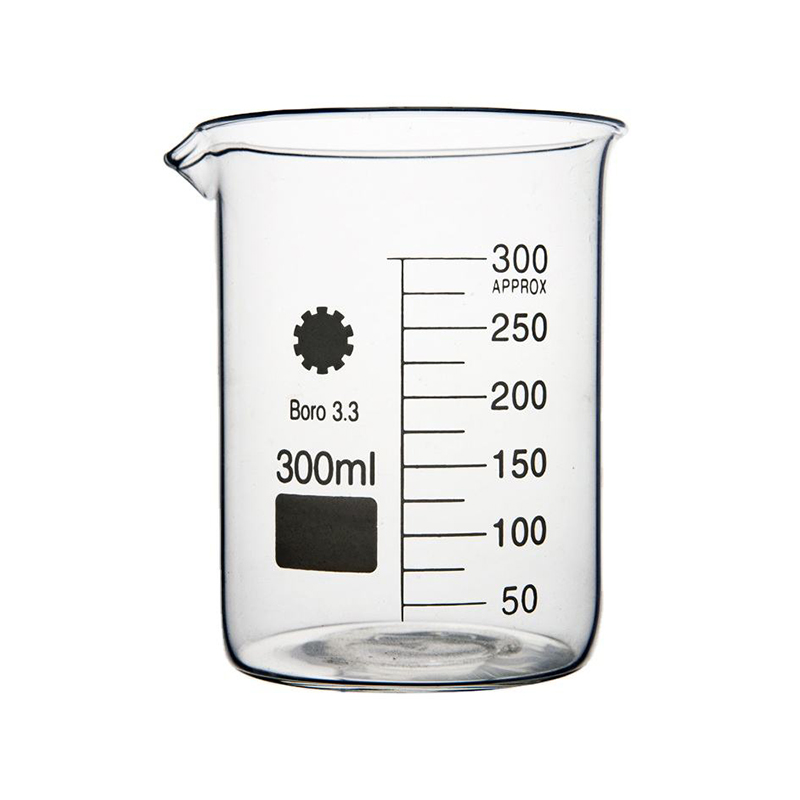
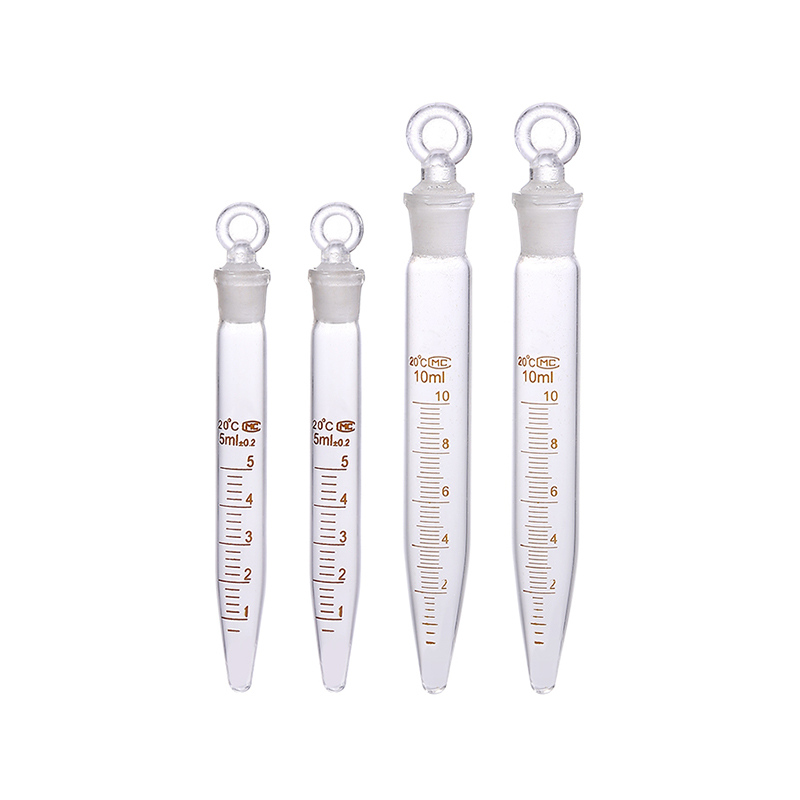
Key Advantages of Non-Graduated Utility Glassware
Plain, ungraduated glassware might seem like simply a stripped-down version of graduated products, but there are specific practical advantages worth recognizing for the many lab tasks where graduation markings genuinely aren't needed.
- More economical than graduated equivalents — without the additional manufacturing step of applying durable graduation markings, plain utility glassware is generally less expensive, which matters for stocking bulk quantities of general-purpose containers.
- Sufficient for the majority of general containment tasks — rinsing, washing, general mixing, and waste collection rarely require any volume reference, making plain glassware entirely adequate for these routine functions.
- No risk of graduation-related confusion — because there's no printed scale to potentially misread or reference incorrectly, plain glassware eliminates a small but real source of error in situations where a volume figure isn't actually needed anyway.
- Straightforward, versatile general-purpose design — without dedicated calibration considerations, plain utility glassware can be used more freely across a wide range of general lab tasks without concern for preserving graduation accuracy.
- Efficient use of lab supply budget — reserving graduated and precision volumetric glassware specifically for tasks that require it, while stocking plain glassware for general use, generally makes more efficient use of overall equipment spending.
The trade-off is simply that these items provide no volume reference at all, so they're not appropriate for any task where even an approximate volume check would genuinely be useful during the procedure.
These advantages compound when a lab standardizes across its glassware inventory rather than mixing several different systems, since staff spend less time hunting for compatible parts and more time actually running experiments. We're happy to walk through your current inventory and suggest where standardizing on this product category might simplify day-to-day operations, particularly for labs juggling several different glassware systems left over from different past suppliers or older equipment purchases made before current staff joined.
Where Non-Graduated Utility Glassware Is Used
Plain utility glassware handles the substantial portion of everyday lab work that doesn't actually depend on any volume reference, which covers a genuinely wide range of routine tasks across nearly every type of laboratory.
- General mixing and stirring — combining reagents or samples where the exact resulting volume isn't relevant to the procedure benefits from simple, unmarked containers.
- Rinsing and washing steps — cleaning glassware or equipment as part of routine lab hygiene doesn't require any volume tracking, making plain beakers and containers the practical default.
- Waste and rinse water collection — collecting spent solvents, rinse water, or general lab waste is a straightforward containment task with no need for graduated markings.
- General sample containment during multi-step procedures — holding a sample temporarily between processing steps often doesn't require tracking its exact volume at that particular stage.
- Teaching laboratory general use — introductory lab sessions covering basic technique often use plain glassware for tasks that don't specifically require volume measurement practice.
- Bulk general-purpose lab stocking — labs maintaining a general supply of everyday containers for miscellaneous, unplanned tasks generally find plain utility glassware more practical and cost-effective than stocking graduated versions for every possible use.
If a specific task doesn't call for any volume reference at all, plain non-graduated glassware is generally the simpler, more economical, and entirely adequate choice over its graduated equivalent for that particular purpose.
Across all of these settings, the common thread is a need for dependable, repeatable performance rather than a highly specialized one-off solution, which is exactly the kind of use case this product category is built around. If your application doesn't fit neatly into the categories above, it's still worth reaching out, since many processes combine elements of more than one of these use cases and we can usually still recommend a suitable configuration based on your specific workflow and budget.
Non-Graduated Utility Glassware Specifications
The table below summarizes typical product types, capacity ranges, and dimensional characteristics for non-graduated utility glassware in our catalog. Since these items lack graduation markings, specifications focus primarily on general dimensions and construction rather than measurement tolerance.
| Parameter | Typical Value |
| Base Material | Borosilicate Glass 3.3 |
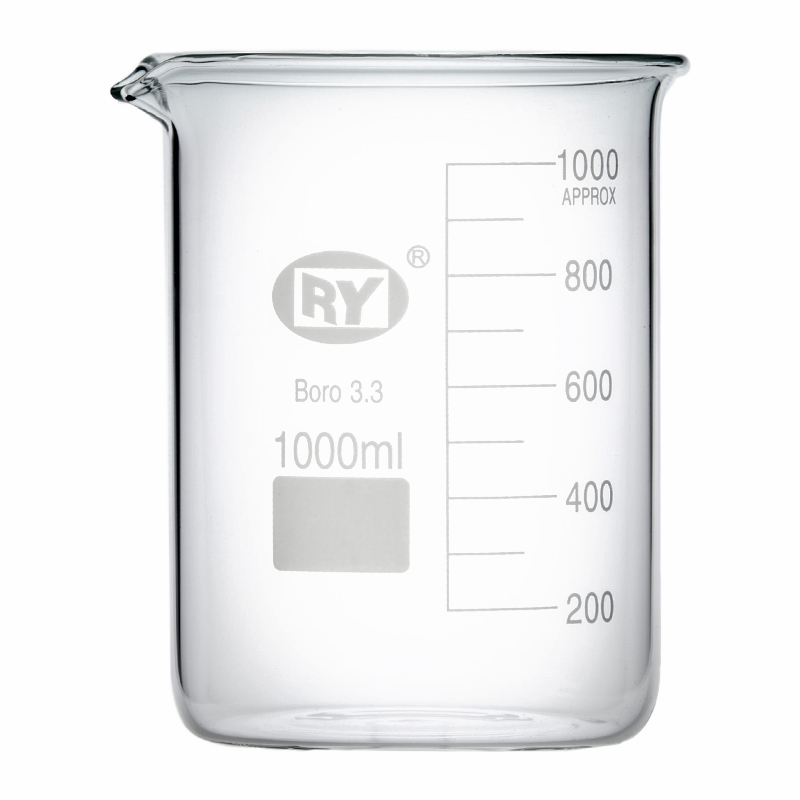
| Common Product Types | Plain beakers, plain flasks (round and flat bottom), plain bottles |
| Capacity Range | 25ml to 20L, depending on product type |
| Wall Thickness | 1.5mm – 3.5mm, depending on capacity and vessel type |
| Neck / Joint Configuration | Matches equivalent graduated or standard product lines where applicable |
| Surface Finish | Standard fire-polished exterior, no printed or etched markings |
| Available Configurations | Single and multi-neck options on select flask types |
| Custom Configurations | Available for non-standard capacities on request |
If you're unsure whether a graduated or non-graduated version better suits a specific task, we're happy to advise based on your intended use, since the cost savings on plain glassware are only worthwhile when the graduation feature genuinely isn't needed for that particular application or workflow.
We periodically review these specifications against evolving international standards to make sure our production tolerances stay aligned with what buyers expect from a reputable manufacturer, and we're glad to share more detailed dimensional drawings for any specific item in this range on request. If a particular parameter isn't listed here, it's worth asking directly rather than assuming a default value, since some characteristics can vary meaningfully between product variants within the same general category or capacity range depending on manufacturing batch.
Frequently Asked Questions
Why choose non-graduated glassware over graduated versions if the price difference is small?
For tasks genuinely requiring no volume reference, plain glassware is simpler and often slightly more economical, though for tasks where a rough volume check might occasionally help, graduated versions offer more flexibility for similar cost.
Can non-graduated glassware be upgraded with graduation markings later?
No, graduation markings need to be applied during manufacturing; if you anticipate needing volume reference in the future, ordering the graduated version from the start is the better choice.
Is non-graduated glassware lower quality than graduated glassware?
No, it's made from the same borosilicate 3.3 material and manufactured to the same quality standards; the only difference is the absence of graduation markings.
What's the best use case for plain utility beakers?
General mixing, rinsing, washing, and waste collection tasks where knowing the exact contained volume isn't relevant to the procedure being performed.
Do you offer bulk pricing for large orders of plain utility glassware?
Yes, volume pricing is available for standard configurations; send us your expected order quantity and we can provide a tiered quote.
Can I mix plain and graduated glassware in the same purchase order?
Yes, this is common when outfitting a lab with a full range of general and volume-reference equipment; we can combine both into a single order and shipment.
Can you help me decide between a few different options in this category for my specific application?
Yes, we're happy to discuss your intended use in more detail and recommend the most suitable configuration, since the right choice often depends on details specific to your process that aren't always obvious from a general product description alone.
Sealing & Interface Performance for Utility Glassware
Non-graduated utility glassware uses the same standard ground taper joints, GL screw threads, or plain rim designs as its graduated equivalents within the same product shape, so sealing and closure performance follows the same general principles covered elsewhere in our catalog for beakers, flasks, and bottles of comparable configuration.
Since these vessels are typically used for general containment rather than precise measurement or long-term calibrated storage, sealing considerations tend to focus more on practical containment — keeping contents from spilling or evaporating during general handling — rather than the accuracy-preservation concerns that apply to graduated or volumetric glassware. For utility bottles used to hold waste solvent or rinse water, a simple screw cap generally provides adequate containment without needing the more specialized gasket considerations that apply to long-term precision reagent storage.
For utility flasks used during general mixing or intermediate sample holding, a basic stopper or cap is often sufficient, though for any task involving volatile or hazardous material, even in a general containment role, appropriate chemical-resistant sealing components remain important regardless of whether the vessel itself carries graduation markings. The absence of graduations doesn't reduce the importance of proper sealing where safety or chemical containment is genuinely at stake, so it's worth applying the same sealing standards you would for any hazardous material regardless of the vessel's measurement capability.
Getting this right the first time is generally simpler than troubleshooting a marginal seal after a process is already underway, so we'd always recommend confirming the appropriate sealing approach for your specific application before finalizing your order, particularly if you're working with an unfamiliar reagent, an unusual operating temperature, or an application outside typical everyday lab conditions where standard assumptions about sealing performance might not hold as reliably as expected.
Payment Terms & Shipping
Non-graduated utility glassware ships under our standard commercial terms, and being a straightforward, high-volume general-purpose product category, logistics are generally efficient and well established.
- Payment methods — T/T, L/C, and Alibaba Trade Assurance, with a 30% deposit and balance due before shipment standard for new buyers, adjustable for established accounts placing recurring bulk orders.
- Sample orders — available for most standard configurations, though given the simplicity of this product category, many buyers proceed directly to a standard bulk order without a separate sample step.
- Lead times — standard plain glassware typically ships within 10–20 days given high production volume and manufacturing simplicity; custom capacities generally take slightly longer.
- Packaging — individually wrapped and packed into foam-lined cartons sized appropriately for vessel capacity, following the same packaging approach as our graduated equivalents in the same shape category.
- Shipping — FOB Shanghai standard, with sea freight generally most economical for bulk utility glassware orders, and air freight available for smaller or urgent shipments.
Given the bulk, general-purpose nature of this product category, we're happy to discuss volume pricing for larger recurring orders of standard utility glassware sizes ordered on a regular restocking schedule.
We understand that international shipping timelines are often a critical part of planning a lab setup or expansion, so we try to communicate realistic lead times upfront rather than optimistic ones that later slip. If your project has a hard deadline, let us know early so we can flag any potential scheduling risk before you commit to a purchase order, rather than discovering a conflict partway through production once materials and labor have already been committed to your specific order.
Compliance, Environmental & Safety Certification
Non-graduated utility glassware carries the same base material certifications as the rest of our borosilicate catalog, with documentation focused on general material quality given the absence of graduation-specific tolerance concerns.
- ISO 9001 quality management certification covers production of utility glassware the same as the rest of our catalog.
- RoHS and REACH compliance — applies across all glass components in this product range, relevant for buyers shipping into the EU and similarly regulated markets.
- Hydrolytic resistance certification — Class 1 hydrolytic resistance documentation is available for the glass body, confirming suitability for general chemical and educational applications.
- Dimensional accuracy verification — wall thickness and general dimensional checks are part of our standard quality control, with documentation available on request.
- Third-party testing — SGS or equivalent testing can be arranged for buyers needing independent verification of material composition for their own procurement documentation.
If your organization requires standardized documentation across a large bulk order of general utility glassware, we can typically prepare a consolidated certificate covering the full batch rather than separate paperwork for each individual item ordered.
Compliance documentation matters most when it's actually usable by your own internal audit or procurement process, so rather than sending a generic packet, we'd rather understand what your specific requirements are and provide exactly what's needed in the format your team expects. This approach has generally worked well for buyers in regulated industries who need documentation that fits directly into an existing internal quality system without extra back-and-forth or repeated requests for reformatted paperwork.


 English
 Français
 Español