English
 Français
 Español
What Type of Solid Is Glass? Amorphous vs Crystalline Solids Explained
Glass is an amorphous solid. Unlike a crystalline solid such as quartz or table salt, which has a periodic atomic lattice, glass has a disordered, non-repeating structure. It is rigid under normal handling, but on a molecular scale it resembles a frozen liquid. That combination is why glass is often described as neither a true solid nor a true liquid, but the correct materials-science term is amorphous solid.
What Makes a Solid Amorphous?
Solids are usually divided into two broad families: crystalline and amorphous. Crystalline solids owe their shape and mechanical properties to a repeating three-dimensional arrangement of atoms or molecules. This lattice gives them sharp melting points, and it explains why they break along predictable cleavage planes. Amorphous solids, in contrast, lack long-range periodic order. The atoms are packed randomly, much like a liquid, yet the material is effectively immobilized because the internal viscosity is enormous.
The difference is not merely academic. It controls how a material responds to heat, pressure, and chemical attack. For glass, the amorphous structure produces isotropic behavior: its properties, such as thermal expansion and optical refraction, are the same in every direction. That is why a glass prism refracts light uniformly and why a glass beaker does not have a preferred direction of fracture. When a chemist ramps the temperature of a crystalline solid, it stays solid until its melting point, then changes state abruptly. Glass instead softens continuously, so the usable working temperature must stay well below its softening point.
| Property | Crystalline solid | Amorphous solid (glass) |
|---|---|---|
| Atomic arrangement | Long-range periodic order | Disordered, no long-range order |
| Melting behavior | Sharp, well-defined melting point | Gradual softening over a range |
| Fracture pattern | Cleaves along flat planes | Conchoidal (shell-like) fracture |
| Thermal expansion | Anisotropic (direction-dependent) | Isotropic (same in all directions) |
Why Glass Is Not a Liquid
A persistent myth says glass is a supercooled liquid that continues to flow, citing old church windows that are thicker at the bottom. That story mistakes manufacturing history for physical behavior. Medieval window glass was often made by spinning a disk and letting the edges thicken, and glaziers intentionally installed the heavier edge downward. Modern measurements show that glass at room temperature does not flow on any observable timescale. Its viscosity is on the order of 1024 pascal-seconds, so the characteristic flow time is vastly longer than the age of the universe.
The term supercooled liquid is sometimes used to describe the state above the glass transition, but below the normal freezing point. In that regime the material is still fluid, but once it passes through the glass transition temperature it should be called a glass. Thermodynamically, glass is an out-of-equilibrium state. When a molten liquid cools, it may bypass crystallization and enter a supercooled liquid region. Further cooling brings it to the glass transition, where the molecular rearrangements become so slow that the material behaves as a solid. This is why glass is better classified as an amorphous solid: it is solid in the mechanical sense, but it lacks the periodic lattice that defines a crystalline solid.
How Glass Forms: From Melt to Amorphous Solid
Most commercial glass begins with silica sand plus fluxes and stabilizers. The batch is heated to about 1500 °C, where the components melt into a viscous liquid. On cooling, one of two things can happen: if the melt crystallizes, you get a dense, opaque or translucent solid with a defined melting point; if the melt is cooled fast enough or contains additives that interfere with nucleation, it forms a glass.
The glass-forming process can be summarized in four steps:
- Melting: raw materials fuse into a homogeneous liquid.
- Refining: bubbles are removed and temperature is homogenized.
- Supercooling: the melt cools below its freezing point without forming crystals.
- Glass transition: viscosity rises to the point where the structure becomes kinetically frozen.
The glass transition, not a melting point, is the key event. Above the transition temperature, the material is a rubbery or viscous liquid; below it, the material is a rigid glass. Cooling rate also matters: a slow cooling rate gives molecules time to arrange into crystals, while a fast cooling rate skips crystallization. That is why thin glass fibers form easily, whereas thick cast glass requires slower, carefully controlled cooling to avoid internal stress.
Common Types of Glass
Not all glass is the same. The atomic network can be modified with oxides to change its optical, thermal, and chemical properties. For practical purposes, three families dominate:
- Soda-lime glass is the most common and cheapest type. It is used for window panes, bottles, and everyday tableware. It softens at relatively low temperatures and has a moderate resistance to thermal shock.
- Borosilicate glass contains boron trioxide, which lowers the thermal expansion coefficient and improves resistance to acids, bases, and temperature cycling. It is the standard material for laboratory glassware and is also used in cookware and pharmaceutical packaging.
- Lead glass contains lead oxide, increasing refractive index and giving a bright, sparkly appearance. It is used for optical lenses and decorative crystal objects, but it is less chemically durable than borosilicate glass.
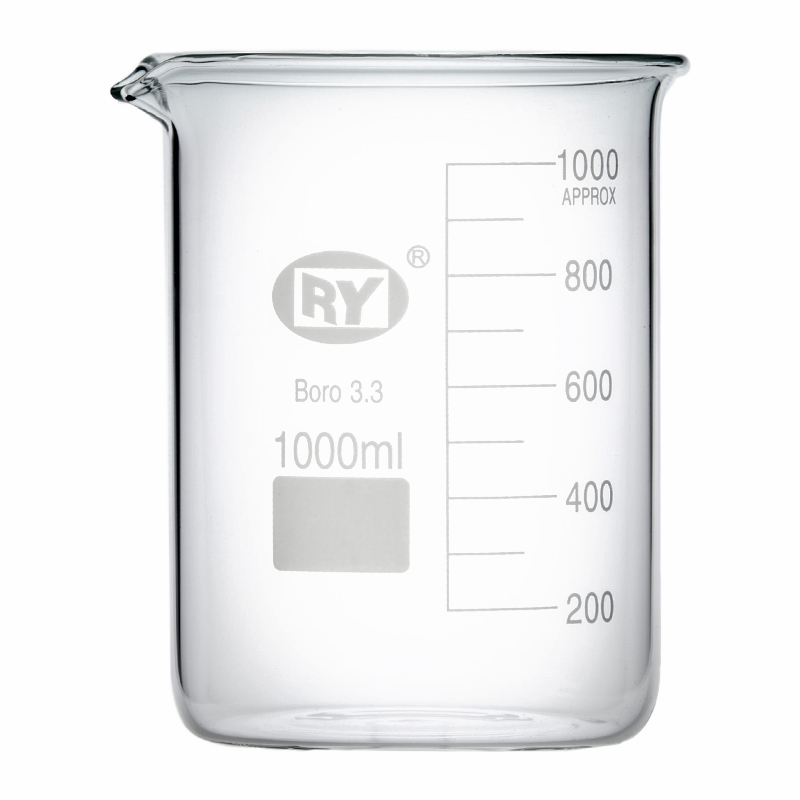
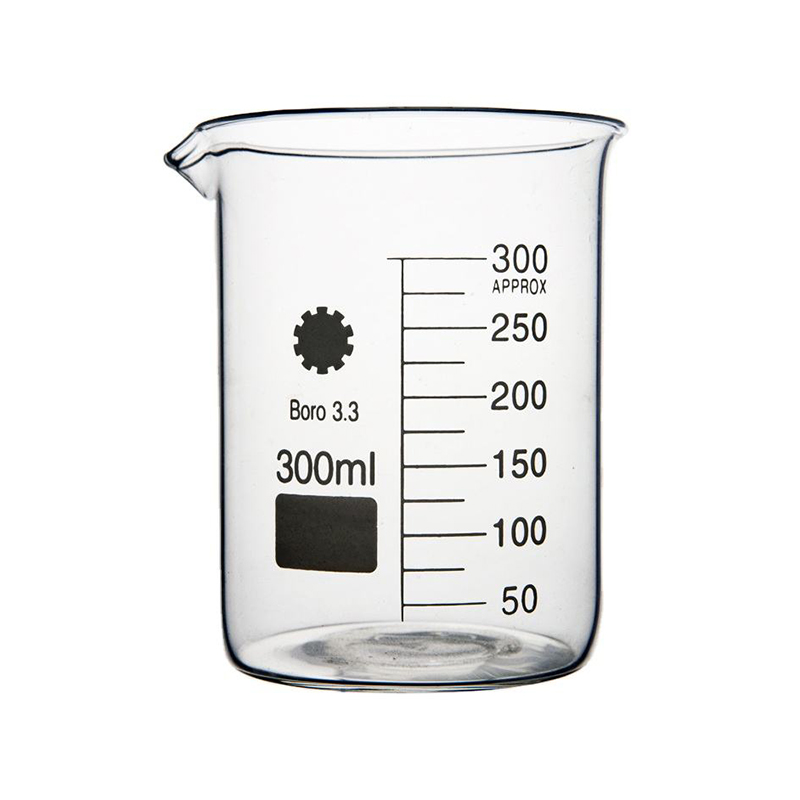
The numbers make the difference clear. Soda-lime glass has a thermal expansion coefficient around 9 × 10⁻⁶ K-1 and is easily broken by sudden temperature changes. Borosilicate 3.3 glass, with an expansion coefficient near 3.3 × 10⁻⁶ K-1, can survive temperature differences of 100 K or more. That is why borosilicate glass is the preferred material for lab glassware. A dependable example is the low-form borosilicate glass beaker, which offers a clear view of reactions while withstanding repeated autoclaving.
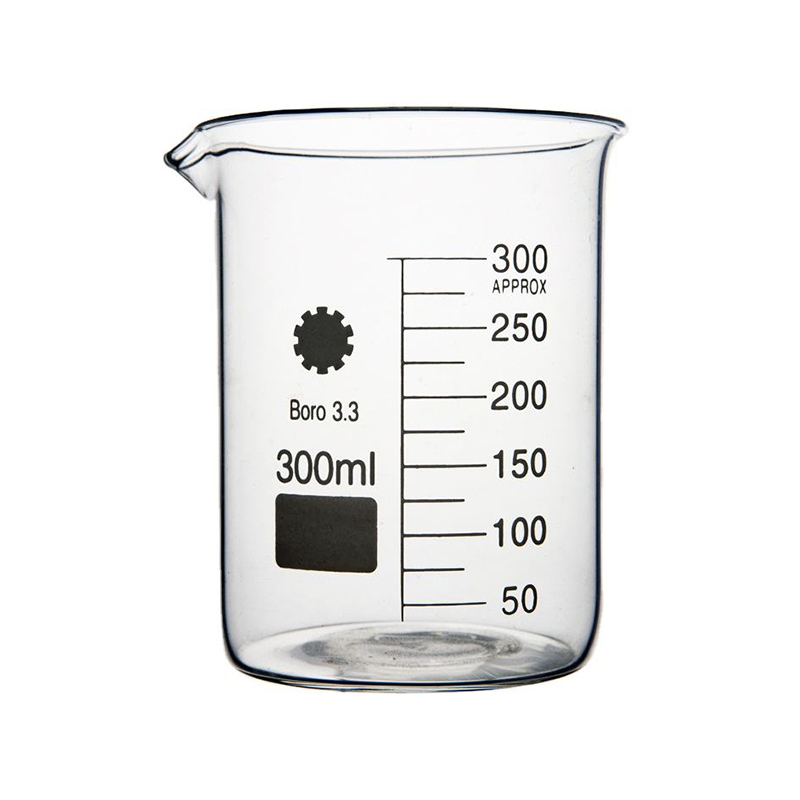 Wholesale Low Form Beaker Chemistry Laboratory Borosilicate Glass Transparent BeShanghai Heqi Glassware Co., Ltd. is China wholesale Low Form Beaker Chemistry Laboratory Borosilicate Glass Transparent Beaker Suppliers...View Product →
Why Glass Type Matters in the Laboratory
Laboratory work exposes glass to solvents, strong acids, hot plates, and vacuum. A soda-lime beaker might survive an hour of gentle heating, but it can shatter when placed on a cold bench. Borosilicate 3.3 glass expands far less, so it tolerates the thermal gradient without cracking. Choosing the right glass type is a safety decision, not just a budget decision.
Understanding what a glass beaker is used for in scientific laboratories helps avoid common handling mistakes. Even with borosilicate glass, you should never heat a scratched or chipped vessel or plunge it directly onto a wet surface. Good lab habits extend the life of every piece of glassware.
For reactions at higher volumes, the vessel geometry is as important as the material. A Class A single-neck round-bottom flask distributes stress evenly and couples well with standard taper joints, making it a reliable choice for reflux, distillation, and rotary evaporation. Class A markings mean the volume tolerances have been verified, which is essential for quantitative work. When you need to condense vapor efficiently, a Liebig condenser with standard taper joints connects directly to the flask and provides strong cooling capacity without excessive water flow.
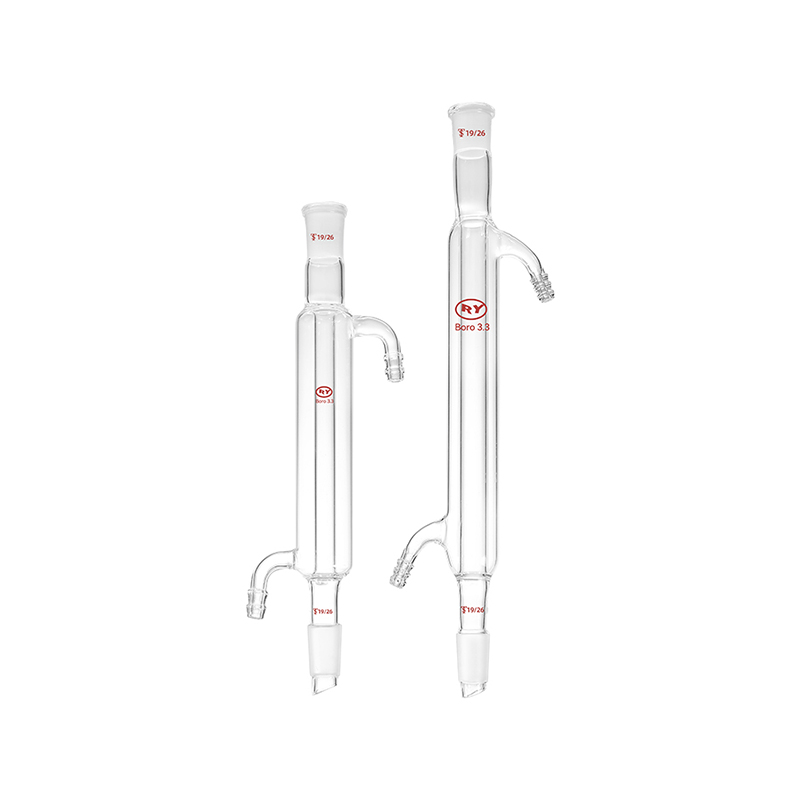 Wholesale Liebig Condenser Suppliers, Factory - Shanghai Heqi Glassware Co., LtdShanghai Heqi Glassware Co., Ltd. is China wholesale Liebig Condenser Suppliers and Factory,Borosilicate glass Liebig condenser for daily...View Product →
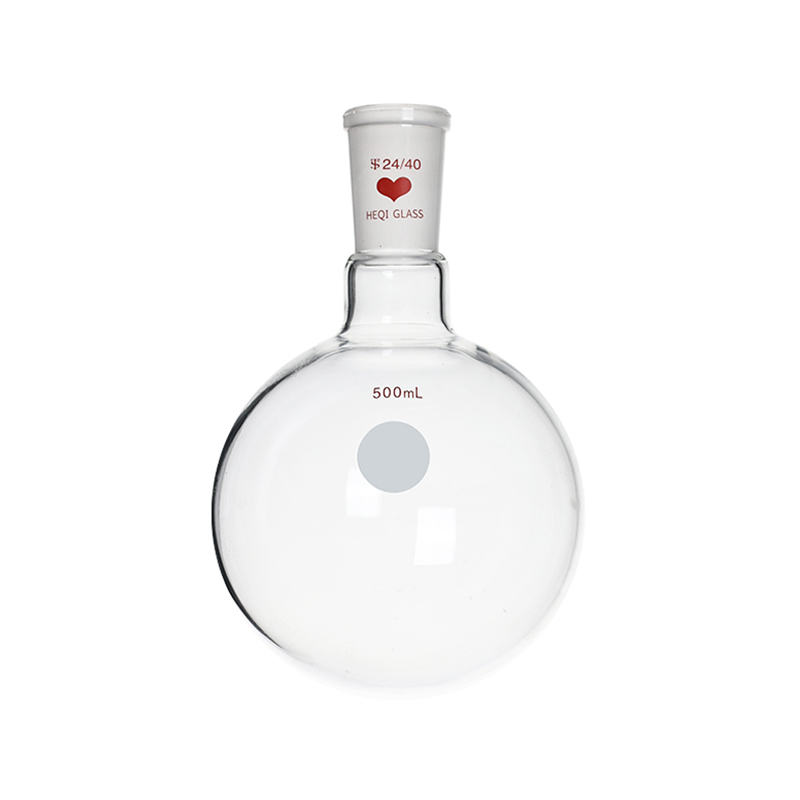 Wholesale Single Neck Round Bottom Flask (Class A) Suppliers, Factory - ShanghaiShanghai Heqi Glassware Co., Ltd. is China wholesale Single Neck Round Bottom Flask (Class A) Suppliers and Factory,Class A single neck r...View Product →
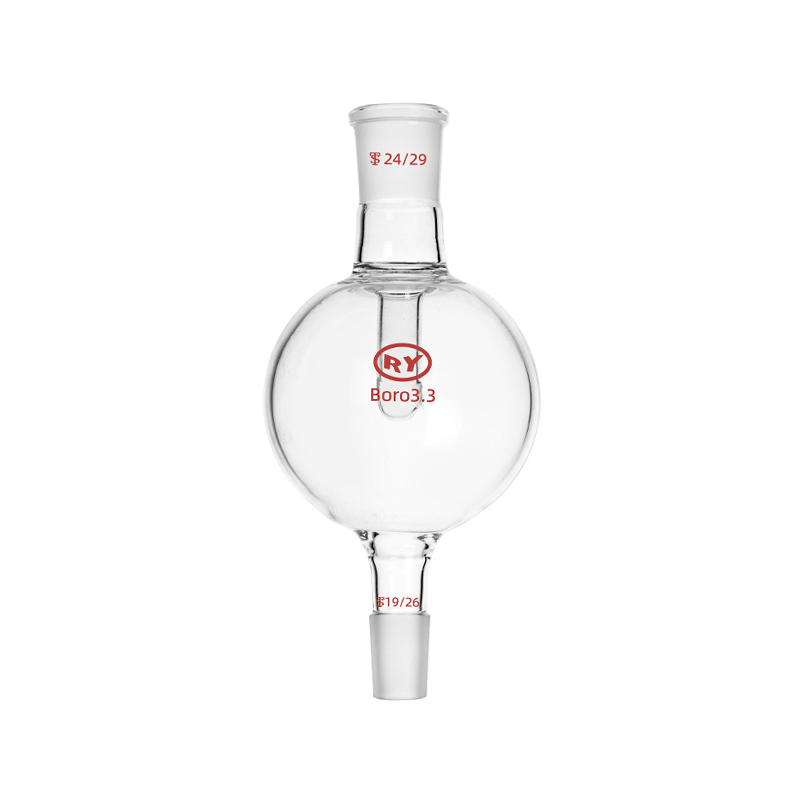
Each component in a glass assembly affects performance. A thick-walled round-bottom flask can be used under reduced pressure, but a thin Erlenmeyer flask cannot. A Liebig condenser with a removable nozzle is easier to clean after a distillation. Standard taper joints allow modular assembly with adapters, condensers, and flasks from the same manufacturer, which simplifies replacement and reduces downtime. Many laboratories also need custom glass components for specialized pilot-plant setups, and that is where a manufacturer with in-house design capability becomes valuable.
In summary, glass is an amorphous solid because it lacks a periodic crystal lattice and exhibits a glass transition rather than a true melting point. The distinction matters for everyday practice: it tells you why glass behaves as a stiff material at room temperature and why borosilicate glass is specified for demanding laboratory work. Choosing the right glass type is not a trivial detail; it is a safety and reproducibility decision. When you buy laboratory glass, check the material grade, joint tolerances, and capacity markings, because those labels determine how safely the glass will perform in your process.