English
 Français
 Español
What Is a Glass Beaker Used For in Scientific Laboratories
Unveiling the Basics of Essential Laboratory Equipment
What is a glass beaker?
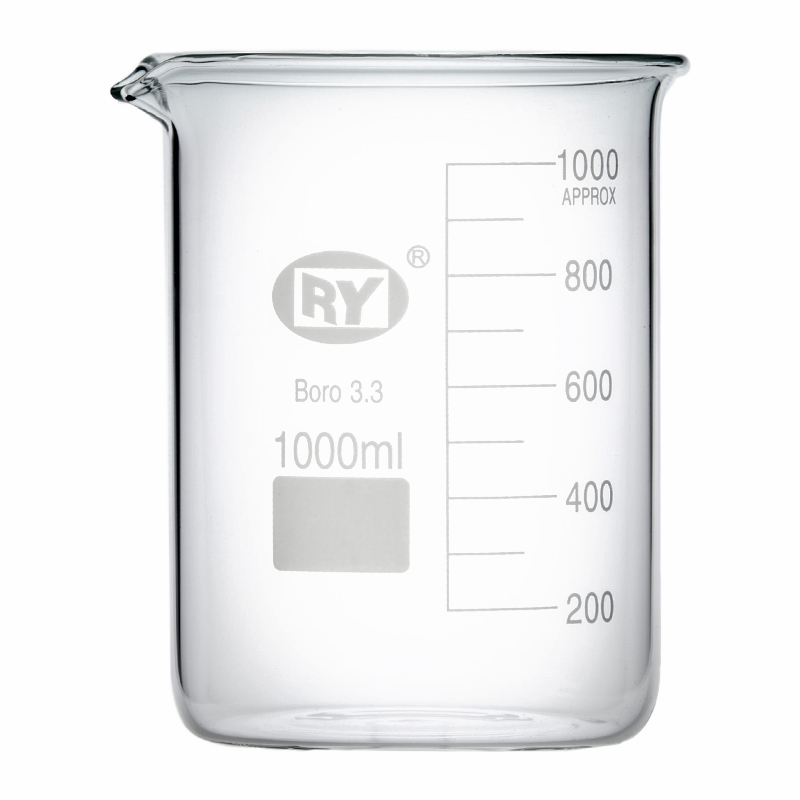
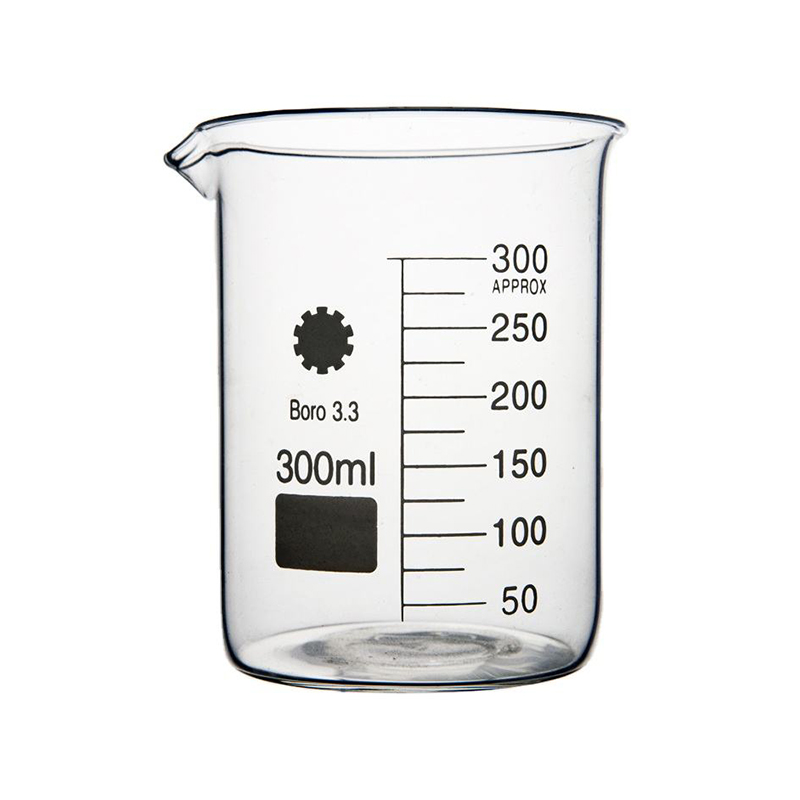
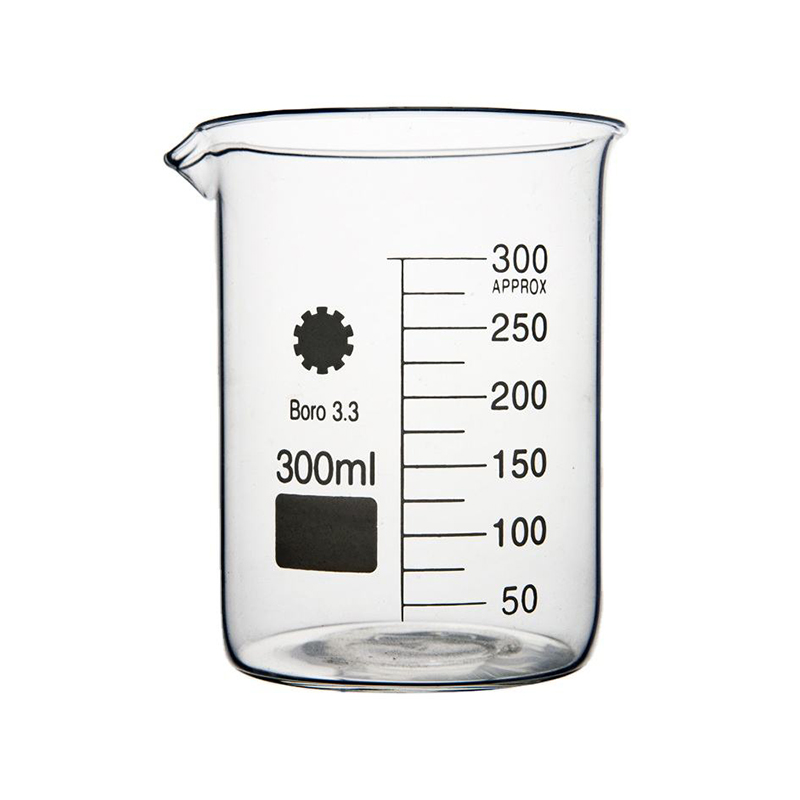
In chemical, biological, and various industrial R&D laboratories, glass beakers are the most indispensable cylindrical basic reaction vessels. Their structural characteristics are highly distinct: the top is designed with a flat and slightly flared rim, equipped with a spout specifically designed for liquid pouring; the bottom is completely flat, ensuring stable placement on laboratory benches, magnetic stirrers, or heating plates.
Based on structural proportions, standard laboratory vessels are mainly divided into two types:
- Low-form beakers (Griffin Beakers): The height is about 1.4 times the diameter. This is the most common style in laboratories, featuring a low center of gravity and excellent stability.
- Tall-form beakers (Berzelius Beakers): The height is about twice the diameter. The side walls are steeper, commonly used for titration experiments or operations requiring reduced liquid volatilization and splash prevention.
Although the walls are usually printed with clear capacity graduations, it must be clarified that these graduations are only used for rough estimation of liquid volume (with an error usually around ±5%). Their true core function serves as a reaction carrier for material mixing, dissolving, heating, cooling, and temporary storage.
Why is glass still the first choice among many materials?
With the development of polymer materials, plastic laboratory utensils (such as PP, PTFE, PFA) are becoming more common. However, in rigorous scientific research and industrial testing, glass continues to dominate. This is primarily due to its irreplaceable physical and chemical properties:
| Core Physical Properties | Practical Value in Experimental Applications |
| Optical Clarity | Allows experimenters a 360-degree blind-spot-free observation of solution color changes, precipitate formation, bubble escape, and phase transition processes, which is the basic premise for quantitative chemical analysis. |
| Chemical Inertness | Except for hydrofluoric acid (HF), hot phosphoric acid, and strong alkalis, it hardly reacts with any organic solvents, strong acids, or conventional chemical reagents, ensuring experimental results are not interfered with by container dissolution. |
| Non-porous Surface | The microscopic surface of glass is extremely smooth. The non-porous structure prevents solute adsorption, making it extremely easy for thorough cleaning and autoclaving, eliminating cross-contamination. |
| Thermal Stability | Capable of withstanding hundreds of degrees of high-temperature heating and maintaining structural integrity under drastic temperature fluctuations (specifically high borosilicate glass), which is unmatched by ordinary plastics. |
Regarding the macroscopic parameter comparison between glass and common laboratory plastic materials, the following data clearly and intuitively demonstrates why glass is the only choice under heating and high-purity requirements:
| Material Performance Parameter | High Borosilicate Glass (Borosilicate 3.3) | Polypropylene (PP) | Polytetrafluoroethylene (PTFE) |
| Maximum Continuous Use Temperature | 500°C (Short term up to 600°C) | 120°C | 260°C |
| Direct Heating via Open Flame/Hot Plate | Supported (Requires wire gauze or uniform heating) | Absolutely cannot be heated | Temperature-controlled heating only, no open flame |
| Transparency | Extremely High (Fully transparent) | Translucent/Opaque | Opaque (Milky white) |
| Organic Solvent Resistance | Excellent (No dissolution, no swelling) | Average (Prone to swelling by aromatic hydrocarbons) | Excellent |
| Trace Adsorption Resistance | Excellent (Suitable for fine analysis) | Poor (Prone to adsorbing small organic molecules) | Good |
Material Analysis: The Secret of "Heat and Corrosion Resistance" of Beakers
What glass are beakers made of?
In chemical or industrial laboratories, not all glass can be used to manufacture scientific vessels. Common window glass, glass bottles, or drinking cups usually belong to Soda-Lime Glass. The main components of this type of glass are silicon dioxide (SiO2), sodium oxide (Na2O), and calcium oxide (CaO). Although soda-lime glass is chemically stable and easy to process, it has a fatal weakness: a high thermal expansion coefficient. When heated locally, the heated part expands rapidly, while the unheated part remains in its original state. The massive internal stress generated will cause the glass to shatter instantly. Therefore, ordinary soda-lime glass must never be used for scientific vessels that require heating.
Vessels used in scientific laboratories must possess an extremely low thermal expansion coefficient, extremely high thermal shock tolerance, and stronger resistance to chemical erosion. To meet these stringent scientific research requirements, they are made of special industrial-grade glass. The core secret lies in adjusting the proportion of silicon dioxide and introducing a specific proportion of non-metal oxides, thereby completely changing the microscopic three-dimensional network structure of the glass.
What type of glass are beakers made from?
The vast majority of vessels used in modern scientific laboratories are made of Borosilicate Glass. In international standards and the industrial field, it is usually standardized as Borosilicate 3.3.
The chemical composition of this glass has strict ratio controls. Its main components include:
- Silicon Dioxide (SiO2): Accounting for about 81%, forming the most basic hard network skeleton of the glass.
- Boron Trioxide (B2O3): Accounting for about 13%. It is the introduction of boron elements that replaces part of the sodium and calcium in ordinary glass, fundamentally changing the lattice structure and giving it extremely low thermal expansion characteristics.
- Aluminum Oxide (Al2O3) and Sodium Oxide (Na2O): The remaining approximately 6% auxiliary components are used to optimize the melting properties and chemical stability of the glass.
Why does high borosilicate glass prevent thermal shock rupture?
The core physical advantage of Borosilicate 3.3 glass is that its linear thermal expansion coefficient is only 3.3 × 10^-6 K^-1 (between 20°C and 300°C). This means that when the temperature rises significantly, its volume change is extremely minimal.
When an experimenter places ice in the vessel and then immediately pours in boiling water, the temperature difference (thermal shock) generated instantly between the inner and outer walls will not trigger shear stress sufficient to destroy the material. It can withstand an instantaneous hot and cold temperature difference of about 150°C and can operate stably at a high temperature of 500°C for a long time.
| Key Physical & Chemical Parameters | Borosilicate 3.3 Glass (Standard Material) | Soda-Lime Glass (Ordinary Glass) | Quartz Glass (Ultra-high Purity) |
| Silicon Dioxide (SiO2) Content | Approx. 81% | Approx. 72% | >99.9% |
| Linear Thermal Expansion Coefficient (20-300°C) | 3.3 × 10^-6 K^-1 | Approx. 9.0 × 10^-6 K^-1 | 0.54 × 10^-6 K^-1 |
| Thermal Shock Resistance (Sudden Temp Drop) | Approx. 150°C | Approx. 50°C (Highly prone to shattering) | >1000°C |
| Maximum Safe Operating Temp (Long-term) | 500°C | Approx. 150°C | 1100-1200°C |
| Acid Resistance (ISO 1776) | Class 1 (Highest) | Class 3 (Moderate) | Class 1 (Highest) |
Professional Classification to Meet Different Experimental Needs
Scientific glass beakers designed for complex experiments
According to international standards (such as ISO 3819 / DIN 12331), vessels used for scientific research have strict geometric proportions in appearance. The main two branches are low-form and tall-form:
1. Low-form (Griffin Beaker)
The core geometric feature is that the height is about 1.4 times the outer diameter.
Design Advantages: Extremely low center of gravity, wide base area, highly stable on the bench or hot plate. The wide mouth allows experimenters to easily insert various stirring rods, thermometers, and pH probes.
Mainstream Applications: Commonly used for preparing solutions, dissolving solids, mixing mixtures, rough liquid proportioning, and acting as a heating bath (water bath, oil bath) container.
2. Tall-form (Berzelius Beaker)
The core geometric feature is that the height is about 2 times the outer diameter.
Design Advantages: The side walls are longer and relatively steeper. This tall structure brings two significant operational advantages: first, when the internal liquid boils violently, foams, or is stirred at high speed, it is less likely to splash; second, it reduces the surface area of the liquid, effectively slowing down the evaporation rate of volatile solvents.
Mainstream Applications: Commonly used for titration analysis, electrochemical testing, chemical reactions requiring long-term stirring, and as receiving flasks for simple fractional distillation or recrystallization.
Multi-functional glass beakers for science
In addition to the classic low and tall forms, vessels meeting scientific experimental requirements are differentiated based on local details and capacity specifications:
- Beakers without Spout: This is a rarer variation with no pouring spout at the top. It is primarily used when liquids do not need to be poured frequently, or for experiments requiring long-term sealing with rubber stoppers or sealing film.
- With or Without Graduations: Most modern scientific vessels are printed with white, blue, or black wear-resistant enamel graduations for rough volume indication. However, in specific high-purity analyses or pure weighing experiments, completely ungraduated bare vessels are selected to absolutely prevent any potential dissolution of printing ink under extreme environments.
| Vessel Type | Typical Capacity Range | Diameter:Height Ratio | Structural Pros & Cons |
| Low-form (Griffin) | 5 mL to 10,000 mL | Approx. 1 : 1.4 | Pros: Extremely stable, wide opening. Cons: Liquid evaporates easily, prone to splashing at high speeds. |
| Tall-form (Berzelius) | 50 mL to 3,000 mL | Approx. 1 : 2.0 | Pros: Good splash protection, reduces evaporation. Cons: Higher center of gravity, prone to tipping when inserting large probes. |
| Micro-beaker | 5 mL, 10 mL | Refers to low-form | Pros: Suitable for micro-pipette operation. Cons: Susceptible to surface tension retention. |
| Heavy-Duty / Large Capacity | 5,000 mL, 10,000 mL | Refers to low-form | Pros: Large batch processing, reinforced thick rim. Cons: Extremely heavy when full, requires two-handed lifting. |
Measurement Accuracy Revealed: Breaking the Graduation Myth
The true reference value of beaker graduations
If you carefully observe a high-quality vessel, you will find that the graduation lines on the side wall usually carry a ±5% mark, or even state "Approximate Volume". This means that when a vessel with a nominal capacity of 250 mL is filled to the mark, its actual volume may fluctuate between 237.5 mL and 262.5 mL.
This low accuracy is determined by the geometric structure itself:
- Wide cross-sectional area: The wide base means that a tiny visual error in the vertical height of the liquid level (parallax error) will be multiplied by the massive base area, amplifying into a significant volumetric error.
- Non-volumetric calibration: During manufacturing, the graduations are merely approximate reference lines printed via mechanical silk-screen or etching. They are not individually calibrated point-by-point according to national metrology standards.
What is the most accurate lab glassware?
When the experimental protocol requires volume errors to be controlled at the parts-per-thousand or parts-per-ten-thousand level, the vessel must be abandoned in favor of Volumetric Glassware designed specifically for precision measurement.
In scientific metrology, the most accurate laboratory glassware includes:
- Class A Volumetric Pipettes: Designed to accurately deliver (Ex) a specific volume of liquid. The narrow neck ensures high sensitivity to liquid level changes.
- Class A Volumetric Flasks: Designed to accurately contain (In) a specific volume for solution preparation. Features a long narrow neck with a single precision-calibrated mark.
- Burettes: Equipped with precision stopcocks (PTFE or glass) and fine graduation marks for continuous accurate measurement of dispensed liquid.
| Glassware Name | 100 mL Spec Limit Error | Calibration Type | Core Design & Principle |
| Volumetric Pipette | ±0.08 mL | To Deliver (Ex) | Extremely narrow neck; liquid flows naturally by gravity, wall residue is pre-calculated. Highest precision. |
| Volumetric Flask | ±0.10 mL | To Contain (In) | Narrow neck, single mark. Volume is absolute within the flask at a specific temperature (usually 20°C). |
| Burette | ±0.10 mL | To Deliver (Ex) | Uniform narrow tube. Stopcock allows drop-by-drop (approx. 0.04 mL/drop) control. |
| Glass Beaker | ±5.00 mL | Uncalibrated | Massive cross-section, used for rough estimation only. It is a reaction vessel, not a measuring instrument. |
Diversified Application Scenarios in Modern Scientific Research and Industry
Glass lab beakers in basic chemistry and routine testing
In classic chemical analysis and physical property testing, high borosilicate glass lab beakers serve as the core reaction and operational platforms. Standard procedures include:
- Efficient dissolution: Adding solid reagents and solvents, dropping in a magnetic stir bar for high-speed agitation.
- Temperature control: Acting as a natural water or oil bath container for mild, uniform heating, or placed directly on ceramic plates for concentrating solutions.
- Precipitate capture: Chemical precipitation reactions are conducted inside, and the spout ensures clear decantation without spillage.
Science glass beakers in life sciences and biotechnology
In biological fields, the focus shifts to non-toxicity, non-dissolution, and extreme environmental tolerance:
- Autoclaving media: Capable of withstanding 121°C saturated steam at 103 kPa for microbiological culture preparation without physicochemical changes.
- Cell disruption: Tall-form models act as deep reaction vessels in ice baths during ultrasonic cell disruption, blocking aerosol splatters.
- Trace analysis cleaning: Immune to extreme acid/base washes, allowing the total removal of trace organics.
Professional Guide for Purchasing, Operation, and Daily Maintenance
Purchasing dimensions of high-quality glass beakers
To ensure reliable data, the qualitative and quantitative evaluation of vessels focuses on three core dimensions:
- Wall thickness uniformity: Must be perfectly consistent. Uneven areas become stress concentration points. The bottom must be absolutely flat to prevent wobbling on hot plates.
- Physical defect inspection: Strict rejection of bubbles larger than 1 mL, stones, or knots, which disrupt internal stress balance during temperature shifts.
- Enamel durability: Graduations printed with high-temperature sintered white porcelain glaze must remain clear after repeated contact with concentrated acids or ultrasonic cleaning.
Laboratory safety and cleaning standard operating procedures (SOP)
Standardized procedures prevent accidents and prolong equipment life:
- Strictly prohibit dry heating: Never heat an empty vessel. Liquid levels should be at least one-quarter of the total capacity.
- No metal brushes: Use only soft-bristled brushes. Metal creates micro-scratches that become fracture sources during the next heating cycle.
- Dry exteriors: Always wipe the exterior completely dry before placing it on a heat source to avoid localized thermal stress.
Advanced Manufacturing and Customization Capabilities
Precision Engineering for Laboratory Glassware
Manufacturing flawless scientific vessels requires an exact orchestration of thermal dynamics and structural engineering. The raw borosilicate tubes undergo high-temperature rotary molding, where the glass matrix is shaped while maintaining strict dimensional tolerances. A critical phase is the annealing process: once molded, the vessels are slowly cooled in a specialized thermal chamber. This controlled temperature descent eliminates internal mechanical stresses formed during the shaping phase. Furthermore, every batch is subjected to polariscopic inspection to detect invisible stress patterns, ensuring that the final structure can withstand intense laboratory thermal shocks and mechanical impacts without failure.
Specialized Product Series
Different operational environments demand distinct structural adaptations. The following models are engineered individually to meet exact procedural requirements:
Heavy-Wall Borosilicate Beaker 250mL
Constructed with walls that are 30% thicker than standard Griffin models. This design offers superior mechanical strength against accidental impacts and is heavily utilized in high-viscosity mixing environments where heavy stirring rods or powerful magnetic rotors are deployed continuously.
Berzelius Tall-Form Beaker 500mL
Engineered with an extended vertical axis and a narrower diameter. The steep internal angle ensures that aggressive fluid agitation and intense boiling occur safely within the chamber, drastically reducing aerosol generation and minimizing the evaporative loss of critical, highly volatile solvents.
Jacketed Thermostatic Beaker 1000mL
Features an intricate double-glass wall system equipped with specialized inlet and outlet ports. By connecting it to a refrigerated or heated circulator, the dual-layer jacket allows for absolute temperature regulation of the internal contents, making it indispensable for exothermic chemical synthesis and sensitive biological enzyme studies.
Frequently Asked Questions and Scientific Knowledge (FAQ)
Q1: Can glass beakers be heated directly over an open flame?
Answer: Absolutely not. While borosilicate glass has low thermal expansion, glass is a poor conductor of heat. Direct localized flame heating causes extreme temperature gradients. The heated area expands while the surrounding area remains cold, generating immense shear stress that will instantly shatter the vessel. Always use a ceramic-center wire gauze to disperse the heat.
Q2: Why do thick-walled beakers break more easily during heating than thin-walled ones?
Answer: This is dictated by the thermodynamics of heat conduction. Heat takes longer to travel through a thick wall; the outer layer expands while the inner layer is still cold, creating destructive internal stress. A thin wall allows heat to penetrate instantly, allowing both sides to expand synchronously and eliminating structural strain.
Q3: Are there beakers made of materials other than borosilicate glass?
Answer: Yes. While borosilicate handles 95% of tasks, aggressive chemicals like Hydrofluoric Acid (HF) will dissolve glass by reacting with silicon dioxide to form silicon tetrafluoride gas. For HF or extreme alkaline environments, Polytetrafluoroethylene (PTFE) or Polypropylene (PP) vessels must be used instead.
Q4: How should stubborn chemical stains be removed after an experiment?
Answer: Mechanical scraping is forbidden. Use targeted chemical dissolution. For inorganic salts, a 10-15% dilute hydrochloric acid soak works best. For stubborn organics or charred residues, an alkaline alcohol wash or a highly controlled chromic acid wash (requires extreme safety precautions) will oxidize the contaminants without scratching the surface.
Q5: How to prevent liquid from running down the side when pouring?
Answer: This phenomenon, known as the "teapot effect," occurs due to surface tension. To prevent liquid from dribbling down the exterior wall, pour the liquid swiftly to break the surface tension at the spout. Alternatively, hold a clean glass stirring rod directly against the pouring spout; the liquid will adhere to the rod and flow precisely into the receiving container.
Q6: Can glass beakers be placed in a freezer or cryogenic environment?
Answer: Borosilicate 3.3 glass can withstand temperatures down to -192°C (liquid nitrogen temperatures). However, the critical danger is the contents inside. If an aqueous solution freezes and expands, the mechanical outward pressure will easily shatter the rigid glass walls. Never freeze vessels filled with liquids that expand upon freezing.
Q7: What is the purpose of a watch glass on top of a beaker?
Answer: A watch glass acts as a breathable lid. Its concave shape allows condensation to run back into the main vessel, preventing solvent loss during gentle heating. It also prevents airborne dust or contaminants from falling into the reaction mixture while still allowing generated gases to escape safely through the unsealed edges.
Q8: Are the printed graduations on beakers chemically resistant?
Answer: High-quality laboratory glassware uses graduations printed with specialized ceramic enamel that is permanently fused into the glass matrix via high-temperature baking. These graduations are highly resistant to acids, alkalis, and routine solvent wiping. However, prolonged exposure to hydrofluoric acid or highly concentrated hot caustic soda will degrade the enamel.
Q9: How do magnetic stir bars affect the bottom of a glass beaker over time?
Answer: Even though magnetic stir bars are coated in soft PTFE, rapid spinning over months can cause microscopic friction against the glass bottom, especially if undisolved crystalline solids are present. This friction can gradually create a frosted appearance (micro-abrasions), which weakens the structural integrity and makes the bottom more susceptible to thermal shock failure.
Q10: Why do some beakers have a heavy-duty or reinforced rim?
Answer: The rim is the most physically vulnerable part of the vessel, highly prone to chipping during washing when knocked against faucets or other glassware. A reinforced, beaded rim absorbs mechanical impact force. This structural thickening significantly extends the operational lifespan of the vessel in fast-paced testing environments without altering its thermal properties.