English
 Français
 Español
Cleaning Laboratory Glassware: The Complete Practical Guide for Lab Professionals
A first-year analytical chemist notices a faint iridescent film inside her round-bottom flask just before a critical synthesis. That film, invisible during the final rinse, later shows up as an unexpected peak in the product chromatogram. The lesson is simple: cleaning laboratory glassware is a core experimental skill, not a housekeeping chore. Glassware that looks perfectly clear can still carry surfactants, grease, metal ions, or traces of the previous reaction. Each contaminant can distort data, damage equipment, or create a safety hazard. The practical approach below explains why thorough cleaning matters, the five steps that work for most lab glassware, and the special care needed for ground glass joints and Class A volumetric ware.
Why Cleaning Laboratory Glassware Correctly Matters
The first reason is analytical accuracy. Residual organic compounds bleed into solvents and produce extra peaks in GC, HPLC, and NMR. Ionic contaminants shift pH and change titration endpoints. Surfactants alter surface tension and cause poor droplet formation. In quantitative work, dirty volumetric glassware can invalidate a calibration curve even when the instrument itself is maintained perfectly.
The second reason is safety. A trace of concentrated acid left in a flask can react violently when the next user charges the vessel with an alkali metal or a reactive hydride. Peroxidizable solvents leave residues that become hazardous as they concentrate and dry on the glass. A consistent cleaning routine removes that uncertainty before anyone touches the next experiment.
The third reason is the lifetime of the glassware itself. Hard water scale, etching from strong base, and scratches from abrasive scrubbers weaken the glass and make it harder to clean in the future. Repeated etching also attacks precision-ground surfaces, so proper cleaning is really a maintenance decision that protects the lab's investment.
The Five-Step Cleaning Workflow
Most laboratory glassware can be returned to a truly clean state with the same five-step sequence. Following these steps in order matters, just as the seven principles of experimental operation apply to every procedure in a well-run lab.
Inspect Before You Wash
Check for chips, star cracks, and stress marks first. Cracked glass can fracture under thermal shock or vacuum, and a damaged vessel has no place in a workflow where pressure and temperature change rapidly. Set damaged items aside for repair or disposal before they reach the sink.
Rinse Immediately After Use
The easiest cleaning starts before a residue dries. Empty the vessel, rinse with the solvent already used in the reaction, and follow with a quick tap water rinse. When you work with biological samples or protein solutions, use an initial cold water rinse instead of hot, because heat can fix proteins to the glass surface.
Wash with a Detergent and the Right Brush
Use a non-abrasive laboratory detergent and hot water. Scrub the inside of round-bottom flasks, condensers, and test tubes with a brush sized to reach the full length of the vessel; a set of laboratory brushes sized for different necks and bores prevents scratched glass and makes the job faster.
 Custom Lab Brushes Manufacturers, SuppliersShanghai Heqi Glassware Co., Ltd. is China Lab Brushes manufacturers and Laboratory Brushes Suppliers, we offer Custom Laboratory Brushe...View Product →
For stubborn residues, soak in warm detergent solution rather than scrubbing harder. Avoid steel wool, scouring pads, and abrasive powders entirely, because micro-scratches trap dirt and become permanent contamination sites.
Final Rinses with Purified Water
After the detergent wash, rinse thoroughly with tap water, then rinse at least three times with deionized or distilled water. A clean glass surface allows water to form a continuous, unbroken film. If water beads up into droplets, the glass still contains grease or hydrophobic residue and needs another wash.
Dry and Store Clean Glassware
Air-dry inverted on a clean drying rack, or dry in an oven set below 120 °C for general-purpose glass. Volumetric flasks and pipettes should be dried at room temperature or with an acetone rinse followed by air drying, since heating can affect their calibration. Keep stoppers and caps with their matching vessels so each standard joint stays correctly paired.
Cleaning Common Residues: A Quick Reference
Different residue families respond best to different treatments. The table below summarizes what works for the most common cases in a synthetic or analytical laboratory.
| Residue type | Immediate rinse | Recommended cleaning |
|---|---|---|
| Water-soluble salts | Warm tap water | Detergent wash, then deionized water rinse |
| Organic solvents | Acetone or ethanol | Detergent wash, then deionized water rinse |
| Mineral acids and bases | Plenty of cold water | Dilute acid or base soak, detergent wash, deionized rinse |
| Silicone oil and grease | Wipe with solvent-moistened tissue | Hot detergent bath, then solvent rinse |
| Dried biological matter | Cold water soak | Enzyme detergent at 40 to 50 °C, then deionized rinse |
When in doubt, start with the mildest treatment and escalate step by step. Strong oxidizing baths such as aqua regia or piranha solution should only be handled by trained personnel with proper containment, and never on volumetric ware, because they can remove calibration markings and etch the glass.
Special Care for Ground Glass Joints and Volumetric Ware
Ground Glass Joints
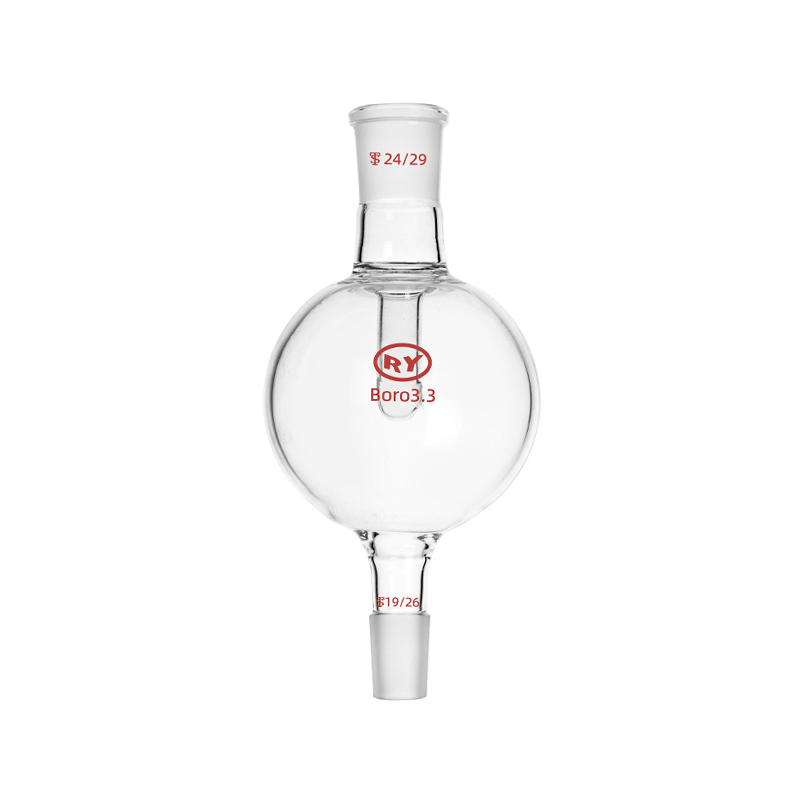
Ground glass joints are the most frequently damaged feature of standard-taper glassware. Degrease joints by wiping them with a lint-free tissue moistened with acetone or ether before washing, and re-grease sparingly after drying. Never let joint grease bake onto the glass in an oven. If a joint is stuck, apply gentle twisting with joint clips in place, or soak the assembly in warm water, rather than forcing it apart with metal tools.
Class A Volumetric Glassware
Volumetric flasks, transfer pipettes, burettes, and graduated cylinders with Class A certification are manufactured to tight tolerances defined by standards such as ISO 4787. Abrasive brushes, hot ovens, and long exposure to concentrated alkali can permanently change their volume. Hand-wash them with a mild detergent, rinse thoroughly, and dry at room temperature. When accuracy is central to your method, starting with Class A volumetric flasks removes one more variable before you ever measure a sample.
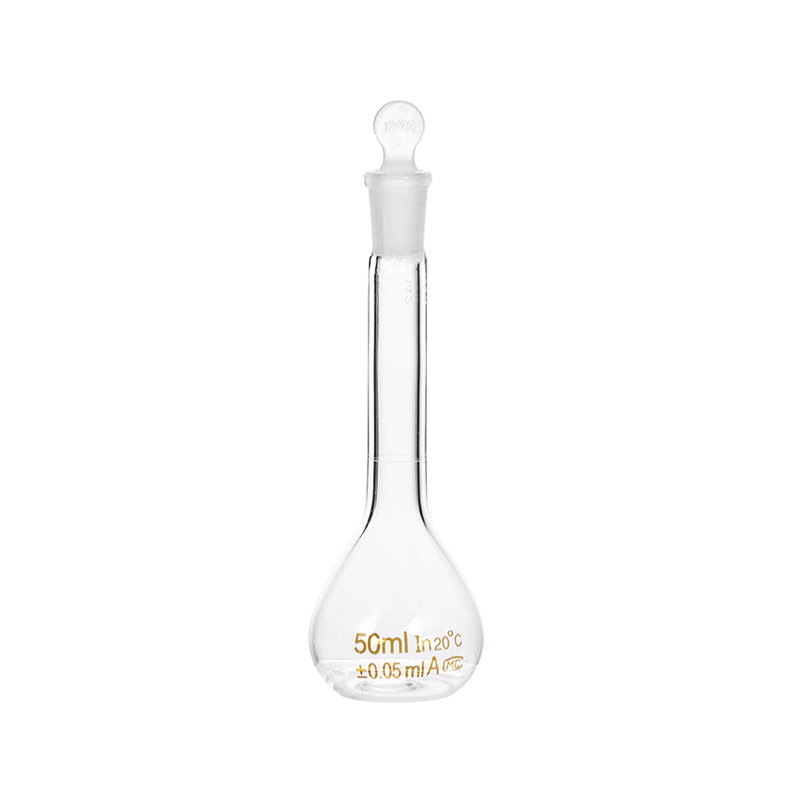 Wholesale Volumetric Flask (Class A) Suppliers, Factory - Shanghai Heqi GlasswarShanghai Heqi Glassware Co., Ltd. is China wholesale Volumetric Flask (Class A) Suppliers and Factory,Class A borosilicate volumetric fla...View Product →
When Cleaning Is Not Enough
Even a perfect cleaning routine cannot repair glass that has become etched or damaged. Cloudy patches that do not disappear after washing indicate chemical etching, which creates a porous surface that will always hold contaminants. Chips on the rim or on a ground joint compromise the seal, and hairline cracks are a fracture waiting to happen under vacuum or thermal cycling.
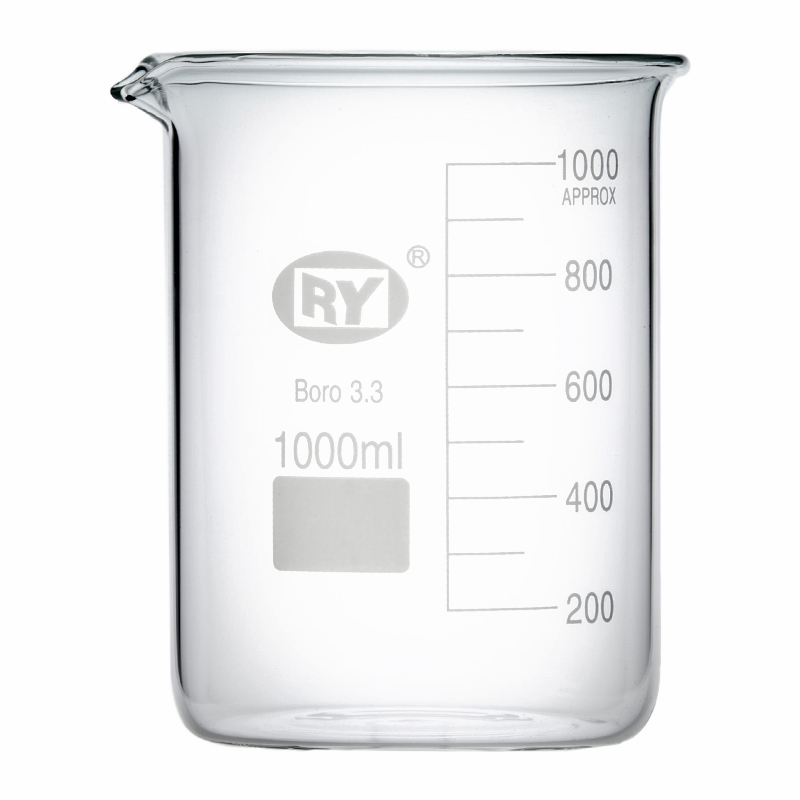
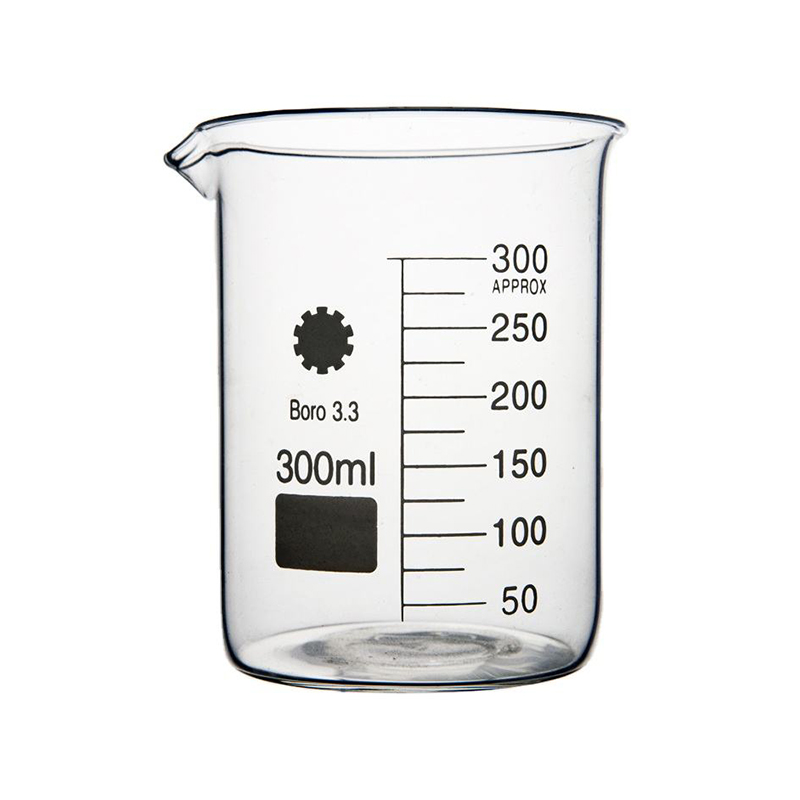
At that point, replacement is the economical decision. For routine synthesis and sample preparation, thick-walled low-form glass beakers and heavy-walled flasks survive repeated cleaning far better than thin-walled soda-lime glass. When you are equipping a new lab or upgrading old inventory, choosing more durable glassware saves money over the full service life of the vessel.
Cleaning laboratory glassware is not a one-time event but a habit that runs through every experiment. Work with residues before they dry, use the mildest effective cleaner, protect ground joints and calibration surfaces, and replace glass that cannot be returned to a truly clean state. These practices keep data reliable and keep safety incidents out of the laboratory. For more everyday advice on running a tidy, efficient lab, explore our laboratory glassware catalog and the support resources that come with it.