English
 Français
 Español
Seven Principles of Experimental Operation
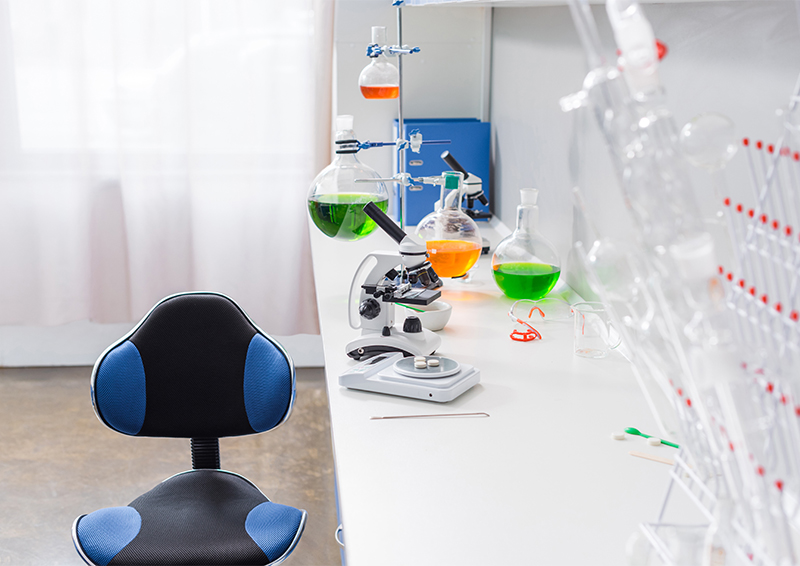
-
"Bottom-to-Top" Principle
Take the laboratory preparation of chlorine gas as an example. The assembly order for the reaction apparatus is as follows: place the iron stand → position the alcohol lamp → fix the iron ring according to the height of the alcohol lamp → place the wire gauze → secure the round-bottom flask. -
"Left-to-Right" Principle
Complex setups should be assembled from left to right. For example, the assembly order for the above setup is: reaction apparatus → gas collection bottle → beaker. -
"Cork Before Fixing" Principle
The cork with tubing should be inserted into the flask before it is fixed on the stand. This prevents difficulty in securing the cork tightly due to restricted movement after fixation, or potential damage to the apparatus from excessive force. -
"Solids First" Principle
In the example above, solid reagents such as MnO₂ should be placed in the flask before it is fixed, to avoid damaging the flask when adding solids afterward. In general, solid reagents should be added to the corresponding container before it is secured. -
"Liquids Later" Principle
Liquid reagents should be added after the flask is fixed. For instance, concentrated hydrochloric acid should be added slowly via a separating funnel only after the flask has been secured. -
"Check for Leaks First" Principle
Always test the airtightness of the apparatus before adding any reagents. -
"Light the Alcohol Lamp Last" Principle
The alcohol lamp should only be lit after the entire setup has been completely assembled.