English
 Français
 Español
Design and Operating Procedure of Gas Drying Towers
I. Structure and Design
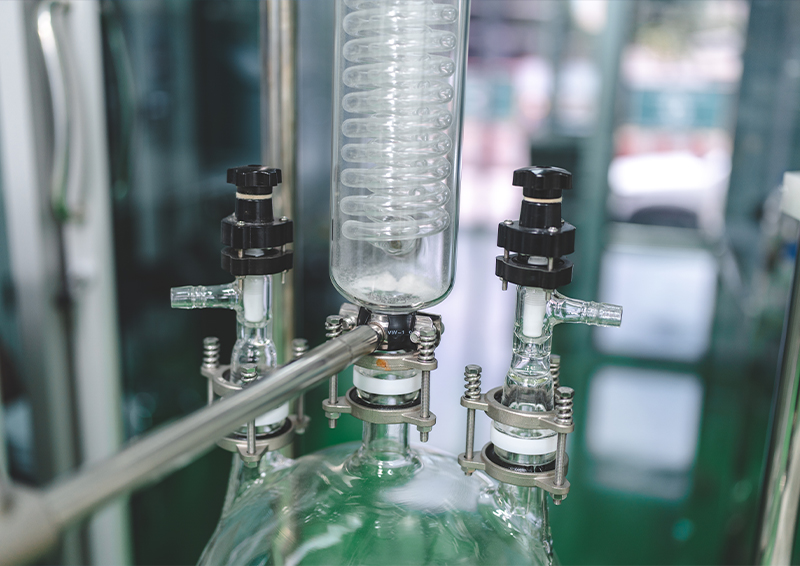
The gas drying tower is a cylindrical glass vessel with a broad, flat base and a slender midsection. The top is fitted with a ground glass stopper, which has an opening aligned with a sidearm port to control gas flow. The elongated tower body serves as a chamber for holding solid drying agents. The base is wider and flatter than the tower body, with a broad rim that provides stability and helps buffer gas flow. Between the tower body and the base, a constricted section is filled with glass wool to prevent drying agents from falling into the base. Two sidearms are fused to the apparatus: one at the lower part of the base functions as the gas inlet, and one at the upper part of the tower serves as the gas outlet.
II. Operating Procedure
-
Clean and thoroughly dry the tower.
-
From the top opening, first place a small amount of glass wool into the constricted section to prevent drying agents from entering the base.
-
Fill the tower body with a suitable drying agent (e.g., anhydrous calcium chloride, indicating silica gel), then cover it with an additional layer of glass wool.
-
Apply a thin layer of stopcock grease to the ground glass stopper, insert it into the tower opening, and rotate gently until the seal appears clear and even.
-
Install the drying tower into the overall gas-handling system, typically after the gas washing bottle.
-
During operation, gas enters through the lower sidearm, passes through the drying agent, and exits from the upper sidearm, thereby achieving drying.
-
If one drying tower is insufficient, two or three towers may be connected in series with different drying agents to enhance efficiency through multiple stages of drying.