English
 Français
 Español
Annex 1 Sterile Manufacturing: Key Glassware and Contamination Control Requirements
When an aseptic filling line is stopped because a glass transfer bottle fails a visual inspection, the loss is not just a batch—it delays a release schedule and forces a full deviation review. Under EU GMP Annex 1, this kind of event is not a random accident; it is a failure in the contamination control strategy (CCS). The conclusion is straightforward: the glassware used in sterile manufacturing must be selected and maintained with the same rigor as the process equipment, because each contact surface is a potential source of contamination.
The Core of Annex 1: Contamination Control Strategy
The revised Annex 1, "Manufacture of Sterile Medicinal Products," was published in August 2022 and applies to all sterile products, including active substances, excipients, primary packaging materials, and finished dosage forms. Its central demand is the implementation of a documented CCS that integrates facility, equipment, process, personnel, and materials into a single risk-based system.
For a glassware supplier or a pharmaceutical team, the practical implication is that no component can be considered neutral. A round-bottom flask, a condenser, or a filter funnel is not a passive vessel; it is part of the product-contact pathway. If a glass item has a hidden crack, a poorly fitted joint, or a residue from a previous batch, the risk of contamination is transferred directly to the product. Therefore, the selection of glassware must be included in the CCS, with each item assigned an appropriate cleaning, sterilization, and storage regime.
This approach aligns with Annex 1's requirement for continuous improvement. Instead of relying on end-of-line checks, the strategy forces manufacturers to control contamination at its source. That is why we recommend conducting a risk assessment on every piece of glassware that enters a cleanroom, from the smallest adapter to a large reactor vessel.
Selecting Glassware for Sterile Production: Three Critical Checkpoints
When evaluating glassware for Annex 1 compliance, three checkpoints cover most of the risk.
Surface Quality and Cleanability
The surface of glass must be smooth and free from defects such as scratches, pits, or embedded particles. In standard-taper ground joints, the grinding should be uniform, not coarse, to avoid creating sites where residues can hide. A Class A quality rating on volumetric glassware also indicates that the capacity tolerances meet the required standard, which is useful for operators who need predictable measurement accuracy during formulation.
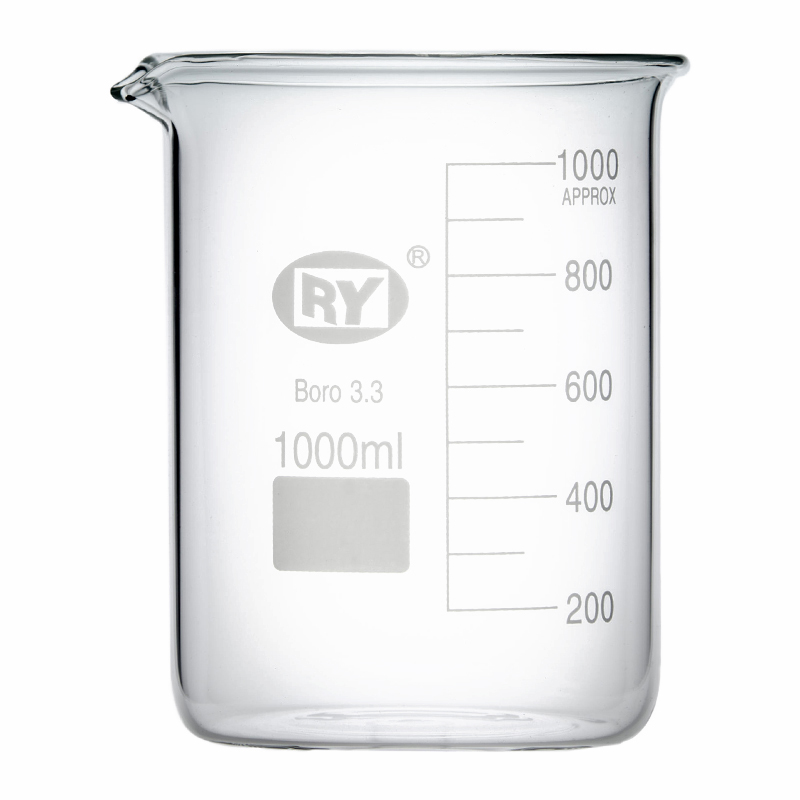
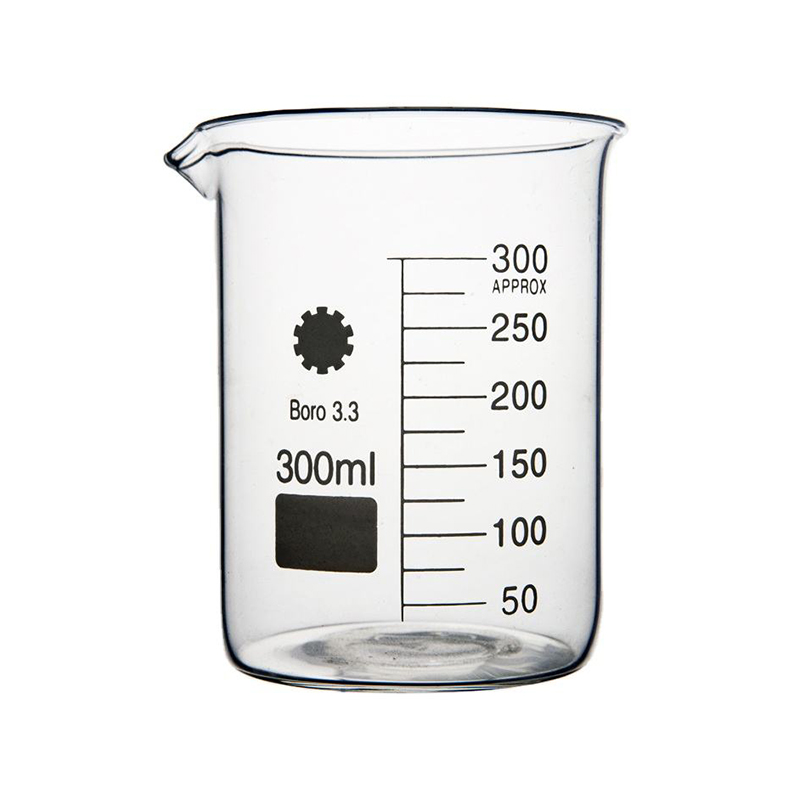
For cleaning, the geometry matters. A flat-bottom crystallising dish is easier to inspect than a narrow-neck bottle with internal baffles. However, in practice, your cleaning validation should cover the most difficult-to-clean item in a group. This is where our practical guidance on beaker usage can help you establish a reasonable cleaning baseline.
Sealing and Container Closure Integrity
After sterilization, the container closure must remain intact. A ground-glass stopper, a PTFE plug, or a threaded cap must provide a consistent seal that prevents the ingress of viable and non-viable particles. Under Annex 1, container closure integrity (CCI) is part of the CCS, and a leaky stopcock or a worn cap can create a direct route for contamination.
 Constant Pressure Funnel with PTFE Stopcock for Controlled Reagent AdditionThis funnel ensures steady, even dropping in closed systems, minimizing contamination risk with a corrosion-free PTFE stopcock that provides a tight seal and precise flow control for aseptic transfers.View Product →
A pressure-equalising addition funnel with a PTFE stopcock is a good example of a component that balances pressure and provides a tight seal during reagent addition. This type of funnel is often used in the preparation of sterile media or aseptic transfers, where low leakage rates are critical. Choose a funnel with a clear, smooth finish and a well-machined stopcock to minimise the risk of leakage and to make cleaning more predictable.
Filtration and Transfer
Many sterile manufacturing operations require the transfer of liquids through filters or into final containers. Glass filter assemblies with sintered discs are commonly used in small-scale processing, and their design should support both efficient filtration and easy validation. In Annex 1 terms, the filter housing must be cleanable, sterilizable, and compatible with the product.
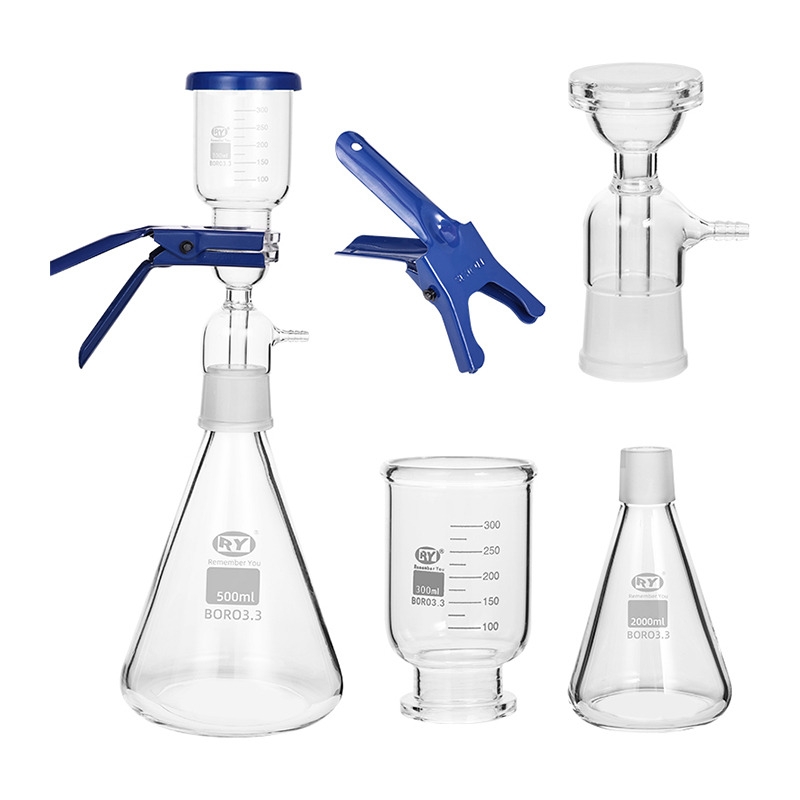 Sintered Glass Filter Assembly for Sterile Vacuum FiltrationA borosilicate glass filter with a detachable design supports efficient solid-liquid separation and easy cleaning, making it suitable for repeated autoclaving and for maintaining filter integrity in small-scale processing.View Product →
A sintered glass filter assembly can be an appropriate choice for lab-scale filtration, especially when the operator needs a glass surface that can withstand repeated autoclaving. When selecting such an assembly, consider the pore size, the frit quality, and the ability to inspect for cracks after use. A damaged frit can release glass particles into the product, which is a critical contamination risk.
Material and Design Considerations for Annex 1 Compliance
The material of glassware is more than a simple product feature. High-borosilicate 3.3 glass is widely used in pharmaceutical laboratories because of its low thermal expansion, high chemical resistance, and mechanical strength. It is ideal for repeated sterilization cycles and for contact with a wide range of solvents and reagents.
For storage applications, a media storage bottle made of high-borosilicate 3.3 glass with a blue screw cap can be autoclaved multiple times without loss of sealing integrity. The cap material also matters: a PTFE-faced or solvent-resistant cap reduces the chance of extractables or particulates entering the container. In sterile production, such bottles are often used to store prepared media, diluents, or buffers before use.
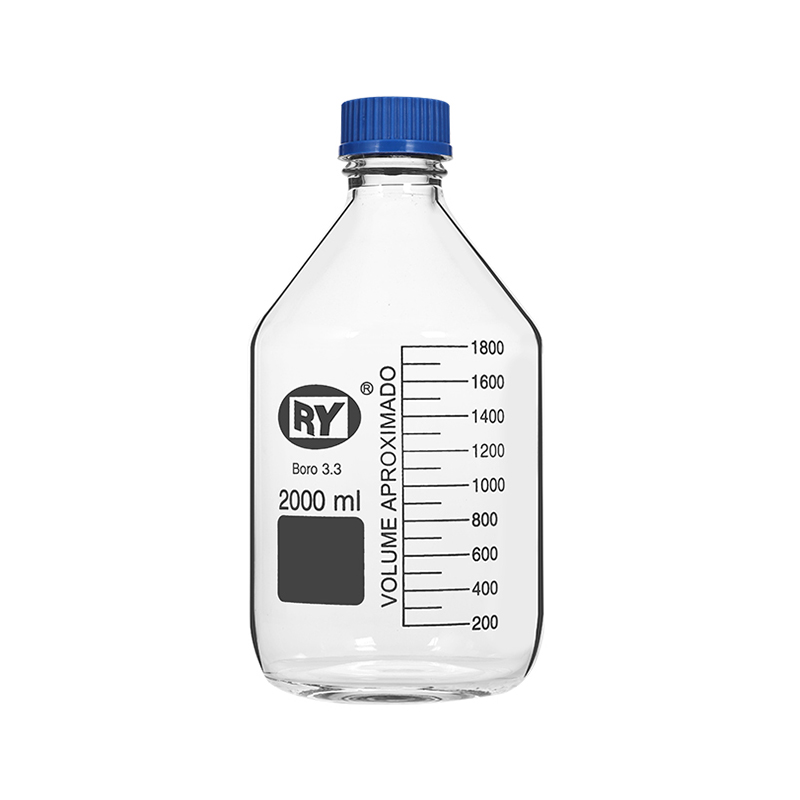 Blue Cap Threaded Reagent Bottle in High Borosilicate 3.3 GlassAutoclavable multiple times without losing sealing integrity, this bottle with a secure blue threaded cap is ideal for storing prepared media or buffers, reducing extractables and particulate ingress in sterile operations.View Product →
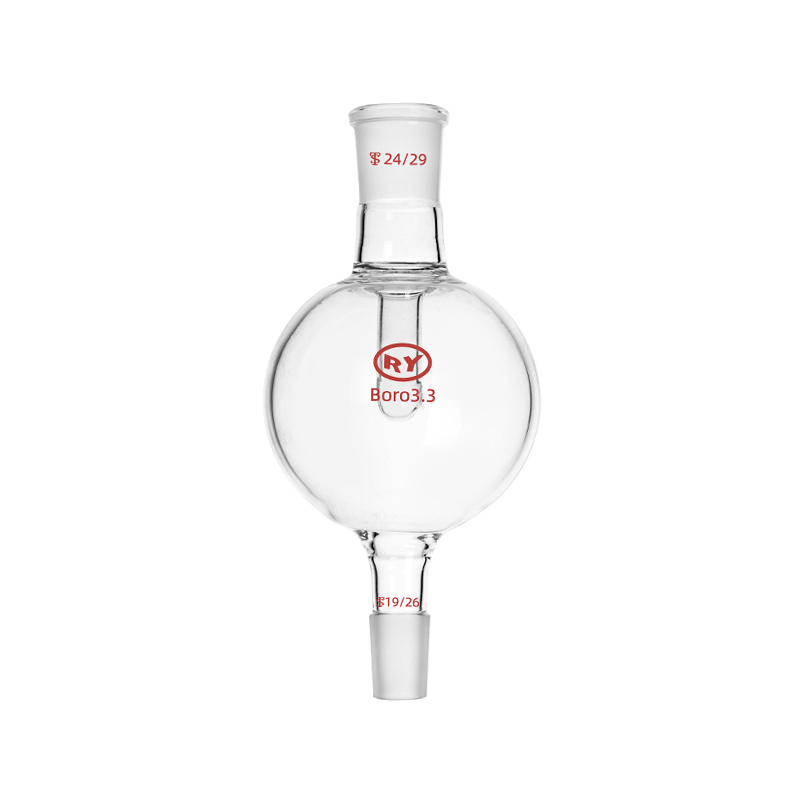
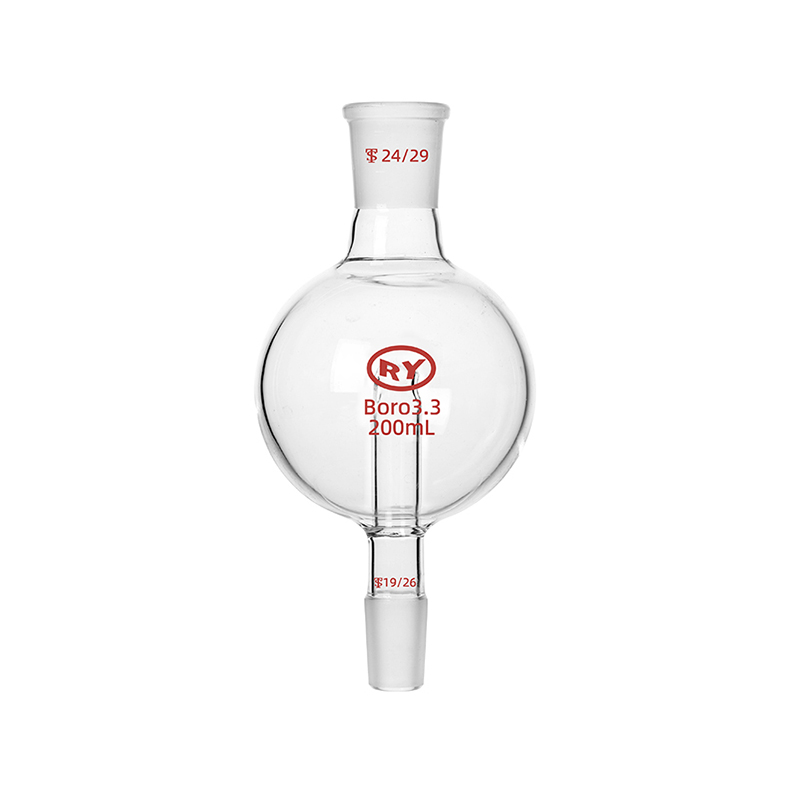
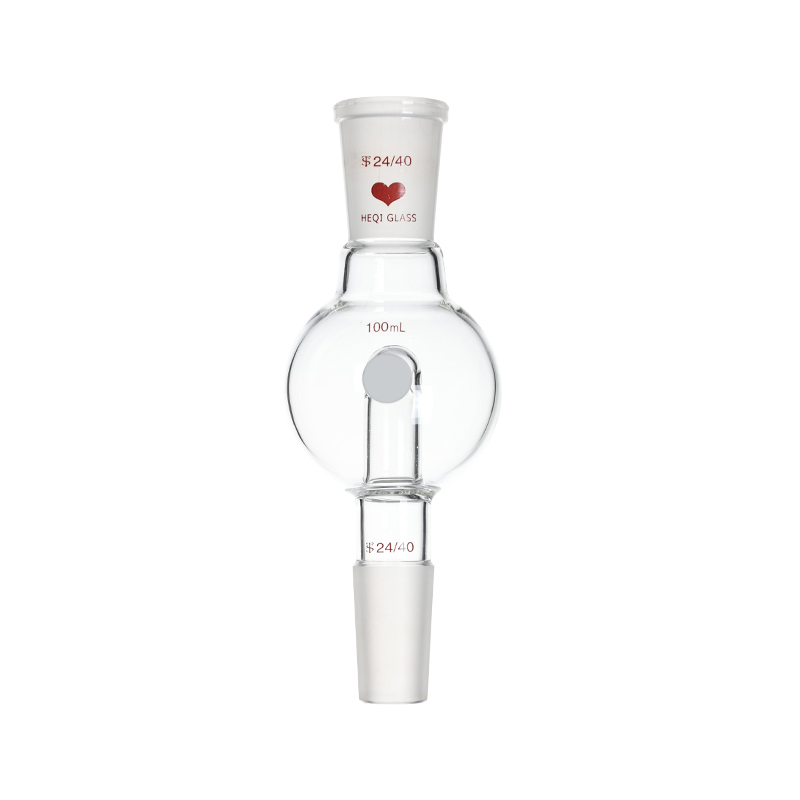
Another design consideration is the standard-taper ground joint. A 24/29 or 19/26 joint is a standard interface that allows components to be assembled and disassembled repeatedly. For Annex 1, the joint must fit tightly enough to prevent leakage but must also be easy to disassemble for cleaning. The joint area is a common hiding place for residues, so ground joints should be inspected after each wash cycle.
Practical Steps for Implementing Glassware Compliance
Implementation begins with the risk assessment and then moves into tangible procedures.
- First, identify all glassware in contact with the product. For each item, document its cleaning parameters, sterilization method, and maximum number of use cycles. This is where traceability becomes important: an item that has been dropped or scratched must be removed from service.
- Second, validate the cleaning process. Use a suitable method, such as visual inspection, water break testing, or residue swabbing, to confirm that cleaning is effective. Determine the maximum storage time between cleaning and sterilization, and between sterilization and use.
- Third, verify the sterilization cycle. Autoclaving is the most common method for glassware, but don't forget to consider liquid sterilization or dry heat for less tolerant components. Record the cycle parameters and ensure that the glassware can survive repeated cycles without degradation.
- Fourth, train operators on the importance of glassware handling. A simple mistake, such as touching a ground joint with a bare hand after sterilization, can introduce contamination. Personnel should be aware of the consequences and the proper technique for aseptic handling.
These steps are not one-time projects; they are part of an ongoing monitoring programme. When deviations occur, the investigation should include a review of the glassware's history, and if necessary, a revision of the cleaning or sterilization parameters.
Conclusion
Annex 1 makes one message clear: contamination control is a system, not a single activity. Glassware plays a smaller but non-negotiable role in that system. By selecting high-borosilicate glass, paying attention to surface quality and sealing, and establishing robust cleaning and sterilization procedures, pharmaceutical manufacturers can reduce the risk of contamination while also improving operational consistency.
For teams that are updating their CCS, taking a close look at the glassware inventory is a practical and low-cost first step. The right choices, validated and maintained, will help you meet the regulatory expectations of Annex 1 without compromising the speed or quality of your production process.