Custom Lab High Temperature Resistant Lab Glassware

High Temperature Resistant Lab Glassware

-- Steady & Reliable Manufacturer --

What Is High Temperature Resistant Lab Glassware?

High temperature resistant lab glassware covers products in our catalog specifically suited to processes involving sustained heat exposure, rapid temperature changes, or direct flame contact — conditions that go beyond typical hot-plate or water-bath heating and put more demand on both the glass and its joints. Our borosilicate 3.3 glass already has a meaningfully higher softening point and thermal shock tolerance than ordinary glass, but this tag specifically highlights products and configurations built and tested for the more demanding end of that range, such as flasks and vessels used in distillation, reflux, ashing, and combustion-related applications.

At Shanghai Heqi, high-temperature performance comes down to a combination of glass composition, wall thickness, and joint design, since a product can be made from a high-temperature-tolerant material but still fail at a joint or seam if those areas aren't engineered with the same thermal considerations in mind. This tag groups together products across our reflux, distillation, and evaporation-related lines that are specifically suited to sustained or repeated high-heat use, which is useful for buyers running processes with more aggressive thermal profiles than standard bench chemistry, including labs scaling up from bench trials toward pilot-scale operation where longer, hotter runs become the norm rather than the exception. Rather than treating high-temperature resistance as a single blanket claim across our entire catalog, we specify it product by product, since wall thickness, joint reinforcement, and overall vessel geometry all affect how a given piece actually performs once it's under sustained thermal load in daily use.

Key Advantages of High Temperature Resistant Glassware

Heat tolerance in lab glass isn't a single number but a combination of related properties, and it's worth knowing what each one actually protects against before assuming any borosilicate product will hold up under demanding thermal conditions.

  • High softening point — our borosilicate 3.3 glass softens at approximately 820°C, well above the operating temperature of most lab heating equipment, giving a comfortable safety margin for sustained high-heat processes.
  • Strong thermal shock resistance — tolerates sudden temperature swings of up to roughly 160°C without cracking, which matters for processes that involve rapid heating, cooling, or quenching cycles rather than gradual temperature changes.
  • Consistent wall thickness — our mechanized production keeps wall thickness even across a vessel, which reduces the risk of localized stress points that are a common cause of cracking under thermal load in less consistently manufactured glassware.
  • Reinforced joint areas — products in this tag are designed with joint geometry that accounts for thermal expansion at connection points, reducing the risk of joint failure during extended high-temperature use.
  • Suitable for direct flame contact — select products in this range can tolerate brief direct flame exposure, though we'd always recommend checking the specific product rating before assuming this applies universally across the catalog.

For processes exceeding roughly 500°C on a sustained basis, quartz glass becomes the more appropriate material rather than borosilicate, regardless of joint or wall thickness engineering, and we'd rather point a buyer toward the correct material upfront than have a borosilicate product underperform in a process it was never really suited to.

Where High Temperature Resistant Glassware Is Used

High-temperature-rated glassware tends to be specified for processes where standard glassware's thermal margin isn't quite enough, which shows up across a range of chemical and analytical workflows.

  • Distillation and reflux setups — particularly those running at elevated temperatures for extended periods, where sustained heat exposure and repeated thermal cycling both come into play.
  • Solvent recovery operations — recovery processes often run hotter and longer than standard lab distillation, putting more cumulative thermal stress on glassware over time.
  • Ashing and combustion analysis — sample preparation involving controlled burning or high-temperature decomposition requires vessels rated well above standard bench chemistry temperatures.
  • Petrochemical testing labs — distillation range testing and related analytical procedures frequently involve higher sustained temperatures than typical academic or QC lab work.
  • Materials research and thermal analysis — sample heating and thermal stability testing often requires glassware that maintains dimensional stability across a wide temperature range.
  • Pilot-scale process development — scale-up work testing reaction conditions at higher temperatures than lab-scale synthesis often specifies high-temperature-rated vessels before committing to metal reactor systems.

If a process regularly pushes past standard operating temperatures or involves rapid thermal cycling, it's worth confirming the specific temperature rating of the glassware in use rather than assuming standard borosilicate margins apply, since running equipment consistently near its upper thermal limit tends to shorten its usable service life even when no single failure event occurs. This is a fairly common oversight in labs scaling up a process without revisiting glassware specifications along the way.

High Temperature Resistant Glassware Specifications

The table below covers the thermal performance characteristics relevant to this product tag. These figures represent standard borosilicate 3.3 performance; for applications requiring performance beyond these ranges, our quartz glassware line should be considered instead. Products under this tag are generally built with heavier wall sections and reinforced joint geometry compared with our standard-duty glassware, which is the main practical difference buyers should expect beyond the base material properties listed below.

ParameterTypical Value
Base MaterialBorosilicate Glass 3.3
Softening PointApprox. 820°C
Transformation TemperatureApprox. 525°C
Maximum Recommended Continuous Use TemperatureApprox. 450–500°C
Thermal Shock Resistance (Sudden ΔT)Up to approx. 160°C
Direct Flame ContactBrief exposure tolerated on select heavy-wall products only
Wall Thickness Range2.0mm – 5.0mm (heavier than standard product lines)
Joint DesignReinforced taper joints, standard sizes 24/29, 29/32, 34/35
Recommended Material Beyond 500°CQuartz glass
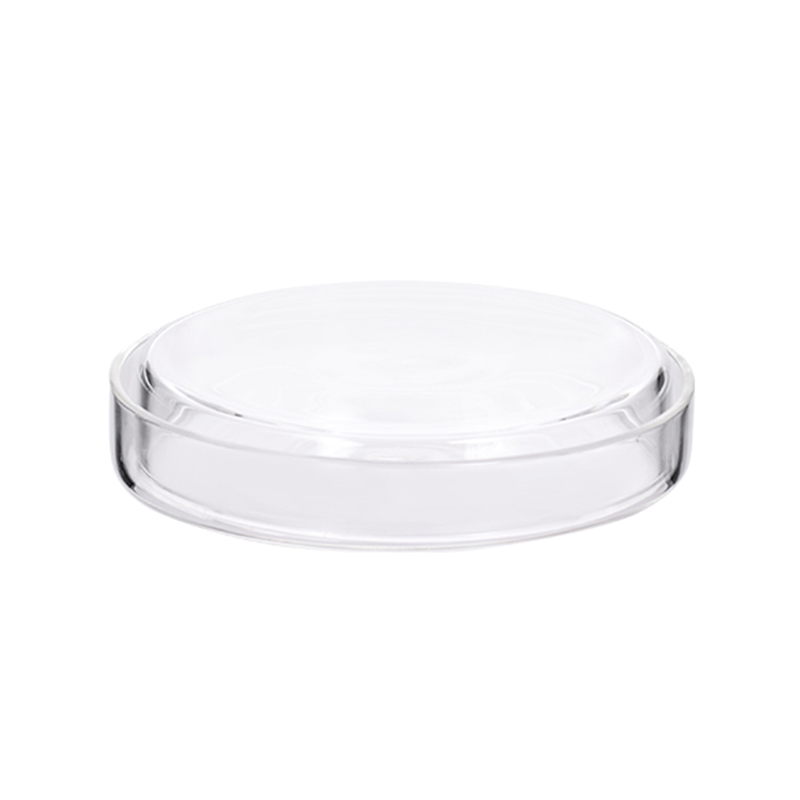
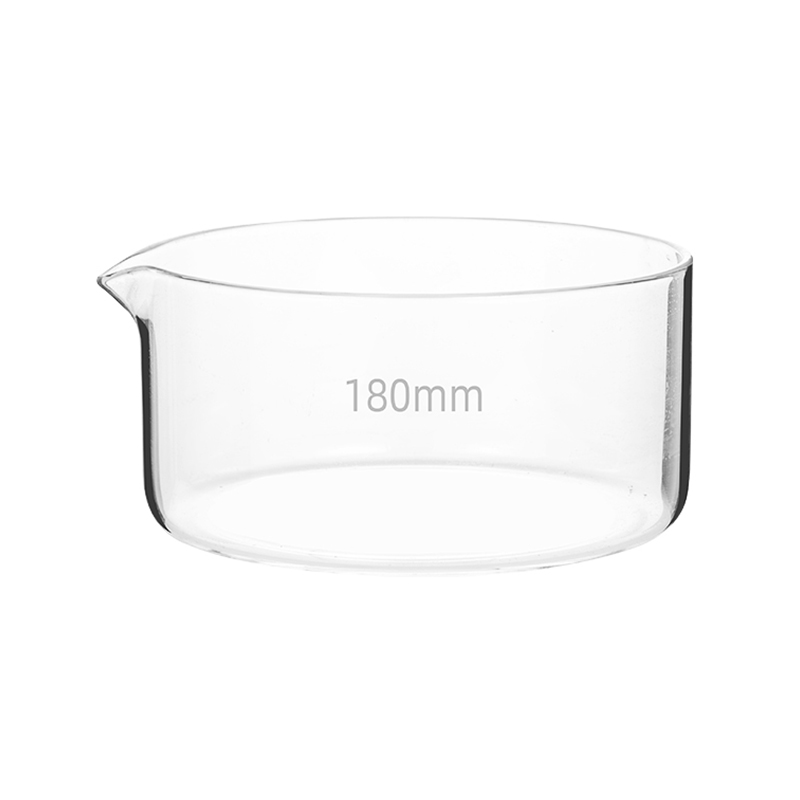
Available Product FormsDistillation flasks, reflux vessels, ashing dishes, evaporation vessels
Available Capacity Range50ml to 20L, depending on product type
Standard Wall ThicknessHeavier than standard-duty equivalents in the same size range

For processes operating close to the upper end of this range on a routine basis, we'd recommend discussing your specific heating method and cycle frequency with us so we can confirm the most appropriate wall thickness and joint configuration. Heating method matters here almost as much as peak temperature, since a mantle-heated flask experiences a very different stress profile than the same flask heated directly over an open flame, even at similar target temperatures.

Frequently Asked Questions

What's the actual maximum temperature this glassware can handle?
Borosilicate 3.3 softens around 820°C, but we'd recommend staying within roughly 450–500°C for sustained continuous use to maintain a reasonable safety margin, particularly around joint areas.

Can I use this glassware over an open flame?
Select heavy-wall products can tolerate brief direct flame exposure, but this isn't a blanket rating across every product in the catalog, so please confirm the specific item's rating before assuming direct flame use is appropriate.

Should I use quartz instead for very high-temperature work?
If your process consistently exceeds roughly 500°C, quartz becomes the more appropriate and reliable material rather than pushing borosilicate past its comfortable operating range.

Why do joints sometimes loosen after repeated high-temperature use?
Thermal expansion and contraction over many heating cycles can gradually loosen the mechanical grip of a ground glass joint even when the seal itself remains intact, which is why clamps are recommended for extended high-temperature runs.

Is heavier-wall glassware automatically more heat resistant?
Not necessarily in terms of maximum temperature, but it does generally handle thermal cycling and mechanical stress better than thinner-walled equivalents, which is why this range uses heavier wall construction.

Do you offer custom wall thickness for specific high-temperature applications?
Yes, send us your process temperature range and cycling frequency and we can recommend an appropriate wall thickness and joint configuration.

How do I know if my current glassware is actually rated for high-temperature use?
If it wasn't specifically sold as high-temperature-rated, it's safest to assume standard operating margins and check with us before pushing it into more demanding thermal conditions.

About
Shanghai Heqi Glassware Co., Ltd.

One point of professionalism, one point of service, one point of companionship—allow me to be your reliable partner on the path forward!

Shanghai Heqi was founded in March 2002, It is China High Temperature Resistant Lab Glassware Manufacturers and Custom High Temperature Resistant Lab Glassware Suppliers, Specializing in the R&D and production of standard-mouth glass instruments. Over the years, the company has established production bases in locations such as Songjiang, Chengdu, Jiaxing, and Yancheng. By integrating technology, craftsmanship, and management expertise, Heqi has adopted mechanized and semi-mechanized techniques to replace traditional manual methods. It has also introduced assembly-line industrial processes to replace simple workshop-style production, thereby reducing costs and improving quality.

To deliver on its service commitment of “you make a call, we handle the rest,” Heqi also supplies a range of high-quality glass instruments, lab consumables, and experimental equipment from both domestic and international brands. With ample inventory, fast delivery, and premium service, the company ensures full support for its clients.

In recent years, Shanghai Heqi has brought together experts in chemical R&D, mechanical design and processing, and electronic control to form a dedicated R&D team. The company has also set up three specialized workshops for glass, metalworking, and assembly. These facilities produce a variety of small and pilot-scale equipment, including glass reactors, rotary evaporators, distillation units, high- and low-temperature circulation systems, vacuum pumps, stirrers, and UV analyzers.

Leveraging its in-house capabilities in design, production, and custom fabrication of glass components, Shanghai Heqi continuously enhances product quality and service standards. It also supports the chemical and pharmaceutical industries by enabling customized small-scale and pilot-scale equipment solutions.


Contact Us
Our custom service team is ready to provide you with expert advice and personalized solutions.