Key Advantages of High Vacuum Distillation Components
Deep vacuum distillation solves a specific thermal degradation problem that standard distillation methods can't address, and it's worth being clear about exactly what this specialized equipment class provides over conventional distillation glassware.
- Enables distillation of heat-sensitive compounds — operating at deep vacuum meaningfully lowers the effective boiling point of a target compound, allowing separation at temperatures well below what would cause thermal decomposition.
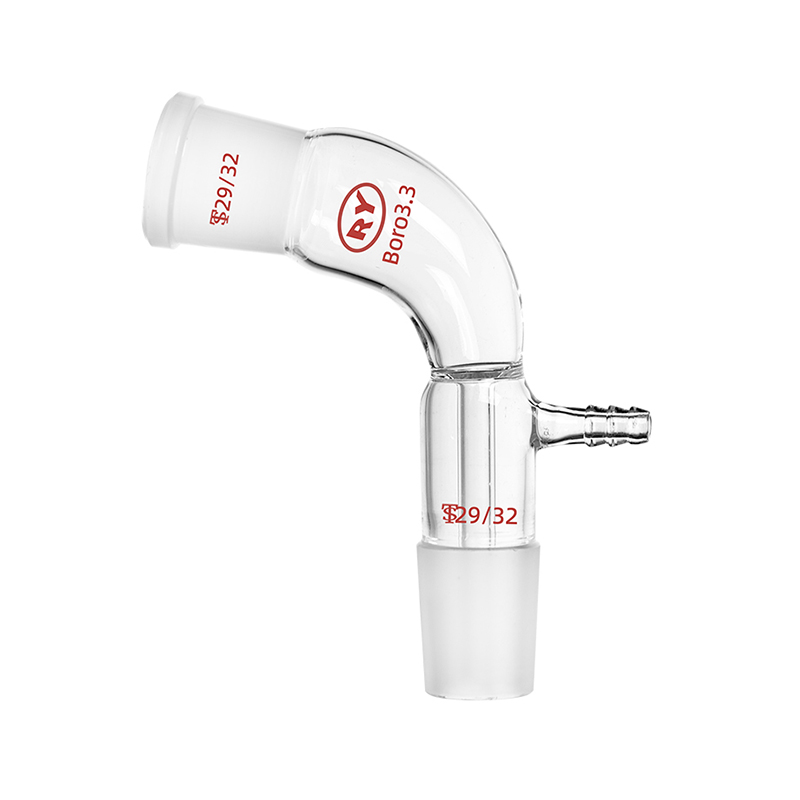
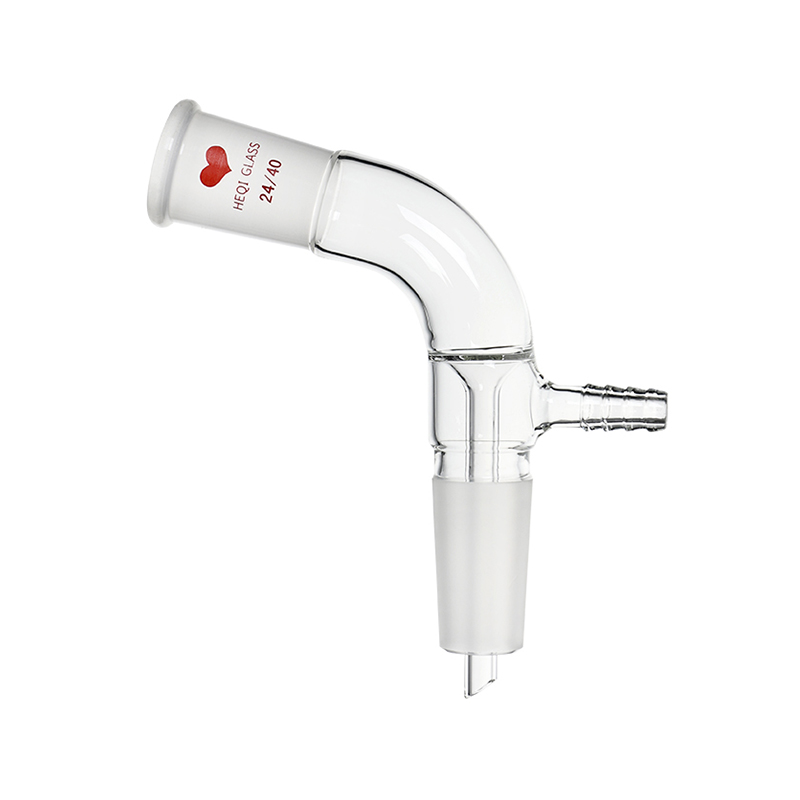
- Short path design minimizes thermal exposure time — the compact vapor path in a short path distillation head reduces the time and distance vapor travels before condensing, further limiting cumulative heat exposure for sensitive materials.
- Multi-receiver adapters enable fraction collection without breaking vacuum — a rotating "cow" style receiver adapter lets multiple fractions be collected sequentially during a single distillation run without needing to stop and release vacuum between each collection.
- Precision engineering matched to demanding vacuum levels — tighter joint tolerances specifically address the increased sensitivity to minor leaks that deep vacuum operation introduces compared to standard laboratory vacuum work.
- Supports recovery of otherwise difficult-to-isolate compounds — materials that would degrade under any other separation method become recoverable in usable, undamaged form through properly executed high vacuum distillation.
The trade-off is that this equipment requires more careful setup, more attention to joint sealing quality, and generally a more capable vacuum pump than standard laboratory distillation work demands.
These advantages compound when a lab standardizes across its glassware inventory rather than mixing several different systems, since staff spend less time hunting for compatible parts and more time actually running experiments. We're happy to walk through your current inventory and suggest where standardizing on this product category might simplify day-to-day operations, particularly for labs juggling several different glassware systems left over from different past suppliers or older equipment purchases made before current staff joined. This kind of standardization also reduces training time for new staff joining the lab.
Where High Vacuum Distillation Components Are Used
High vacuum distillation is specified specifically where thermal sensitivity makes standard distillation methods impractical, which concentrates its use in a fairly specific but genuinely important set of applications.
- Essential oil and cannabinoid distillation — many natural aromatic and cannabinoid compounds degrade at the temperatures standard distillation would require, making deep vacuum short path distillation the practical method for isolating them cleanly.
- Heat-sensitive natural product purification — plant-derived compounds with limited thermal stability often require deep vacuum conditions to distill without decomposition affecting yield or purity.
- Polymer and oligomer fractionation — separating polymer or oligomer mixtures by molecular weight sometimes uses high vacuum distillation techniques suited to materials with very high effective boiling points.
- Pharmaceutical intermediate purification — certain drug synthesis intermediates require low-temperature purification to avoid degradation, making deep vacuum distillation a standard step in some synthesis routes.
- High-value compound recovery — recovering scarce or valuable compounds efficiently, without thermal loss, justifies the additional equipment sophistication that high vacuum distillation requires.
- Research into thermally unstable materials — academic and industrial research studying compounds with known thermal instability commonly relies on deep vacuum methods for both purification and characterization work.
If your target compound has a genuinely high boiling point combined with known or suspected thermal sensitivity, high vacuum distillation equipment is generally the appropriate approach rather than attempting standard atmospheric or moderate vacuum distillation.
Across all of these settings, the common thread is a need for dependable, repeatable performance rather than a highly specialized one-off solution, which is exactly the kind of use case this product category is built around. If your application doesn't fit neatly into the categories above, it's still worth reaching out, since many processes combine elements of more than one of these use cases and we can usually still recommend a suitable configuration based on your specific workflow and budget constraints.
High Vacuum Distillation Component Specifications
The table below summarizes typical components and specifications relevant to high vacuum distillation work. Achieving genuinely deep vacuum depends on the full system, including pump capacity, not just the glassware alone, and we're glad to discuss your complete setup requirements. These figures apply across our standard catalog offerings and can be adjusted for specialized project requirements.
| Parameter | Typical Value |
| Base Material | Borosilicate Glass 3.3 |
| Common Components | Short path distillation heads, multi-receiver (cow) adapters, high-vacuum joints |
| Target Vacuum Range | Down to millitorr / low mbar range, depending on pump and system design |
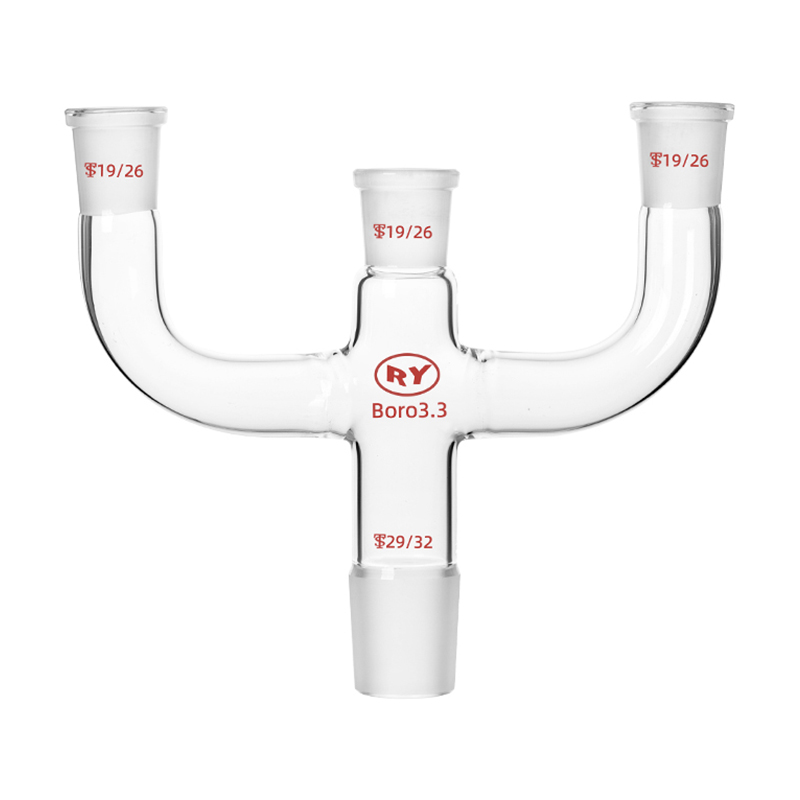
| Standard Joint Sizes | 19/26, 24/29, 29/32 (precision ground for high-vacuum sealing) |
| Receiver Configurations | 3-way, 4-way, and 5-way rotating multi-receiver adapters |
| Recommended Grease | High-vacuum-rated grease, formulated for low outgassing under deep vacuum |
| Capacity Range | 10ml to 5L, depending on scale of distillation |
| Custom Configurations | Available for specialized short path geometries or receiver arrangements on request |
For buyers new to high vacuum distillation, we're happy to advise on a complete system configuration, including pump capacity and cold trap requirements, rather than just the glassware components in isolation, since the whole system's performance depends on every component working together properly.
We periodically review these specifications against evolving international standards to make sure our production tolerances stay aligned with what buyers expect from a reputable manufacturer, and we're glad to share more detailed dimensional drawings for any specific item in this range on request. If a particular parameter isn't listed here, it's worth asking directly rather than assuming a default value, since some characteristics can vary meaningfully between product variants within the same general category or capacity range depending on manufacturing batch and specific configuration ordered.
Frequently Asked Questions
What vacuum level do I actually need for short path distillation?
This depends heavily on your specific compound's boiling point and thermal sensitivity; generally the deeper the achievable vacuum, the lower the required distillation temperature, but the specific target should be based on your compound's known properties.
Why can't I reach deep vacuum with my current setup?
This is usually caused by a leak somewhere in the system, often at a joint using standard rather than high-vacuum grease, or from residual contamination affecting seal quality; checking each joint individually often identifies the source.
What's the difference between a 3-way and 5-way cow receiver adapter?
The number indicates how many separate receiving flasks can be connected and rotated into position during a single run, allowing more distinct fractions to be collected without breaking vacuum.
Do I need a special vacuum pump for high vacuum distillation?
Yes, standard laboratory vacuum pumps typically can't reach the vacuum levels this technique requires; a dedicated high-vacuum or diffusion pump is generally necessary depending on your target pressure.
Can standard vacuum grease be used instead of high-vacuum grease?
Standard grease generally isn't sufficient for genuinely deep vacuum work; a specifically formulated high-vacuum grease with lower outgassing characteristics is recommended for reliable performance.
Do you offer custom short path distillation head geometries?
Yes, custom configurations can be produced on request for specialized research or production requirements beyond our standard catalog offerings.
Can you help me decide between a few different options in this category for my specific application?
Yes, we're happy to discuss your intended use in more detail and recommend the most suitable configuration, since the right choice often depends on details specific to your process that aren't always obvious from a general product description alone.
Do you offer ongoing support after the initial purchase for this product category?
Yes, our team remains available to answer setup, compatibility, or troubleshooting questions well after your order has shipped and been put into regular use.
Achieving Reliable Sealing at High Vacuum
Sealing requirements for high vacuum distillation are meaningfully stricter than for standard laboratory vacuum work, since even a very minor leak that would be inconsequential at moderate vacuum can prevent a system from ever reaching the deeper vacuum levels this technique actually requires.
Standard vacuum grease, while adequate for moderate vacuum applications, generally isn't sufficient for genuinely deep vacuum work, where a specifically formulated high-vacuum grease with lower outgassing characteristics becomes important for both achieving target vacuum levels and maintaining them reliably throughout an extended distillation run. Joint cleanliness matters more here as well, since even small amounts of contamination or residual grease from previous use can meaningfully affect a joint's ability to hold deep vacuum, making thorough cleaning between uses a more important routine practice than it might be for standard atmospheric-pressure glassware used in everyday bench work.
The rotating mechanism on a multi-receiver cow adapter introduces an additional sealing consideration specific to this equipment type, since the rotating joint needs to maintain vacuum integrity while still allowing smooth receiver switching during an active distillation run. This rotating seal benefits from careful grease application and periodic inspection, since a receiver adapter that doesn't rotate smoothly under vacuum is both frustrating to use and a common source of accidentally breaking vacuum partway through a multi-fraction distillation, particularly during longer runs where operator attention naturally wanes over time.
Getting this right the first time is generally simpler than troubleshooting a marginal seal after a process is already underway, so we'd always recommend confirming the appropriate sealing approach for your specific application before finalizing your order, particularly if you're working with an unfamiliar reagent, an unusual operating temperature, or an application outside typical everyday lab conditions where standard assumptions about sealing performance might not hold as reliably as expected under normal use.
Payment Terms & Shipping
High vacuum distillation components ship under our standard commercial terms, with additional care in packaging given the precision tolerances and higher value typical of this specialized product category.
- Payment methods — T/T, L/C, and Alibaba Trade Assurance, with a 30% deposit and balance due before shipment standard for new buyers, adjustable for established accounts.
- Sample orders — available for most standard configurations, worth considering given the precision requirements involved, so you can confirm joint fit and vacuum performance before a larger system order.
- Lead times — standard configurations typically ship within 20–30 days given the additional precision manufacturing involved; custom geometries or specialized receiver configurations generally take 30–45 days.
- Packaging — individually wrapped with extra protective cushioning specifically to prevent any surface damage to precision-ground joints during transit, given how sensitive high vacuum sealing is to even minor imperfections.
- Shipping — FOB Shanghai standard, with air freight commonly used given the relatively compact size of most high vacuum distillation components, alongside sea freight for larger combined orders.
For buyers assembling a complete high vacuum distillation system, combining the distillation head, receiver adapter, flasks, and any specialized fittings into one purchase order helps us confirm full compatibility across the entire setup before shipment, which reduces the risk of a mismatched component causing delays once everything arrives.
We understand that international shipping timelines are often a critical part of planning a lab setup or expansion, so we try to communicate realistic lead times upfront rather than optimistic ones that later slip. If your project has a hard deadline, let us know early so we can flag any potential scheduling risk before you commit to a purchase order, rather than discovering a conflict partway through production once materials and labor have already been committed to your specific order and configuration.
Compliance, Environmental & Safety Certification
High vacuum distillation components carry documentation addressing both general material quality and the specific precision requirements this application demands.
- ISO 9001 quality management certification covers production of high vacuum distillation components the same as the rest of our catalog.
- RoHS and REACH compliance — applies across all glass and grease components relevant to this product range.
- Joint precision verification — dimensional checks specific to high vacuum sealing tolerance are part of our quality control for this product category, with documentation available on request.
- Vacuum performance testing — select components can be tested for vacuum-hold performance prior to shipment, useful documentation for buyers validating a new high vacuum system.
- Third-party inspection — SGS or equivalent testing can be arranged for buyers needing independent verification of dimensional accuracy or material composition for regulated or research documentation purposes.
If your process operates under a documented equipment qualification framework requiring verified vacuum performance data for this equipment category, let us know and we can arrange the appropriate testing and documentation alongside your order before it ships to your facility.
Compliance documentation matters most when it's actually usable by your own internal audit or procurement process, so rather than sending a generic packet, we'd rather understand what your specific requirements are and provide exactly what's needed in the format your team expects. This approach has generally worked well for buyers in regulated industries who need documentation that fits directly into an existing internal quality system without extra back-and-forth or repeated requests for reformatted paperwork later on.


 English
 Français
 Español