Custom Lab PTFE-Lined Lab Glass Components

PTFE-Lined Lab Glass Components

-- Steady & Reliable Manufacturer --

PTFE-lined lab glass components solve a specific, recurring problem: plain ground glass joints and stopcocks can seize, stick, or gall over time, especially with alkaline reagents, viscous materials, or repeated thermal cycling. Lining or sleeving the ground glass surface with PTFE (polytetrafluoroethylene) keeps the joint smooth and easy to separate even after extended use, while also improving chemical resistance at the interface itself, since PTFE is essentially inert to almost everything a lab throws at it.

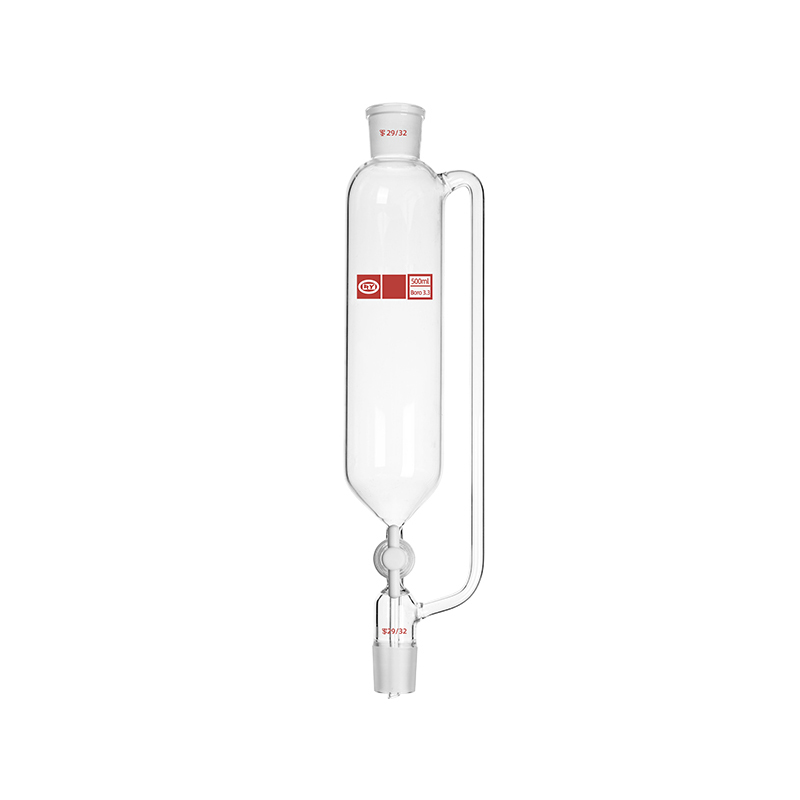
At Shanghai Heqi, we produce a range of glass components — stopcocks, joint sleeves, adapters, and stoppered fittings — that pair our standard borosilicate 3.3 or quartz glass bodies with PTFE sealing surfaces, combining the mechanical and thermal properties of glass with the low-friction, chemically inert surface of PTFE where it matters most. This tag brings together every product across our catalog that uses PTFE as part of its sealing or interface design, which is useful if you've had joint-seizing problems before and specifically want to avoid repeating them, or if your process involves reagents known to be hard on plain ground glass.

These components are made to the same standard taper sizes as our regular ground glass line, so switching an existing setup over to PTFE sealing generally doesn't require replacing anything beyond the specific stopcock or joint that's been causing problems.

Key Benefits of PTFE-Lined Components

PTFE lining isn't just a nice-to-have upgrade — it addresses specific, well-documented failure modes that plain ground glass joints run into over time.

  • No joint seizing — PTFE's low coefficient of friction means joints stay easy to turn and separate, even after months of use, avoiding the frustrating (and sometimes destructive) process of freeing a stuck ground glass joint.
  • Broader chemical compatibility — PTFE resists attack from strong acids, strong bases, and most organic solvents, covering some reagents that can slowly etch or cloud plain glass-on-glass ground joints over repeated exposure.
  • No lubricant needed — unlike plain ground glass stopcocks, which often require vacuum grease to seal properly, PTFE stopcocks typically seal without lubricant, which matters when grease contamination would interfere with your reaction or analysis.
  • Consistent sealing performance — PTFE surfaces maintain a reliable seal across a wide temperature range without the grease migration or hardening issues that come with traditional stopcock lubricants.
  • Longer component life — reduced wear at the sealing surface means these components generally outlast plain ground glass equivalents under frequent-use conditions.

For buyers assembling a full reflux or distillation setup, pairing these with our reflux & condensation lab assemblies tag is a practical way to standardize on grease-free sealing throughout.

Industries and Applications

PTFE-lined components tend to get specified wherever joint reliability and chemical purity both matter, which covers a fairly wide range of lab settings.

  • Chemical and pharmaceutical R&D labs use PTFE stopcocks and sleeves in reflux, distillation, and reaction setups where grease contamination would compromise results.
  • Solvent recovery and distillation operations benefit from PTFE's resistance to a wide range of organic solvents at the joint interface, reducing the risk of slow degradation at contact points.
  • Analytical labs doing trace-level work often specify PTFE over greased ground glass specifically to avoid the possibility of lubricant contamination in sensitive samples.
  • Pilot-scale process development — where equipment gets assembled, disassembled, and reconfigured frequently, PTFE joints hold up much better to repeated handling than plain ground glass.
  • Vacuum filtration and vacuum distillation setups — PTFE stopcocks provide reliable sealing under vacuum without the grease that can outgas or contaminate a vacuum line over time.
  • Teaching and training labs — where equipment sees frequent use by less experienced hands, PTFE components are more forgiving and less prone to accidental seizing than plain glass joints.

If your lab has previously dealt with stuck stopcocks or joints that needed regreasing constantly, this is usually the category worth checking first.

Technical Specifications

These specifications describe the glass body and PTFE sealing surface together, since performance on this product line depends on both materials working correctly as a pair rather than either one in isolation. The figures below apply to our standard catalog configurations, which cover the vast majority of buyer requirements without any modification. Bore size, handle style, and joint dimensions can all be adjusted to match your existing equipment on request, and if you're replacing a worn part from another supplier, sending us the current dimensions is generally enough for us to confirm a compatible match before you commit to an order. We're also happy to send a short technical drawing showing bore diameter and joint taper for any item in this range, which is often the quickest way to confirm fit before an order ships.

Parameter Typical Value
Glass Body Material Borosilicate 3.3 (standard); quartz available on request
Lining / Sealing Material Virgin PTFE (polytetrafluoroethylene)
PTFE Temperature Range Approx. -200°C to +260°C
Chemical Resistance Resistant to most acids, bases, and organic solvents
Standard Joint Sizes 14/23, 19/26, 24/29, 29/32, 34/35
Stopcock Bore Sizes 1mm, 2mm, 4mm, 6mm (custom bore available)
Lubricant Requirement None required for standard operation
Component Types Available Stopcocks, joint sleeves, adapters, stoppers, valve cores
Vacuum Tightness Suitable for standard laboratory vacuum applications
Customization Custom bore size, handle style, and joint dimensions available

Frequently Asked Questions

Do PTFE stopcocks really not need any grease at all?
Correct, under normal conditions — that's one of the main reasons labs switch to them. If you notice a slow leak, it's usually a sign the retention nut needs minor tightening, not that grease is missing.

Will PTFE components fit my existing borosilicate glassware?
As long as the joint size matches (14/23, 19/26, 24/29, etc.), yes. Send us your current joint specification and we can confirm compatibility before you order.

Is PTFE resistant to hydrofluoric acid?
Yes, PTFE is one of the few materials that holds up well against HF, which is actually a common reason labs specifically choose PTFE-sealed components over plain ground glass for that kind of work.

Can I get PTFE components with a custom bore size?
Yes — see our custom lab glass fabrication & OEM tag, or send us your required bore diameter directly.

How does this compare to plain standard ground joint lab glassware?
Plain ground glass is cheaper and works fine for occasional use, but PTFE is the more reliable choice if joints get assembled and disassembled often, or if you've had seizing problems before.

What's the maximum temperature these components can handle?
The glass body handles standard borosilicate ranges, but the PTFE sealing surface is rated to about 260°C — check your specific application against that limit.

About
Shanghai Heqi Glassware Co., Ltd.

One point of professionalism, one point of service, one point of companionship—allow me to be your reliable partner on the path forward!

Shanghai Heqi was founded in March 2002, It is China PTFE-Lined Lab Glass Components Manufacturers and Custom PTFE-Lined Lab Glass Components Suppliers, Specializing in the R&D and production of standard-mouth glass instruments. Over the years, the company has established production bases in locations such as Songjiang, Chengdu, Jiaxing, and Yancheng. By integrating technology, craftsmanship, and management expertise, Heqi has adopted mechanized and semi-mechanized techniques to replace traditional manual methods. It has also introduced assembly-line industrial processes to replace simple workshop-style production, thereby reducing costs and improving quality.

To deliver on its service commitment of “you make a call, we handle the rest,” Heqi also supplies a range of high-quality glass instruments, lab consumables, and experimental equipment from both domestic and international brands. With ample inventory, fast delivery, and premium service, the company ensures full support for its clients.

In recent years, Shanghai Heqi has brought together experts in chemical R&D, mechanical design and processing, and electronic control to form a dedicated R&D team. The company has also set up three specialized workshops for glass, metalworking, and assembly. These facilities produce a variety of small and pilot-scale equipment, including glass reactors, rotary evaporators, distillation units, high- and low-temperature circulation systems, vacuum pumps, stirrers, and UV analyzers.

Leveraging its in-house capabilities in design, production, and custom fabrication of glass components, Shanghai Heqi continuously enhances product quality and service standards. It also supports the chemical and pharmaceutical industries by enabling customized small-scale and pilot-scale equipment solutions.


Contact Us
Our custom service team is ready to provide you with expert advice and personalized solutions.