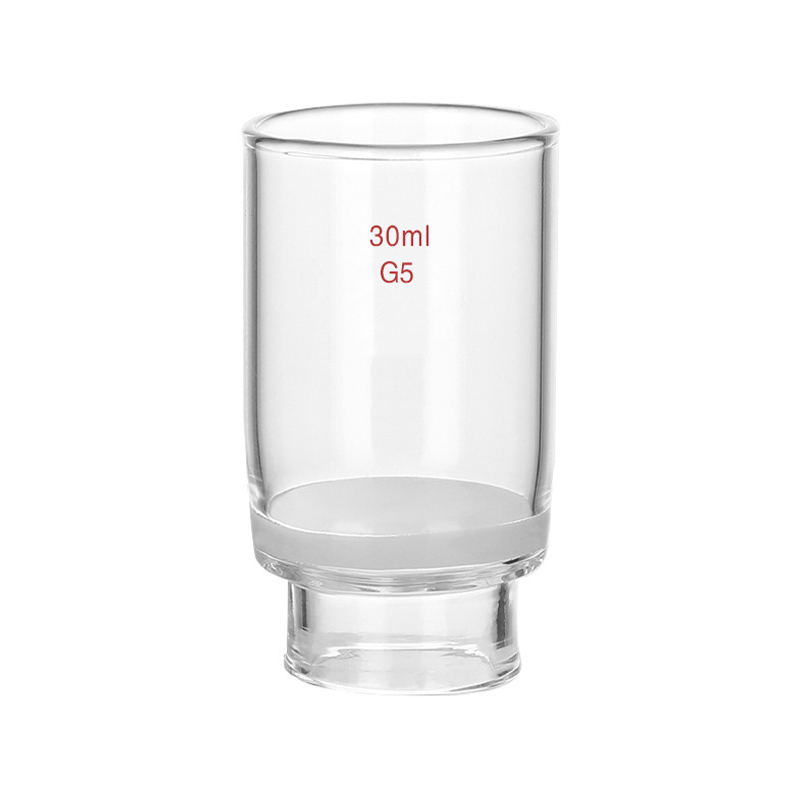
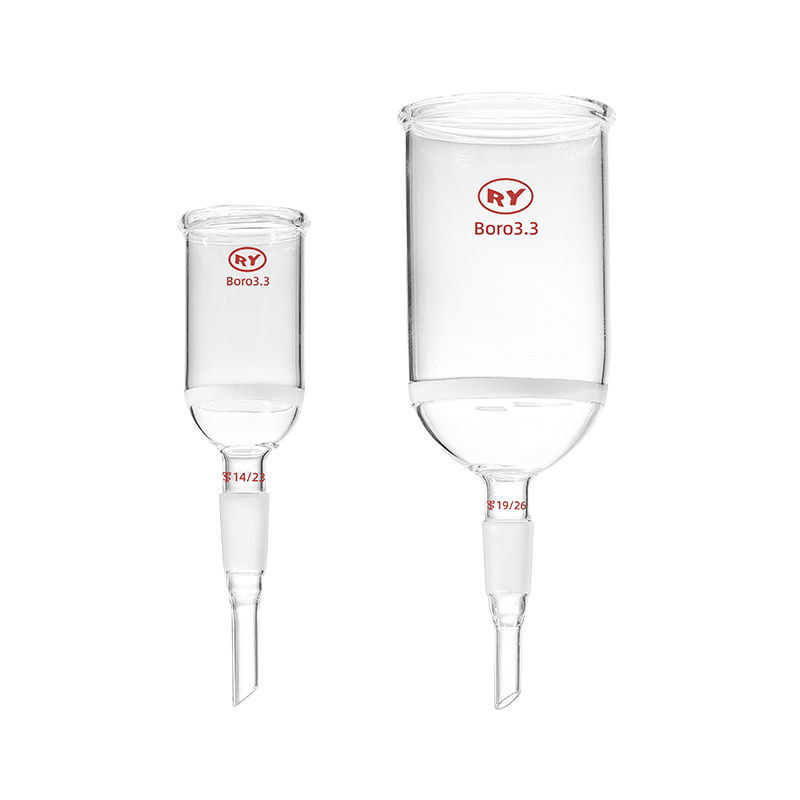
Custom Lab Lab Glass Flange Sealing Systems

Lab Glass Flange Sealing Systems

-- Steady & Reliable Manufacturer --

What Are Lab Glass Flange Sealing Systems?

Lab glass flange sealing systems use flat, wide-diameter flange connections rather than ground taper joints to join larger vessels, reactor lids, and pilot-scale equipment components together. While a ground taper joint relies on two precisely matched conical surfaces to create a seal, a flange connection uses a flat gasket compressed between two flanged glass edges, typically held together with a clamp ring or bolted assembly, which is a more practical approach once vessel diameters get large enough that a ground taper joint would become impractically heavy, expensive, and difficult to seat evenly.

At Shanghai Heqi, flange sealing systems appear primarily on our larger pilot-scale and small-production equipment — glass reactor lids, large receiving vessels, and bigger distillation column sections — where our in-house glass, metalworking, and assembly workshops work together to produce a flange face that's flat and consistent enough to seal reliably under repeated clamping and unclamping. This tag brings together every flange-based sealing component across our catalog, along with the clamps, gaskets, and associated hardware used with them, which is useful for buyers scaling up from bench-scale ground-joint glassware toward pilot-scale equipment, where flange connections become the standard way of joining major vessel components rather than an occasional specialty item.

Buyers new to this category often start by matching an existing setup or replacing a single worn component, and our team is glad to help identify the right specification if you're not sure exactly what you need. We keep detailed production records for this product line, which makes it straightforward to source matching replacement parts even years after an original order, without needing to guess at dimensions from memory or re-measure an entire assembly from scratch.

Key Advantages of Lab Glass Flange Sealing Systems

Flange sealing solves problems that ground taper joints aren't well suited to handle once equipment scale increases, and it's worth understanding specifically what a flange connection does better at larger diameters.

  • Handles large diameters practically — a flange connection scales to reactor lids and large vessel openings far more easily than a ground taper joint, which becomes impractical to manufacture and handle reliably once you're beyond a certain size.
  • Even clamping force distribution — a clamp ring or bolted flange distributes compression evenly around the full circumference of the joint, reducing the risk of localized stress that could crack a large-diameter ground joint under similar clamping pressure.
  • Fast, repeatable opening and closing — quick-release clamp systems allow a reactor lid or large component to be opened and resealed quickly for cleaning, loading, or maintenance, which matters for equipment used in daily production or pilot runs.
  • Flexible gasket material selection — because the seal comes from a separate gasket rather than glass-on-glass contact, gasket material can be selected specifically for the chemical environment involved, offering more targeted chemical resistance than a fixed glass surface would provide.
  • Suitable for both vacuum and moderate pressure applications — a properly torqued flange with the right gasket handles vacuum service as well as some positive pressure applications, depending on the specific gasket and clamp rating involved.

The main consideration is that flange systems generally require more careful assembly attention than a simple ground joint, since even gasket compression and correct clamp torque matter more here than with a taper joint's self-aligning geometry.

Where Lab Glass Flange Sealing Systems Are Used

Flange sealing systems tend to appear once equipment moves beyond simple bench-scale glassware into larger pilot-scale or small-production equipment, which shapes where this tag's products typically get specified.

  • Pilot-scale glass reactors — reactor lids and large vessel access points almost always use flange sealing rather than ground taper joints, given the diameters involved.
  • Rotary evaporator systems — larger rotary evaporator flasks and evaporating vessel connections often incorporate flange-style sealing at key connection points.
  • Distillation columns — larger-diameter column sections in pilot-scale distillation setups typically join through flanges rather than taper joints, particularly at packing support points or column-to-reboiler connections.
  • Large receiving and storage vessels — vessels used for collecting distillate or reaction product at pilot scale frequently use flange access points for cleaning and material transfer.
  • Vacuum-rated process equipment — larger vacuum vessels and chambers use flange sealing for their access covers, since a ground taper joint isn't practical at these diameters.
  • Custom pilot and small-production equipment — equipment built to buyer specifications for scale-up work, which our own R&D and fabrication teams support directly, frequently incorporates flange connections wherever vessel diameter exceeds what standard ground joints can reasonably accommodate.

If you're scaling a process up from bench-scale glassware and starting to work with larger vessel diameters, flange sealing is generally the point at which this transition in joint technology becomes necessary rather than optional.

Across all of these settings, the common thread is a need for dependable, repeatable performance rather than a highly specialized one-off solution, which is exactly the kind of use case this product category is built around. If your application doesn't fit neatly into the categories above, it's still worth reaching out, since many processes combine elements of more than one of these use cases and we can usually still recommend a suitable configuration.

Lab Glass Flange Sealing System Specifications

The table below summarizes typical flange sizes, gasket options, and related specifications for this product category. Flange diameter and gasket selection should be matched to your specific vessel size and process chemistry, and we're glad to advise on the right combination for a custom pilot-scale build.

ParameterTypical Value
Base MaterialBorosilicate Glass 3.3
Common Flange Sizes (Nominal Diameter)DN50, DN80, DN100, DN150, DN200, and larger on request
Gasket Material OptionsPTFE, PTFE-encapsulated, EPDM, Viton
Clamp TypesQuick-release clamp rings, bolted flange rings
Vacuum RatingSuitable for standard laboratory and pilot-scale vacuum service
Pressure RatingDepends on gasket and clamp selection; consult for specific ratings
Available Product FormsReactor lids, large vessel bodies, distillation column sections
Custom Flange SizingAvailable for non-standard vessel diameters on request

For buyers designing a full pilot-scale system from scratch, we'd recommend confirming flange size and gasket material early in the design process, since these choices affect compatible clamp hardware and downstream component selection throughout the rest of the assembly.

We periodically review these specifications against evolving international standards to make sure our production tolerances stay aligned with what buyers expect from a reputable manufacturer, and we're glad to share more detailed dimensional drawings for any specific item in this range on request. If a particular parameter isn't listed here, it's worth asking directly rather than assuming a default value, since some characteristics can vary meaningfully between product variants within the same general category, particularly gasket recess depth on custom flange faces.

Frequently Asked Questions

At what vessel size does flange sealing become necessary instead of a ground joint?
This varies by application, but generally once a vessel opening exceeds what a standard large ground joint (34/35 or similar) can practically handle, flange sealing becomes the more practical and reliable option.

Which gasket material should I choose for aggressive solvents?
PTFE or PTFE-encapsulated gaskets generally offer the broadest chemical resistance for aggressive solvents and most acids and bases, compared to plain elastomer gaskets like EPDM.

Can flange systems handle positive pressure, or only vacuum?
Depending on the specific flange, gasket, and clamp combination, some configurations are rated for moderate positive pressure in addition to vacuum service. Let us know your operating pressure and we can confirm suitability.

How often should flange gaskets be replaced?
This depends on usage frequency, chemical exposure, and gasket material, but any gasket showing visible compression set, cracking, or reduced sealing performance should be replaced rather than reused.

Do you supply complete pilot-scale reactor systems with flange lids included?
Yes, our R&D and fabrication teams design and build complete pilot-scale glass equipment, including flange-sealed reactor lids and associated hardware, to buyer specifications.

Can existing flange hardware from another supplier be used with your glass components?
In many cases yes, provided the flange dimensions match standard nominal sizes; send us your existing hardware specifications and we can confirm compatibility.

Can you supply a full flange kit including clamps and gaskets in one order?
Yes, we can put together a matched flange, gasket, and clamp set based on your vessel dimensions and process chemistry.

About
Shanghai Heqi Glassware Co., Ltd.

One point of professionalism, one point of service, one point of companionship—allow me to be your reliable partner on the path forward!

Shanghai Heqi was founded in March 2002, It is China Lab Glass Flange Sealing Systems Manufacturers and Custom Lab Glass Flange Sealing Systems Suppliers, Specializing in the R&D and production of standard-mouth glass instruments. Over the years, the company has established production bases in locations such as Songjiang, Chengdu, Jiaxing, and Yancheng. By integrating technology, craftsmanship, and management expertise, Heqi has adopted mechanized and semi-mechanized techniques to replace traditional manual methods. It has also introduced assembly-line industrial processes to replace simple workshop-style production, thereby reducing costs and improving quality.

To deliver on its service commitment of “you make a call, we handle the rest,” Heqi also supplies a range of high-quality glass instruments, lab consumables, and experimental equipment from both domestic and international brands. With ample inventory, fast delivery, and premium service, the company ensures full support for its clients.

In recent years, Shanghai Heqi has brought together experts in chemical R&D, mechanical design and processing, and electronic control to form a dedicated R&D team. The company has also set up three specialized workshops for glass, metalworking, and assembly. These facilities produce a variety of small and pilot-scale equipment, including glass reactors, rotary evaporators, distillation units, high- and low-temperature circulation systems, vacuum pumps, stirrers, and UV analyzers.

Leveraging its in-house capabilities in design, production, and custom fabrication of glass components, Shanghai Heqi continuously enhances product quality and service standards. It also supports the chemical and pharmaceutical industries by enabling customized small-scale and pilot-scale equipment solutions.


Contact Us
Our custom service team is ready to provide you with expert advice and personalized solutions.