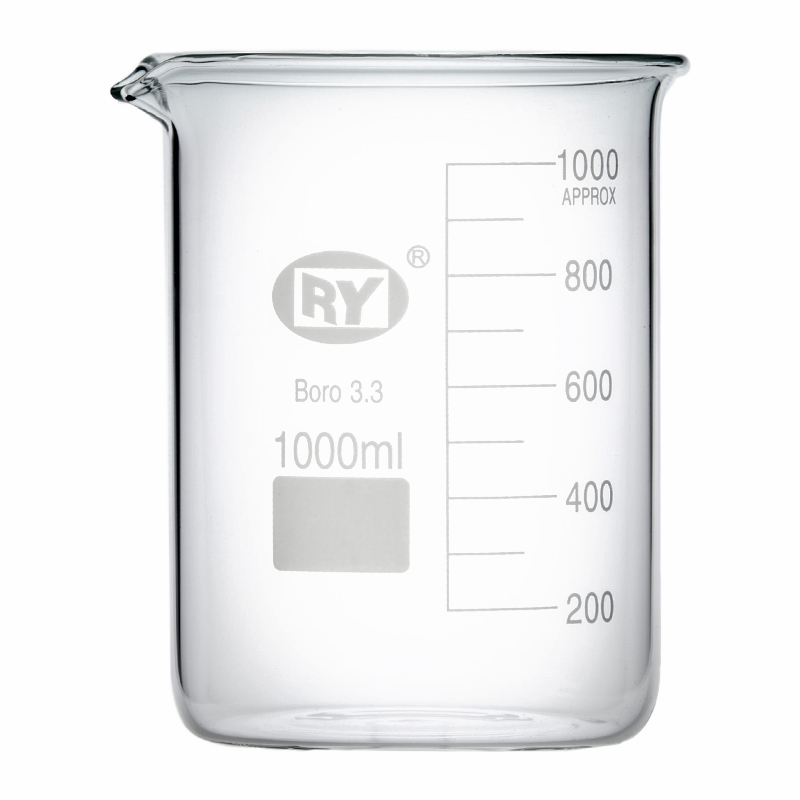
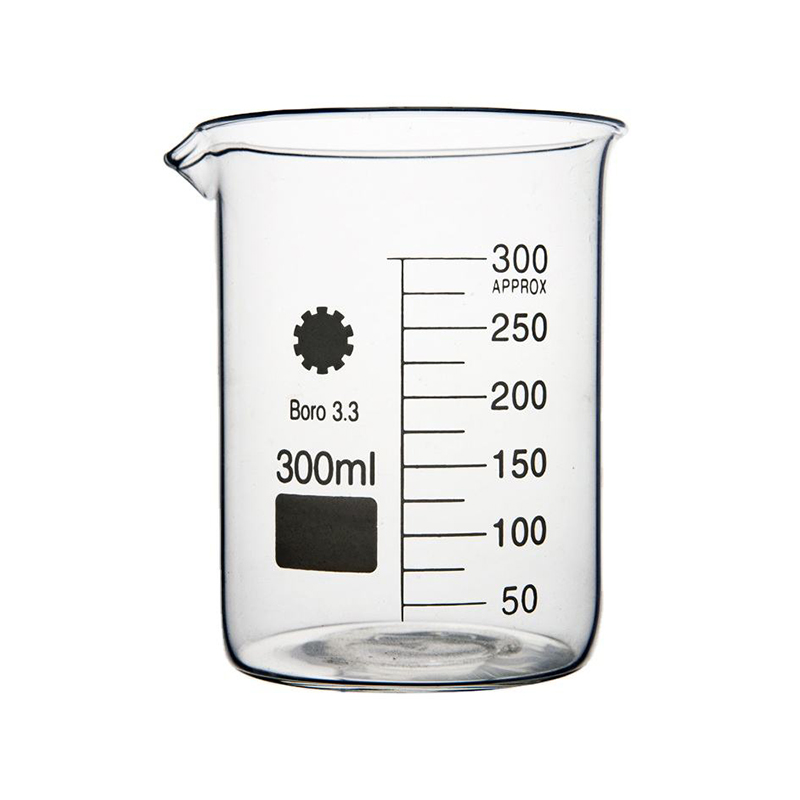
Custom Lab Chemical-Resistant Lab Glassware

Chemical-Resistant Lab Glassware

-- Steady & Reliable Manufacturer --

What Is Chemical-Resistant Lab Glassware?

Chemical-resistant lab glassware refers to glassware manufactured and tested specifically for its ability to withstand prolonged or repeated exposure to acids, alkalis, salt solutions, and organic solvents without degrading, clouding, leaching, or losing structural integrity. While all of our borosilicate 3.3 products carry a baseline level of chemical resistance, this tag specifically highlights items in our catalog that are built, tested, or configured for the more demanding end of chemical exposure — whether that's through material choice, joint design, or accessory components like stopcocks and closures rated for aggressive media.

At Shanghai Heqi, chemical resistance isn't a single feature we bolt onto a product; it's a function of glass composition, manufacturing consistency, and the compatibility of every component that touches the sample, from the glass body itself to the seals, stopcocks, and stoppers used with it. This tag brings together products across multiple categories — beakers, bottles, flasks, funnels, and stopcock-equipped components — that are specifically suited to handling corrosive or aggressive chemical environments, which is useful for labs working with concentrated acids, strong bases, or solvents known to be harder on standard glassware and rubber components than typical lab reagents. Treating chemical resistance as a system-level property rather than a glass-only property is really the key idea behind this tag, since the most common failure point in a corrosive process is rarely the glass body itself, but rather a seal, gasket, or stopcock that wasn't specified to match the chemical demands of the process.

Key Advantages of Chemical-Resistant Glassware

Chemical resistance sounds like a given for lab glass, but there's a meaningful range in how well different products actually hold up under sustained exposure to aggressive reagents, and it's worth understanding what separates a genuinely resistant product from one that just happens to be made of glass.

  • Consistent hydrolytic resistance — our borosilicate 3.3 glass meets Class 1 hydrolytic resistance under ISO 719, meaning minimal alkali leaching even under repeated water and steam exposure, which matters for anything involving aqueous acid or base solutions.
  • Resistance across a broad chemical range — strong acids (except hydrofluoric and hot concentrated phosphoric), most organic solvents, and salt solutions don't meaningfully degrade the glass surface, even with prolonged contact.
  • No leaching into samples — important for analytical work where trace contamination from the container itself could skew results, particularly in environmental or pharmaceutical testing.
  • Compatible component selection — products in this tag are paired with resistant stopcocks, stoppers, and seals (PTFE where appropriate) rather than standard rubber or grease that might degrade faster under aggressive chemical exposure.
  • Extended usable lifespan — glassware that resists chemical attack at the surface level maintains its optical clarity and structural integrity longer, reducing replacement frequency for labs running high-volume corrosive processes.

Worth flagging directly: no glass, including ours, is fully resistant to hydrofluoric acid or hot concentrated phosphoric acid, and buyers working with either should ask about alternative materials for those specific steps, since attempting to use standard glassware for these specific reagents typically results in gradual etching and clouding that shortens the product's usable life considerably.

Where Chemical-Resistant Glassware Is Used

Chemical-resistant glassware tends to be specified wherever a process involves reagents aggressive enough that standard component lifespan or contamination risk becomes a real operational concern.

  • Acid and base handling in chemical R&D — beakers, flasks, and funnels used for titration, dilution, and reaction work involving concentrated acids or strong alkaline solutions.
  • Industrial and petrochemical testing labs — where reagents used in sample prep or analysis are often more aggressive than typical academic lab chemicals.
  • Environmental testing facilities — digestion and extraction procedures for soil, water, and sediment samples frequently involve strong acids that require resistant glassware and non-reactive stopcocks.
  • Pharmaceutical quality control — stability and impurity testing sometimes involves aggressive solvents or reagents where any container-related contamination would compromise results.
  • Solvent recovery and reclamation operations — recovered solvents can contain residual acids or reactive byproducts that put more stress on glassware and seals than fresh reagent-grade material.
  • Battery and materials research — electrolyte handling and testing often involves corrosive salts and solvents that require glassware and stopcocks rated for aggressive chemical exposure.
  • Cosmetics and personal care formulation labs — certain preservative systems and active ingredients are formulated at low pH or with reactive solvents that call for the same resistant components used in heavier industrial testing.

If your process regularly damages standard glassware or degrades stopcock seals faster than expected, it's usually worth reviewing whether the components in use are actually rated for what's passing through them, since switching to a properly matched chemical-resistant configuration is often a simpler and cheaper fix than continuing to replace worn parts on a frequent cycle.

Chemical-Resistant Glassware Specifications

The table below summarizes the chemical resistance ratings and related specifications relevant to this product tag. These figures follow standard international test methods for glass chemical durability, and we can provide the underlying test certificates on request for procurement or quality documentation purposes. Resistance ratings are consistent across the beakers, bottles, flasks, and funnels grouped under this tag, since they all share the same base borosilicate 3.3 composition, with differences between products limited mainly to which sealing and stopcock components are included.

ParameterTypical Value
Base MaterialBorosilicate Glass 3.3
Hydrolytic Resistance ClassClass 1 (ISO 719 / DIN 12111)
Acid Resistance ClassClass 1 (ISO 1776 / DIN 12116)
Alkali Resistance ClassClass 2 (ISO 695)
Not Recommended ForHydrofluoric acid, hot concentrated phosphoric acid
Compatible Seal MaterialsPTFE, borosilicate ground joints
Compatible Stopcock TypesPTFE-plug stopcocks, ground glass stopcocks
Available Product FormsBeakers, bottles, flasks, funnels, stopcock-equipped assemblies
Standard Joint Sizes14/23, 19/26, 24/29, 29/32, 34/35
Recommended ForStrong acids and alkalis, organic solvents, salt solutions
Available SizesFull standard capacity range across beakers, bottles, flasks, and funnels

If your process involves a reagent not listed here, let us know the specific chemical, concentration, and expected exposure duration and we can advise on suitability before you place an order. This kind of upfront check is generally quicker and cheaper than discovering a compatibility issue after a product has already been in service for several months, particularly for stopcock-equipped components where seal degradation isn't always obvious until it starts to leak. We're glad to walk through your reagent list item by item if that's a more practical starting point than guessing at general resistance classes.

Frequently Asked Questions

Is all borosilicate glass chemically resistant, or is this a special material?
All our borosilicate 3.3 glassware has good baseline chemical resistance. This tag highlights products additionally configured with resistant seals, stopcocks, and closures for more demanding corrosive applications.

Can this glassware handle concentrated sulfuric or nitric acid?
Yes, borosilicate 3.3 handles both well under normal lab conditions. Hydrofluoric acid and hot concentrated phosphoric acid are the main exceptions where glass generally isn't suitable regardless of grade.

Why does the stopcock matter if the glass itself is resistant?
Stopcocks and seals often degrade faster than the glass body under chemical exposure, particularly if they use standard grease or rubber components rather than PTFE, so component selection is just as important as glass grade.

Do you offer chemical compatibility documentation for procurement audits?
Yes, we can provide hydrolytic, acid, and alkali resistance test certificates, along with PTFE material certificates where applicable.

What should I do if my specific reagent isn't covered by standard resistance classes?
Send us the reagent and exposure conditions (concentration, temperature, duration) and we can advise on suitability or arrange specific testing where needed.

Is chemical-resistant glassware more expensive than standard glassware?
Only modestly, and mainly due to PTFE-sealed components rather than the glass itself, since the base material is the same borosilicate 3.3 used across our standard catalog.

Can existing glassware be retrofitted with resistant stopcocks?
In many cases yes, as long as the joint size matches; send us your current joint specification and we can confirm compatible PTFE stopcock options.

About
Shanghai Heqi Glassware Co., Ltd.

One point of professionalism, one point of service, one point of companionship—allow me to be your reliable partner on the path forward!

Shanghai Heqi was founded in March 2002, It is China Chemical-Resistant Lab Glassware Manufacturers and Custom Chemical-Resistant Lab Glassware Suppliers, Specializing in the R&D and production of standard-mouth glass instruments. Over the years, the company has established production bases in locations such as Songjiang, Chengdu, Jiaxing, and Yancheng. By integrating technology, craftsmanship, and management expertise, Heqi has adopted mechanized and semi-mechanized techniques to replace traditional manual methods. It has also introduced assembly-line industrial processes to replace simple workshop-style production, thereby reducing costs and improving quality.

To deliver on its service commitment of “you make a call, we handle the rest,” Heqi also supplies a range of high-quality glass instruments, lab consumables, and experimental equipment from both domestic and international brands. With ample inventory, fast delivery, and premium service, the company ensures full support for its clients.

In recent years, Shanghai Heqi has brought together experts in chemical R&D, mechanical design and processing, and electronic control to form a dedicated R&D team. The company has also set up three specialized workshops for glass, metalworking, and assembly. These facilities produce a variety of small and pilot-scale equipment, including glass reactors, rotary evaporators, distillation units, high- and low-temperature circulation systems, vacuum pumps, stirrers, and UV analyzers.

Leveraging its in-house capabilities in design, production, and custom fabrication of glass components, Shanghai Heqi continuously enhances product quality and service standards. It also supports the chemical and pharmaceutical industries by enabling customized small-scale and pilot-scale equipment solutions.


Contact Us
Our custom service team is ready to provide you with expert advice and personalized solutions.