Key Advantages of Centrifuge-Compatible Glassware
Centrifuge-rated construction addresses a specific mechanical stress that general-purpose glassware isn't built to handle safely, and it's worth being clear about exactly what this product category provides beyond simply looking similar to a standard sample tube.
- Withstands centrifugal stress safely — increased wall thickness and quality-controlled glass composition allow these tubes to reliably survive the mechanical stress of high-speed spinning within their rated speed range.
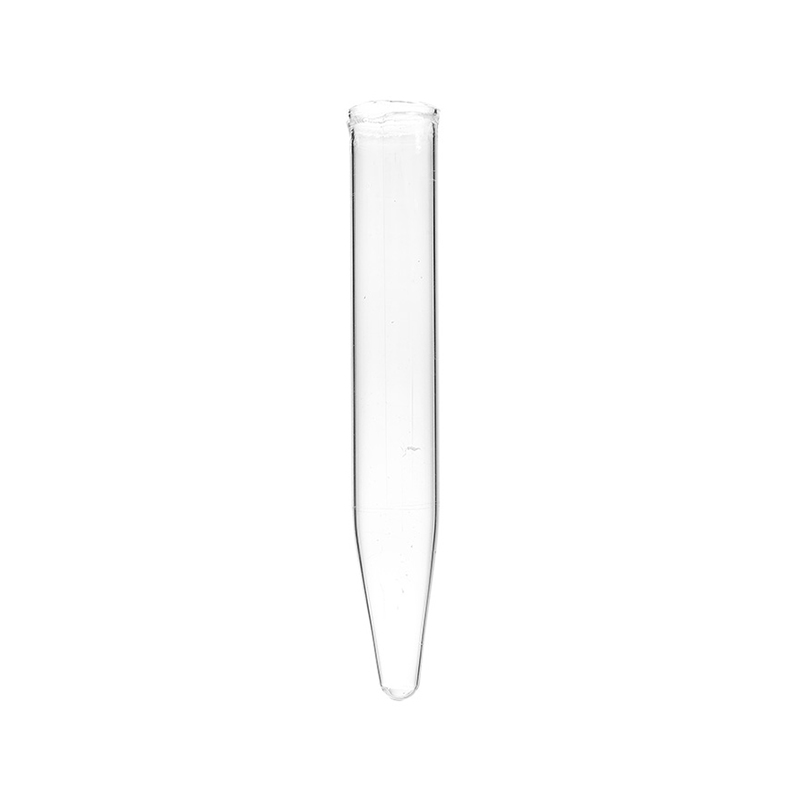
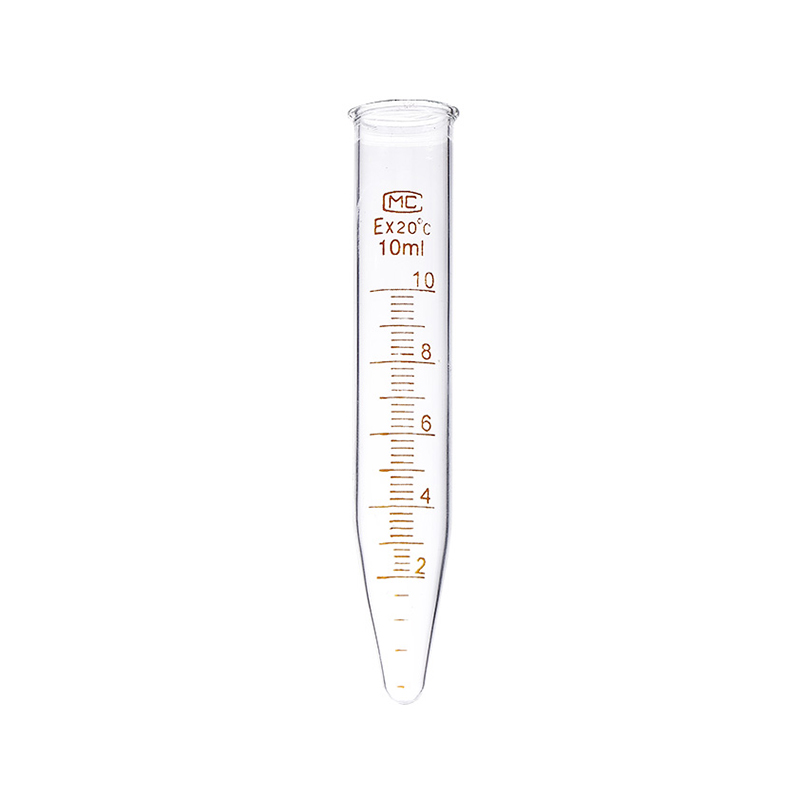
- Conical bottom designs support efficient pellet recovery — the tapered conical shape concentrates pelleted material into a small, easily accessible area at the tube's tip, simplifying recovery of separated solid material.
- Weight-matched construction supports rotor balance — consistent wall thickness and overall tube weight across a manufacturing batch helps maintain proper rotor balance, which matters directly for safe, smooth centrifuge operation.
- Chemical resistance maintained under mechanical stress — borosilicate construction provides the same chemical inertness as our standard catalog, without compromising the structural properties needed for safe centrifuge use.
- Durable, reusable alternative to disposable plastic centrifuge tubes — glass centrifuge tubes withstand repeated cleaning, sterilization, and reuse across many cycles, which can be more economical and generates less disposable waste than single-use plastic alternatives over time.
Using tubes not specifically rated for centrifuge use, even ones that appear similar in size and shape, introduces real safety risk and should generally be avoided regardless of apparent cost savings.
These advantages compound when a lab standardizes across its glassware inventory rather than mixing several different systems, since staff spend less time hunting for compatible parts and more time actually running experiments. We're happy to walk through your current inventory and suggest where standardizing on this product category might simplify day-to-day operations, particularly for labs juggling several different glassware systems left over from different past suppliers or older equipment purchases made before current staff joined. This kind of standardization also reduces training time for new staff joining the lab.
Where Centrifuge-Compatible Glassware Is Used
Centrifuge-compatible glassware is essential wherever a workflow includes a centrifugation step, which spans several important applications across biological, chemical, and materials laboratory work.
- Sample pelleting and separation — separating solid material or dense particles from a liquid suspension through centrifugal force is one of the most common laboratory applications for this equipment.
- Suspension clarification — removing suspended particulates from a liquid sample to obtain a clear supernatant relies on properly rated centrifuge tubes for reliable, repeatable results.
- Biological sample preparation — cell pelleting, sample concentration, and various biological separation procedures depend heavily on appropriately sized and rated centrifuge tubes.
- Particle and precipitate isolation — isolating precipitated material from a reaction or crystallization procedure sometimes uses centrifugation as a faster alternative to filtration for certain particle sizes.
- Materials and environmental sample processing — separating suspended solids from liquid environmental or materials samples as part of standard analytical preparation frequently relies on centrifuge-compatible glassware.
- Compatible across various rotor types — both fixed-angle and swinging-bucket centrifuge rotors accept appropriately sized centrifuge tubes from our catalog, depending on your specific equipment and application.
If your workflow includes any centrifugation step, using genuinely rated, quality-controlled centrifuge tubes rather than substituting general-purpose glassware is an important, non-negotiable safety practice worth following consistently.
Across all of these settings, the common thread is a need for dependable, repeatable performance rather than a highly specialized one-off solution, which is exactly the kind of use case this product category is built around. If your application doesn't fit neatly into the categories above, it's still worth reaching out, since many processes combine elements of more than one of these use cases and we can usually still recommend a suitable configuration based on your specific workflow and budget constraints, even for applications that don't fit a standard description.
Centrifuge-Compatible Glassware Specifications
The table below summarizes typical specifications for centrifuge-compatible glassware in our catalog. Speed rating and tube shape should be matched to your specific centrifuge and separation requirement, and we're glad to advise on the appropriate configuration for your equipment.
| Parameter | Typical Value |
| Base Material | Borosilicate Glass 3.3 |
| Tube Shapes | Conical bottom, round bottom |
| Typical Speed Rating | Rated for standard laboratory benchtop centrifuge speeds; confirm specific rating per product |
| Wall Thickness | Increased relative to general-purpose tubes, sized to capacity and rated speed |
| Capacity Range | 5ml to 250ml, depending on tube type and rotor compatibility |
| Closure Options | Leak-resistant screw caps recommended for centrifuge use |
| Weight Matching Tolerance | Consistent manufacturing tolerance to support rotor balance requirements |
| Custom Configurations | Available for specialized rotor compatibility or capacity requirements on request |
Always confirm the specific speed rating of any centrifuge tube against your centrifuge's operating parameters before use, since exceeding a tube's rated speed is a genuine and serious safety hazard that should never be treated casually, even for a quick or routine run.
We periodically review these specifications against evolving international standards to make sure our production tolerances stay aligned with what buyers expect from a reputable manufacturer, and we're glad to share more detailed dimensional drawings for any specific item in this range on request. If a particular parameter isn't listed here, it's worth asking directly rather than assuming a default value, since some characteristics can vary meaningfully between product variants within the same general category or capacity range depending on manufacturing batch and specific configuration ordered by the buyer.
Frequently Asked Questions
Can I use a regular test tube in a centrifuge instead of a rated centrifuge tube?
We'd strongly advise against it; general-purpose tubes aren't manufactured or quality-checked for the mechanical stress of centrifugal spinning and pose a genuine safety risk if substituted.
How do I know the maximum safe speed for a centrifuge tube?
Each centrifuge-rated tube product has a documented maximum speed rating; always confirm this against your centrifuge's operating parameters before use.
Why does tube weight matching matter for centrifuge safety?
Unmatched tube weights across loaded rotor positions can cause imbalance during high-speed spinning, which affects both separation quality and overall operational safety.
Should I still use a tube if it has a small chip?
No, any visible chip, crack, or surface damage should immediately remove a tube from centrifuge service, even if the damage appears minor, since it can concentrate dangerous stress under centrifugal load.
What's the advantage of conical over round-bottom centrifuge tubes?
Conical tubes concentrate pelleted material into a smaller, more accessible area at the tip, generally making pellet recovery easier than with a round-bottom design.
Do you offer centrifuge tubes for specific rotor brands or models?
We can advise on compatibility for common rotor types; let us know your specific centrifuge model and we'll confirm the appropriate tube configuration.
Can you help me decide between a few different options in this category for my specific application?
Yes, we're happy to discuss your intended use in more detail and recommend the most suitable configuration, since the right choice often depends on details specific to your process that aren't always obvious from a general product description alone.
Do you offer ongoing support after the initial purchase for this product category?
Yes, our team remains available to answer setup, compatibility, or troubleshooting questions well after your order has shipped and been put into regular use in your lab.
Safe Sealing & Handling for Centrifuge Use
Sealing and handling considerations for centrifuge tubes carry genuine safety weight beyond the sealing concerns that apply to general-purpose glassware, since a failure during high-speed spinning has consequences well beyond a simple sample loss.
A properly seated, leak-resistant screw cap matters considerably for centrifuge use, since any leakage during spinning can create both sample loss and, more seriously, an imbalance in the rotor that could affect safe operation. Confirming caps are fully and evenly threaded before every centrifuge run, rather than assuming a cap seated correctly the last time it was used, is a simple but important habit, particularly for tubes reused across many cycles where cap threading can gradually wear.
Beyond sealing, visual inspection for any chips, cracks, or surface damage before each use is a genuinely critical safety step for centrifuge tubes specifically, since a compromised tube that might be perfectly usable for simple storage becomes a real hazard once subjected to the mechanical stress of high-speed spinning. Any tube showing visible damage should be removed from centrifuge service immediately, even if the damage looks minor, since flaws that seem inconsequential under normal handling can concentrate stress dangerously under centrifugal load. Balancing tube weights across loaded rotor positions, using tubes of matched weight and fill volume, is equally important for safe operation and shouldn't be treated as optional even for routine, seemingly low-risk runs.
Getting this right the first time is generally simpler than troubleshooting a marginal seal after a process is already underway, so we'd always recommend confirming the appropriate sealing approach for your specific application before finalizing your order, particularly if you're working with an unfamiliar reagent, an unusual operating temperature, or an application outside typical everyday lab conditions where standard assumptions about sealing performance might not hold as reliably as expected under routine use.
Payment Terms & Shipping
Centrifuge-compatible glassware ships under our standard commercial terms, with quality control specifically relevant to this product category factored into our standard production process.
- Payment methods — T/T, L/C, and Alibaba Trade Assurance, with a 30% deposit and balance due before shipment standard for new buyers, adjustable for established accounts placing recurring orders.
- Sample orders — available for most standard configurations, worth considering given the safety importance of confirming rotor and speed compatibility before a larger centrifuge tube order.
- Lead times — standard configurations typically ship within 15–25 days given the additional quality control involved; custom capacities or rotor-specific configurations generally take 20–30 days.
- Packaging — individually wrapped with extra cushioning specifically to prevent any surface damage during transit, given how even minor scratches or chips affect safe centrifuge use.
- Shipping — FOB Shanghai standard, with sea freight for bulk orders and air freight available for smaller or time-sensitive shipments.
We'd recommend inspecting centrifuge tubes carefully upon arrival before placing them into service, confirming no transit damage occurred despite our protective packaging measures, given the safety stakes involved in this specific product category.
We understand that international shipping timelines are often a critical part of planning a lab setup or expansion, so we try to communicate realistic lead times upfront rather than optimistic ones that later slip. If your project has a hard deadline, let us know early so we can flag any potential scheduling risk before you commit to a purchase order, rather than discovering a conflict partway through production once materials and labor have already been committed to your specific order and configuration requested.
Compliance, Environmental & Safety Certification
Centrifuge-compatible glassware carries documentation specifically addressing the safety considerations unique to high-speed spinning applications, beyond the general material certifications applicable across our standard catalog.
- ISO 9001 quality management certification covers production of centrifuge-compatible glassware the same as the rest of our catalog.
- Speed rating verification — documented maximum safe operating speed is available for each centrifuge tube product, confirming the rated performance relevant to your specific equipment.
- RoHS and REACH compliance — applies across all glass and cap components used in this product range.
- Weight consistency documentation — batch weight tolerance verification is available on request for buyers needing this documented as part of a formal centrifuge safety procedure.
- Third-party inspection — SGS or equivalent testing, including structural verification, can be arranged for buyers needing independent confirmation before commissioning new centrifuge equipment.
If your facility's safety procedures require documented tube ratings or batch consistency records as part of a formal risk assessment, let us know and we can provide relevant documentation alongside your order to support that internal review process.
Compliance documentation matters most when it's actually usable by your own internal audit or procurement process, so rather than sending a generic packet, we'd rather understand what your specific requirements are and provide exactly what's needed in the format your team expects. This approach has generally worked well for buyers in regulated industries who need documentation that fits directly into an existing internal quality system without extra back-and-forth or repeated requests for reformatted paperwork after the initial order ships.


 English
 Français
 Español