Key Advantages of Wide Mouth Containers
The wider opening on this product category solves a specific, practical problem, and understanding exactly what it improves helps clarify when a wide mouth container is genuinely the better choice over a standard narrow mouth bottle.
- Easy filling and scooping — a wide opening allows direct access with a spatula, scoop, or spoon, which matters considerably for powders, granular solids, and viscous or semi-solid materials that don't pour cleanly through a narrow neck.
- Simplified cleaning — a larger opening accommodates a brush or cloth for thorough interior cleaning, which is considerably more difficult to achieve through a narrow-necked bottle, particularly for containers that have held sticky or residue-prone materials.
- Accommodates larger sampling equipment — probes, larger stirring implements, or bulkier sampling tools fit through a wide mouth opening in situations where a narrow neck would be physically restrictive.
- Better suited to sediment-containing samples — environmental and geological samples containing solid material or sediment are considerably easier to collect, transfer, and later remove through a wide opening than through a standard reagent bottle neck.
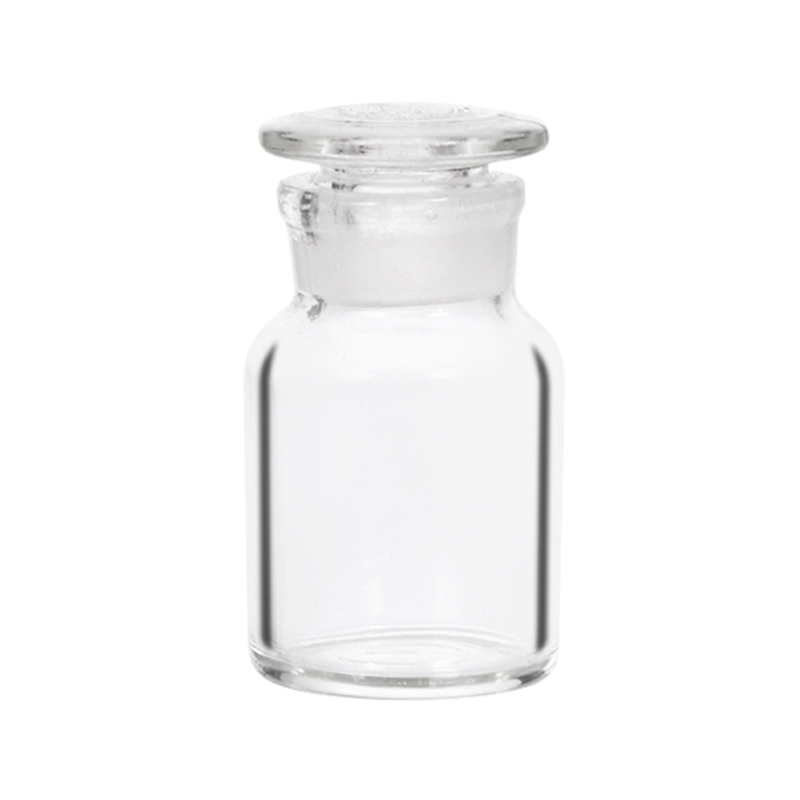
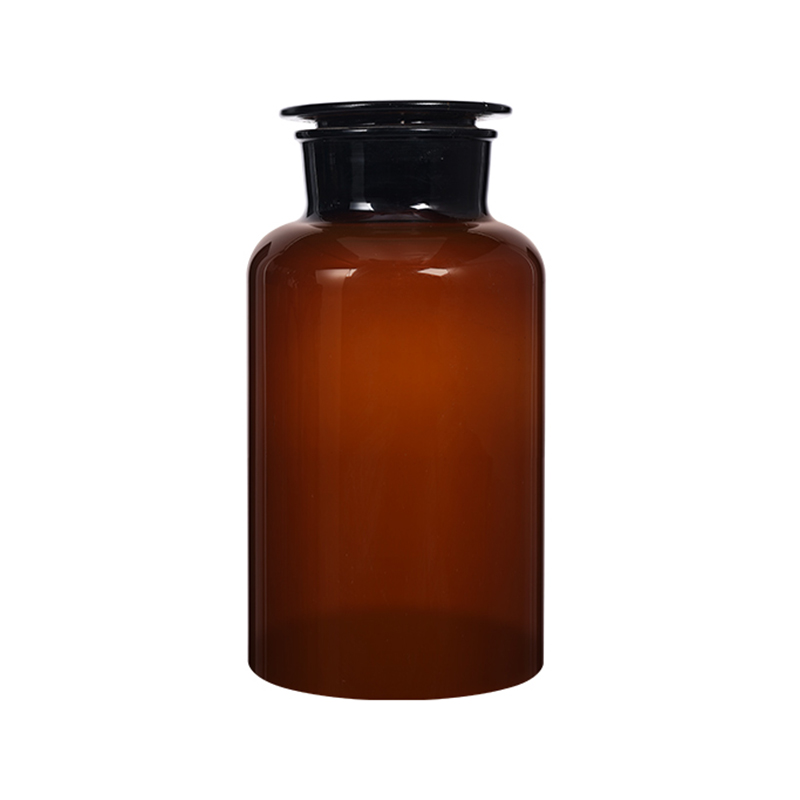
- Available with multiple closure options — wide mouth containers accept a range of closures including plain screw caps, snap-on lids, and ground glass stoppers, giving buyers flexibility depending on whether airtight sealing or simple convenient access matters more for a given use.
The main trade-off compared to narrow mouth bottles is a somewhat higher risk of spillage if the container is tipped, since the larger opening naturally allows contents to escape more readily than a restricted neck would.
These advantages compound when a lab standardizes across its glassware inventory rather than mixing several different systems, since staff spend less time hunting for compatible parts and more time actually running experiments. We're happy to walk through your current inventory and suggest where standardizing on this product category might simplify day-to-day operations, particularly for labs juggling several different glassware systems left over from different past suppliers or older equipment purchases.
Where Wide Mouth Containers Are Used
Wide mouth containers are specified whenever a lab needs to work with material that isn't a simple, free-flowing liquid, which covers a fairly broad and consistent range of laboratory and industrial applications.
- Powder and granular solid storage — reagents supplied as powders or granules are far easier to measure and dispense from a wide mouth container than from a narrow-necked bottle.
- Environmental and geological sampling — soil, sediment, and particulate samples are commonly collected and stored in wide mouth jars specifically because of the easier access for both filling and later subsampling.
- Food, cosmetics, and personal care ingredient storage — formulation work involving viscous creams, pastes, or semi-solid ingredients relies on wide mouth containers for practical handling during both storage and use.
- Culture media and agar preparation — wide mouth bottles and jars simplify pouring and handling of prepared media, particularly for viscous or partially solidified preparations.
- General reagent storage requiring scooping access — any solid or semi-solid reagent that needs to be measured out repeatedly benefits from the easier access a wide mouth container provides compared to attempting to pour or shake material from a narrower opening.
- Waste collection involving solid or particulate material — laboratory waste streams containing solids rather than purely liquid waste are more practically collected in wide mouth containers.
If your material of interest doesn't pour cleanly and predictably like a simple liquid, a wide mouth container is generally the more practical choice over a standard narrow-necked bottle.
Across all of these settings, the common thread is a need for dependable, repeatable performance rather than a highly specialized one-off solution, which is exactly the kind of use case this product category is built around. If your application doesn't fit neatly into the categories above, it's still worth reaching out, since many processes combine elements of more than one of these use cases and we can usually still recommend a suitable configuration based on your specific workflow.
Wide Mouth Container Specifications
The table below summarizes typical neck diameters, thread configurations, and capacity ranges for wide mouth containers in our catalog. Neck diameter scales somewhat with overall container capacity, and we're glad to confirm exact dimensions for a specific product if you need to match existing storage or handling equipment.
| Parameter | Typical Value |
| Base Material | Borosilicate Glass 3.3 |
| Common Neck Thread Sizes | GL45, GL65, GL80, and larger wide-neck standards |
| Capacity Range | 100ml to 20L, depending on product type |
| Closure Options | Screw caps, snap-on lids, ground glass stoppers |
| Cap Gasket Materials | PTFE-faced silicone, plain silicone, or solid PTFE |
| Wall Thickness | 2.0mm – 4.0mm, depending on capacity |
| Available Forms | Storage jars, wide neck bottles, sample collection containers |
| Custom Configurations | Available for non-standard neck diameters or capacities on request |
If you're replacing an existing wide mouth container from another supplier, sending us the current neck diameter and thread pitch is generally enough for us to confirm compatible cap options before you place an order.
We periodically review these specifications against evolving international standards to make sure our production tolerances stay aligned with what buyers expect from a reputable manufacturer, and we're glad to share more detailed dimensional drawings for any specific item in this range on request. If a particular parameter isn't listed here, it's worth asking directly rather than assuming a default value, since some characteristics can vary meaningfully between product variants within the same general category or capacity range, particularly rim thickness on larger jar sizes, which affects how the cap seats under pressure.
Frequently Asked Questions
What's the main advantage of a wide mouth container over a standard bottle?
Easier filling, scooping, and cleaning access, particularly for powders, viscous materials, or samples containing solids or sediment that don't pour cleanly like a simple liquid.
Can wide mouth containers be used for liquid storage as well?
Yes, though narrow mouth bottles generally offer more controlled pouring and reduced evaporation for pure liquid storage where scooping access isn't needed.
Why does my wide mouth cap sometimes seem to leak on one side?
This is usually caused by uneven gasket compression, often from the cap not being threaded down completely evenly; checking that the cap seats smoothly all the way around generally resolves this.
Do you offer wide mouth containers with a ground glass stopper instead of a screw cap?
Yes, select sizes are available with a ground glass stopper closure as an alternative to a threaded screw cap.
What capacity range do you offer for wide mouth storage jars?
Our standard range spans 100ml up to 20L, with custom capacities available outside this range on request.
Can I get food-contact-grade documentation for wide mouth containers used in cosmetic formulation?
Yes, we can provide relevant material documentation for both the glass body and the gasket materials used in the cap.
Can you supply a matched set of wide mouth jars in different sizes for a new lab setup?
Yes, we can put together a curated set spanning several capacities based on your typical material handling needs.
Do you offer wide mouth containers with tamper-evident closures?
Yes, select cap options include tamper-evident features for buyers needing this for regulated storage or shipping requirements.
Sealing Performance for Wide Mouth Containers
Sealing a wide mouth container reliably takes somewhat more attention to gasket flatness and cap seating than a narrow mouth bottle, simply because the larger diameter opening involves a proportionally larger sealing surface where any imperfection has more opportunity to create a gap somewhere along the circumference.
Screw cap closures for wide mouth containers rely on a gasket, typically silicone or PTFE-faced silicone, compressed evenly around the full circumference of the neck opening as the cap threads down. Getting this compression even matters more here than on a smaller-diameter closure, since a slightly warped gasket or an unevenly seated cap is more likely to leave a gap on one side of a wide mouth opening than it would on a narrower one, simply due to the larger surface area involved. For applications requiring a genuinely airtight seal, checking that the cap threads smoothly and evenly all the way down, without binding or resistance on one side, is a useful practical check before assuming the container is properly sealed.
For wide mouth containers using a ground glass stopper rather than a screw cap, the same general principles as any other ground joint apply, though the larger diameter involved means even minor surface damage to either the stopper or the neck opening is more likely to create a noticeable, hard-to-ignore leak path compared to a smaller ground joint elsewhere in the catalog.
Getting this right the first time is generally simpler than troubleshooting a marginal seal after a process is already underway, so we'd always recommend confirming the appropriate sealing approach for your specific application before finalizing your order, particularly if you're working with an unfamiliar reagent, an unusual operating temperature, or an application outside typical everyday lab conditions where standard assumptions about sealing performance might not hold as reliably.
Payment Terms & Shipping
Wide mouth containers ship under our standard commercial terms, with packaging considerations shaped somewhat by their typically larger opening and, for bigger sizes, greater overall footprint.
- Payment methods — T/T, L/C, and Alibaba Trade Assurance, with a 30% deposit and balance due before shipment standard for new buyers, adjustable for established accounts.
- Sample orders — available for most standard configurations, worth considering if you need to confirm cap and gasket compatibility with your specific material before a larger purchase.
- Lead times — standard configurations typically ship within 15–25 days; custom neck diameters or non-standard capacities generally take 20–30 days.
- Packaging — wide mouth containers are individually wrapped with particular attention to protecting the neck opening rim, since this area is more exposed to impact damage than a narrower, more recessed neck design.
- Shipping — FOB Shanghai standard, with sea freight for bulk orders and air freight available for smaller or time-sensitive shipments.
For buyers ordering wide mouth containers alongside matching caps or closures in different configurations, it's usually simplest to combine everything into one purchase order so we can confirm all the fittings match correctly before shipment.
We understand that international shipping timelines are often a critical part of planning a lab setup or expansion, so we try to communicate realistic lead times upfront rather than optimistic ones that later slip. If your project has a hard deadline, let us know early so we can flag any potential scheduling risk before you commit to a purchase order, rather than discovering a conflict partway through production once materials and labor have already been committed.
Compliance, Environmental & Safety Certification
Wide mouth containers carry certifications covering both the glass body and the various closure and gasket components used across this product range.
- ISO 9001 quality management certification covers production of wide mouth container products the same as the rest of our catalog.
- RoHS and REACH compliance — applies to the borosilicate glass bodies as well as the plastic, silicone, and PTFE components used in caps and gaskets.
- Food-contact and cosmetic-grade options — available for wide mouth containers intended for ingredient storage in food or personal care formulation work, with relevant documentation provided on request.
- Hydrolytic resistance certification — Class 1 hydrolytic resistance documentation is available for the glass body, confirming suitability for chemical and pharmaceutical storage applications.
- Third-party testing — SGS or equivalent testing can be arranged for buyers needing independent verification of gasket chemical compatibility or dimensional accuracy for their own procurement documentation.
If your procurement process requires specific material certificates for gasket components used with wide mouth containers, particularly for food-contact or cosmetic-grade applications, let us know at the inquiry stage so we can confirm the right gasket material and documentation together.
Compliance documentation matters most when it's actually usable by your own internal audit or procurement process, so rather than sending a generic packet, we'd rather understand what your specific requirements are and provide exactly what's needed in the format your team expects. This approach has generally worked well for buyers in regulated industries who need documentation that fits directly into an existing internal quality system without extra back-and-forth.


 English
 Français
 Español