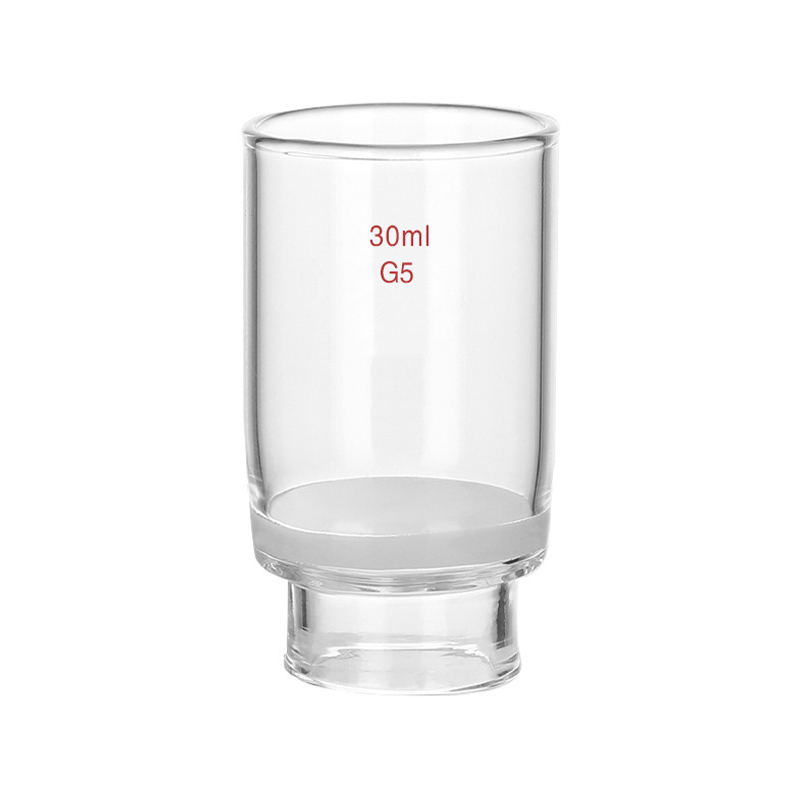
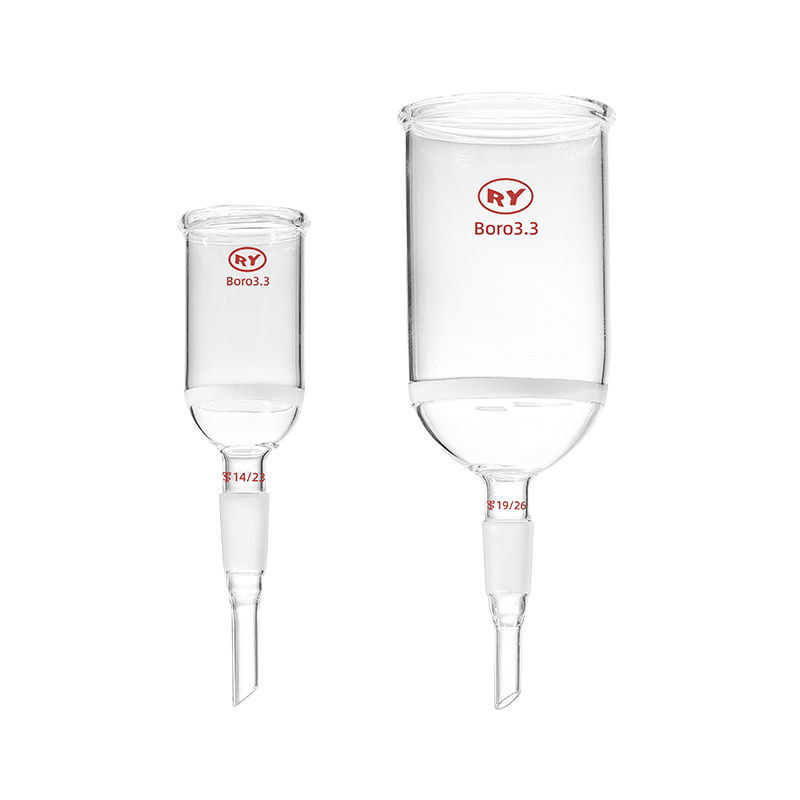
Custom Lab Pilot-Scale Lab Glass Vessels

Pilot-Scale Lab Glass Vessels

-- Steady & Reliable Manufacturer --

What Are Pilot-Scale Lab Glass Vessels?

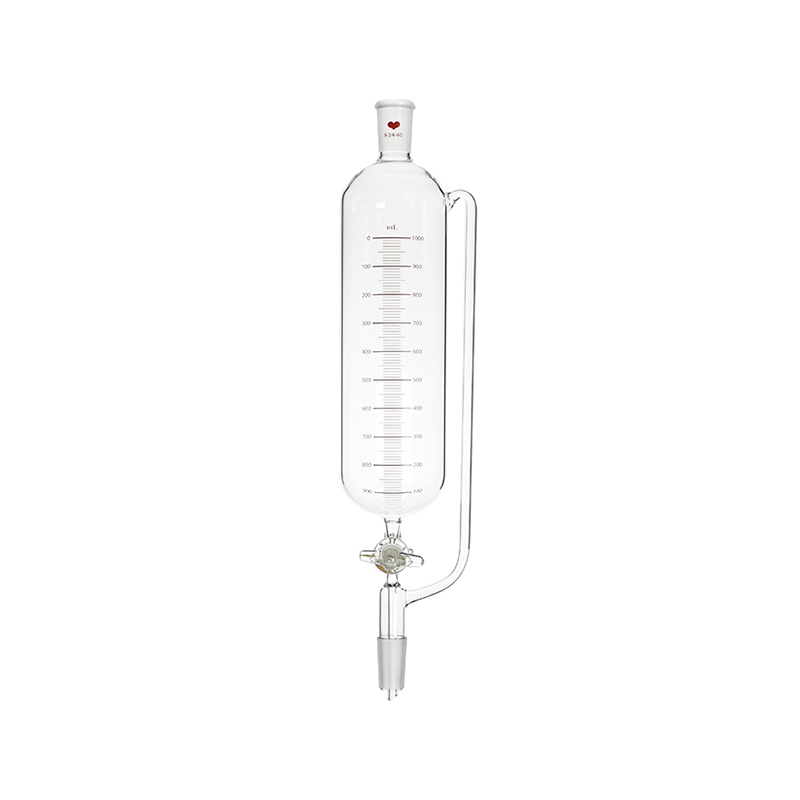
Pilot-scale lab glass vessels bridge the gap between bench-scale laboratory glassware and full production equipment, typically ranging from several liters up to 100 liters or more, and often incorporating features standard lab glassware doesn't need — jacketed walls for precise temperature control, flange connections for large-diameter access, and reinforced construction built to withstand repeated, sustained use in a way closer to industrial equipment than typical bench apparatus. These vessels give process development teams a realistic way to test and validate a chemical or extraction process at a meaningful scale before committing the capital investment required for full production equipment.

At Shanghai Heqi, pilot-scale vessels are developed by the same combined team responsible for our custom glass reactors, distillation units, and related process equipment — chemical R&D specialists, mechanical designers, and electronic control engineers working together across our dedicated glass, metalworking, and assembly workshops. This tag brings together our pilot-scale vessel offerings across various configurations, which is particularly relevant for buyers moving a process beyond initial bench-scale development, whether for internal scale-up validation, toll manufacturing, or building out a dedicated pilot plant capable of producing meaningful quantities of product ahead of a full production-scale commitment down the line.

Buyers new to this category often start by matching an existing setup or replacing a single worn component, and our team is glad to help identify the right specification if you're not sure exactly what you need. We keep detailed production records for this product line, which makes it straightforward to source matching replacement parts even years after an original order, without needing to guess at dimensions from memory or re-measure an entire assembly from scratch. This is particularly useful for labs maintaining equipment over many years across multiple purchase cycles and staff turnover.

Key Advantages of Pilot-Scale Vessels

Moving from bench glassware to genuine pilot-scale equipment introduces capabilities that matter considerably once a process needs to behave predictably at a meaningfully larger scale, and it's worth being specific about what this equipment class actually provides.

  • Realistic scale-up validation — testing a process at pilot scale reveals heat transfer, mixing, and mass transfer behaviors that don't always show up clearly at bench scale, helping identify scale-up issues before committing to full production equipment.
  • Precise temperature control via jacketing — jacketed pilot vessels allow circulating heating or cooling fluid around the vessel body, providing far more even and controllable temperature management than external heating mantles or water baths can achieve at this scale.
  • Robust construction for sustained use — built with heavier wall sections and reinforced fittings, pilot-scale vessels are designed to handle repeated, industrial-style use cycles rather than the more occasional handling typical of bench glassware.
  • Supports meaningful production quantities — pilot-scale batches can produce genuinely useful quantities of product for further testing, stability studies, or limited commercial supply, rather than the small quantities typical of bench-scale synthesis.
  • Custom configuration to match specific processes — our in-house design and fabrication capability allows pilot vessels to be configured with the specific ports, agitator compatibility, and fittings a particular process actually requires.

The trade-off is considerably higher cost and longer lead time compared to bench-scale glassware, reflecting the more substantial engineering and fabrication effort this equipment class requires.

These advantages compound when a lab standardizes across its glassware inventory rather than mixing several different systems, since staff spend less time hunting for compatible parts and more time actually running experiments. We're happy to walk through your current inventory and suggest where standardizing on this product category might simplify day-to-day operations, particularly for labs juggling several different glassware systems left over from different past suppliers or older equipment purchases made before current staff joined.

Where Pilot-Scale Vessels Are Used

Pilot-scale vessels are specified specifically at the transition point between laboratory research and larger production, which places them at the center of process development and scale-up work across several industries.

  • Chemical and pharmaceutical process scale-up — validating that a bench-scale synthesis route performs consistently and safely at a larger scale is a standard step before committing to full production equipment.
  • Pre-production process validation — testing process parameters, yield, and product quality at pilot scale reduces the risk of costly surprises once a process moves to full commercial production.
  • Toll manufacturing and contract production — facilities producing smaller batch quantities under contract for other companies often rely on pilot-scale equipment to serve this middle-ground production volume efficiently.
  • Extraction and distillation process development — testing extraction yields or distillation efficiency at a meaningful scale, beyond what bench glassware can realistically demonstrate, is a common pilot-scale application.
  • University and institutional pilot plants — research institutions with dedicated pilot facilities use this equipment class to bridge academic research and industrially relevant process demonstration.
  • New product development requiring larger sample quantities — generating enough product for extended stability testing, customer sampling, or regulatory submission batches often requires pilot-scale rather than bench-scale production.

If your process has been validated at bench scale and the next step involves demonstrating consistent performance at a meaningfully larger volume, pilot-scale vessels are generally the appropriate equipment class for that stage of development.

Across all of these settings, the common thread is a need for dependable, repeatable performance rather than a highly specialized one-off solution, which is exactly the kind of use case this product category is built around. If your application doesn't fit neatly into the categories above, it's still worth reaching out, since many processes combine elements of more than one of these use cases and we can usually still recommend a suitable configuration based on your specific workflow and budget.

Pilot-Scale Vessel Specifications

The table below summarizes typical configurations and specifications for pilot-scale vessels in our catalog. Because pilot-scale equipment is frequently customized to match specific process requirements, we're glad to discuss exact configuration details relevant to your particular application.

ParameterTypical Value
Base MaterialBorosilicate Glass 3.3
Capacity Range5L to 100L, with larger custom capacities available on request
Jacketing OptionsSingle or double jacket for heating/cooling fluid circulation
Agitator CompatibilityTop-mounted or bottom-mounted agitator mounting options available
Connection TypesFlange connections for large openings; reinforced taper joints for smaller ports
Available ConfigurationsSingle and multi-port vessels, with sight glass and sampling port options
Support StructureDedicated stands or frames engineered for the specific vessel size and duty cycle
Custom EngineeringFull custom design available through our in-house R&D and fabrication team

For buyers planning a full pilot-scale system, sharing your intended process parameters — operating temperature, pressure or vacuum requirements, and agitation needs — early in the discussion helps us recommend the most appropriate vessel configuration from the start.

We periodically review these specifications against evolving international standards to make sure our production tolerances stay aligned with what buyers expect from a reputable manufacturer, and we're glad to share more detailed dimensional drawings for any specific item in this range on request. If a particular parameter isn't listed here, it's worth asking directly rather than assuming a default value, since some characteristics can vary meaningfully between product variants within the same general category or capacity range depending on manufacturing batch.

Frequently Asked Questions

What's the typical capacity range for pilot-scale equipment?
Our standard pilot-scale range spans 5L to 100L, with larger custom capacities available depending on your specific process requirements.

Do pilot-scale vessels always need jacketing?
Not necessarily; jacketing is recommended for processes requiring precise temperature control, but simpler processes may work adequately with external heating or cooling methods depending on the specific requirements.

How long does it take to get a pilot-scale system built?
Typically 45–90 days depending on capacity, complexity, and the degree of custom engineering involved; we can provide a firmer estimate once we understand your specific requirements.

Can you help design the full pilot system, not just supply the vessel?
Yes, our R&D and fabrication team can support full system design, including vessel configuration, supporting equipment, and installation planning.

What kind of testing happens before a pilot vessel ships?
Pressure and vacuum testing, along with jacket integrity verification, can be arranged to confirm the vessel meets its specified operating parameters before it leaves our facility.

Do you offer ongoing support after a pilot system is installed?
Yes, our team is available to answer questions and provide support as you commission and begin routine operation of a new pilot-scale system.

Can you help me decide between a few different options in this category for my specific application?
Yes, we're happy to discuss your intended use in more detail and recommend the most suitable configuration, since the right choice often depends on details specific to your process that aren't always obvious from a general product description alone.

About
Shanghai Heqi Glassware Co., Ltd.

One point of professionalism, one point of service, one point of companionship—allow me to be your reliable partner on the path forward!

Shanghai Heqi was founded in March 2002, It is China Pilot-Scale Lab Glass Vessels Manufacturers and Custom Pilot-Scale Lab Glass Vessels Suppliers, Specializing in the R&D and production of standard-mouth glass instruments. Over the years, the company has established production bases in locations such as Songjiang, Chengdu, Jiaxing, and Yancheng. By integrating technology, craftsmanship, and management expertise, Heqi has adopted mechanized and semi-mechanized techniques to replace traditional manual methods. It has also introduced assembly-line industrial processes to replace simple workshop-style production, thereby reducing costs and improving quality.

To deliver on its service commitment of “you make a call, we handle the rest,” Heqi also supplies a range of high-quality glass instruments, lab consumables, and experimental equipment from both domestic and international brands. With ample inventory, fast delivery, and premium service, the company ensures full support for its clients.

In recent years, Shanghai Heqi has brought together experts in chemical R&D, mechanical design and processing, and electronic control to form a dedicated R&D team. The company has also set up three specialized workshops for glass, metalworking, and assembly. These facilities produce a variety of small and pilot-scale equipment, including glass reactors, rotary evaporators, distillation units, high- and low-temperature circulation systems, vacuum pumps, stirrers, and UV analyzers.

Leveraging its in-house capabilities in design, production, and custom fabrication of glass components, Shanghai Heqi continuously enhances product quality and service standards. It also supports the chemical and pharmaceutical industries by enabling customized small-scale and pilot-scale equipment solutions.


Contact Us
Our custom service team is ready to provide you with expert advice and personalized solutions.